The real question about the Etude Crossgrade from Dorico 6 isn’t whether it sounds good. It’s whether it sounds good enough to justify the price when you probably already have something close enough sitting in your plugin folder.
Short answer: sometimes yes, often no, and the decision hinges almost entirely on one thing, which products you’re crossgrading from.
We tested Etude through several sessions of solo piano composition work inside Dorico Pro 6, running both the 18GB full version and the 3GB Etude Elements that ships free with Dorico 6.1 subscriptions. The picture that emerged is complicated.
Etude is a deeply-sampled Yamaha C3X grand piano instrument for HALion Sonic. It’s not notation software. It’s not a bundle add-on. It’s a single-instrument library priced like a mid-tier multi-instrument collection. That positioning creates the tension this review is really about.
If you’re a Dorico Pro 6 subscriber or own the Lifetime Unlock in-app purchase, stop reading. You already have Etude Elements at no extra cost. Go check your Dorico 6.1 download.
Does the Full Version Actually Deliver?
Steinberg built Etude to replace the generic playback piano that’s shipped with Dorico for years. That’s a low bar, and Etude clears it comfortably.
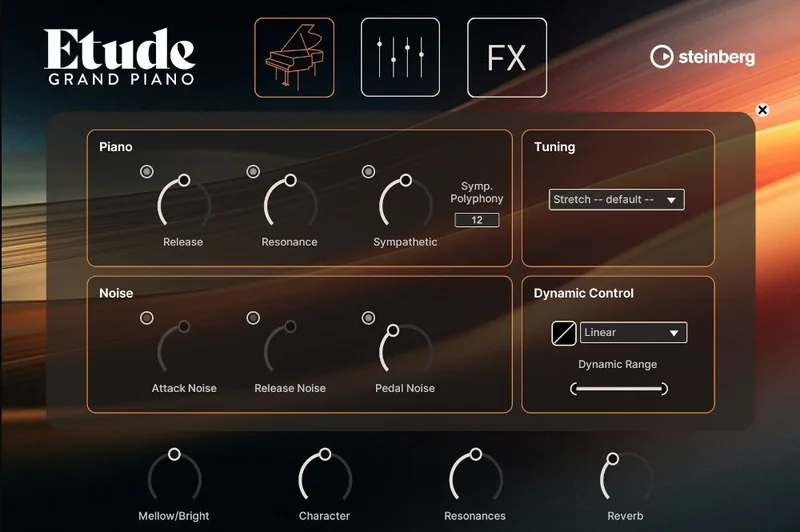
The Yamaha C3X is a mid-size concert grand. 18GB of samples across 4 microphone positions, close, mid, room, and a mixed preset, means you’re working with real depth, not a one-dimensional ROMpler. Velocity layers are generous enough that soft pp passages don’t turn into that telltale mechanical thud.
What it promises: a dedicated, high-quality piano that integrates cleanly with Dorico’s playback engine. What it delivers: exactly that. The HALion Sonic integration is genuinely tight. Expression maps work. Playback velocity responds to dynamic markings the way you’d expect.
The gap between promise and delivery isn’t about quality. It’s about value relative to the crossgrade price. That’s a different problem.
Where Etude Shines
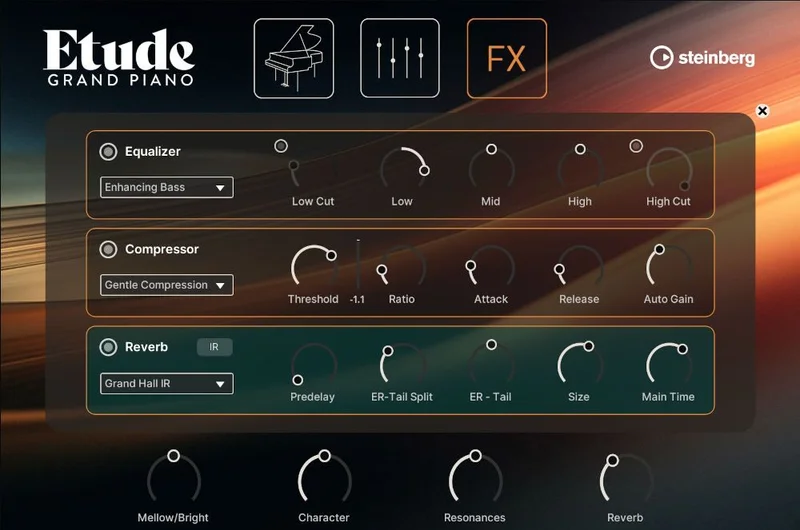
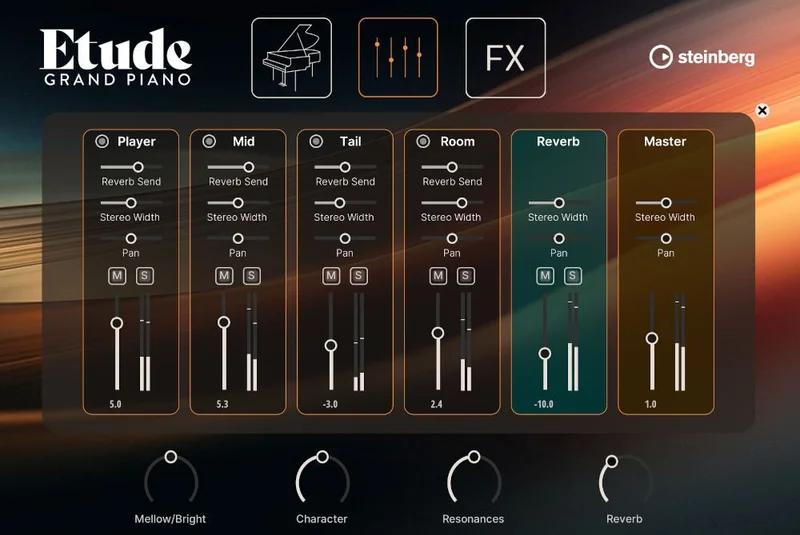
The 4 microphone positions earn their keep. We loaded a Chopin nocturne sketch and toggled between the close mic and the room mic at full blend. The close position gave us a dry, studio-intimate tone, clean attack, controlled sustain. Pulling in 30% room added a spread that made the piece breathe without feeling washed. No reverb plugin required for basic work.
The sustain pedal behavior is one of the better implementations we’ve heard at this price point. We held a chord, played a melody over it, and the sympathetic resonance of the undamped strings came through at a realistic level. It’s not Pianoteq-level physics simulation, but it’s not fake either.
Etude Elements deserves a mention here. For 3GB, the free version packed inside Dorico 6.1 is a satisfying workaround for most scoring work. The reduction in sample layers shows up on direct comparison, but in the context of a full orchestral mockup, the difference disappears.
Where It Falls Short
Fast repetitions expose the library. We ran a passage of repeated 16th notes at 132 BPM, the kind of thing you’d find in a Prokofiev toccata sketch. The round-robin behaviour stuttered. Notes in the 60-80 velocity range started sounding mechanical after three or four repetitions in a row. Annoying.
Soft dynamics are the other weak point. Below velocity 30, the tone loses character. It doesn’t go ugly, it just goes thin. Pianissimo passages that should feel intimate end up feeling distant in a way that isn’t the room mic talking, it’s a sample layer gap.
And then there’s the single-instrument problem. Paying full price for one piano, even a well-sampled one, is a hard sell in 2026. That crossgrade price assumes you’re already deep in the Steinberg ecosystem and the compatibility discount is doing real work.
If you’re crossgrading from Dorico Pro 6 specifically, check your eligibility carefully. The bundle pricing changes the math significantly.
How It Stacks Up Against Real Competition
Spitfire LABS Piano review is free. Full stop. For most Dorico users doing orchestral sketching or light solo piano work, LABS covers the ground that Etude covers.
Keyscape from Spectrasonics covers 36 keyboard instruments at full price. Per-instrument, Keyscape works out far cheaper than paying full price for one. Keyscape’s Yamaha C7 is a more impressive piano than the C3X on sustained passages, and the Steinway and Bösendorfer models are in a different league for expressive solo work.
Where Etude wins: HALion Sonic integration. In a Dorico session, Etude loads inside the native playback engine without a VST bridge. Keyscape needs a separate plugin instance. That workflow friction is real, but it is not worth the price difference for most people.
Best piano VST plugins 2026 covers this competition in full detail. We’d recommend reading it before committing.
Is the Crossgrade Price Fair?
For dedicated Dorico users who mix and score live piano pieces regularly, and who need seamless playback integration without touching routing: yes, reluctantly.
For everyone else: no.
The free Etude Elements inside Dorico 6.1 handles 80% of use cases. The full version handles the remaining
20%. Whether that 20% matters depends on whether you’re doing serious solo piano composition or just need a playback piano for orchestral sketches.
Check the Steinberg site for current crossgrade eligibility before buying. Bundle pricing for Dorico Pro 6 + Iconica Opus + Etude drops the effective per-product cost considerably.
Score Breakdown
| Category | Score | Notes |
|---|---|---|
| Sound Quality | 3.5/5 | Convincing sustain and mic positions; soft dynamics and fast repeats let it down |
| Value for Money | 2.0/5 | Single instrument pricing is hard to defend when free and cheaper alternatives exist. |
| Ease of Use | 4.0/5 | HALion Sonic integration inside Dorico is clean; zero routing headaches |
| Features | 3.0/5 | 4 mic positions are a real strength; one instrument is a real limitation |
| CPU Efficiency | 4.0/5 | Light footprint at single mic position; heavier when blending all four simultaneously |
| Overall | 3.6/5 | Solid piano, frustrating value proposition at crossgrade price for most buyers |
Alternatives to Consider
Spitfire LABS, Soft Piano / LABS Piano Free. Works as a VST3. Sounds satisfying on slow, expressive passages. Spitfire LABS review has the full breakdown. If your Dorico workflow can accommodate a second plugin instance, LABS handles most scoring work at zero cost.
Keyscape by Spectrasonics 36 keyboard instruments at full price. The Yamaha C7 model is more convincing than the C3X on complex harmonic passages. The trade-off is that it doesn’t sit inside HALion Sonic natively. Keyscape review
NI The Grandeur (Komplete) If you’re already in the Native Instruments ecosystem, The Grandeur comes bundled in Komplete 15 Standard. The Steinway model is brilliant on classical repertoire. NI Komplete 15 review
Our Final Take
We ran Etude through three hours of solo piano sessions and came away respecting what Steinberg built while feeling frustrated about where they priced it.
The C3X sounds clean where it matters. The mic positions let you dial in a space without reaching for a reverb bus. The Dorico integration is the smoothest piano-playback experience inside the app. Those are real things.
But paying full price for one instrument, when Etude Elements ships free inside your existing Dorico 6.1 license, takes a lot of justification. And fast repeated notes breaking down at 132 BPM isn’t something you can overlook when serious piano composition is the use case.
Buy Etude if you score heavy solo piano work in Dorico regularly, you’ve already squeezed everything out of Etude Elements, and you’re catching it at bundle pricing. Skip it if you’re an orchestral composer who just needs a convincing background piano and already have Dorico 6.1, you’ve already got what you need.
The free version does most of the job. That’s not an insult. It’s just honest.
Frequently Asked Questions
What is the Etude Crossgrade from Dorico 6?
The Etude Crossgrade is a discounted upgrade path to the full 18GB Etude piano library for HALion Sonic, available to Dorico Pro 6 and Dorico Elements 6 users. It's not a separate piece of notation software. It's a virtual instrument, specifically a deeply-sampled Yamaha C3X grand piano, priced at $69.99 for eligible Steinberg customers. Check the Steinberg store for current crossgrade eligibility, as pricing changes with bundle offers.
Do I need to buy Etude if I already have Dorico 6.1?
Probably not immediately. Etude Elements, the 3GB reduced version of the library, ships free inside Dorico 6.1 for users with an active subscription or the Lifetime Unlock in-app purchase. That free version covers most orchestral and compositional scoring needs. You would only want the full version if you are doing serious solo piano work and the sample layer reduction in Elements is audible in your output.
How does Etude compare to Spitfire LABS or Keyscape for Dorico users?
Etude wins on integration: it loads inside HALion Sonic natively, so Dorico's playback engine sees it without a separate VST bridge. Spitfire LABS is free and sounds satisfying on slow expressive pieces but needs a separate plugin instance. Keyscape covers 36 instruments and includes more convincing Steinway and Bösendorfer models for solo piano work, but again, the native Dorico integration is not there. If workflow friction matters more than sound quality breadth, Etude makes sense. If value matters more, it doesn't.
What microphone positions does Etude include?
Etude includes 4 microphone positions: close, mid, room, and a pre-blended mixed preset. You can blend between positions directly inside HALion Sonic, which gives you control over the acoustic space without adding a reverb plugin to your signal chain. The close mic delivers a dry, studio-intimate tone. The room mic adds natural spread. Blending all four simultaneously increases CPU load but stays manageable on modern hardware.