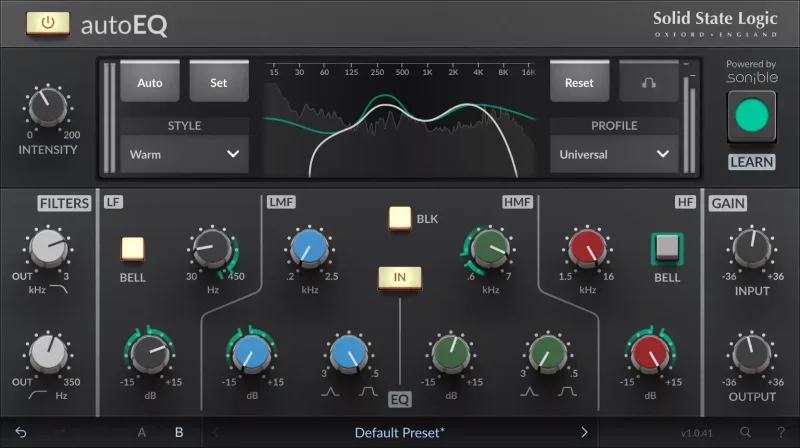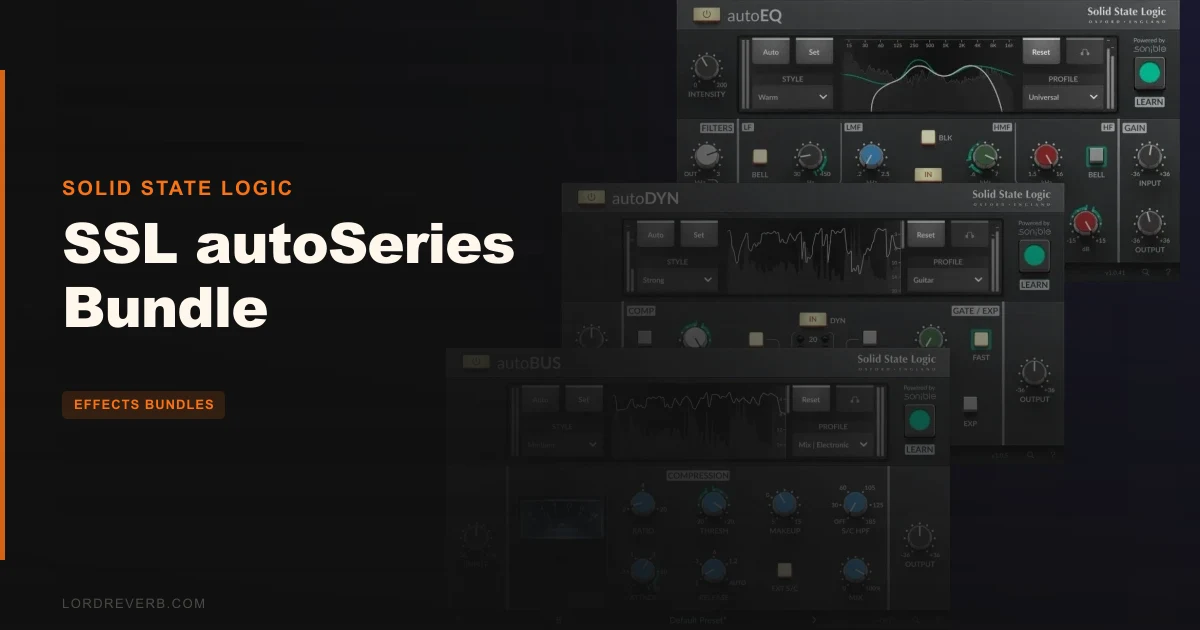
The SSL autoSeries Bundle gives you three AI-assisted plugins, autoEQ, autoDYN, and autoBUS, built on SSL 4000 E/G-Series processing and powered by Sonible’s audio analysis engine, priced at an introductory rate that steps up to $149 regular. It’s designed for producers who want a fast, intelligent starting point for mixing decisions rather than a deep-dive analog recreation. Whether it belongs in your signal chain is a different question, and that’s what we’re here to settle.
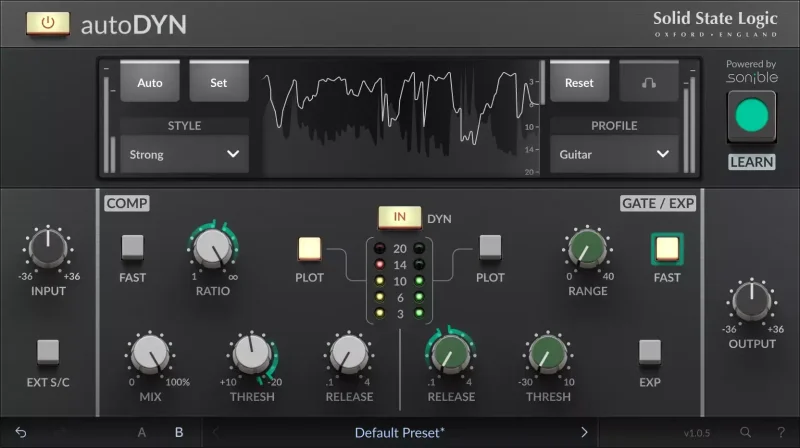
We loaded autoDYN onto a full rock drum bus one Tuesday afternoon. Four bars of audio analysed. The plugin suggested an attack of 28ms, a release of 180ms, a ratio of 4:1, and pulled about 4dB of gain reduction on the peaks. We hit play. The snare pushed forward. The kick had weight. The overhead bleed sat back just enough. We looked at each other. Then we checked the threshold, tweaked the attack down to 22ms ourselves, and the whole kit locked in tighter. That first suggestion was 80% of the way there. But that remaining 20% still needed a human decision, which is exactly the tension that defines this entire bundle.
Three Plugins, One Clear Purpose
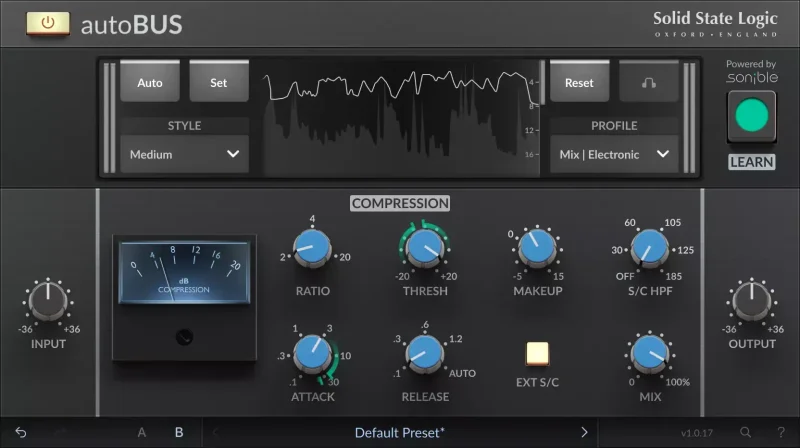
The autoSeries Bundle is three tools: autoEQ for spectral correction and tone shaping, autoDYN for dynamics control, and autoBUS for stereo mix bus processing. Each one uses Sonible’s AI analysis to suggest a starting point based on what it hears in your audio.
It’s NOT a mix engineer. It doesn’t understand your arrangement, your genre intent, or what the artist said in the session. It also isn’t the deepest SSL emulation available. If you want forensic analog modeling of SSL 4000 console character, the SSL 4K Bundle goes further in that direction.
What the autoSeries is: a faster on-ramp. The Audiotonix/Sonible partnership that made this possible, announced in 2023 and shipped into these plugins, puts official SSL licensing behind Sonible’s analysis engine. That combination didn’t exist before. That matters.
Living With All Three Every Day
Setup is painless. Authorization runs through SSL’s own license manager. All three plugins loaded inside two minutes on our M2 MacBook Pro in Pro Tools and Logic Pro without drama.
autoEQ is where the AI feels most confident. Load it on a vocal, hit analyse, and it reads the frequency content and maps a corrective curve. On a soprano vocal with a 3.2kHz presence spike and low-mid mud around 280Hz, the plugin pulled those frequencies back before we’d touched a single knob. The resulting curve looked like something we’d have dialled in manually after two minutes of sweep-and-cut work. We were done in eight seconds.
autoDYN is more variable. On transient-heavy sources, drums, acoustic guitar, bass DI, the analysis suggestions land well. On a dense poly-synth pad with slow transients, the attack and release suggestions felt random. We set attack to 80ms and release to 600ms by ear. The plugin suggested 12ms and 90ms. Both produced audible pumping on that source.
autoBUS surprised us the most. On a finished mix bus, it suggested a subtle 0.8dB high-shelf boost above 8kHz and a gentle 1.4dB cut around 400Hz with wide Q, plus 2.5dB of compression at a ratio of 2:1 with medium attack. The mix opened up. It added what felt like air without adding brittleness. We loved that moment. It’s the closest any AI plugin has come to earning the “trust it” response from us.
The frustrating part: none of these plugins tell you why they suggested what they suggested. No reading on what frequency content triggered the EQ decision. No explanation of why the compressor chose that attack time. You’re left with a starting point and no map. For a beginner, that’s a missed teaching opportunity. For a pro, it’s just mildly annoying.
CPU draw sits in the light-to-medium range. All three running simultaneously on separate tracks in a 64-track session used approximately 8-12% of our CPU, comparable to running two instances of a mid-tier EQ plugin.
The Trade-Offs Worth Knowing
The honest trade-off here isn’t about sound quality. The SSL character is real. The 4000 E/G-Series modeling gives autoDYN that recognizable forward, punchy quality, meaning faster transient recovery with controlled sustain, which translates to mix presence without losing body. The bus glue from autoBUS is legitimate.
The trade-off is transparency versus speed. You get faster decisions, but you get them with no insight into the reasoning. Experienced engineers will adjust the suggestions and trust their ears anyway. But for intermediate producers learning why certain settings work, the black-box AI approach trains dependency rather than skill.
There’s also a genre boundary. We ran the plugins across rock drums, pop vocals, acoustic guitar, jazz piano, and synth-heavy electronic material. The suggestions were helpful on the first three. They were hit-or-miss on piano and actively unhelpful on the synths. The AI clearly performs best on material close to its training data, which feels like rock and pop production.
Against the Field
The obvious comparison is the SSL 4K Bundle. That bundle is deeper, more flexible, and better understood by engineers who grew up on SSL hardware. The autoSeries wins on speed and approachability. The 4K Bundle wins on precision and depth. They’re not actually competing for the same workflow.
Sonible’s own smart:EQ 4 (check the manufacturer’s site for current pricing) uses the same underlying AI analysis technology but without the SSL voicing. It’s arguably the more transparent tool for pure correction work. If you want SSL character with the AI, the autoSeries is your only official option.
For bus processing specifically, SSL LMC+ handles limiting duties with more control and less guesswork, and it pairs with the autoSeries rather than competing with it. We’d actually run both on a mix bus, autoBUS for the glue and character, LMC+ for the ceiling.
Nothing else on the market combines official SSL 4000 licensing with AI-assisted workflow suggestions. That’s a real differentiator.
The Real Verdict
Buy the SSL autoSeries Bundle if you’re at the beginner-to-intermediate stage and you want fast, SSL-flavored starting points that’ll get you 80% of the way to a good mix decision in under ten seconds. At $149, it is fair money for three working tools.
Skip it if you’re an experienced engineer who already has SSL emulations you trust. You’ll spend more time second-guessing the AI than using it. Skip it also if most of your work is synth-heavy or ambient, the analysis engine isn’t calibrated for that territory.
The AI doesn’t mix your song. It makes your first move faster. That’s not a small thing.
Score Breakdown
| Category | Score | Notes |
|---|---|---|
| Sound Quality | 4.0/5 | SSL 4000 character is genuine; the bus glue and compression punch hold up under scrutiny |
| Value for Money | 4.0/5 | Three plugins at the introductory price is fair, and the regular price of $149 is still defensible for the bundle. |
| Ease of Use | 4.5/5 | Genuinely fast to get results; beginner-friendly without being dumbed down |
| Features | 3.0/5 | AI analysis is clever but opaque; no explanation of decisions limits depth and learning value |
| CPU Efficiency | 4.0/5 | Light-to-medium draw; all three running simultaneously won't choke most modern sessions |
| Overall | 3.5/5 | Solid starting-point tools with a real SSL pedigree, held back by black-box AI and genre limitations |
Alternatives to Consider
If you want more control over your SSL compression workflow, the SSL LMC+ pairs brilliantly with autoBUS and gives you manual limiting with the same SSL family DNA.
For a deeper SSL console emulation without the AI layer, the SSL 4K Bundle is the reference option, more flexible, better understood by engineers who want to drive the decisions themselves.
And if you’re exploring the broader SSL plugin ecosystem before committing, our SSL GateVerb review covers another side of their software range that might surprise you on drum rooms and reverb tails.
We’d suggest starting with the autoSeries if you’re building your first real mixing setup. Upgrade to the 4K Bundle later when you outgrow the AI assist.
The bundle is currently available at an introductory price. The AI is useful, the SSL sound is real, and the ceiling is exactly where beginners need it to be. For anything more advanced, you’re going to want a different tool in that slot.
Related reviews: Does the UAD Analog Tape Bundle Beat All 2026 Rivals? · Krotos Sound Design Bundle Review 2026
Frequently Asked Questions
Does the SSL autoSeries Bundle work with all DAWs?
It ships in VST3, AU, and AAX formats, which covers Logic Pro, Pro Tools, Ableton Live, Cubase, Studio One, and most major DAWs in current use. If your DAW supports one of those three formats, you're covered. Check the SSL website for the current full compatibility list before purchasing.
Is the AI in the autoSeries actually making mix decisions for me?
No, and this is the most important thing to understand before buying. The AI analyses your audio and suggests starting settings, specific EQ curves, compressor attack and release times, bus processing levels. You still decide whether to accept, adjust, or ignore those suggestions entirely. It's a faster first move, not an automated mix.
How is the autoSeries different from the SSL 4K Bundle?
The 4K Bundle models classic SSL console channels and bus processing with deeper manual control and more flexible routing options. The autoSeries adds AI-assisted analysis on top of a 4000 E/G-Series foundation but trades some manual depth for speed and approachability. They serve different stages of the mixing learning curve, and some engineers use both.
Is the introductory price still available?
The introductory pricing for the bundle and for individual plugins was confirmed with an end date of January 26, 2026. After that date, check the SSL website directly for current pricing. We never recommend buying on urgency alone, but the intro rate is a legitimate discount worth knowing about.