The most repeated claim about Mutable Instruments Rings is that it can physically model "just about any resonant material imaginable," from bells to metallic plates to sitar-like drones. That claim largely holds up. Where it doesn't is in the fine print nobody talks about: the dependency chain, the CPU hit, and the clocking headaches that come with running it inside Softube Modular. At $39, Rings is genuinely impressive sound design territory. But it's not a simple drop-in tool. You need to know what you're walking into.
This review is built for producers who already own or are seriously considering Softube Modular, who want to know whether Rings is worth adding to that ecosystem. If you're not already in that world, this probably isn't your starting point.
What Softube Promises
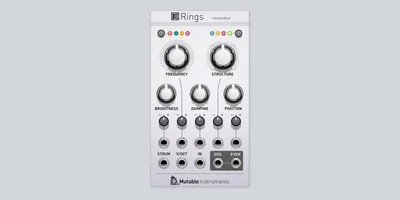
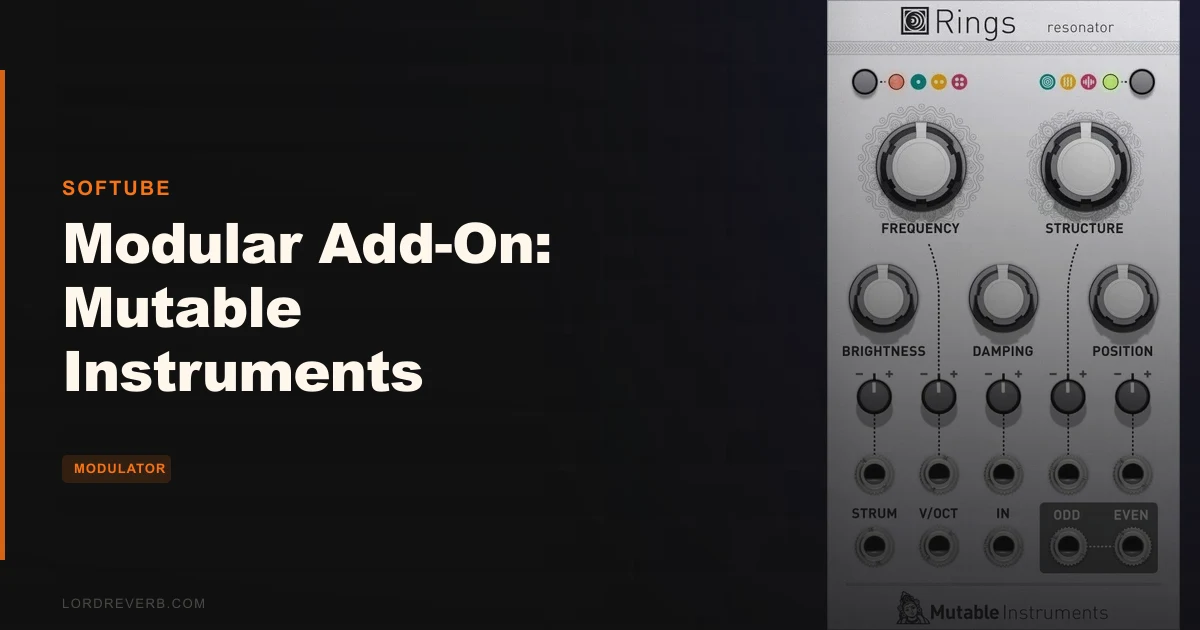
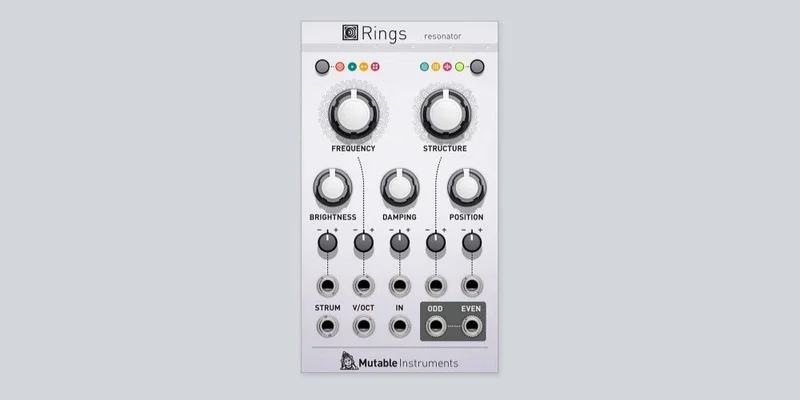
Softube calls the range of sounds Rings can create "staggering." That's a bold word. The pitch is physical modeling of resonant materials: plates, strings, membranes, tubes, sympathetic droning strings, and extended Karplus-Strong synthesis pushed into inharmonic territory. Three distinct resonator models. Up to four voices of polyphony. Excitation via internal noise bursts or external audio. Timbral control throughout.
The official pitch also leans hard on legitimacy. Rings is the only software version of the original Mutable Instruments hardware module that's officially licensed and endorsed by Mutable Instruments. That matters. There are clones and approximations in the modular software world. This isn't one of them.
So the promise is: the real thing, in software, with a sonic range that covers everything from plucked strings to whistling resonance. Let's see where that lands.
What Actually Holds Up
The Three Resonator Models
The modal resonator is the most versatile of the three. It emulates the resonant qualities of plates, strings, membranes, and tubes. You want a bowed metallic plate with long sustain? Start here. You want a punchy percussive membrane hit with tight decay? Also here. The jump between those two sounds is a matter of a few parameter moves, and the transitions aren't just clean, they're musically useful along the way.
Pitch a bell tone down four octaves and you'll hit something that sounds closer to a bass resonator than a melodic instrument. Push it up and the top end turns glassy in a way that sits beautifully above a pad.
The sympathetic strings model is the one that gets owners excited. It produces droning, overtone-rich sounds in the vein of a sitar or a tanpura, and those overtones follow the input signal in ways that feel almost alive. If you're building a generative ambient patch, this model produces exactly the kind of unpredictable-but-musical response that makes patch-building satisfying. Owners who've worked with the hardware version report the software translates this behaviour faithfully.
The modulated/inharmonic string model is the most unusual. It extends Karplus-Strong synthesis with delay and high feedback, which means you can push it into clanging, metallic, almost broken-sounding territory. It's not the most playable model. But for textural sound design, it's the one that goes somewhere unexpected.
Polyphony and Excitation
Each trigger spawns a new virtual string, up to four total. So you can strum a four-note chord and each voice has its own physical model responding in real time. That's a lot of resonance happening simultaneously, which is part of why the CPU load is real. But the results when you dial it right are genuinely hard to replicate with conventional synthesis.
The dual excitation modes give you creative flexibility. Use the internal noise burst and Rings behaves like a self-contained instrument. Feed it external audio and it becomes a resonant processor. Run a drum bus through it and the resonators pick up the transients and ring out sympathetically. Run a voice through it and things get interesting fast.
Integration with Other Mutable Instruments Modules
Owners consistently report that Rings paired with Mutable Instruments Marbles is a complete generative system. Marbles provides randomised triggers and pitch CVs; Rings responds with plucked, panned, physically modeled results that feel organic rather than programmatic. Owners transitioning from VCV Rack to Softube Modular describe this combination as immediately inspiring.
It also integrates cleanly with Plaits and Beads, which are also available in Softube Modular. Plaits as an oscillator feeding Rings as a resonator, with Beads adding granular texture on the output: that's a serious ambient sound design chain, and it works exactly as you'd hope. Owners describe this kind of setup as going "off in a completely different direction and yet somehow feeling right at home."
That's the brilliant part of Rings. It rewards patching.
What Doesn't Hold Up
The Dependency Problem
You cannot run Rings without Softube Modular. Full stop. It's not a standalone plugin. It's not a VST you drop on a channel. Softube Modular is a separate purchase, and Rings only functions as a module inside it. If you're evaluating Rings at $39 without factoring in the cost of the host, you're not doing the real maths.
This is the piece of the sales pitch that gets quietly underplayed. The promise of a versatile physical modeling resonator sounds like a simple plug-and-play proposition. It's not. You're buying into an ecosystem with its own cost structure.
The Account Problem
You need a Softube account. You also need an iLok account. Both are required. Both need internet access for installer downloads and license management. For producers who've moved away from iLok-based workflows, this is genuinely annoying. It's not a dealbreaker for everyone. But it is a friction point that the marketing doesn't highlight.
CPU and Clocking
This is where the "staggering range of sounds" claim starts to cost you something. Running four-voice polyphony through a physically modeled resonator isn't light work. Owners report significant CPU usage, and some report timing errors in clocking when using Softube Modular. That second issue is frustrating in a way that goes beyond inconvenience. If your clock is drifting or misfiring, your generative patch falls apart, and generative patching is exactly what Rings is best at.
Whether this is Rings specifically or a broader Softube Modular issue is hard to pin down. Either way, it's something you need to stress-test before committing to a live or studio-critical build.
AAX DSP is also not in active development. TDM and RTAS are dead ends. If your setup depends on DSP-accelerated processing, Rings doesn't go there.
Who This Is Actually For
The Ambient and Generative Producer
You're building patches that run themselves. You want a resonator that responds to randomised CVs with musical, physically plausible results. You probably already own Marbles or Plaits in Softube Modular, or you're planning to. Rings was built for this workflow. The sympathetic strings model in particular produces the kind of unpredictable drone behaviour that makes generative patches feel alive rather than mechanical.
Buy it. At $39, it's one of the more affordable entry points into real physical modeling in a modular software context, provided you already own the host.
The Sound Designer Hunting New Textures
You want sounds that conventional synthesis doesn't give you. Metallic resonance. Inharmonic decay. Plate-like sustain that responds to transients. The modal resonator covers all of this. The inharmonic string model goes somewhere weirder. If you're scoring films, building foley-adjacent textures, or designing instruments for a sample library, Rings gives you a set of tools that are genuinely hard to replicate elsewhere in software.
Buy it. But be realistic about the CPU budget you're allocating.
The Working Producer Who Wants Interesting Plucks
You hear those panned pluck sounds that owners describe and you want them on your next track. You're not building generative systems. You want a pluck sound, you want to bounce it, and you want to move on. Rings can give you that. But the dependency on Softube Modular, the account setup, and the CPU cost make this a slow way to get a pluck sound. There are more direct routes.
Wait. Check whether you're already planning to use Softube Modular for other things. If yes, Rings adds real value. If you're buying Modular just for Rings, the total spend doesn't justify a single sound source.
The Beginner Looking for Their First Physical Modeling Plugin
This is not your starting point. The modular patching environment has a real learning curve. The dependency chain adds friction before you even make your first sound. And the CPU issues mean you could spend an afternoon troubleshooting rather than creating. There are physical modeling instruments with dedicated interfaces that will have you making music in an hour.
Skip it for now. Come back when you know what you want from modular synthesis.
The Verdict
Rings is the real thing. Officially licensed, sonically deep, and genuinely effective for generative and textural work. The claim that it models "just about any resonant material imaginable" is ambitious but not far off: the three resonator models cover serious ground, and the integration with other Mutable Instruments modules in Softube Modular is a legitimate creative system.
But it's not a self-contained tool. The Softube Modular dependency, the dual-account activation, and the CPU and clocking reports are real costs. At $39 it's a fair deal for what it is. Know what it is before you buy.
Specs & Technical Details
| Developer | Softube |
| Price | $39 |
| Plugin Format | VST / VST3 / AU / AAX (runs inside Softube Modular) |
| OS Support | macOS Big Sur 11, Monterey 12, Ventura 13 / Windows 10 (64-bit), Windows 11 |
| Activation | Softube account + iLok account required |
| CPU Usage | Heavy (owners report significant load and clocking timing errors) |
| Trial Available | N/A |
| Version Reviewed | N/A |
Score Breakdown
| Category | Score | Notes |
|---|---|---|
| Sound Quality | 4.8/5 | Three resonator models cover a genuinely wide sonic range; the sympathetic strings model is outstanding |
| Value for Money | 3.5/5 | Fair price for the module itself, but the Softube Modular dependency changes the real cost calculation |
| Ease of Use | 3.0/5 | Modular patching environment and dual-account setup adds friction; not beginner-friendly |
| Features | 4.5/5 | Four-voice polyphony, dual excitation modes, and three physically modeled resonator types is a strong set |
| CPU Efficiency | 2.5/5 | Owners report heavy CPU usage and timing errors in clocking; not suitable for resource-constrained sessions |
| Overall | 4.2/5 | Brilliant sound design tool for the right workflow, with real activation and CPU costs to factor in |
Alternatives to Consider
If the Softube Modular dependency puts you off, PSP Studio Modular Collection is worth looking at as a different modular software approach, with its own ecosystem of modules and a different activation model.
Mutable Instruments Elements is the closest sonic sibling to Rings. Where Rings focuses on the resonator stage, Elements models the full vibrating structure: excitation, body, and a built-in reverb. If you want more control over how a sound starts before it resonates, Elements goes deeper into that excitation stage. It's also available inside Softube Modular, so the dependency situation is the same.
Mutable Instruments Clouds is a different animal but lives in the same creative space. Where Rings is about resonance and sustain, Clouds is a granular texture engine that works beautifully on the output of a Rings patch. If you're building ambient systems rather than looking for a standalone instrument, consider whether Clouds might be a more useful first Mutable Instruments module for your specific workflow.
For producers who want physical modeling without any modular infrastructure at all, dedicated instruments like Applied Acoustics Systems Chromaphone or Modal Audio's software instruments offer physically modeled resonators with a conventional plugin interface. They won't patch with Marbles. But they'll work in twenty seconds with no iLok required.
Rings is underrated by producers who haven't spent time in modular software, and overrated by the kind of person who buys modules faster than they learn them. If you're somewhere in the middle, it's probably worth it. Set your buffer size conservatively, manage your CPU expectations, and don't build a live set around it until you've stress-tested the clocking.
Related reviews: EFEKTOR Vibracula · MMorph Review
Frequently Asked Questions
Do I need Softube Modular to run Mutable Instruments Rings?
Yes. Rings is a modular add-on and cannot run as a standalone plugin. It requires Softube Modular as a host environment. If you don't already own Softube Modular, you'll need to factor that cost into your total before buying Rings at $39.
Is this the same as the Mutable Instruments Rings hardware module?
It's the only officially licensed and endorsed software version of the original Mutable Instruments Rings hardware module. Other software implementations exist in the modular software world, but this one has the blessing of Mutable Instruments directly.
What kind of sounds can Rings produce?
Rings covers three physically modeled resonator types: modal resonance (plates, strings, membranes, tubes), sympathetic strings (sitar-like droning and overtones), and a modulated inharmonic string model that extends Karplus-Strong synthesis into clanging, metallic territory. You can excite these resonators with internal noise bursts or by feeding external audio through them. The practical range runs from clean bell tones and plucked strings to dense metallic textures and resonant drones.