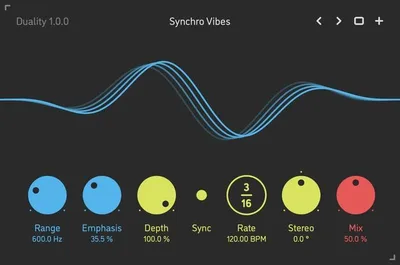
Sinevibes Duality is a hybrid vibrato plugin that runs two independent modulation engines simultaneously, letting you shape the pitch movement and the spectral character of that movement separately. We pulled it into a session with a stacked synth pad that had been fighting us for two days, and inside ten minutes we understood why it exists.
The pad was sitting wrong. Too static without modulation, too seasick with a standard vibrato. We dialed Duality’s two engines to different rates, set the spectral shaper to pull energy from the upper mids during the pitch cycle’s peak, and the pad suddenly had motion without nausea. That’s not something a single-LFO vibrato does. That’s the whole point of this plugin.
It’s built for producers who’ve already outgrown Chorus and decided phaser isn’t the answer either. If you’re still figuring out basic modulation routing, this isn’t your first stop.
What Duality Actually Does (and What It Won't)
Duality isn’t a chorus. It’s not a phaser. Sinevibes is clear about this, and so are we.
It’s a vibrato processor with two modulation engines that work on different parts of the signal independently. One handles pitch deviation. The other shapes the spectral character of the sound through the modulation cycle. They run together, and you control how they interact.
What it won’t do: it won’t give you the shimmer of a chorus doubling effect. It won’t add voices. If you want width from multiple detuned copies of your signal, look elsewhere. best chorus plugins for producers
It also won’t hold your hand. The UI is minimal, the preset count is thin, and you need to know why you’re reaching for it before you load it.
For synths, guitars, and vocal processing where you want movement without the signal losing coherence, it works brilliantly. For “make this sound interesting fast,” it’s frustrating.
Living With Duality Through Real Sessions
We ran Duality across three different contexts over several weeks.
First: a clean electric guitar DI, feeding into the plugin with both engines set to slow rates below 1Hz. The pitch engine at a narrow depth, the spectral shaper nudging brightness up during the vibrato’s trough. The guitar felt like it was breathing. Not wobbling. Breathing. We kept that patch.
Second: a mono analog-style bass synth. We pushed the pitch engine harder here, around 4Hz with moderate depth. The spectral shaper followed, pulling back low-mid weight at the modulation peak. That’s a trick that kept the bass from going muddy on fast passages. Satisfying in a way that standard vibrato just doesn’t get close to.
Third: vocals. Specifically a chopped vocal sample running through Duality as a send effect. This is where we hit the first real wall. At extreme settings the phase behavior gets complex fast. Nothing broken, nothing clicking, but the interaction between engines at short delay times needed careful gain staging or we’d get a subtle, annoying buildup in the low-mids.
The zero-latency design held clean in all three contexts. We ran four instances during the vocal session on a mid-range M2 MacBook Pro and the CPU didn’t flinch. That matters when you’re stacking modulation across a mix.
Setup is fast. AU and VST3 load cleanly in Logic, Ableton, and Bitwig. No authorization headaches. No iLok. We’d have liked an AAX build for the Pro Tools users on our team, but that’s a known gap right now.
The Trade-Offs Worth Talking About
The dual-engine architecture is the whole argument for Duality. But it’s also the thing that will frustrate producers who want a quick result.
You get real control over two separate processing paths. That’s genuinely more powerful than anything a single-LFO vibrato gives you. The trade-off is that dialing it in takes longer. Every parameter change affects the interaction between engines, not just a single knob’s output.
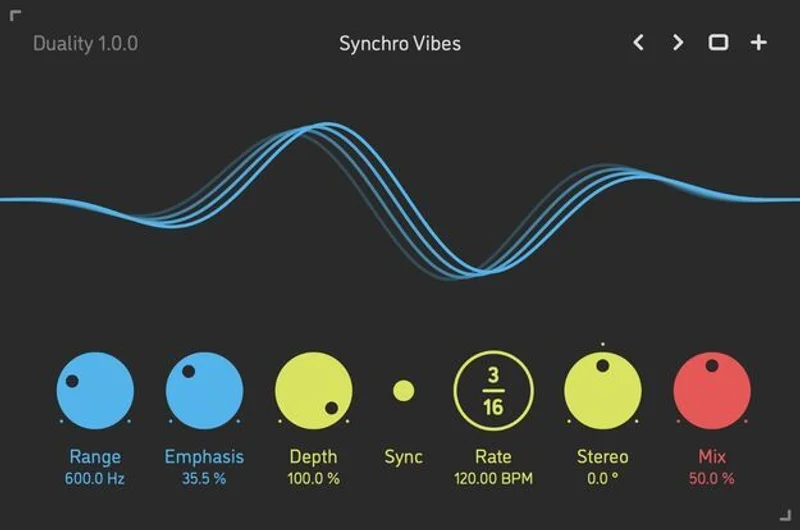
The UI gives you numeric feedback on rate and depth values. What it doesn’t give you is any visual representation of the spectral shaping curve. You’re listening, not watching. For some producers that’s fine, or even preferred. For anyone used to seeing a frequency display confirm what their ears are hearing, it feels like working blind.
The light CPU load is a genuine strength. CPU-efficient modulation plugins roundup We saw no performance impact stacking four instances in a session. Compare that to some modulation plugins that spike when you automate a single parameter.
The thin preset library is a real con. Two or three dozen well-designed starting points would make this a much easier daily-driver recommendation.
Against the Field
The honest comparisons here sit with a few specific tools.
Eventide’s MicroPitch handles pitch modulation with more width-focused DSP and has a deeper preset library. It wins when you want thickness and stereo movement. Duality wins when you want the pitch movement to stay focused and the spectral character to move separately.
Zynaptiq’s PITCHMAP does spectral pitch work at a much higher price and much higher CPU cost. Different category entirely, but producers sometimes reach for it when Duality would actually do the job in a lighter, more musical way.
For basic vibrato, any stock DAW modulation plugin beats Duality on speed. Duality isn’t competing there.
The closest true competitor is probably Sinevibes’ own lineup. We’ve looked at how their modulation tools fit into the Korg Multi-Engine ecosystem. Sinevibes Integer vs the Korg Multi-Engine Field: 2026 Duality fits a different slot: it’s a studio tool, not a hardware target.
The Real Verdict
Buy Duality if you’re already comfortable with modulation and you want a vibrato processor that doesn’t bleed your signal’s spectral identity into mush during the cycle. It earns its place in a modulation toolkit for sound designers, synth producers, and anyone mixing sources that need movement without wobble.
Skip it if you’re new to vibrato as a tool, if you need Pro Tools compatibility, or if you want a preset browser to do the heavy lifting. It rewards the curious and punishes the impatient.
At the price point Sinevibes is asking, the risk is low. The ceiling is higher than most vibrato plugins can reach.
Score Breakdown
| Category | Score | Notes |
|---|---|---|
| Sound Quality | 4.3/5 | Dual-engine motion is clean, musical, and genuinely different from single-LFO competitors |
| Value for Money | 4.5/5 | Price point makes the risk negligible for what you get architecturally |
| Ease of Use | 3.3/5 | Minimal UI and thin preset library slow down the learning curve |
| Features | 3.8/5 | Independent spectral shaping is rare; no AAX and no visual frequency display hold it back |
| CPU Efficiency | 4.8/5 | Stacked four instances on a session without a single CPU spike |
| Overall | 4.1/5 | Earns its place for producers who know what vibrato is for and want it done properly |
Alternatives to Consider
If Duality isn’t your fit, here’s where we’d go instead.
Eventide MicroPitch is the call if you want pitch modulation with stereo width built in and a deeper library of starting points. More CPU, more color, more immediately usable. Eventide MicroPitch review
Your DAW’s stock vibrato or modulation unit is the honest answer if you’re new to the tool. Logic’s Modulator, Ableton’s LFO Tool, or any basic pitch-mod device will teach you what vibrato does before you reach for something with two independent engines.
Sinevibes’ broader suite is worth exploring if Duality clicks for you. Their approach to digital modulation is consistent across tools, and suite pricing bundles value fast. Sinevibes plugin suite overview
We came into Duality skeptical of the “hybrid vibrato” framing, because that phrase gets applied to plugins that are just chorus with a different name. Duality is not that. The spectral independence is real, it works, and we’ll keep it in the template session.
That pad that had been fighting us for two days? It’s on the record now.
Frequently Asked Questions
Is Sinevibes Duality a chorus plugin?
No. Duality is a vibrato processor, not a chorus. It doesn't duplicate the signal or add voices to create width. It modulates pitch and spectral character through two independent engines on the same signal. If you want chorus thickening, you need a different tool.
Does Duality work in Pro Tools?
At the time of this review, we couldn't confirm an AAX build for Duality. It runs cleanly in AU and VST3 formats, covering Logic, Ableton, Bitwig, Studio One, and most non-Avid DAWs. Pro Tools users should check Sinevibes' site directly for any format updates before buying.
How CPU-heavy is Duality?
Light. We ran four instances simultaneously on an M2 MacBook Pro mid-session without a measurable CPU spike. It's one of the more efficient modulation plugins we've tested in this category, which makes it genuinely stackable across a mix without worrying about your buffer.
What's the difference between Duality's two engines?
One engine handles pitch deviation, controlling the rate and depth of the vibrato cycle itself. The second engine shapes the spectral character of the signal as it moves through that cycle, independently of the pitch movement. That separation is what makes Duality different from a standard LFO-to-pitch setup, where both behaviors are locked to the same modulation source.