If you own exactly 4 Rob Papen products and you're wondering whether this upgrade makes sense, the honest answer is: it depends entirely on how deep you want to go with the Rob Papen ecosystem, because the value is real but the ownership complaints are also real. At $99, you're gaining access to 37 plugins plus an optional 11 legacy products, which on paper is a serious deal. But owners have been vocal that the upgrade feels limited in scope compared to what they expected, and the boot drive installation issue has caused genuine frustration with no satisfying resolution from the developer.
Quick Verdict
Score: 3.5/5. At $99, the eXplorer 11 Upgrade from 4 Rob Papen Products is a reasonable consolidation move for committed Rob Papen users, not a compelling upgrade on its own merits. The plugin count is high, FilterField and RAW-Kick 2 are worth having, and Prisma is clever. But the complaints around installation, VST2 requirements, and limited improvements over previous versions are hard to ignore. If you're already in the ecosystem and want everything under one license, it works. If you were hoping for a step-change in quality or workflow, you'll be disappointed.
What You Are Upgrading To
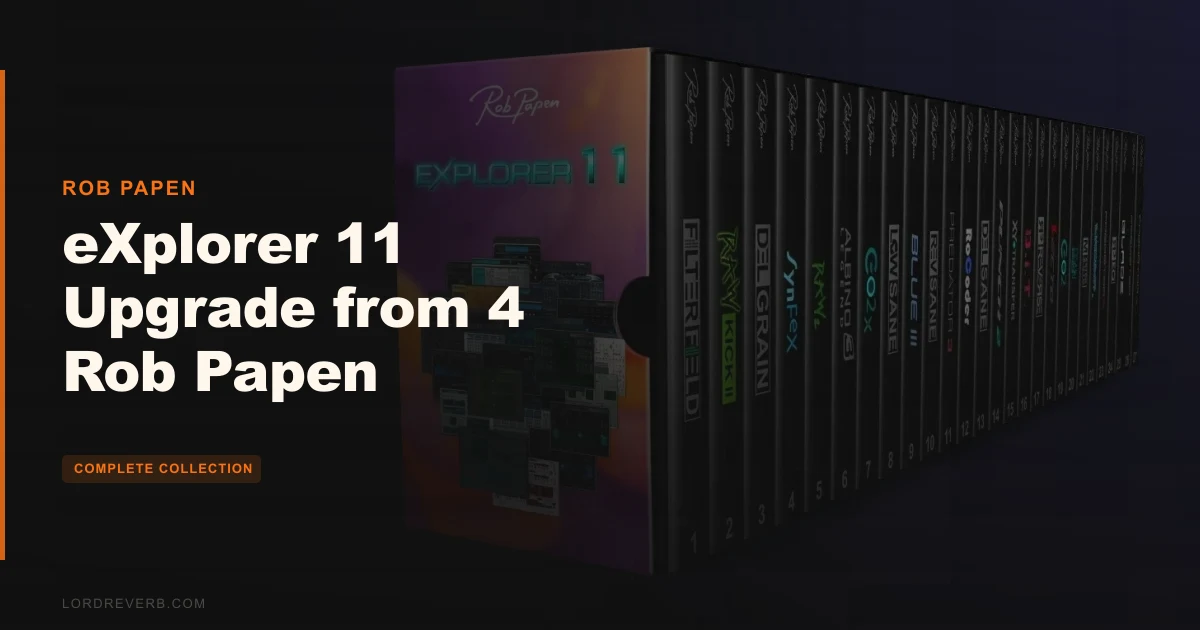
The eXplorer 11 Upgrade takes you from owning 4 individual Rob Papen products to holding the full eXplorer 11 bundle: 37 plugins across synthesis, effects, and processing, with the option to add 11 legacy products on top of that.
Those legacy products include the original SubBoomBass, the original Blade, and the original RP-Distort. They're not the current versions. If you're chasing the new stuff, the main 37-plugin library is where your attention should go.
The bundle requires 5.3 GB of storage. That's not outrageous for 37 plugins, but you need to know the library installs to your boot drive. There's no option to redirect it, and that's already caused friction with owners who have smaller system drives.
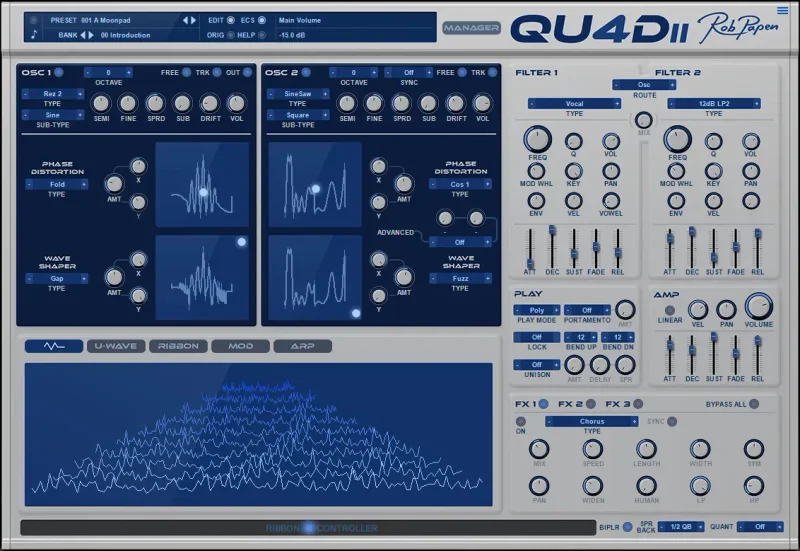
What's new in version 11 worth flagging: QUAD-2 arrives as a VST3/AU/AAX plugin with Phase Distortion, WaveShaper, two XY-Pads per oscillator, and the Albino-3 Legend Cream Filter. RAW-Kick 2 brings a redesigned workflow with a new MAIN page, tabbed GUI, and Granular mode. FilterField enters the collection as a full filter effects processor. Prisma adds the ability to layer up to 4 Rob Papen instruments simultaneously. And RoCoder shows up with a 32-band vocoder and five distinct operating modes.
That's a meaningful list of new tools. Whether they justify the upgrade from your 4 existing products depends on what those 4 products are, and what you're missing.
Who Qualifies
You need to own exactly 4 Rob Papen products to qualify for this upgrade path. Not 3. Not 2. Four.
If you're below that threshold, this upgrade isn't available to you regardless of the price or the plugin count. Rob Papen runs tiered upgrade pricing based on how many of their products you already own, so the eXplorer 11 Upgrade from 4 Rob Papen Products is a specific entry point in that ladder.
The plugin format is VST3, AU, and AAX, covering Mac and Windows. Linux users are out of luck natively, and owners who've tried running it through WINE or Yabridge have reported graphics issues. If your production setup is Linux-based, this bundle won't work cleanly for you, and Rob Papen hasn't indicated that's changing.
Check your current license count before you buy. The eligibility requirement is strict.
The Value Case
At $99, you're spreading that cost across 37 plugins. The math looks good in isolation. The question is whether these are 37 plugins you'll actually use, or 37 plugins you'll scroll past to reach the 4 you care about.
The honest answer from the owner community is mixed. Some find FilterField alone worth the investment. RAW-Kick 2 gets praise for the redesigned workflow and the MAIN page overhaul. Prisma's ability to layer up to 4 Rob Papen instruments simultaneously is a legitimate sound design tool that doesn't have a direct equivalent inside the bundle otherwise.
But a portion of owners describe the upgrade as offering limited scope of improvements over what they already had. If your 4 existing Rob Papen products cover your synthesis and processing needs, the marginal value of adding 33 more plugins you weren't reaching for is debatable.
The legacy add-on option (11 more products including the original SubBoomBass and Blade) is a nice gesture for collectors and for anyone who wants the historical versions for specific sounds. It's not a dealbreaker either way.
Where the value case weakens is the boot drive installation issue. Owners report the library forces itself onto the boot drive with no flexibility, and the developer's response to this complaint left people feeling dismissed. If you're managing a tight SSD with a separate sample library drive, that's a real workflow problem, not a minor inconvenience.
Prisma: Layering Up to 4 Instruments
Prisma is the plugin in this bundle that makes the ecosystem angle worth considering. It loads Rob Papen instruments directly and lets you combine up to 4 of them in a single instance.
Think about what that means in practice. You're writing a lead and you want the body of Predator-3 with the string texture of BLUE-III underneath. Rather than running two separate plugin instances on separate tracks and busing them together, Prisma handles that internally. You layer them, blend levels, and treat the result as one instrument.
That's a workflow shift. It won't replace dedicated layering in a full DAW setup, but for quick sound design and for keeping your session tidy, it's genuinely useful. The fact that it only loads Rob Papen instruments is an obvious limit: you can't pull in a Kontakt library or a third-party synth. But if you're upgrading to 37 Rob Papen plugins, that limit matters less.
What Prisma doesn't do is explained clearly: it's not a performance tool for live use with heavy modulation between instruments. It's a preset-building and sound design environment. Set your layers, dial in the balance, save the result.
RAW-Kick 2: What's Actually New
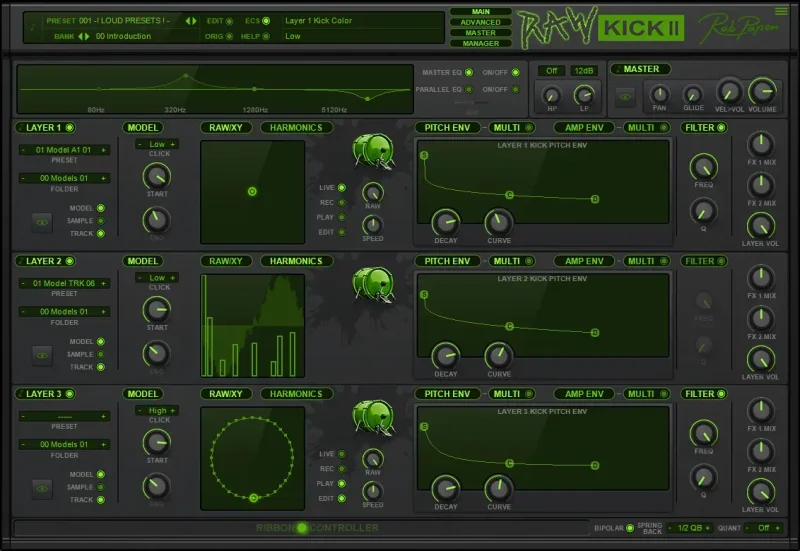
Owners who came from RAW-Kick version 1 have been consistent in praising the workflow changes in version 2. The redesigned MAIN page gets specific mention. It streamlines blending and parameter tweaking in a way that version 1's layout didn't.
RAW-Kick 2 builds kicks from 3 layers. Each layer can use a dedicated kick synthesizer model or a sample-based approach. The sample-based model includes a Granular mode with its own modulation options, which is where things get interesting for sound design rather than just preset-browsing.
If you're making EDM, Hip Hop, R&B, House, or DnB, the developer has built this specifically for those genres. The Ribbon Controller with tempo-based spring back is a live performance and automation tool that lets you shape the kick's behaviour in real time against the grid.
The tabbed GUI gets credit from owners for making the multi-layer approach navigable. Version 1 apparently made switching between layers clumsier. Version 2 fixes that.
FilterField: The Standout Effect
FilterField is the plugin in this bundle that owners mention most positively as a standalone reason to upgrade. And looking at what it does, that's not surprising.
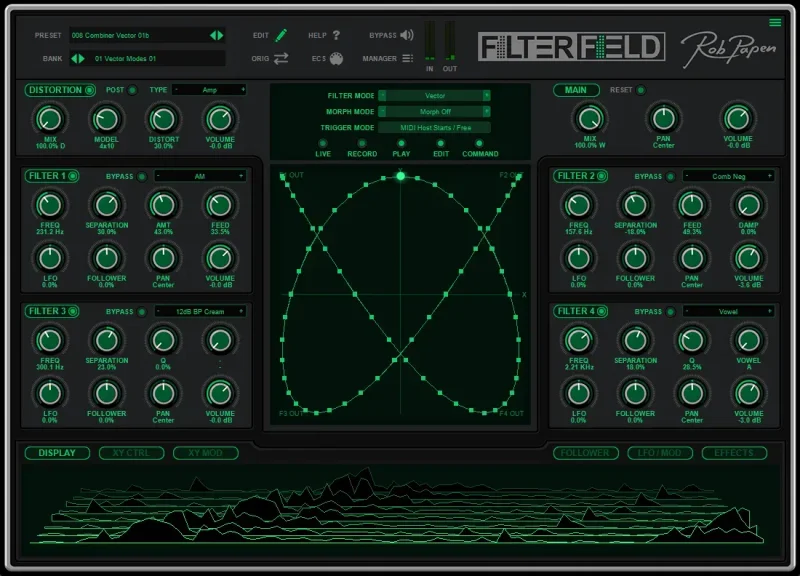
It runs 4 filter modules simultaneously, in parallel or serial configurations. Each module draws from a pool of 32 analog modeled filters, comb filters, vowel filters, and EQ filters. That's not a filter with a few character modes. That's a full filter effects processor that covers territory from surgical EQ shaping to formant-driven movement.
Layer 21 distortion types on top of those filters, with the choice to place distortion pre or post each filter. Run it in parallel with one filter doing vowel movement and another doing comb filtering. The combinations are deep enough that you won't exhaust them quickly.
The XY field is the performance and automation centrepiece. You record XY movements and play them back in tempo-synced patterns. This isn't just an XY pad for real-time tweaking: it's a programmable modulation source tied to the filter parameters. Set it to sweep between a low-pass and a comb filter position over 4 bars and automate a filter build that moves without you touching it.
The Audio Follower adds sidechain responsiveness: the filters respond to input signal level, which opens up ducking, pumping, and envelope-following effects. The LFO section gives you 4 filter-dedicated LFOs plus 2 free LFOs across various waveforms.
The Tape-Delay Stereo Delay at the end of the chain with its Equal Feedback feature rounds out FilterField as a full effects processor, not just a filter bank. For sound designers and mixers who work with heavy processing, this is the most complete tool in the eXplorer 11 bundle.
QUAD-2: Synthesis With Teeth
QUAD-2 is a VST3/AU/AAX synthesizer with 4 oscillators, each carrying Phase Distortion and WaveShaper sections plus two XY-Pads. That oscillator architecture is not standard for a poly synth in this price range.
Phase Distortion per oscillator means you can warp the waveshape independently before the signal hits the filter. The WaveShaper adds further harmonic shaping. Stack those two stages across 4 oscillators and you have a synthesizer that can get aggressively complex at the oscillator level before you've touched the filter or the effects chain.
The filter section includes the Albino-3 Legend Cream Filter, which carries specific character from Rob Papen's earlier synthesizer work. If you know Albino, you know the filter. If you don't, it's a smooth-sounding resonant filter that handles high resonance without getting shrill.
The Arpeggiator includes Ratcheting and a Free row. Ratcheting on a step sequencer or arpeggiator means individual steps can subdivide into faster repeated notes, which is a rhythmic tool that EDM and IDM producers will recognize immediately. The Free row breaks from strict arp logic to let you program additional steps outside the main pattern.
The effects chain is comprehensive: Stereo Tape Delay, reverb, 11 modulation effects, 33 distortion effects, an equalizer, and an effects filter. That's a full signal chain within the plugin. You can bounce a finished sound from QUAD-2 without touching a single mixer channel strip.
RoCoder: Five Modes and a Built-In Synth
A 32-band vocoder is already a serious tool. Most vocoders run 16 bands at the high end of the affordable range. RoCoder at 32 bands gives you finer frequency resolution across the vocoded signal, which means more intelligible formant reproduction when you're running vocals or speech as the modulator.
RoCoder's multiple modes are where it earns its place in the bundle. Standard Vocoder mode is what you expect. Additive mode processes the signal through additive synthesis instead of classic vocoder filtering. Vocoder + Additive combines both. Noise mode replaces the carrier with filtered noise. Tuned Noise and Tuned Comb modes add pitched noise and comb-filtered textures.
That's not five presets. Those are five fundamentally different signal-processing approaches operating under the same interface. If you're building robotic vocal effects, atmospheric textures, or industrial processing for sound design, RoCoder covers all of it without routing a separate carrier synthesizer.
Stereo panning per band is the detail that separates RoCoder from cheaper vocoders. Pan the lower formant bands left and the upper bands right and the vocoder output spreads across the stereo field in a way that feels spatial rather than just wide. Combine that with the built-in Chorus, Flanger, Phaser, Stereo Delay, and Reverb effects and you're not reaching for external processing.
The built-in carrier synthesizer means you don't need a separate synth routed to the sidechain input. Load a preset, sing into the modulator input, and RoCoder handles the rest. That's the right workflow for studio use.
PowerChord and UniMagic: Genre-Specific Tools
PowerChord is a guitar synthesis plugin with 53 guitar models, a groove sequencer, and the ability to play manual strokes, long strokes, and ghost strokes. The developer says it creates unique sounds even guitar players may envy. That's a bold pitch.
What it actually does is give producers who don't play guitar a way to build convincing guitar groove patterns without recording a live player. The groove sequencer handles rhythm and articulation. The 53 models cover acoustic, electric, and processed guitar characters. If your production needs a guitar part and you're working ITB, PowerChord is a faster path than hiring a session player or programming MIDI in a sampler.
It won't replace a great recorded guitar performance. But it fills the gap for demos, loop-based productions, and genres where the guitar is a textural element rather than the focus.
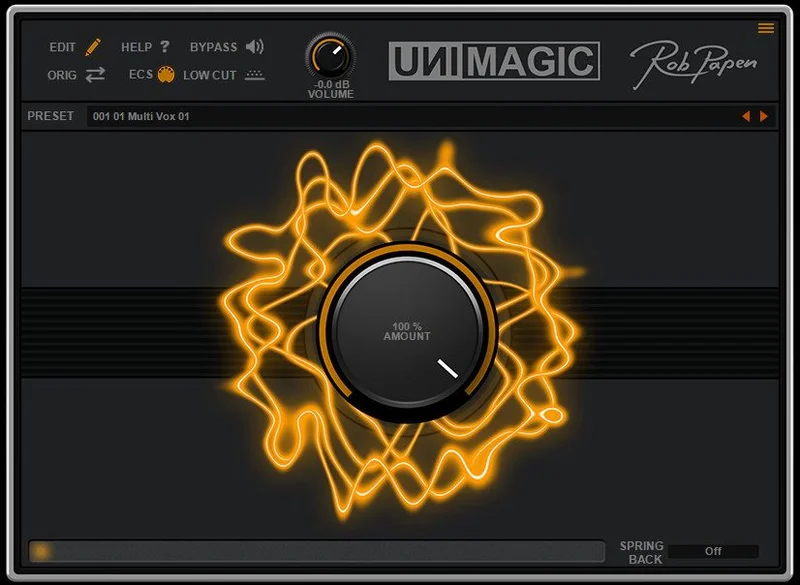
UniMagic is a unison-style thickening effect. 50 presets, MIDI control, a Ribbon controller with tempo-based slide-back, and animated response to audio. The developer says it's for thickening vocals or instruments. The 100%, 125%, 150%, and 200% GUI sizes are a practical touch for high-resolution screens where smaller interfaces become unworkable.
Neither PowerChord nor UniMagic is a reason to buy this upgrade on its own. But they're useful additions that fill specific production gaps without requiring a separate plugin purchase.
BLUE-III: 5,000 Presets and Karplus-Strong
BLUE-III ships with over 5,000 presets. That's enough presets to get lost in for weeks, which is either a feature or a warning depending on how you work.
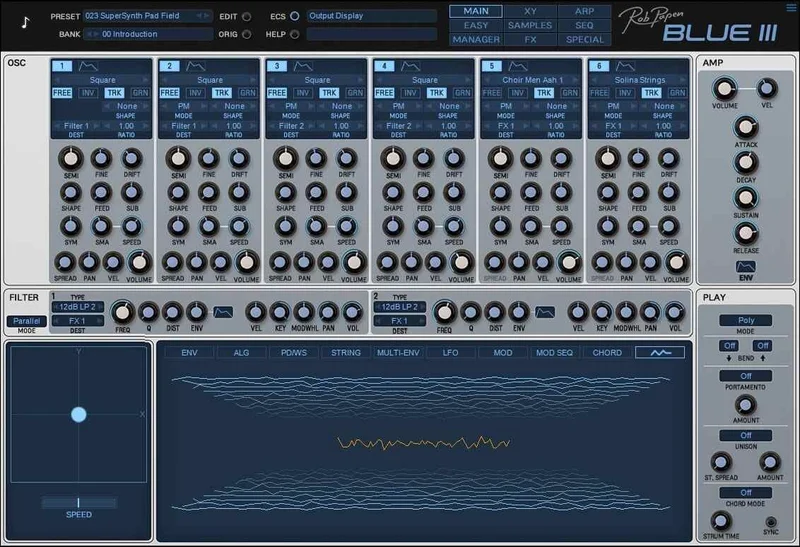
The synthesis architecture includes Karplus-Strong String Model Synthesis, which is a physical modeling approach for plucked string textures. You can load up to 6 samples inside each preset, which makes BLUE-III a hybrid instrument: physical modeling plus sample playback in a single instance.
The XY pad moves to the front panel in this version, which matters for live use and real-time automation. Previously buried in a subpage, it's now immediately accessible when you open the instrument.
5,000-plus presets sounds like an overwhelming number, and it is. The practical approach is to treat the preset library as a starting point for sound design rather than a browsing exercise. Load something close to what you need, adjust the XY pad position, modify the sample slots, and work from there.
Predator-3: The Workhorse Synth
Predator-3 is Rob Papen's flagship soft synth and one of the most preset-rich instruments in the bundle at over 6,500 presets across various music styles.
The 100%, 133%, and 200% GUI sizes are a practical consideration. At 100% on a large monitor, the interface can feel small. At 200%, it's comfortable for detailed editing without squinting at tiny knobs. That flexibility matters across different monitor setups and working environments.
If you're working in a genre-agnostic environment and need a synthesizer that covers everything from leads to pads to basses to sound effects, Predator-3's preset library is wide enough to serve as your primary instrument across a full project. The 6,500 presets aren't identical patches with minor variations: they span enough musical territory to be genuinely useful across styles.
Who Should Skip It
If you're frustrated by boot drive installation requirements and can't absorb a 5.3 GB install on your system drive, skip this. The developer hasn't provided a workaround, and owner complaints about this have not been met with a satisfying response. That's a real problem with real workflow consequences.
Linux users should skip this outright. No native Linux support exists. WINE and Yabridge users have reported graphics issues. If your DAW runs on Linux, this bundle won't work reliably.
If you're hoping this upgrade represents a dramatic step forward in sound quality or synthesis architecture over what Rob Papen has shipped before, the owner community's consistent feedback is that it doesn't. The improvements are real but incremental. If you wanted a leap, this isn't it.
And if you use VST2-only hosts, check compatibility carefully. QUAD-2 is specified as VST3/AU/AAX. Know your host's format requirements before you commit.
Finally, if you don't own 4 Rob Papen products, this upgrade simply isn't for you. Full stop.
The Verdict
The eXplorer 11 Upgrade from 4 Rob Papen Products is a solid consolidation play for producers already committed to the Rob Papen ecosystem. At $99, you're getting FilterField (genuinely strong), RAW-Kick 2 (improved and functional), QUAD-2 (deep synthesis), and RoCoder (a serious vocoder), plus 33 more plugins and optional legacy content.
What it isn't is a reason to suddenly love Rob Papen if you were on the fence. The installation friction is real. The improvement scope over previous versions is narrower than some owners hoped. And the eligibility requirement means this review is relevant to a specific subset of producers, not a general audience.
If you're in that subset, it's worth the ask. If you're not already deep in the ecosystem, start somewhere else.
Specs & Technical Details
| Developer | Rob Papen |
| Price | $99 |
| Plugin Format | VST3 / AU / AAX |
| OS Support | Mac / Windows |
| Activation | N/A |
| CPU Usage | N/A |
| Trial Available | N/A |
| Version Reviewed | eXplorer 11 |
Score Breakdown
| Category | Score | Notes |
|---|---|---|
| Sound Quality | 4.0/5 | FilterField, QUAD-2, and RoCoder deliver genuinely capable audio; RAW-Kick 2 is solid for EDM-focused kick design |
| Value for Money | 3.5/5 | 37 plugins at upgrade pricing is fair math, but owner consensus on limited improvement scope softens the value case |
| Ease of Use | 3.0/5 | Boot drive installation and VST2 friction are real workflow obstacles; individual plugin GUIs are well-designed with scalable sizing |
| Features | 4.0/5 | Prisma layering, FilterField's XY recording, RoCoder's 5 modes, and QUAD-2's oscillator architecture are all above average for the category |
| CPU Efficiency | N/A/5 | No owner or developer data available on CPU load |
| Overall | 3.5/5 | A worthwhile consolidation for committed Rob Papen users, with real highlights and real friction points that keep it from being a clean recommendation |
Alternatives to Consider
Omnisphere (Spectrasonics) is the name that comes up most often alongside Rob Papen bundles for producers weighing their options. Owners compare it as a more popular alternative for similar synthesizer capabilities. It's a different architecture and a different workflow, but if you want a single flagship soft synth rather than a broad ecosystem, it's the name worth researching.
Arturia V Collection gets mentioned as complementary rather than competitive, with particular relevance for producers focused on instrument virtualization. If the instruments in the Rob Papen bundle feel too synthesis-heavy and you want more keyboard and hardware emulation in your collection, Arturia's approach is worth comparing.
Neither alternative is a direct swap. The Rob Papen bundle is wider in plugin count, more synthesis-focused, and built around a specific ecosystem logic. The alternatives work differently and serve different production priorities. Know what you actually need before you decide which direction makes sense for your setup.
And if your 4 Rob Papen products already cover synthesis and you're really shopping for effects processing, FilterField is the standout here. It's worth asking whether you could get equivalent filter and distortion processing from a dedicated effects plugin for less than the full upgrade cost. That's a question only your current signal chain can answer.
The Last Word
The eXplorer 11 Upgrade from 4 Rob Papen Products at $99 is a sensible move if you're already neck-deep in Rob Papen's world and you want to close out the gaps in your license. FilterField is genuinely worth having. RAW-Kick 2's new workflow is an improvement owners have confirmed. Prisma's instrument layering is clever and functional. QUAD-2 and RoCoder are strong additions that most producers don't have covered elsewhere.
But we won't pretend the ownership complaints are small print. The boot drive installation issue is frustrating, the developer's response to it disappointed the community, and some owners feel the upgrade was underwhelming relative to expectations. Those are legitimate signals, not fringe complaints.
Buy it if you're the right buyer: 4 products in, Mac or Windows, comfortable with the installation setup, and looking to consolidate. Skip it if you're chasing a dramatic upgrade in sound quality, running Linux, or already annoyed by the boot drive constraint. That last category of producer will stay annoyed.
Frequently Asked Questions
Do I need exactly 4 Rob Papen products to qualify for this upgrade?
Yes. The eXplorer 11 Upgrade from 4 Rob Papen Products requires ownership of exactly 4 Rob Papen products. If you own fewer, you'll need to look at a different upgrade tier or the full bundle price. Rob Papen's upgrade pricing is tiered based on how many products you already own, so your current license count determines your entry point.
What plugins are included in eXplorer 11?
The bundle includes 37 plugins with the option to add 11 legacy products. Key plugins include Predator-3, BLUE-III, QUAD-2, RoCoder, FilterField, RAW-Kick 2, Prisma, PowerChord, and UniMagic. The legacy add-on covers older versions including the original SubBoomBass, the original Blade, and the original RP-Distort.
Can I install the library to a drive other than my boot drive?
Owners report that the library installs to the boot drive and there is no option to redirect it elsewhere. This has been a consistent complaint from users with smaller system SSDs. The developer's response to this feedback has been described by owners as disappointing. Check your available boot drive space before purchasing.
Does eXplorer 11 work on Linux?
No native Linux support is available. Owners who have attempted to run the plugins through WINE or Yabridge have reported graphics issues. If your production setup runs on Linux, this bundle will not work reliably for you at this time.
What is Prisma and why does it matter?
Prisma is a plugin within the bundle that loads Rob Papen instruments and allows you to layer up to 4 of them simultaneously within a single plugin instance. It's a sound design and preset-building tool that lets you combine instruments like Predator-3 and BLUE-III without running multiple plugin instances. It only loads Rob Papen instruments, so it won't work with third-party synths.
Is FilterField available as a separate purchase outside the bundle?
FilterField is included in the eXplorer 11 bundle. Whether it's available as a standalone separate purchase is something to verify directly with Rob Papen's store. Owners who have called it the standout reason to upgrade suggest it has real standalone value, so it's worth checking the current Rob Papen product listing if you want just that plugin.
How does RAW-Kick 2 differ from the original RAW-Kick?
RAW-Kick 2 features a redesigned MAIN page that owners describe as significantly improving the workflow for blending and parameter tweaking compared to version 1. It adds tabbed GUI navigation, a Granular mode in the sample-based layer with dedicated modulation options, and a Ribbon Controller with tempo-based spring back. Owners who came from version 1 have consistently praised the workflow improvements even where other parts of the upgrade have drawn criticism.