Karanyi Sounds Wavesurfer is a genuinely useful multi-effects plugin for producers who want ambient texture, rhythm-synced modulation, and amp colour in a single drag-and-drop interface, but it is not a replacement for precision tools, and at $49 it is a considered buy rather than an impulse grab.
The skeptic's worry with any "AI-powered" multi-effect is that the neural branding is marketing paint over ordinary DSP. We tested Wavesurfer with that question at the front of our minds. The short answer: the Neural Reverb genuinely responds differently to transient-heavy material versus sustained pads. That's not nothing.
This review is for beat producers, sound designers, and composers who work in cinematic, electronic, or experimental music and want a modulation-forward effects rack they can reconfigure without rebuilding their whole signal chain every session.
Does It Actually Deliver?
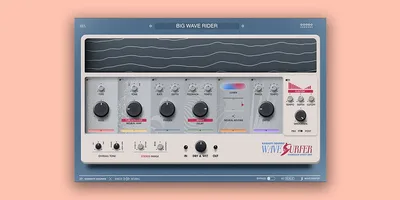
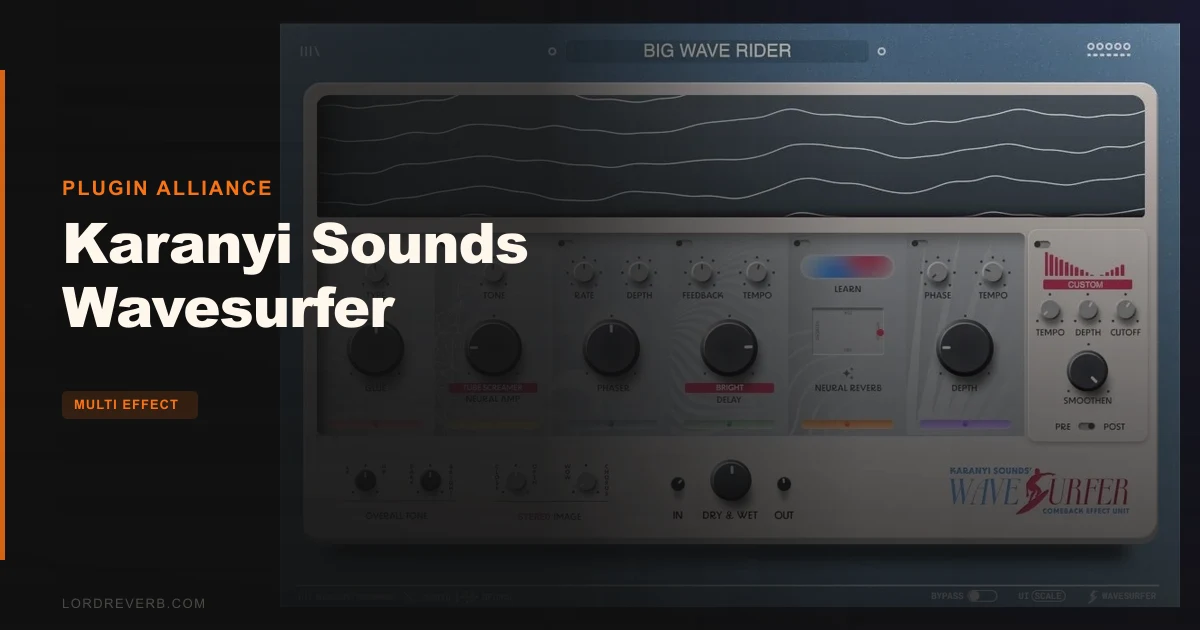
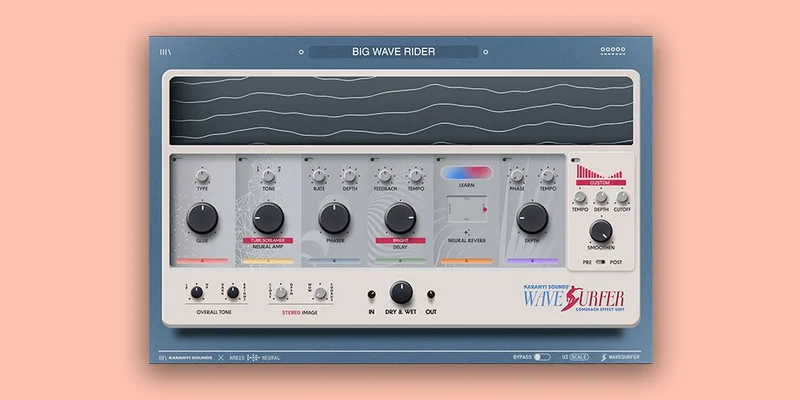
Wavesurfer is built by Karanyi Sounds and distributed through Plugin Alliance. The modular layer gives you seven swappable slots: Delay, Neural Amp, Autopan, Phaser, Glue, Neural Reverb, and Filter Pulse. On top of that sit four fixed master effects: Combo Filter, Tonal EQ, Stereo Imager, and Stereo WOW/Chorus.
The whole thing is powered by Karanyi Neural AI, which performs real-time audio analysis to sculpt the signal and balance clarity, character, and warmth across the effects. That description is vague in the marketing. In practice, what it means is the Neural Reverb adjusts its decay and density based on what's hitting it, and the Neural Amp's gain staging responds to your input level rather than treating every source identically.
The interface earns its reputation. The drag-and-drop modular design is highly intuitive and versatile. We had a fresh session running with all seven slots configured in under four minutes. That's satisfying in a way that menu-diving competitors just aren't.
Where It Shines
The Filter Pulse module is the most clever thing in this plugin. The Filter Pulse Module and its 16-step sequencer create compelling rhythmic movement and smooth LFOs with tempo-based filter modulation. We dropped it on a static synth pad, set it to a dotted-eighth pattern at 128 BPM, and pulled the cutoff into the 800–1200Hz range. It went from dead texture to a pulsing, breathing sound in about 30 seconds. No MIDI clip. No automation lane. Just the sequencer locked to tempo.
The Neural Amp is the other standout. Neural AI delivers stunningly accurate emulations of classic analog tape machines and guitar amplifiers, with the amp section created by training AI on detailed models of classic and modern analog hardware. We ran a dry 808 kick through it at low input gain. The result added roughly 2–4dB of harmonic saturation in the 200–400Hz band, tightening the low-mid body without introducing the fizzy artifacts you get from cheaper saturation plugins.
The Glue compressor offers three distinct compression styles, which matters for a multi-effect. Most plugins in this category treat the compressor as an afterthought. Having three modes means you can dial in bus-style glue, punchy transient control, or gentle leveling depending on what's sitting in that module slot.
Where It Falls Short
There's no trial. None. You are buying blind on a plugin with minimal independent reviews and no demo to verify how the CPU performs under a full 7-module chain in your specific DAW. That's frustrating in 2026 when most serious developers offer at least a 14-day window.
The preset count is never stated outright. The Hurricane DLC adds 30 presets, which implies the core factory library isn't enormous. We wish Karanyi would publish that number upfront.
Latency specs are also absent from any official documentation. If you're using Wavesurfer on a live input or a heavily real-time performance setup, you're guessing. For studio bounce work, that's less of an issue, but it's a gap that shouldn't exist.
And the "AI" terminology, while partially justified, is overused. The Autopan and Phaser modules don't appear to use neural processing at all. Calling the whole plugin "AI-powered" because two modules use it is a stretch.
How It Stacks Up
The closest comparison is the SoundToys bundle, specifically using Effect Rack to chain Tremolator, PanMan, and EchoBoy together. SoundToys wins on depth of individual effect quality and decades of track record. Wavesurfer wins on unified interface speed: you're not tab-switching between four separate UIs.
iZotope Trash 2 (now legacy but still widely used) covers the distortion and amp angle with more granularity than Wavesurfer's Neural Amp, but it has no rhythmic filter sequencer, no reverb, and no stereo imaging suite. They're genuinely different tools.
For multi-effect plugin comparisons, Wavesurfer sits in the mid-tier: more integrated than building a SoundToys chain, less surgically deep than dedicated single-function tools. It's the right pick for producers who want speed over maximum control.
Is the Price Fair?
Wavesurfer is currently listed at $49. For 7 swappable modules, 4 master effects, a 16-step filter sequencer, and neural amp emulation, that's reasonable. It's not a steal. If you'd only use two or three of the modules regularly, you're paying for features you'll ignore.
The bundle angle changes the math. If you're already into the Karanyi catalogue, check the Karanyi Sounds Complete Kontakt Suite Review 2026 before buying Wavesurfer standalone. Bundle pricing can drop individual product cost significantly.
At $49 without a trial, it is a considered buy. Not a hard pass, but not a reflex add-to-cart either.
Score Breakdown
| Category | Score | Notes |
|---|---|---|
| Sound Quality | 4.0/5 | Neural Amp and Neural Reverb genuinely respond to source material; Phaser and Autopan are more ordinary |
| Value for Money | 3.5/5 | Fair at $49, but the lack of a trial and undisclosed preset count holds it back |
| Ease of Use | 4.5/5 | Drag-and-drop routing is one of the fastest interfaces we've used in this category |
| Features | 4.0/5 | 7 modular slots, 4 master effects, 16-step sequencer: genuinely comprehensive |
| CPU Efficiency | 3.0/5 | No published specs; neural processing modules carry an unknown overhead |
| Overall | 3.8/5 | Clever, fast, and more musically useful than the AI marketing suggests, but needs a trial |
Alternatives to Consider
SoundToys Effect Rack, Bundle the individual SoundToys modules into a custom chain. More depth per individual effect. More expensive and slower to configure. Best for producers who already own SoundToys plugins and want maximum per-effect control. SoundToys Effect Rack review
Eventide Physion Mk II, Splits your signal into transient and tonal components, then processes each independently. More surgical than Wavesurfer. No rhythmic filter sequencer. Check the Eventide Physion Mk II review if you work in post-production or need precision over speed.
Karanyi Sounds Complete Kontakt Suite, If you're deep in the Karanyi world already, read our Karanyi Sounds Complete Kontakt Suite Review 2026 and consider the bundle route before buying Wavesurfer on its own.
Wavesurfer is the right buy if speed of creative routing matters more to you than maximum depth in any one effect. It's the wrong buy if you need precise CPU budget control, a trial period, or surgical single-effect quality.
At $49 with no trial, the risk is real but not ridiculous. The Filter Pulse sequencer alone justifies a serious look. Just don't expect it to replace your dedicated reverb or amp sim on your best work.
Frequently Asked Questions
Does Karanyi Sounds Wavesurfer work in Ableton Live?
Yes. Wavesurfer ships in VST3 and AU formats, both of which are supported in Ableton Live 11 and 12 on Mac and Windows. AAX support means it also runs in Pro Tools. There's no standalone mode, so you'll always need a host DAW.
Is there a free trial for Wavesurfer?
No trial is available at time of writing. This is one of the plugin's genuine weaknesses given the price point. Check Plugin Boutique and the Plugin Alliance site periodically, as both platforms occasionally offer time-limited demos during promotional windows.
What does the Neural Reverb actually do differently from a standard algorithmic reverb?
The Neural Reverb uses real-time audio analysis to adjust its decay shape and density based on the transient and spectral content of your input signal. In practice, a snare hit and a sustained pad routed through the same preset settings will produce different-sounding tails. Standard algorithmic reverbs apply the same decay curve regardless of what you're feeding them.
Can I use Wavesurfer on a full mix bus?
Technically yes, but we'd be cautious. The Glue compressor, Tonal EQ, and Stereo Imager are all plausible on a mix bus. Running the Neural Amp on a full mix is a different story: saturation that sounds satisfying on a single instrument can cloud a 30-track mix quickly. Use it on stems or individual buses rather than the master out until you've tested your specific session.