If you're weighing up Scene - Bloodplant against Scene: Nightshade or Scene: Lotus, here's where this review lands: Bloodplant is the strongest of the three for sci-fi dystopia, weaker than Lotus for anything organic, and close enough to Nightshade that owning both is hard to justify. At $29, it's a sharp buy for the right brief and a frustrating mismatch for the wrong one. This is a Kontakt instrument built for media composers who need gritty, industrial texture fast, and it delivers on that specific promise without apology.
How It Compares Out of the Box
Put Bloodplant next to Scene: Nightshade and the difference is narrower than the naming suggests. Nightshade sits in horror territory: slow, dread-heavy drones with dark organic movement. Bloodplant goes metallic and glitchy, with futuristic synths, distorted guitars, and warped textures that feel more Blade Runner than haunted house.
Scene: Lotus is a different animal entirely. Lotus pulls from Eastern scales, soft pads, and serenity. If your brief uses words like "ethereal" or "meditative," Lotus wins without a fight. Bloodplant doesn't try to compete there.
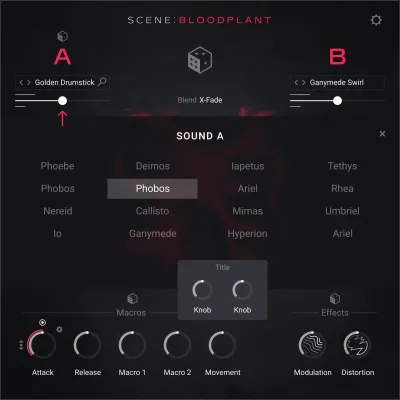
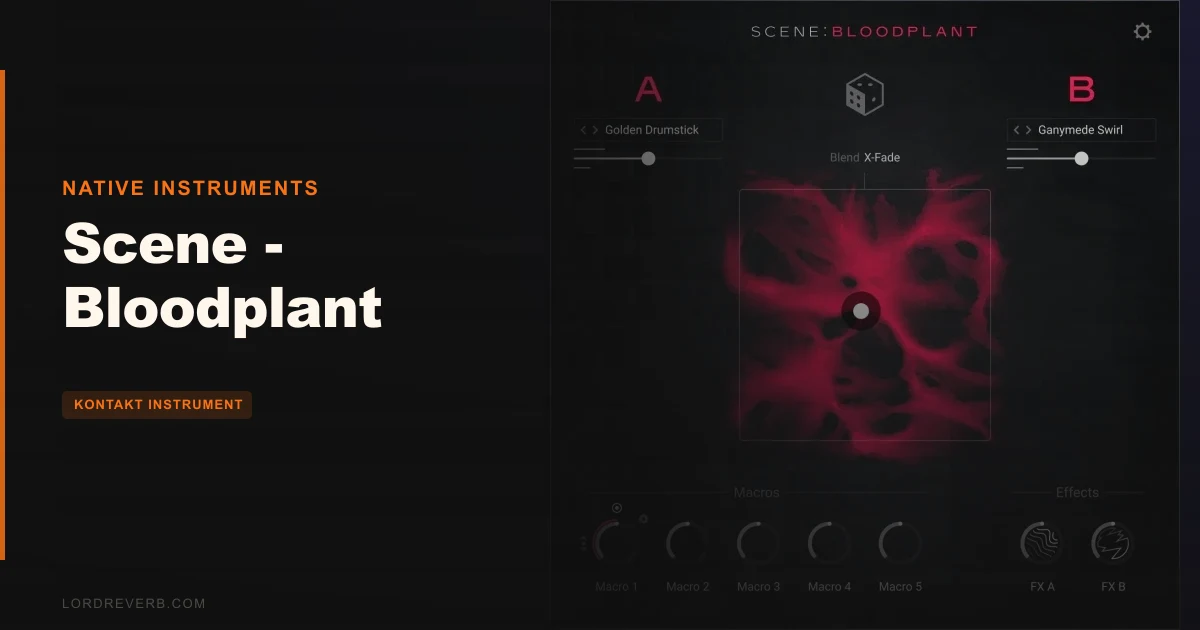
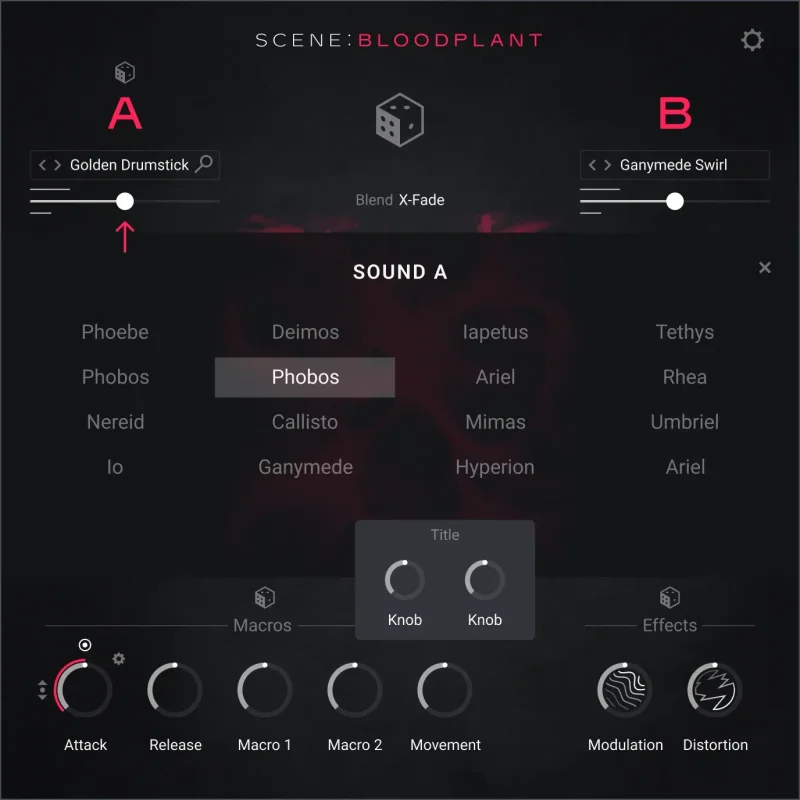
All three share the XY pad interface that defines the Scene series. What separates Bloodplant is the 16 sound sources underneath that pad, which skew consistently toward industrial and sci-fi rather than spreading across moods. That focus is its biggest strength and its sharpest limit.
Performance Deep Dive
Bloodplant runs at approximately 5-8% CPU on an M1 inside Kontakt Player. For a layered cinematic instrument with 16 sound sources, that's light. You can stack it with other instruments on a busy template without watching your meter climb.
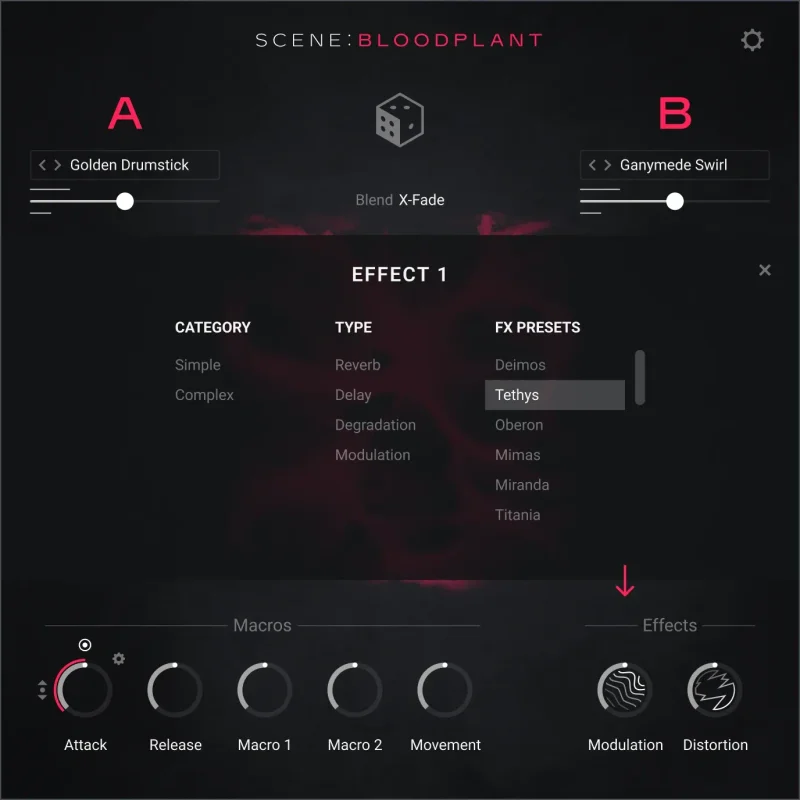
The XY pad drives everything. Move across the X axis and you're sweeping between texture clusters. The Y axis shifts the effects and spatial character. Owners describe XY sweeps that warp drone clusters into metallic shrieks, with low-end pulses that move subwoofers without turning into mud. That low-end control matters: a lot of industrial instruments go heavy and undefined below 80Hz. This one stays coherent.
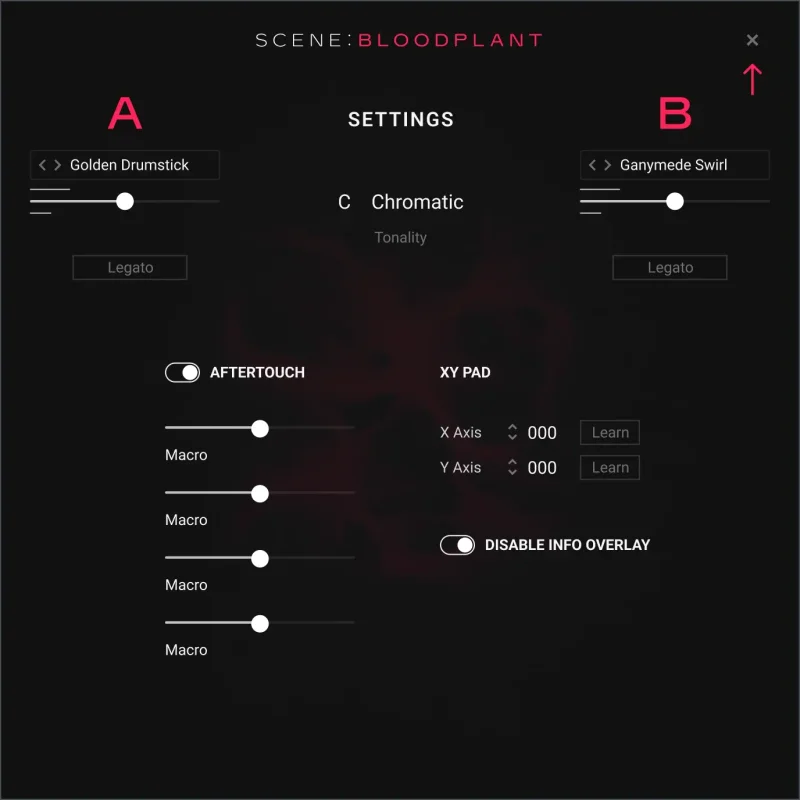
Polyphonic aftertouch covers volume, tuning, and motion parameters. If you're playing a capable controller, pressing harder into individual notes shifts the texture under your fingers. That's a satisfying level of real-time control for a $29 instrument.
Macro controls can widen textures without introducing phase issues, and the attack/release shaping works cleanly for building risers into hybrid drops. The 120 presets aren't filler: reviewers note strong value across the board, with flexible customisation options once you're past the preset browser.
Where It Wins
The XY pad is the honest answer. You're scoring a chase scene set in a collapsing factory, the deadline is in two hours, and you need something that sounds like civilisation ending. Load Bloodplant, move the pad, adjust the attack. Done in minutes, not sessions.
The polyphonic aftertouch support is underrated for this price tier. Most Kontakt instruments at $29 don't bother. Bloodplant does, and if you own an MPE-capable controller it opens up expressive real-time performance that cheaper tools can't match.
CPU efficiency is a genuine win too. You're not sacrificing headroom to run it. On a busy orchestral template, 5-8% on M1 leaves room for everything else in your signal chain.
The scales and modes library is extensive. For composers writing to picture, that means quick access to non-Western tonalities without reaching for a separate instrument or a manual retuning session.
Where the Competition Wins
Lotus beats Bloodplant badly on organic pads. If your brief asks for warmth, space, or anything that doesn't feel like corroded steel, Bloodplant is the wrong tool. The dystopian focus is a feature for sci-fi work and a liability for everything else.
Nightshade is a legitimate concern. If you already own it, the texture overlap with Bloodplant is real enough that buying both for a small collection is a questionable decision. They're not identical, but they share enough sonic ground that you'll reach for both in similar situations. Annoying, given they're separate purchases.
Standalone operation isn't possible. Kontakt Player 8.8 or higher is a hard requirement. That's free software, so it's not a dealbreaker, but composers who prefer minimal software dependencies will feel it.
Who Should Buy Which
- ✅ Buy Bloodplant if you score sci-fi, cyberpunk, or dystopian visuals regularly and want a fast, pad-driven texture tool that runs lean.
- ✅ Buy Bloodplant if you own an MPE controller and want to exploit polyphonic aftertouch in cinematic work without spending heavily.
- ✅ Buy Bloodplant if you don't already own Scene: Nightshade and need industrial sci-fi textures in your template.
- ❌ Skip Bloodplant if your work leans toward organic, emotional, or tonal pads. Get Lotus instead.
- ❌ Skip Bloodplant if you already own Scene: Nightshade and your collection is small. The overlap will frustrate you.
- ❌ Skip Bloodplant if you need a standalone instrument with no DAW or Kontakt Player dependency.
Specs & Technical Details
| Developer | Native Instruments |
| Price | $29 |
| Plugin Format | Kontakt Player (NKI) |
| OS Support | Mac / Windows |
| Activation | Native Access |
| CPU Usage | Light (approx. 5-8% on M1) |
| Trial Available | N/A |
| Version Reviewed | N/A |
Score Breakdown
| Category | Score | Notes |
|---|---|---|
| Sound Quality | 4.0/5 | Metallic, glitchy, and coherent in the low end, works exactly as intended for the genre |
| Value for Money | 4.5/5 | 120 presets, polyphonic aftertouch, and lean CPU at this price is hard to argue with |
| Ease of Use | 4.5/5 | XY pad interface removes friction; you're shaping sound in seconds |
| Features | 3.5/5 | Strong for its lane; limited source access in Kontakt Player holds it back |
| CPU Efficiency | 4.5/5 | 5-8% on M1 is light for a 16-layer cinematic instrument |
| Overall | 4.0/5 | Brilliant for dark sci-fi scoring; too narrow for general use |
Alternatives to Consider
Scene: Nightshade is the closest relative. If your work sits closer to horror than sci-fi, Nightshade is probably the better purchase. Overlapping both is a waste unless your template demands high volume across the dark cinematic spectrum.
Scene: Lotus is the right call if organic pads, Eastern scales, and meditative textures are your brief. It shares the same XY pad interface, so switching between the two in a session is painless. The sonic worlds don't compete much.
Heavyocity's DAMAGE 2 sits in the same dark cinematic space and offers more percussion-focused chaos for hybrid scoring. If you need heavy hits alongside texture morphing, it's worth comparing. More CPU-heavy and a higher price, but a wider toolkit.
For a wider look at where Bloodplant sits among dark texture instruments, our best Kontakt instruments for dark scoring roundup places it in context with tools at several price points.
Our Verdict on Scene - Bloodplant
Scene - Bloodplant does one thing and does it with clarity: it puts a corroded, metallic, sci-fi texture engine in your hands and gets out of the way. The XY pad is clever and genuinely fast for on-screen moments. Polyphonic aftertouch at $29 is a nice surprise. And 5-8% CPU means you're not rationing headroom to run it.
You're loading this onto a cue that needs something industrial. Push the XY pad toward the top-right corner and the sound opens into a shimmering metallic spread. Pull it back toward bottom-left and it collapses into a low-frequency pulse. That's the whole workflow. It works.
What it doesn't do: warmth, organic movement, tonal lushness. If your session folder is full of nature documentaries and emotional dramas, close this tab and look at Lotus. If you already own Nightshade and have a small collection, the overlap will feel like a waste.
For everyone else scoring dystopian fiction, cyberpunk trailers, or science fiction anything: this is a focused, lean, well-priced tool. Check what else is in your Scene collection first, because the redundancy with Nightshade is a real issue worth thinking through before you click.
Related reviews: Cabal 8 · Vintage Horns 3
Frequently Asked Questions
Does Scene - Bloodplant require a paid version of Kontakt?
No. It runs on the free Kontakt Player, version 8.8 or higher. You don't need the full paid version of Kontakt. Native Access handles the download and activation, which is standard across Native Instruments' library.
How different is Scene - Bloodplant from Scene: Nightshade?
They share the XY pad interface and sit in the same dark cinematic territory, but the sonic focus differs. Nightshade leans toward horror drones and organic dread. Bloodplant goes metallic, glitchy, and sci-fi. The overlap is real enough that owning both in a small collection is hard to justify, but composers who score heavily across both genres will find them usefully distinct.
Is Scene - Bloodplant good for live performance?
The XY pad and polyphonic aftertouch support make it more performance-friendly than most cinematic instruments at this price. If you have an MPE-capable controller, the aftertouch response across volume, tuning, and motion parameters adds real expressiveness in a live or hybrid live context. The Kontakt Player dependency means you'll need a laptop running the software, so truly standalone use isn't possible.