The Everything Pack Native v7 is worth the money if you work in Pro Tools, Logic Pro, or any serious AAX Native / AU / VST3 host and you're tired of assembling a patchwork signal chain from six different companies. This is McDSP's complete catalog: channel strips, EQs, compressors, limiters, multiband dynamics, noise reduction, and de-essing, all under one iLok license. It's not perfect. But it's one of the most cohesive professional bundles you can buy in 2026, and at $1,099 it's genuinely hard to argue against.
This review is for engineers who've hesitated because McDSP carries a reputation as "the Pro Tools HDX brand." That reputation is outdated. Everything Pack Native v7 runs on AAX Native, AU, and VST3. Logic Pro, Ableton Live, Cubase, Studio One, all covered. No HDX card required.
Does It Actually Deliver on the "Everything" Promise?
McDSP was founded in 1998, started life building DSP-accelerated tools for Avid's hardware platforms, and earned its stripes on sessions you've heard without knowing it. The company built algorithms from scratch rather than licensing cores from third parties. That matters because the compressors in this bundle aren't repackaged VCA clones.
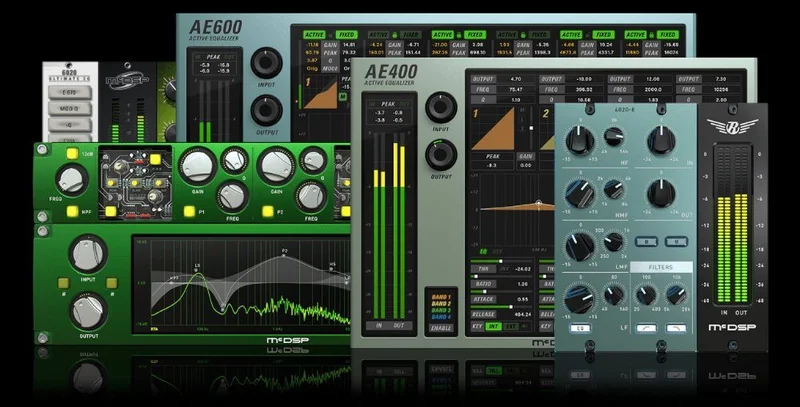
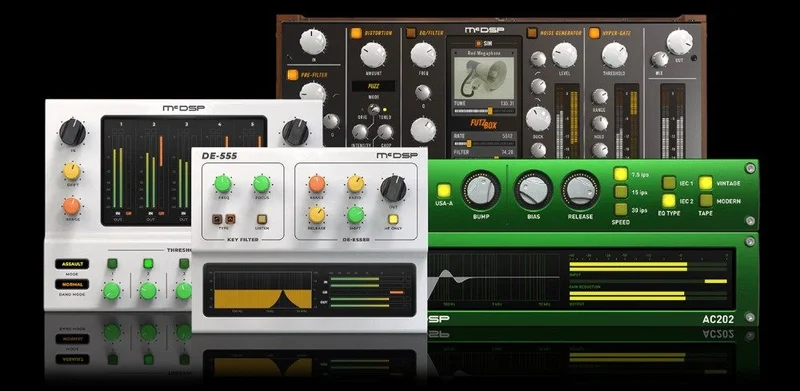
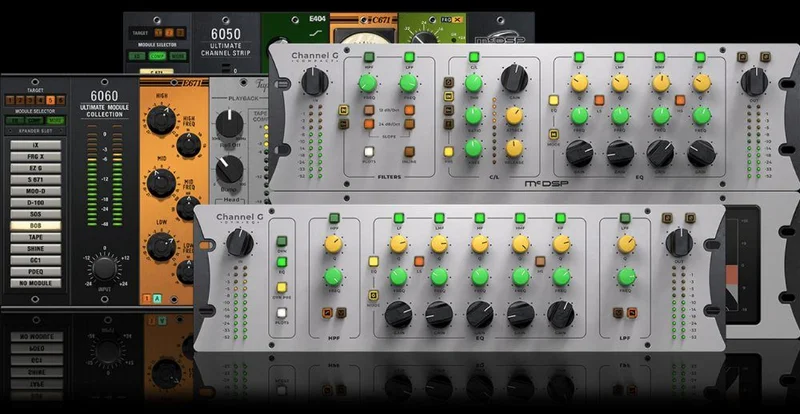
The bundle contains all plugins from the Emerald Pack, Retro Pack, and Classic Pack, plus the 6060 Ultimate Module Collection, NR800 Noise Reduction, the 6034 Ultimate Multi-band, and the Emmy Award-winning SA-2 Dialog Processor. That's over 30 processors. Channel strips, EQs, compressors, limiters, multiband dynamics, reverb, echo, noise filter, de-esser, and FutzBox (a distortion / lo-fi processor for sound design and post work) are all included.
Does it deliver? Yes. With one honest caveat: the bundle's depth is unevenly distributed. Dynamics and EQ coverage is outstanding. Reverb and delay are adequate but not special. If you're a mixing engineer, this is a love letter to your workflow. If you're primarily a producer who lives in reverb buses and creative time-based effects, you'll still want something else alongside it.
Where It Shines
The 6020 Ultimate EQ is the tool we reach for when a mix needs surgical correction without sounding corrected. It's a 6-band parametric that runs clean at extreme gain settings. We pushed a lead vocal +8dB at 3.2kHz with a Q of 2.1 and got presence, not harshness. That's harder to pull off than it sounds.
The AE400 and AE600 Active EQs are the real underrated gems in this pack. These are dynamic EQs that respond to signal level in real time, similar in concept to a de-esser but fully frequency-flexible. We used the AE600 on a dense mix bus with a broad cut centered at 250Hz, Q of 0.7, threshold set so it only pulled 3dB during the loudest passages. The low-mid buildup vanished during choruses without touching the verses. Satisfying in a way that static EQ can't replicate.
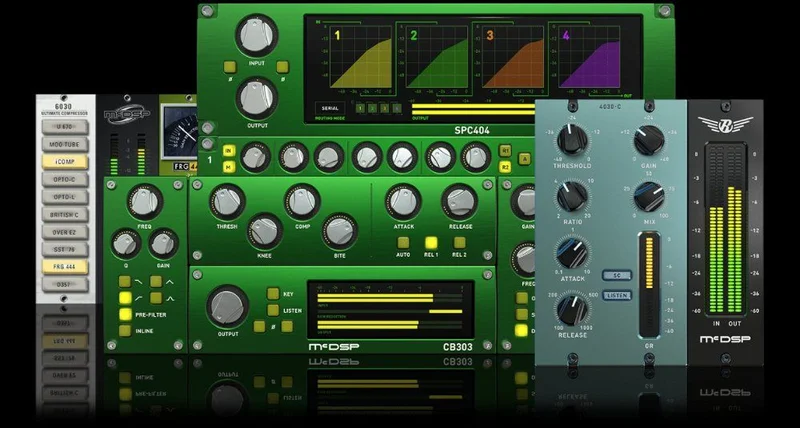
The 6030 Ultimate Compressor is brilliant for character processing. It houses 9 different compressor models in one plugin, ranging from clean VCA-style limiting to something closer to an optical response. We ran a kick bus through the CompA model with an 8ms attack, 60ms release, and 4:1 ratio. The transient stayed intact. The tail got rounded and thick. It sat in the mix without needing a separate saturation plugin to glue it.
The SA-2 Dialog Processor deserves its own section. It's an Emmy Award-winning tool built for broadcast-level voice processing: de-essing, dynamic EQ, and spectral balancing in one chain. Load a vocal, hit a preset close to your source material, dial in the threshold. We had a raw location-recorded interview track sitting cleanly in a podcast mix inside 4 minutes. For post engineers, that alone justifies a significant portion of the bundle price.
Where It Falls Short
The iLok requirement is annoying. In 2026, machine-based activation with a cloud fallback is table stakes. McDSP still requires iLok 2 hardware, iLok 3, or iLok Cloud. If your Cloud session drops or you're traveling without the dongle, you're not mixing. That's a real workflow risk on deadline.
The UI consistency is rough. The 6020 Ultimate EQ, the FilterBank, and the newer AE series feel like they were designed by different teams in different decades. Because they were. Some GUIs scale beautifully on a 5K display. Others look like they belong on a 2009 Mac Pro. It's not a dealbreaker, but it's frustrating when you're switching tools mid-session.
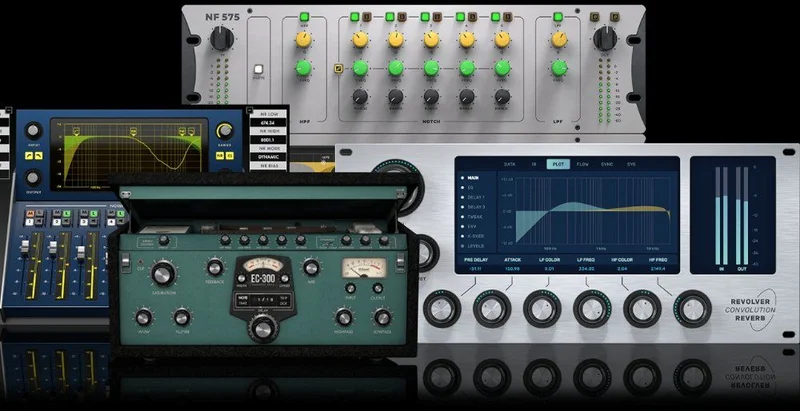
Reverb. Revolver, the bundle's convolution reverb, is functional. It loads IRs, it works. But next to dedicated options like Valhalla or Exponential Audio's tools, it's not where you'd naturally spend time. If reverb is central to your mixes, this bundle alone won't cover you there.
System requirements are 4GB RAM minimum and Intel Core 2 Duo or higher, with macOS 10.13+. That floor is low enough that most modern machines qualify comfortably, but it tells you the native performance targets were conservative at design time.
How It Stacks Up
The honest comparison here is against the Waves Mercury bundle and the SSL Complete. Waves Mercury bundle review
Waves Mercury has broader coverage of vintage hardware emulations and more aggressive sale pricing on annual plans. But Waves plugins on subscription carry licensing anxiety, and their analog emulations vary wildly in quality. McDSP's algorithms are more consistent because they were fewer and more deliberate.
SSL Complete goes deep on one sonic character: that fast, punchy SSL sound. It's brilliant for what it is. But it's one flavor. The McDSP bundle covers more ground sonically, from clean transparent processing to colored vintage compression. SSL Complete plugin bundle review
FabFilter's individual plugins remain best-in-class for their specific tasks. Pro-Q 4 beats any single EQ in this bundle. But you'd spend a lot assembling just four FabFilter tools. The Everything Pack covers thirty or more. Pick your priority.
Is the Price Fair?
At the sale price, yes. Clearly. If you price out even eight of these plugins individually, you'd pass a high total before you hit the SA-2, the NR800, or the 6060 Module Collection. The math isn't close.
At full MSRP of $1,099, it's still defensible for a working studio, but we'd wait for a sale. McDSP runs them. The current price is shown in the buy box on this page.
Each v7 authorization includes 2 activations. That's a laptop and a studio desktop covered on a single license. That detail alone saves you from buying a second seat. best plugin bundle deals 2026
Score Breakdown
| Category | Score | Notes |
|---|---|---|
| Sound Quality | 4.5/5 | Dynamics and EQ algorithms are clean and deliberately designed; reverb is the weak link |
| Value for Money | 4.5/5 | Getting thirty or more processors at the sale price is hard to beat, but full price needs patience for a sale. |
| Ease of Use | 3.5/5 | Individual plugins are logical, but UI inconsistency across the bundle creates friction |
| Features | 4.0/5 | Covers every core mixing task; SA-2 and AE600 are standout tools unavailable elsewhere |
| CPU Efficiency | 4.5/5 | Near-zero latency across compressors; individual plugin load is modest on modern hardware |
| Overall | 4.2/5 | A cohesive, professional-grade bundle that covers nearly every mix stage without compromise |
Alternatives to Consider
Waves Mercury Waves Mercury bundle review, More plugins, lower sale price, but subscription licensing model and uneven quality control across the catalog. Better for producers who need a specific vintage hardware emulation. Worse for engineers who need reliability on deadline.
FabFilter Total Bundle FabFilter Total Bundle review, Fewer processors but individually best-in-class. Pro-Q 4 and Pro-MB are harder to beat in their lanes. Choose this if depth on fewer tools matters more than breadth across many.
SSL Complete SSL Complete bundle review, One sonic character, executed brilliantly. The right pick if you're building an SSL-flavored mix template and don't need the variety the McDSP bundle offers.
If you're sitting in front of a Pro Tools rig, Logic, Cubase, or Studio One session and you want one bundle that covers your entire signal chain without gaps, this is the one we'd buy. The iLok requirement is a genuine pain. The UI dating is real. But the algorithms are honest, the SA-2 is worth more than people give it credit for, and the AE600 is the kind of tool that changes how you think about EQ.
Skip it if you're primarily a producer who cares more about creative reverbs and delays than surgical mix processing. Skip it if iLok hardware is a dealbreaker. But if you mix for a living and you're done assembling your plugin folder one tool at a time, get it on sale and don't look back.
Frequently Asked Questions
Does the Everything Pack Native v7 work without an iLok dongle?
You can use iLok Cloud instead of a physical iLok 2 or iLok 3 hardware dongle, but some form of iLok authorization is required. There's no machine-based activation. If your Cloud connection drops and you don't have a dongle, you won't be able to open the plugins. For studio work on a reliable internet connection, iLok Cloud is fine. For mobile or offline sessions, a physical dongle is the safer choice.
What's the difference between Everything Pack Native v7 and the HD version?
The Native version runs on AAX Native, AU, and VST3 formats. It works on any modern Mac or Windows DAW, including Pro Tools, Logic Pro, Ableton Live, Cubase, and Studio One, without any additional hardware. The HD version is built for AAX DSP processing on Avid HDX or HD Native Thunderbolt systems, where processing is offloaded to dedicated hardware. If you don't own HDX cards, you want the Native version reviewed here.
How many plugins are included in the Everything Pack Native v7?
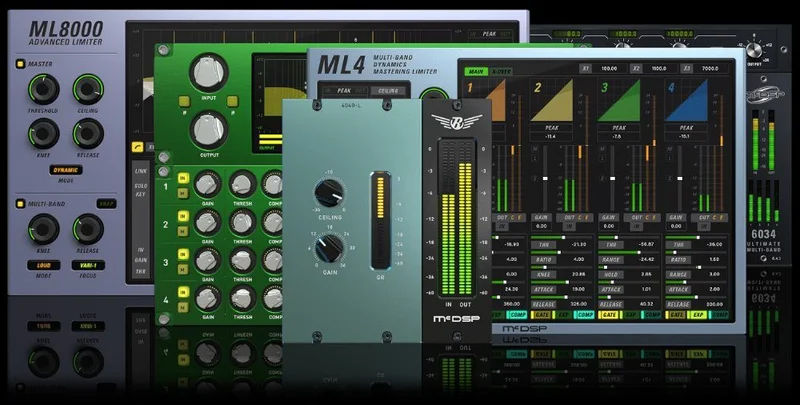
The bundle contains over 30 individual processors across every major category: channel strips (Channel G, Channel G Compact, 6050, 6060), EQs (FilterBank, 6020, 4020 Retro, AE400, AE600), compressors (6030, 4030 Retro, SPC2000), limiters (4040 Retro, ML4000, ML8000), multiband dynamics (6034), noise reduction (NR800), de-esser (DE555), noise filter (NF575), reverb (Revolver), echo (EC-300), dialog processing (SA-2), tape emulation (Analog Channel), and the FutzBox distortion tool.
Is McDSP Everything Pack Native v7 good for beginners?
Honest answer: it's not the most beginner-friendly entry point. The 1,500+ preset library helps shorten the learning curve, and most individual plugins are logical once you're inside them. But the sheer volume of tools and the inconsistency in UI design across different plugins can be overwhelming if you're still learning signal chain fundamentals. If you're newer to mixing, start with a more focused bundle and come back to this when you know what gaps you're trying to fill. best plugins for beginner mixing engineers