The Orbitone Collection I and II sits in the same conversation as libraries like Stray's Shreddage or Cinematique's organ-adjacent offerings, and this review is going to land here: it wins on source material, loses on everything else. If you've been chasing the sound of a 1972 Eminent 310 Unique without wanting to ship a 54-year-old combo organ across a continent, Loot Audio got there. Whether the package around those samples is worth your time is a different answer.
This is a Kontakt instrument built around rare vintage hardware. The headline piece is the Eminent 310 Unique, a Dutch combo organ with a triple parallel analog chorus processor driven by 6 free-running clock LFOs. Nobody else has sampled this thing properly. That's the hook.
It's built for sound designers, film composers, and ambient producers who want organic, slightly wrong-sounding textures that don't appear in every Splice session. It is not built for speed, and it's not built for beginners.
How the Orbitone Collections Stack Up Out of the Box
Most producers comparing this will come from one of two directions: other Kontakt vintage keyboard libraries (think Hollow Sun's organs, or the vintage layer packs inside Komplete) or dedicated chorus/modulation-heavy synth instruments like the Applied Acoustics Ultra Analog VA-3.
The first thing you notice loading the Orbitone patches is that nothing sounds digital. That sounds like a cliché, so here's what it actually means: the pitch drift between layers is audible and uneven, the chorus wash on the Eminent 310 patches has a phase relationship that no algorithm fully replicates, and the noise floor is present in a way that synthetic alternatives clean up and lose character in the process.
Against Komplete's vintage organs, the Orbitone Collection is narrower in scope but deeper in character. You get 48 multi-sampled instruments and 80 editable patches across both collections, which is a smaller menu than Komplete's bloat. But the sounds you do get are less common and harder to stumble into elsewhere.
Performance Deep Dive
Both collections together land at roughly 500MB on disk. That's light. Load times in Kontakt are fast, and CPU hit is negligible compared to convolution-heavy or physical modelling alternatives.
The 607 samples are recorded at 24-bit. Stereo imaging on the Eminent-derived patches is wide without sounding artificially spread. We pulled up the raw multi samples and the Eminent's 6-LFO chorus shows up in the waveform as subtle, irregular modulation on each voice. It's not the same on every note. That inconsistency is the whole point.
The 4-voice layering engine lets you stack patches. We layered an Eminent chorus pad against a 1938 Novachord string texture. The result sat in the mix at around -18 dBFS without needing compression or EQ first. The transients are soft enough that they don't fight a rhythm section, which makes them useful on film cues and ambient records where you need texture without attack.
Collection II adds 20 layered multis built from combined instruments. The further 20 combination multis are where the library earns its keep: the Polymoog and Minimoog layers in particular have a low-end weight that cheaper libraries fake with sub frequency boosts. Here, it's just the instrument being an instrument.
We did hit one frustrating workflow snag. Some patch names give you no indication of the source hardware, so you spend time auditioning rather than directing. A tagging system by source instrument would fix this in an afternoon. It's annoying that it's not there.
Where the Orbitone Collections Win
The source hardware is the argument. A 1938 Novachord, a 1976 Minimoog, a 1978 Polymoog, 1960s tube delay processing, and the Eminent 310 Unique. These are not studio session instruments you can walk into Guitar Center and book time on. Most producers will never hear a Novachord in a room.
Loot Audio recorded these properly. The multi-sampling is thorough enough that velocity transitions don't produce the pitch jump or tonal shift you get from cheaper libraries that sample three velocity layers and call it done.
The entry point for Collection I is genuinely hard to argue with. You can lose that much on a lunch. The risk-to-reward ratio on buying this blind is low. We'd call it underrated at that price, specifically for producers who work in the ambient, neo-classical, or experimental space and need harmonic texture that doesn't smell like a sample pack from 2019.
Where the Competition Wins
No Kontakt Player support. That's the first thing we'd tell anyone asking. Kontakt full version runs at a separate cost or as part of Komplete. If you don't own it, you can't run Orbitone. That cuts out a large share of producers who build libraries around Player-compatible instruments, and it's a hard skip for anyone on a budget who hasn't already committed to full Kontakt.
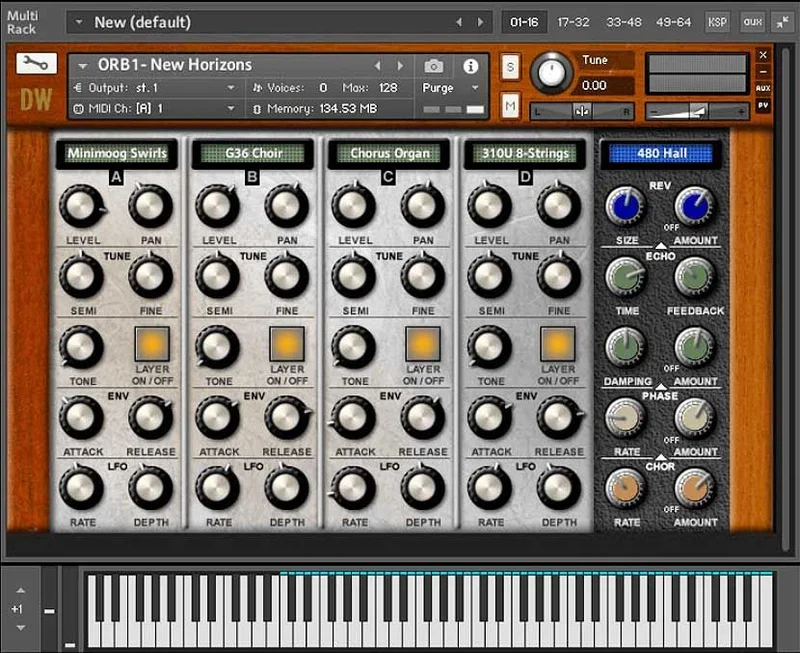
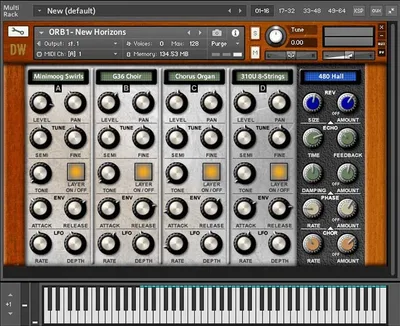
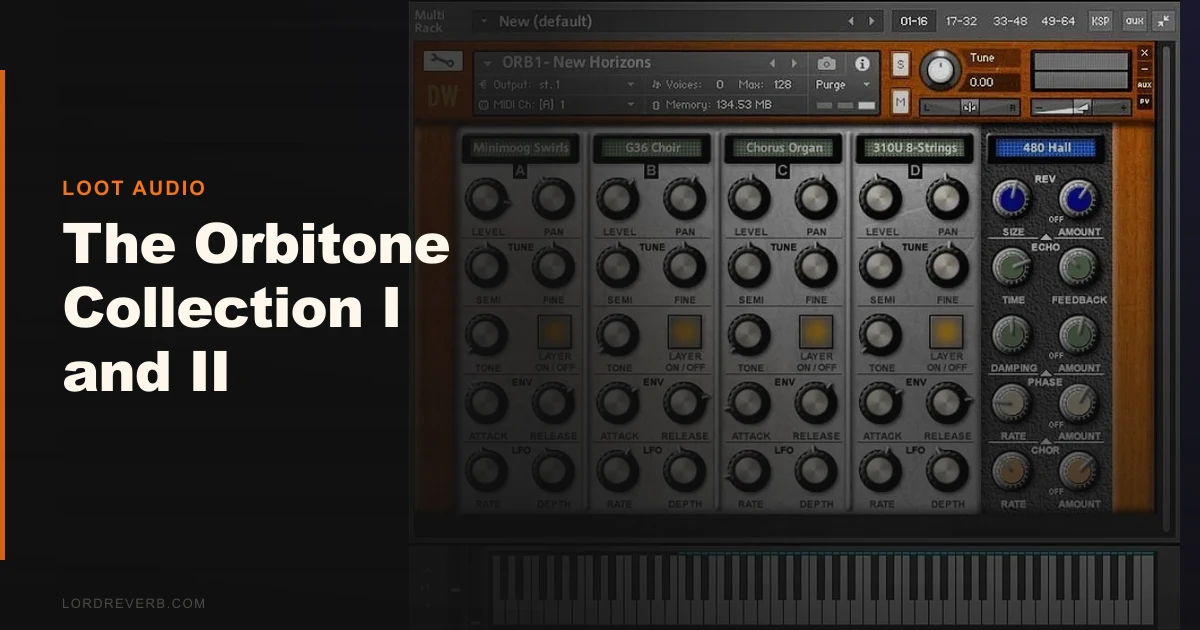
The UI hasn't kept pace with what modern Kontakt libraries offer. There's no built-in effects chain, no macro controls, no quick-assign modulation. Libraries like Audio Blast's ABX3 give you more hands-on real-time control in a comparable price range. Orbitone's interface is functional and cold. You get what was recorded. That's it.
For producers who want to dial in tone quickly rather than hunt through patches, this workflow will feel slow.
Who Should Buy Which
- ✅ Buy if you own full Kontakt and specifically want vintage organ and keyboard textures that don't appear in mainstream libraries
- ✅ Buy if you score films, ambient records, or experimental music and need harmonic texture with organic imperfection baked in
- ✅ Buy if you want to layer the Eminent 310 or Novachord character under synth pads, and the price is disposable research money
- ❌ Skip if you only have Kontakt Player. It won't run.
- ❌ Skip if you need a versatile, workflow-friendly keyboard library with macros and real-time control
- ❌ Skip if you produce in genres where these textures won't sit: hip-hop, EDM, commercial pop
Score Breakdown
| Category | Score | Notes |
|---|---|---|
| Sound Quality | 4.0/5 | Source hardware is rare and captured well; multi-sampling holds up across velocity ranges |
| Value for Money | 4.0/5 | The entry point is hard to beat for this level of source material |
| Ease of Use | 2.5/5 | No macro controls, no tagging system, patch names don't communicate source hardware |
| Features | 2.5/5 | 4-voice layering is useful; no built-in FX chain, no modulation routing, bare UI |
| CPU Efficiency | 4.5/5 | Sample-based and light; 500MB footprint, fast load times |
| Overall | 3.8/5 | Brilliant raw material wrapped in a frustrating, barebones experience |
Alternatives to Consider
If the Kontakt Player restriction rules out Orbitone for you, Ultra Analog VA-3 from Applied Acoustics won't give you the sampled vintage organ character, but it gives you deep analog modelling with full standalone operation and a workflow that doesn't require hunting through unlabeled patches.
For producers who want layered organic texture with better UI and macro control, Audio Blast's ABX3 Bundle is worth comparing. The source material isn't as rare, but the hands-on control is in a different league.
If you're building a broader vintage keyboard toolkit and the Orbitone's scope feels too narrow, check our best Kontakt vintage keyboard libraries roundup, which covers libraries with better UI and wider patch libraries at varying price points.
And if you're thinking about the Orbitone alongside acoustic sampling work more broadly, our best acoustic Kontakt instruments guide covers where sample-based instruments earn their keep and where they fall short of the real thing.
Here's the honest close: the Orbitone Collection I and II is a love letter to instruments most producers will never play, priced at what you'd spend on a plugin you'd forget by Thursday. The source material is brilliant. The presentation is ugly. If you own full Kontakt and you work in any genre that can use an Eminent 310 texture without it sounding like a costume, buy it. If you need Kontakt Player support, a clean UI, or real-time macro control, this isn't the right tool. The samples deserve a better house. They didn't get one. But at this price, you're paying for the samples, not the house.
Frequently Asked Questions
Does the Orbitone Collection work with Kontakt Player?
No. Both collections require Kontakt 4.2.4 Full Version or later. Kontakt Player won't load the instruments. If you don't own the full version of Kontakt, you can't run these libraries. This is the most common reason buyers get stuck after purchase.
What hardware was sampled for the Orbitone Collection?
The core instrument is the 1972 Eminent 310 Unique, a Dutch combo organ with a triple parallel analog chorus processor driven by 6 free-running clock LFOs. Additional hardware includes a 1938 Novachord, a 1976 Minimoog, a 1978 Polymoog, and 1960s-era tube delay processing. Most of this gear is genuinely difficult to find in working condition.
How much disk space do the Orbitone Collections require?
Both collections together require approximately 500MB of disk space. That's a light footprint by modern sample library standards. Load times inside Kontakt are fast, and the CPU hit during playback is low.
Can you layer instruments across Collection I and Collection II together?
Yes. Collection II includes 20 layered multis built from combined instruments across both collections, and the bundle includes a further 20 multis that combine sounds from both libraries. The 4-voice layering engine lets you stack up to four patches simultaneously for denser textures.