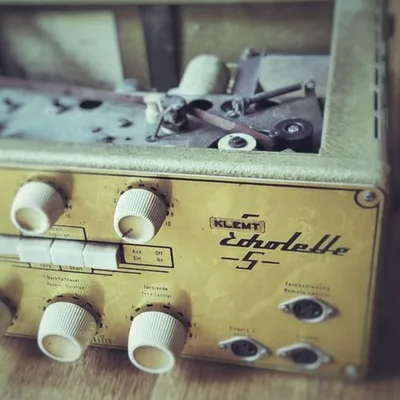
Six dollars for a tape-mangled choir instrument sounds like the kind of thing that shows up in a bundle filler and never gets opened. TAPED: Echolette Choir for Ableton Live by KLANG is not that. It's a purposefully lo-fi, self-oscillating, tube-distorted choir instrument built on vintage Echolette tape delay character, and for $6 it delivers something genuinely usable in ambient, lo-fi, and experimental productions. The catch is the platform lock: you'll need Ableton Live 10 Suite or above, or the full version of Kontakt 5.6.8 or higher. If you're on Intro or Standard, stop reading here and look elsewhere.
Does the Echolette Choir Actually Deliver?
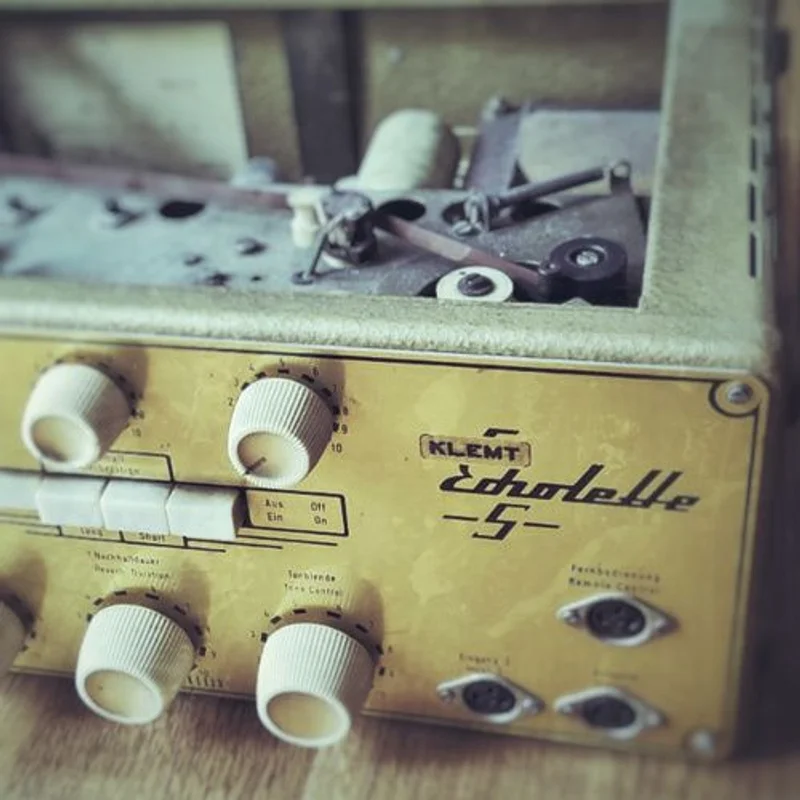
KLANG built this around the sonic character of the Echolette, a German tape echo machine from the 1960s known for its feedback behavior and the way it degrades signal in an almost musical way. The instrument captures that character through self-oscillation feedback routing and tube-style distortion rather than trying to be a clean choir sample library.
It holds an 4.7-star rating across 55 reviews on Plugin Boutique. That's not an accident. The core sound is convincing in context: push the Rage and Distort controls and you get something that sounds genuinely corroded, not just digitally filtered. Pull them back and you get a softer, vaguely human texture sitting in the upper mids around 2kHz-4kHz.
It does what it promises. Whether that's enough depends entirely on what you're building.
Where TAPED: Echolette Choir Shines
The eight macro controls are where this instrument earns its price. Rage, Tone, Destroy, Volume, Attack, Distort, Delay, and Reverb cover the full sound design range without requiring any rack editing.
We loaded a sustained C2 pad underneath a lo-fi hip-hop loop. Pulling Attack to around 60% smeared the transient so the choir bloomed in over roughly 800ms. Then we pushed Destroy to about 75%. The pitch started to waver. The signal broke apart at the edges in a way that sounded like a cassette left in a hot car. That kind of textural degradation is exactly what this instrument is for, and it takes about 30 seconds to dial in.
The tape wow and flutter behavior sits underneath everything naturally. You're not reaching for a separate modulation source. It's baked in, which keeps your signal chain short when you're sketching ideas.
The Delay and Reverb macros are genuinely useful on this instrument. We ran the Delay up to around 40% and it fed the choir back into itself with a rhythmic smear. Not a clean slapback. A deteriorated one. That's the right character for the sound. See our TAPED: Blooming Vibes review for how KLANG handles similar macro-driven texture design in a different instrument from the same series.
Where It Falls Short
The platform restrictions are frustrating if you're not already in the right setup. Ableton Live Suite is the most expensive tier of Live. Many producers are on Standard. You can't load the .adg format there. That locks out a real chunk of the target audience for a $6 instrument.
The Kontakt version solves the Ableton requirement but introduces a different cost: you need the full version of Kontakt, not Kontakt Player. Kontakt retail price is well above what most budget plugin buyers expect to spend. Spending that much to run a $6 instrument is a ridiculous trade-off if you don't already own it.
Beyond platform issues: the instrument is a texture tool. It's not a playable choir for melodic lines. If you want to write chord progressions with a choir sound that tracks cleanly across octaves, this isn't built for that. Notes above roughly the 4th octave get unstable fast. That's the tape character working against you rather than for you.
How It Stacks Up Against Real Alternatives
Soundtoys EchoBoy handles tape delay character in a completely different way. It's a dedicated delay plugin at a much higher price point, it gives you more precise control over delay time and flutter depth, and it's not a sampled instrument at all. If tape delay behavior in your FX chain is the goal, EchoBoy is the better tool. If a choir-textured instrument that has tape decay built into its DNA is the goal, TAPED: Echolette Choir has no real direct competition at this price.
Output Portal and similar granular-based texturizers can produce adjacent sounds, but they require more sound design work to get there and cost significantly more. TAPED: Echolette Choir is a specific sound, not a blank canvas. That's either its strength or its limitation depending on what you need from it.
For lo-fi and ambient virtual instruments in a similar price range, the niche is thin. That alone justifies knowing it exists.
Is $6 Fair for This Instrument?
Yes. At $6, the risk is zero. If you open it once, use a texture from it on a single track, and never open it again, you've paid $6 for that texture. That's a reasonable exchange.
The only asterisk: the platform requirements mean your real cost might be nothing extra (if you already own Suite or Kontakt) or it might be substantial (if you don't). The instrument itself is priced correctly. The ecosystem requirements are where the value calculation gets complicated.
Score Breakdown
| Category | Score | Notes |
|---|---|---|
| Sound Quality | 3.8/5 | Convincing tape degradation character; limited upper-register tracking |
| Value for Money | 4.5/5 | $6 removes all financial risk if you already have the required host |
| Ease of Use | 4.0/5 | Eight macros are immediately intuitive; no menu-diving required |
| Features | 3.0/5 | Purposefully narrow feature set; works for textures, not melodic use |
| CPU Efficiency | 4.3/5 | Light footprint in both Ableton and Kontakt hosts |
| Overall | 3.8/5 | Brilliant for its specific use case; platform restrictions limit the audience |
Alternatives to Consider
Soundtoys EchoBoy: If you want tape delay behavior as an effect in your signal chain rather than baked into an instrument, EchoBoy is the professional standard. The current price is shown in the buy box on this page. Soundtoys EchoBoy review
KLANG TAPED: Blooming Vibes: From the same series, same price. If you love the TAPED aesthetic but want a different source texture, this is the logical next step. TAPED: Blooming Vibes review
Native Instruments Choir: If you need a clean, playable choir instrument with serious melodic range, the NI Choir libraries inside Komplete are worth looking at. The current price is shown in the buy box on this page. best choir VST plugins
TAPED: Echolette Choir is a love-it-or-leave-it proposition, and the deciding factor isn't the sound. It's your DAW tier. If you're in Ableton Suite, $6 is not a decision. Buy it, drop it on an ambient pad track, push Destroy to 70%, and you'll have a texture in under a minute that would take three separate plugins to approximate otherwise. If you're on Ableton Standard or don't own full Kontakt, skip it for now and circle back if your setup ever changes.
Frequently Asked Questions
Does TAPED: Echolette Choir work with Ableton Live Standard or Intro?
No. The .adg format requires Ableton Live 10 Suite or above. Intro and Standard editions cannot load .adg Rack files. If you're on those tiers, the Kontakt version is your only option, but that requires the full paid version of Kontakt 5.6.8 or higher, not the free Kontakt Player.
Is this the same as a reverb or delay plugin?
Not exactly. TAPED: Echolette Choir is a sampled instrument with tape delay character built into its core sound, not a separate delay or reverb processor you'd drop on a bus. The Delay and Reverb controls are macros within the instrument rack itself. You can still run it through additional FX in your chain.
What's the difference between the Ableton and Kontakt versions?
They're two versions of the same instrument designed for different hosts. The Ableton version is a .adg file that opens directly as an instrument rack in Live Suite. The Kontakt version is a .nki file that loads inside Native Instruments Kontakt. The core sound design is the same across both.
Can you use TAPED: Echolette Choir for melodic chord work, or is it strictly texture?
Strictly texture, for the most part. The tape degradation and self-oscillation character works against clean pitch tracking at higher registers. It sits best under other elements as an ambient layer or sustained bed rather than as a lead melodic instrument. If you need a choir that tracks cleanly across four octaves, look at a dedicated sample library instead.