We Dropped a Bram and Heard the Problem Immediately
Evolution: Dragon is a cinematic hybrid Kontakt instrument built for film, TV, and game trailer composers who need production-ready impact layers fast, and it mostly delivers that. But our first honest moment with it was also our first frustration.
We loaded a Braam into a trailer cue sitting around 120 BPM. The attack was immediate, saturated around 80–200Hz with that low-mid density that trailer editors love. It sounded satisfying. Then we pulled up three more Braams looking for variation, and we hit the wall: they sit in almost the exact same spectral pocket. Cut 3dB at 150Hz on one and it starts to differentiate. Don't touch anything, and they blend into a single, anonymous wall of metal.
That moment sums up Evolution: Dragon completely. Fast to reach for. Brilliantly produced. Frustratingly narrow once you try to push past what it was designed to do. Keepforest Wildhunt Bundle review
It's built for composers on deadline. If that's you, read on.
What It Is, and Where It Stops
Evolution: Dragon is Keepforest's first entry in their Signature series. It's a hybrid cinematic instrument aimed at film, TV, video game, and trailer composers. The library covers 3.6 GB of content with 120+ instruments spanning Pads, Basses, Leads, Guitars, Drones, and Pianos, all sampled at 48kHz / 24-bit.
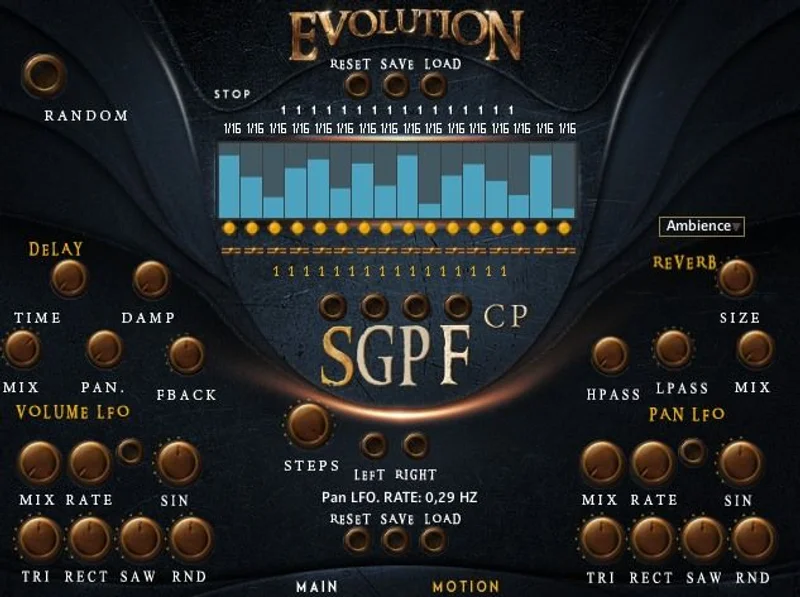
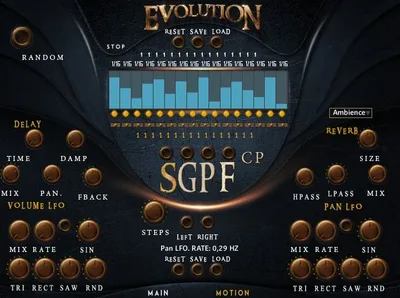
The core appeal is the rhythm designer, not the individual patches. You're meant to layer elements and let the sequencer build motion at 1/4, 1/8, 1/16, and 1/32 grid settings, including triplet variants. That's genuinely clever for fast trailer assembly.
What it's not: a sound design workbench. Don't buy this expecting deep modulation routing or the kind of granular manipulation you'd get from something built around a synthesis engine. The customization ceiling is lower than the marketing suggests. If you want to build something that sounds distinctly yours from the atoms up, you'll want to look elsewhere.
Living With It
Setup is pain-free if you own the full Kontakt licence. Download, drop the folder where Kontakt can see it, drag an .nki into the instrument rack, done. The 3.6 GB is manageable. Takes about six minutes on an SSD.
The rhythm sequencer is where we spent most of our time. We tested three scenarios: a 16-step 1/16 pulse pattern for underscore tension, a 1/8 triplet Bass Riff layer for a chase cue, and a sparse 1/4 pad movement for a scene-setting drone. All three worked quickly. Setting up a full tension bed took under 10 minutes from a blank session.
The sound design toolkit is where things get interesting. 48 Whoosh Hits, 48 standard Whooshs, 48 Braams, 48 Tonal and Untonal Risers, 36 Sub Hits, 30 Short Hits, 26 Hybrid Bass Riffs, and 24 Downers. That's a complete one-stop hit package for a typical trailer cue. We ran the Sub Hits against a 909 kick at 808 levels. They lock in at 40–80Hz with a clean tail that doesn't cloud the transient above 200Hz.
The annoying part? The GUI, while visually impressive, doesn't always telegraph which parameters are live. We clicked on what looked like an active knob for two minutes before realising it was decorative in that particular instrument view. Minor, but it costs you real time on a deadline.
CPU load is moderate. Running four Dragon instruments simultaneously in Logic Pro on an M2 MacBook Pro sat around 18–22% CPU, which is not light for what are essentially sample playback patches. Heavyocity's Damage 2 runs leaner on a comparable drum texture load. Keep that in mind if you're building dense 80-track trailer templates.
The Trade-Offs
Here's the honest version of the strengths-versus-weaknesses story.
The library is brilliant for speed. We've seen composers finish a 60-second trailer mock-up using only Dragon elements in under 45 minutes. That's the real value proposition: not sound quality in isolation, but time saved in a paid-by-the-project world. For that specific workflow, $149 is fair.
But the speed comes at a cost. Every Dragon patch comes pre-baked with Keepforest's aesthetic, which is dense, layered, and saturated in the 100–500Hz range. That sits immediately in an epic action context. It does not sit quietly in a drama underscoring context. Trying to clean it up to work for something understated means you're fighting the library rather than using it.
The rhythm sequencer is the best part of the instrument. But it's also the only part with real flexibility. Outside of the sequencer, you're mostly choosing between pre-designed patches. There's no per-layer filter or modulation matrix to speak of. Compare that to Heavyocity's Damage 2 at a similar price: you get per-element transient control, send routing, and macro assignment. Dragon doesn't come close on that axis.
We also wish the Kontakt Player compatibility issue wasn't an issue at all. Requiring the full version of Kontakt 5.5.1 or newer isn't unusual in this category, but it's a hard wall for a lot of composers who run Kontakt Player-only setups. No trial either. That's a purchase you're making on faith or demos alone.
Against the Field
The main competitors here are Heavyocity Damage 2, 8Dio's Hybrid Tools series, and Orchestral Tools' Metropolis Ark range.
Heavyocity Damage 2 wins on customization. Per-element control, lower CPU draw, and a deeper macro system. If you need to do more than assemble pre-built layers, start there.
8Dio Hybrid Tools 3 wins on sonic variety. The tonal palette is wider, the textural content covers ambient and experimental territory that Dragon doesn't touch.
Orchestral Tools Metropolis Ark 1 wins for authentic orchestral power behind the hybrid gloss. Better for drama and prestige TV than pure trailer work.
Dragon wins on one thing: pre-assembled, ready-to-place sound design elements. The sheer count of 48 Braams, 48 Risers, 26 Hybrid Bass Riffs, and so on in one library at $149 beats piecing together individual hit packs. For composers who already own a deep customization tool and want to add a fast hit library, Dragon makes sense as a complement, not a primary instrument. Palm Mute Piano review
The Real Verdict
Buy Evolution: Dragon if you write for trailers, video games, or action-adjacent sync placements and need a single library that covers the full sound design toolkit from Sub Hits to Braams to Pulse Designers, fast. At $149, it's a legitimate time-saver for working composers.
Skip it if you want deep sound design control, run a Kontakt Player-only setup, or expect it to be the only hybrid instrument in your rig. It's not a workhorse for unique, signature sounds. It's a brilliant delivery mechanism for genre-approved ones.
At a sale price, it's a near-automatic buy. At full price, it depends on how often you write this genre.
Score Breakdown
| Category | Score | Notes |
|---|---|---|
| Sound Quality | 4.0/5 | 48kHz/24-bit samples are clean and loud; spectral variety between patches is narrower than the count implies |
| Value for Money | 3.5/5 | Fair at $149 for the hit count; harder to justify at full price without a trial |
| Ease of Use | 4.0/5 | Fast to load and dial in; GUI has isolated dead-zone confusion |
| Features | 3.0/5 | Rhythm sequencer is strong; outside of it, customization depth is shallow |
| CPU Efficiency | 3.0/5 | Moderate draw for sample playback; gets heavy in dense multi-instance templates |
| Overall | 3.5/5 | A fast, polished toolkit for trailer-adjacent work that hits its ceiling quickly for sound designers |
Alternatives to Consider
Heavyocity Damage 2, Our top recommendation if you want per-element control, lower CPU draw, and macro routing in a cinematic percussion and hybrid context. The current price is shown in the buy box on this page. Heavyocity Damage 2 review
8Dio Hybrid Tools 3, Wider tonal palette, better for experimental and ambient hybrid work beyond the straight epic-action zone. The current price is shown in the buy box on this page.
Keepforest Wildhunt Bundle, If Dragon appeals to you but you want more breadth across Keepforest's own catalogue, the bundle is worth pricing up. See our full breakdown in the Keepforest Wildhunt Bundle review.
For a completely different approach to expressive Kontakt instruments, our Palm Mute Piano review shows what happens when a developer prioritises organic character over genre speed.
Dragon is the right tool for a specific job. Know the job before you buy it.
Frequently Asked Questions
Does Evolution: Dragon work with the free Kontakt Player?
No. Evolution: Dragon requires the full paid version of Kontakt 5.5.1 or newer. It will not open or function in the free Kontakt Player. If you only have Kontakt Player installed, you cannot use this library without purchasing the full Kontakt licence separately.
How many sounds does Evolution: Dragon actually include?
The library contains 120+ instruments across categories including Pads, Basses, Leads, Guitars, Drones, and Pianos. The sound design suite specifically includes 48 Whoosh Hits, 48 Whooshs, 48 Braams, 48 Tonal/Untonal Risers, 36 Sub Hits, 30 Short Hits, 26 Hybrid Bass Riffs, and 24 Downers, all recorded at 48kHz / 24-bit across 3.6 GB of content.
Is Evolution: Dragon good for beginners to trailer music?
It's accessible, not instructional. The rhythm sequencer and ready-made hit elements mean a beginner can assemble a trailer cue quickly. But the library assumes you know what a Braam is, what a Downer does, and where these elements sit in a signal chain. You'll get sounds fast, but you'll still need to know how to mix and arrange them into something that works for sync.
How does Evolution: Dragon compare to other Keepforest libraries?
Dragon is the first entry in Keepforest's Signature series and sits firmly in the epic-cinematic zone. It's more focused on trailer-specific hits and rhythmic design than some of their broader cinematic libraries. If you want more genre range across one purchase, the Keepforest Evolution Bundle or the Keepforest Ultimate Bundle offer more coverage, though Dragon's specific sound design hit toolkit is one of the tighter and more complete in the catalogue.