If you already own Music Production Suite 1-3 or Music Production Bundle 1-2, the Neoverb crossgrade at $149 is a genuinely strange deal: it costs more than buying Neoverb outright at $99. We'll explain exactly when it makes sense, and when it absolutely doesn't.
Neoverb is iZotope's AI-assisted reverb plugin. It uses a feature called Reverb Assistant to analyze your audio and suggest reverb settings in real time. The crossgrade pricing is aimed at existing owners of Music Production Suite versions 1 through 3 or Music Production Bundle versions 1 or 2. And here's the thing: we'd tell most of those people to just buy the full version instead and save $50. The crossgrade only makes sense in a specific bundle scenario we'll cover below. For producers who want a smart, blendable reverb with professional-quality tails, Neoverb itself is worth the look. The pricing structure around the crossgrade? Less so.
What You're Actually Getting
Neoverb runs on Exponential Audio reverb engines, the same tech that powers iZotope's higher-tier products. You're not getting a watered-down algorithm here.
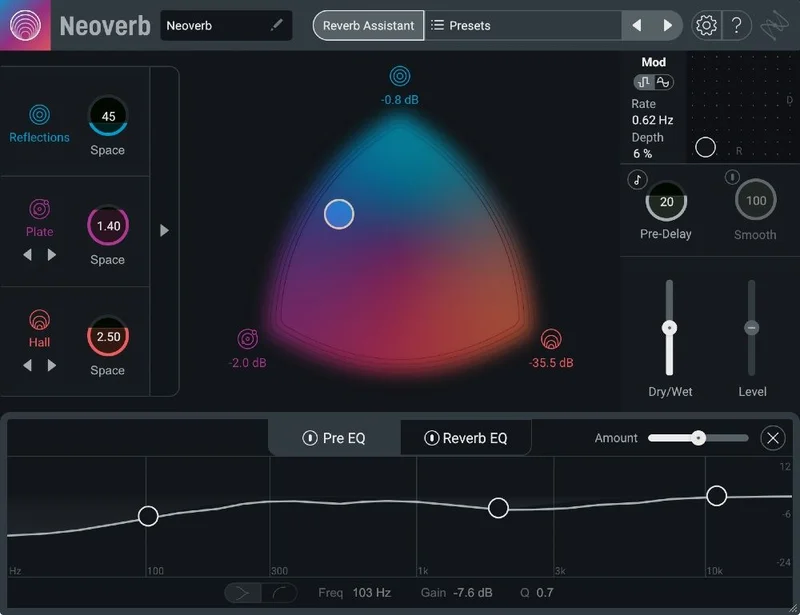
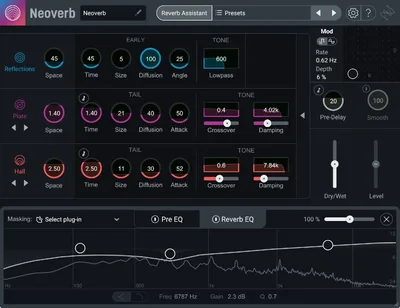
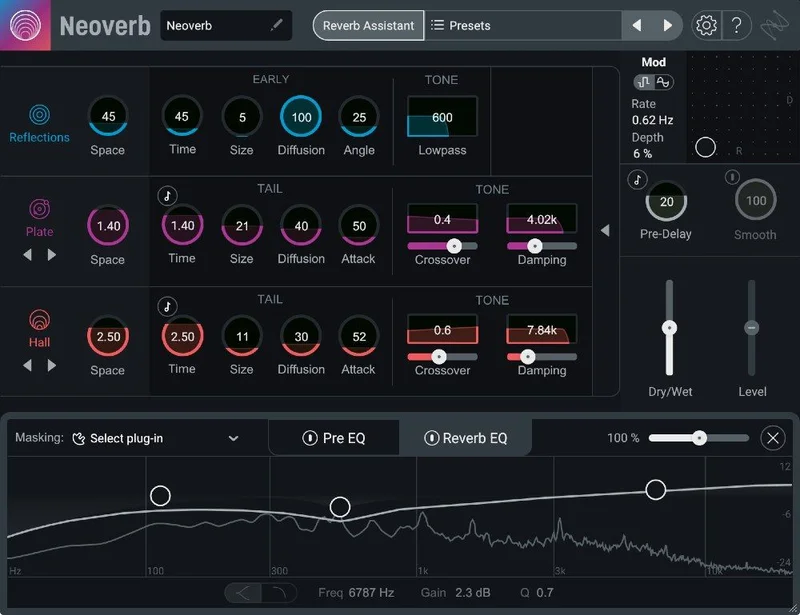
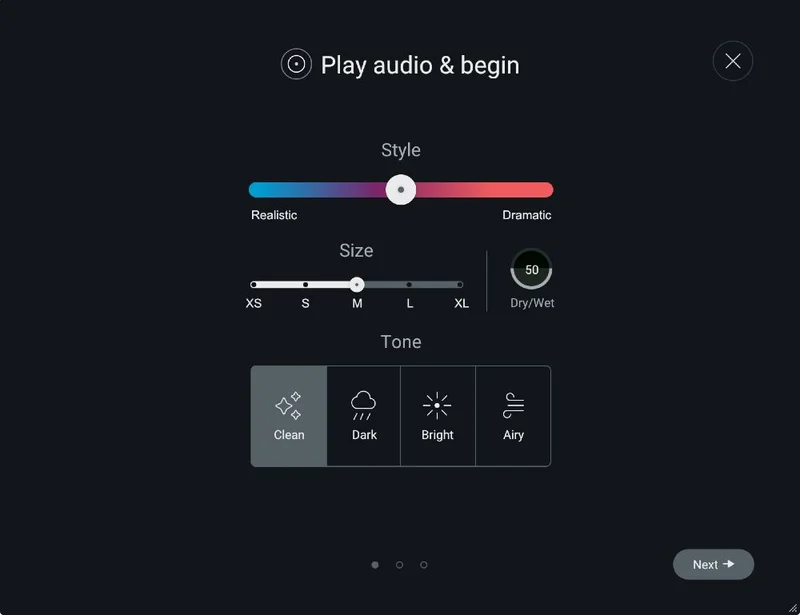
The core feature is the Reverb Assistant: you tell it what you're treating (vocal, guitar, full mix), and it sets up an initial reverb in seconds. From there, you can blend up to three reverb types simultaneously inside a single instance. Think room plus plate plus hall, all feeding from one source, all tuned against each other.
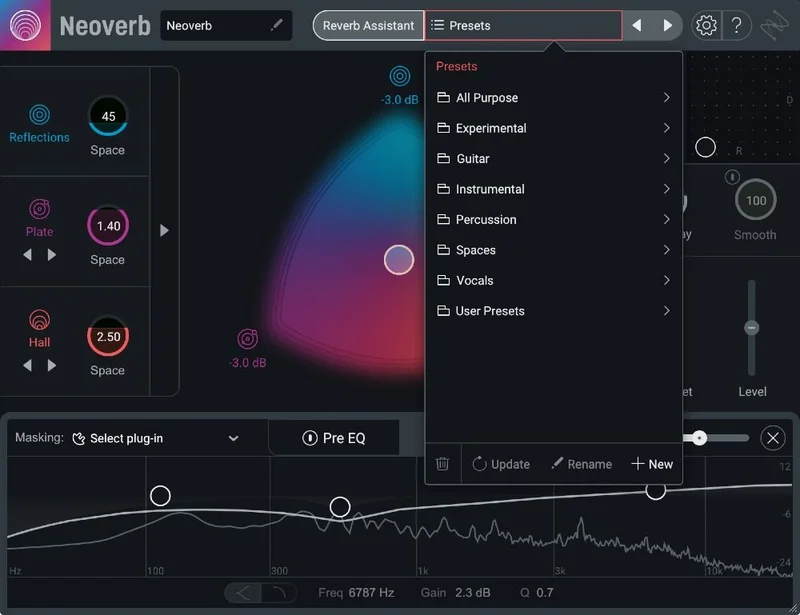
The built-in EQ applies pre- and post-reverb shaping inside the plugin itself. That means you can cut the low end before the reverb engine even sees it, which stops mud from building up in your low mids before it ever hits your bus. Over 100 presets ship with the plugin, covering vocals, guitars, and more experimental spatial sounds.
The Good
We loaded a dry vocal take, a close-mic'd singer with some room bleed, and let Reverb Assistant analyze it. It suggested a room/plate blend with the pre-delay set to 22ms. That's not a guess. It's reading the transient structure and spacing the tail accordingly. We adjusted the plate contribution down by about 30% and it sat clean. No masking on the consonants. That's satisfying in a way that dialing in reverb manually for 20 minutes isn't.
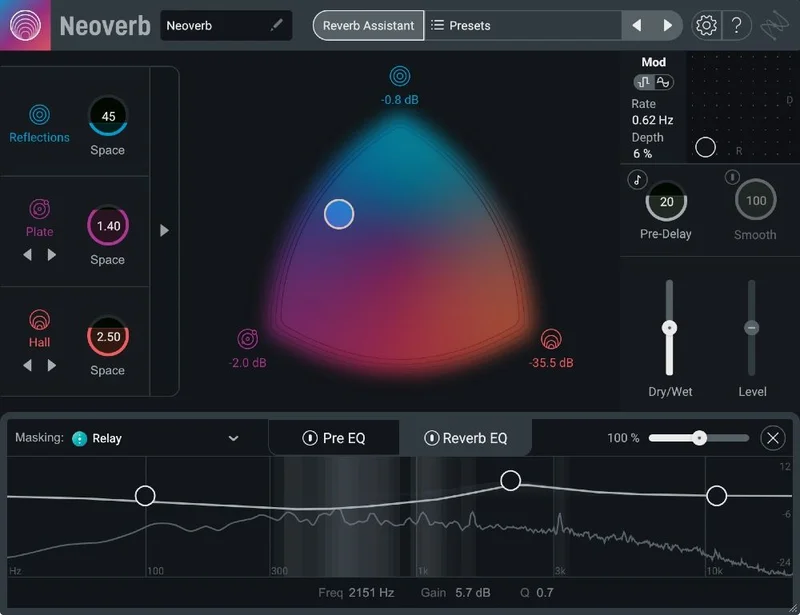
The three-reverb blend architecture is the most underrated part of this plugin. Running hall plus plate at a 60/40 ratio with a subtle chamber underneath gives you a sense of physical space that one algorithm rarely achieves. We've used this on acoustic guitars and the depth reads even on laptop speakers.
The internal EQ is a genuine time-saver. A high-pass at 180Hz and a shelf cut above 8kHz on the reverb return keeps things from piling up without reaching for a separate EQ in your signal chain. That's one fewer plugin instance in your session.
The Not-So-Good
The crossgrade price is frustrating. At $149, you're paying $50 more than the standalone full version, which is listed at $99 on Native Instruments' site. That's not a discount for loyalty. That's iZotope asking existing bundle customers to pay a premium for the privilege of crossgrading through a specific channel. We hate this.
The preset library has just over 100 entries. For a plugin that markets itself as a fast, AI-powered shortcut, that's thin. Valhalla Reverb ships with 72 presets and costs $50. Neoverb's presets are well-curated but there aren't enough of them to cover edge cases without starting from scratch.
The UI is annoying when you're trying to compare two reverb blend configurations. There's no proper A/B toggle. You're saving snapshots and switching manually, which breaks the creative flow. For a plugin aimed at speed, that's a real design gap.
Compared to the Alternatives
Valhalla Room costs $50 and sounds brilliant on room and chamber settings. It doesn't have AI assistance or multi-reverb blending, but its tail quality rivals Neoverb on single-algorithm tasks. If you're happy dialing in reverb manually, Valhalla wins on price every time.
Native Instruments Raum is often bundled into Komplete packages and handles experimental spaces better than Neoverb. It's more of a sound design tool than a mix tool, though. Neoverb is more practical on a vocal chain. Check our Reverb Plugins Guide for a broader breakdown
Soundtoys' upcoming SpaceBlender takes a weirder approach to reverb blending. Read our SpaceBlender Review It's more creative, less grab-and-go. Neoverb is faster. SpaceBlender is more interesting. Pick based on your workflow.
Apogee's Clearmountain's Spaces is worth mentioning too. See our Clearmountain's Spaces review It's a different philosophy: you're paying for captured spaces, not alg
orithms. Neoverb is more flexible but Clearmountain’s sounds more specific and character-driven.
Who Should Buy This
- ✅ Buy if you own MPS or MPB and are already purchasing a bundle upgrade that happens to include the crossgrade at no extra cost.
- ✅ Buy if you want AI-guided reverb that blends up to three algorithms and don't mind paying for that convenience.
- ✅ Buy if you're working fast sessions where setting up reverb chains manually costs you creative momentum.
- ❌ Skip if you want Neoverb as a standalone purchase. Buy the $99 full version directly. Don't pay $149 for the crossgrade.
- ❌ Skip if you're a sound designer chasing unusual spaces. Raum or SpaceBlender will get you further.
- ❌ Skip if your reverb work is mostly single-algorithm. Valhalla Room at $50 does that better, for less.
Score Breakdown
| Category | Score | Notes |
|---|---|---|
| Sound Quality | 4.3/5 | Exponential Audio engines deliver clean, pro-grade tails with no obvious artifacts |
| Value for Money | 2.5/5 | Crossgrade costs more than the full version. Hard to justify on price alone. |
| Ease of Use | 3.8/5 | Reverb Assistant is clever but the lack of A/B switching slows creative decisions |
| Features | 4.0/5 | Three-reverb blending and built-in EQ are genuinely useful; preset count is low |
| CPU Efficiency | 3.5/5 | Medium load with all three engines running; fine for modern machines |
| Overall | 3.8/5 | Great plugin, broken pricing for the crossgrade path specifically |
Alternatives to Consider
Valhalla Room ($50): The honest alternative for single-algorithm reverb work. Sounds clean, costs less, runs light on CPU. No AI, no blending. Just great reverb. Reverb Plugins Guide
Native Instruments Raum (bundled in Komplete): Better for experimental sound design and unusual spaces. Weaker as a go-to mix tool. If your reverb needs lean creative, look here first.
Apogee Clearmountain's Spaces: Captured real-room IR character versus Neoverb's algorithmic flexibility. More opinionated, more specific. Clearmountain's Spaces Review We'd pick Neoverb for versatility and Clearmountain's for character.
The bottom line is simple. Neoverb is a well-designed reverb plugin with real professional quality underneath the AI surface. The crossgrade at $149 is a trap. Buy the $99 full version instead, unless you're in a bundle deal where this crossgrade drops below that price. That's the only scenario where this pricing makes sense. For everyone else: go direct.
Frequently Asked Questions
Does the Neoverb crossgrade make financial sense compared to buying the full version?
Not on its own. The crossgrade is listed at $149 while the full standalone version costs $99 on Native Instruments' site. You'd only get value from the crossgrade path if it's included as part of a larger bundle upgrade at no additional cost. Always check current pricing on the manufacturer's site before purchasing.
What is the Reverb Assistant and how much does it actually help?
Reverb Assistant analyzes your incoming audio, identifies the source type you've selected (vocal, guitar, mix, etc.), and sets an initial reverb configuration based on the transient structure and frequency content. It gets you to a usable starting point faster than dialing in from scratch. It's not a replacement for manual adjustment, but it cuts setup time significantly on fast sessions.
Can you run Neoverb alongside other iZotope plugins without license conflicts?
Yes. Neoverb activates through iZotope's Product Portal or Native Instruments Access depending on how you purchased it. It runs independently from other iZotope products in your session. Crossgrade activation requires you to verify ownership of an eligible MPS or MPB version before the license unlocks.
How does Neoverb's three-reverb blending actually work in practice?
You select up to three reverb types from the available algorithms (room, plate, hall, chamber, etc.) and set a blend ratio between them. All three run inside a single plugin instance. You control the contribution of each type independently, and the built-in EQ applies pre- and post-reverb shaping to the combined output. It's one of the more useful creative tools in the plugin, particularly for building complex spatial textures on vocals or guitars.