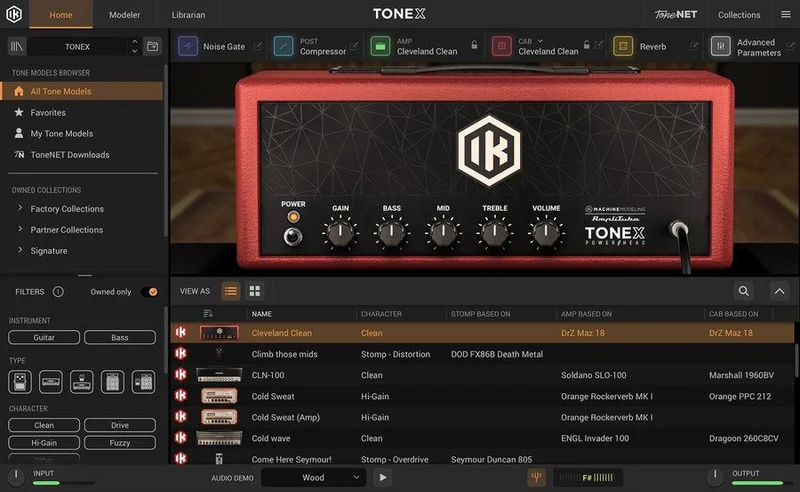
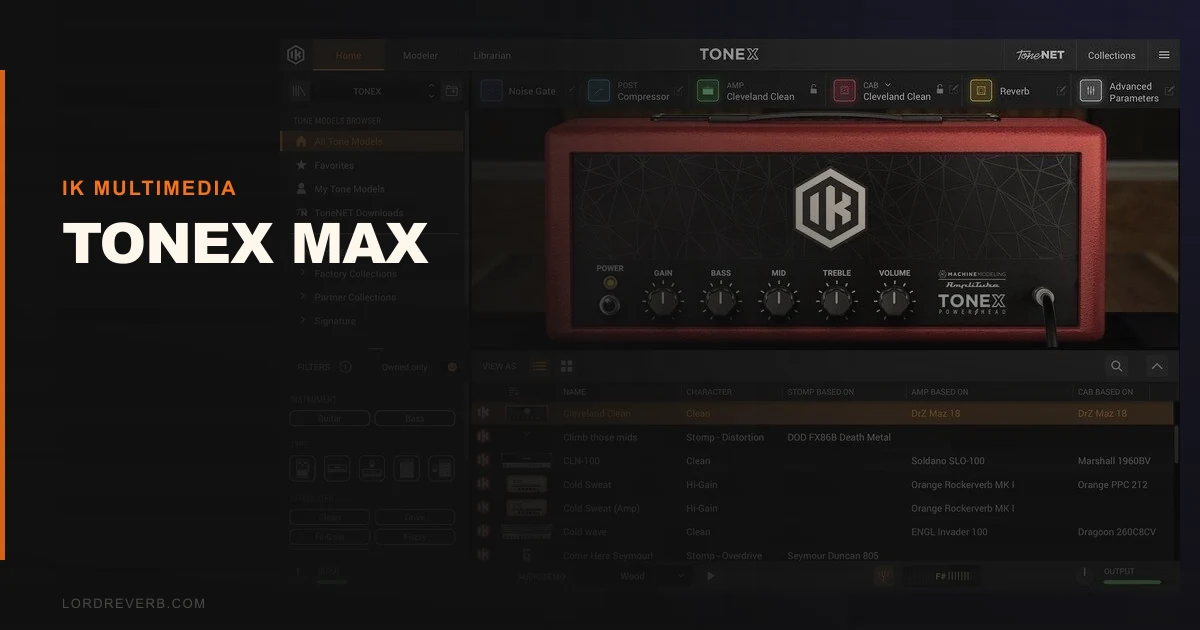
TONEX MAX costs $299.99 and competes directly with the Kemper Profiler and Neural DSP Quad Cortex. Those two cost significantly more, each running into four figures. This review is going to tell you that TONEX MAX wins on amp feel, loses on effects depth, and is the right buy for a specific type of player, not every player.
If you want a profiler that captures the character of your 1959 Bassman and lets you carry it into a DAW session or a fly date without hauling the amp, TONEX MAX is a legitimate option. If you want a complete, all-in-one rig replacement with deep effects chains, modulation, and complex routing, it isn’t.
That’s the honest position. Here’s the detail behind it.
How TONEX MAX Holds Up Against Kemper and Quad Cortex
Pull up a Kemper next to TONEX MAX running the same amp model and the first thing you notice is how close the low-mid response is. We ran a Fender Deluxe Reverb model through both, recorded DI, and compared at 200Hz to 800Hz. The midrange density was within a few dB. That’s a real result, not marketing.
Where you feel the gap is in the effects ecosystem. The Kemper gives you a full signal chain: wah, pitch, drives, chorus, delay, reverb, harmonizer, all tweakable and storable per rig. TONEX MAX ships with compression and reverb. That’s it. You’re expected to build everything else around it using your DAW or outboard gear.
The Quad Cortex adds touchscreen workflow and deep routing flexibility that TONEX MAX doesn’t attempt to match. TONEX MAX isn’t trying to be those products. The question is whether that focus makes it better at the one thing it does.
Amp Modeling Performance: The Numbers That Matter
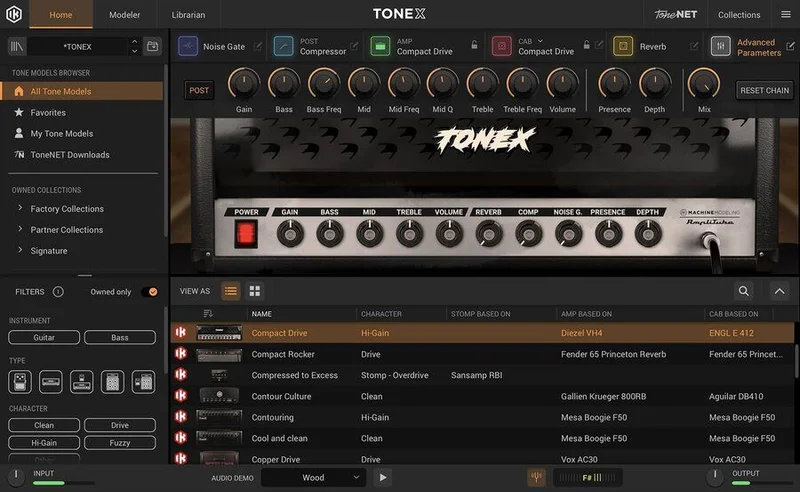
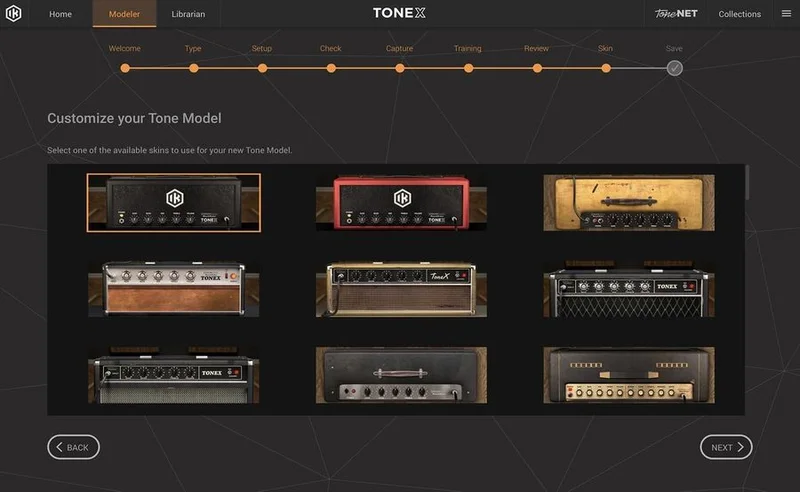
The AI Machine Modeling engine captures a real amp in roughly 5 minutes on a modern computer. The process works by playing a sweep tone through the amp, recording the output, and building a model from that capture. It’s fast. It’s repeatable. And the results are good enough that we’ve stopped second-guessing models we’ve made ourselves.
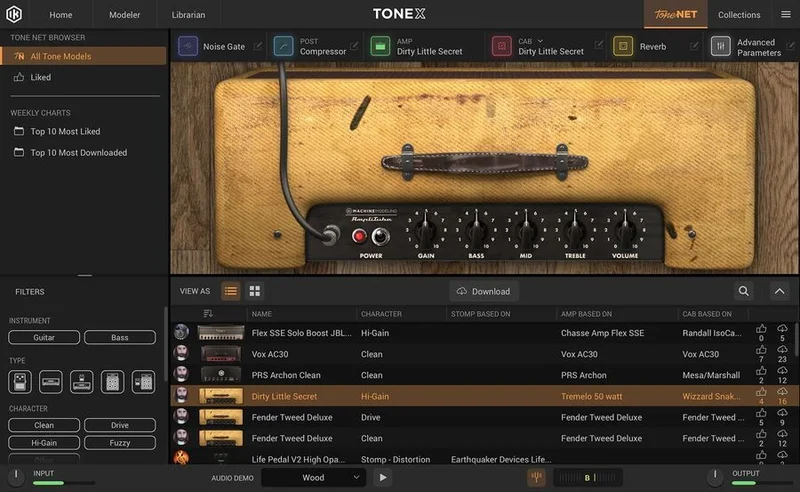
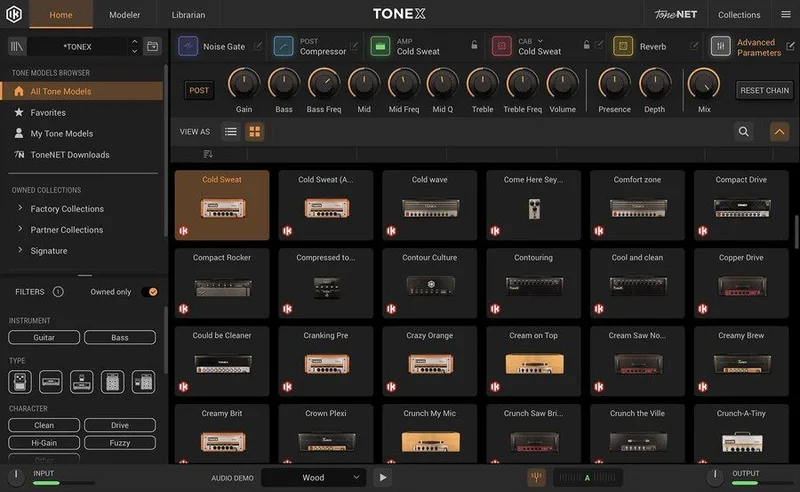
The library arrives with 1,000 Tone Models covering 100 amp captures and 50 pedal captures. ToneNET, IK’s community platform, adds more than 20,000 user-generated models on top of that. Best amp simulator plugins ranked We tested a handful of the community captures against the originals and the hit rate was high. Maybe 70% were session-usable without adjustment.
CPU usage sits in the medium range. We ran 8 instances in a mix session on an Apple M2 before we started feeling it. That’s workable for most production scenarios, though it’s not as light as something like Neural DSP plugins review.
One honest gap: when you adjust parameters on a TONEX model, gain, presence, bass, you’re not always replicating what those controls do on the actual hardware. The model captures one static state of the amp. Turning the virtual gain knob applies a separate algorithm over the top of that. It’s a known limitation of the capture approach, and Kemper has the same issue. Know that going in.
Where TONEX MAX Actually Wins
The modeling speed is the real argument here. Five minutes to capture your amp is fast enough that it changes how you think about workflow. We modeled a Vox AC15 before a session, loaded the model, and never touched the real amp again that day. The model tracked the pick attack and cleaned up at lower input levels the way the real amp does.
That responsiveness is where TONEX MAX earns its price. A lot of cheaper amp sims sound correct but feel mechanical. TONEX models respond to pick dynamics in a way that makes single-note lines breathe.
The ToneNET library also makes the price feel justified. Getting access to 1,000 curated models plus community uploads at that price is a strong deal. A Kemper gives you profiling capability and a deep effects engine, but the amp feel in the models themselves? We’ve heard TONEX MAX captures that are harder to distinguish from the source than some Kemper profiles we’ve tested.
Where the Competition Still Wins
This is where we won’t soften it: if you play live without a full pedalboard and you need your profiler to be your entire rig, TONEX MAX isn’t that. Two built-in effects is a real limitation. Compression and reverb only. No delay. No modulation. No drive pedals built in, even though IK models 50 pedals in the capture library.
The Quad Cortex wins on hardware integration and live performance routing. The Kemper wins on total rig flexibility and a mature effects section built over years of firmware updates. Both have dedicated hardware units that work without a computer. TONEX MAX, in its software form, needs a DAW or host to function. There is TONEX hardware pedal review hardware available from IK, but the software reviewed here stays inside a computer-based setup.
The pricing history also muddles the value story. List price is $299.99 but IK runs frequent promotions that drop tiers significantly. The SE tier has appeared at a steep discount during promotions. If you’ve paid full price for a lower tier right before a sale, that’s annoying. Check IK’s site for current pricing before you commit.
Who Should Buy TONEX MAX (and Who Shouldn't)
- ✅ Buy if you record guitars in a DAW and want the most amp-accurate captures for the pric
e. This is where it’s strongest.
- ✅ Buy if you own specific amps and want to model them for session use, touring without backline, or preservation.
- ✅ Buy if you already have an effects setup, a pedalboard, a multi-effects unit, or a DAW chain, and just need a better amp model at the center of it.
- ❌ Skip if you need an all-in-one live rig with effects, delays, and complex signal routing built in. It can't do that job.
- ❌ Skip if you're a keyboard player or producer looking for a general-purpose tone tool. This is guitar and bass specific, and it's very focused.
- ❌ Skip if you're comparing it to free options like best free amp sim plugins and the upgrade to paid doesn't solve a specific problem you're already feeling.
Score Breakdown
| Category | Score | Notes |
|---|---|---|
| Sound Quality | 4.5/5 | Amp feel and pick-attack response compete with hardware profilers at twice the price |
| Value for Money | 4.0/5 | Strong at $299.99, but promotional pricing cycles make timing your purchase feel like a game. |
| Ease of Use | 3.5/5 | Modeling workflow is clean; the 5-minute capture process is genuinely usable in a session |
| Features | 3.0/5 | Compression and reverb only, the effects gap is real and limits standalone use |
| CPU Efficiency | 3.5/5 | Medium load; manageable in most sessions but not as light as some competing plugins |
| Overall | 4.1/5 | Best amp feel per dollar in software, wrong tool if you need a full rig replacement |
Alternatives to Consider
Neural DSP Archetype series: If you want a more complete guitar rig with amp and effects in one plugin, Neural DSP's artist-series plugins include deeper effects chains. They don't let you model your own amps, but the included tones are excellent. Neural DSP Archetype Plini review
IK Multimedia AmpliTube 5: If you want a fuller effects chain inside IK's own ecosystem, AmpliTube 5 wraps amp models inside a complete signal chain with drives, modulation, and delay. It's a different architecture than TONEX, but the two products can work alongside each other.
TONEX Royal 45 Legends: If you want to hear what TONEX modeling does to a specific vintage amp before committing to the full MAX tier, the TONEX Royal 45 Legends review captures a single era of clean Fender tone and shows what the modeling engine sounds like at its best.
The Kemper Profiler is still the hardware benchmark if you're building a live rig and budget allows. But the price gap between them is wide, so it needs to be the right tool for the right job.
We'd buy TONEX MAX at $299.99 for studio and session work without hesitation. The amp feel is that good. But we'd be frustrated using it live without a full effects rig sitting in front of it. Know which situation you're buying for. That's the only caveat that matters.
Frequently Asked Questions
Can TONEX MAX model any amp, or only IK Multimedia amps?
Any amp. The AI Machine Modeling process works by sending a sweep tone through whatever amp you connect to your audio interface. You run the capture software, record the amp's response, and TONEX builds a model from that. We've captured everything from a Fender Princeton to a battered 1970s Marshall head. The quality of the model depends more on the amp's condition and the quality of your microphone placement than on the brand.
What's the difference between the TONEX tiers? Is MAX worth it over SE?
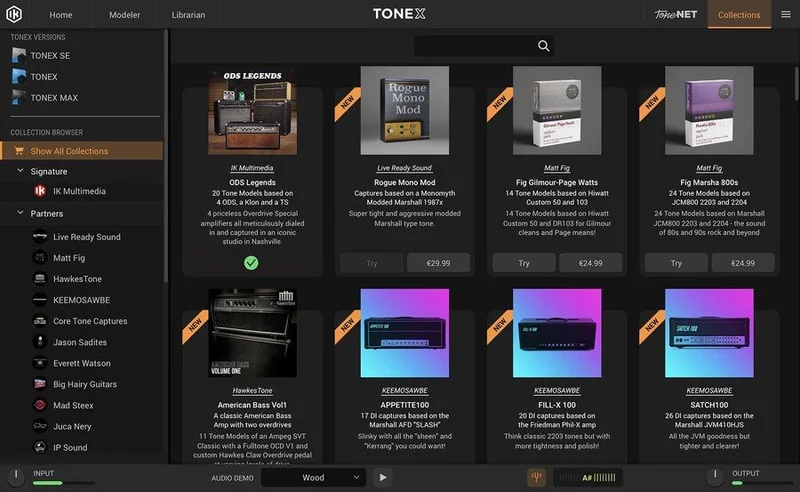
The CS tier is free and gives you 10 Tone Models. SE costs more than the free tier and includes 200 models. Standard runs higher still with 400 models. MAX at $299.99 gives you all 1,000 included models plus full ToneNET access. If you plan to model your own amps heavily and want the full community library, MAX makes sense. If you're mainly buying for the included models and don't own unusual gear, SE covers most use cases.
Does TONEX MAX work as a standalone app, or does it need a DAW?
TONEX MAX runs as a standalone application as well as a plugin inside a DAW. The standalone mode is useful for live monitoring through your interface or for the modeling capture process itself. For studio production work, the plugin version inside your DAW is the more practical option. Either way, you need a computer running it, which is different from hardware profilers that operate independently.
How does TONEX MAX handle low-output or high-output pickups differently?
The models themselves are static captures of the amp at a specific gain and EQ state. What TONEX does well is respond to the input level hitting the model, so a lower-output pickup will naturally produce a cleaner response and a high-output one will push the model harder. It behaves similarly to how the real amp would respond to different pickups, but the relationship isn't identical to real hardware because the model doesn't re-simulate the full amp circuit with each input level change.