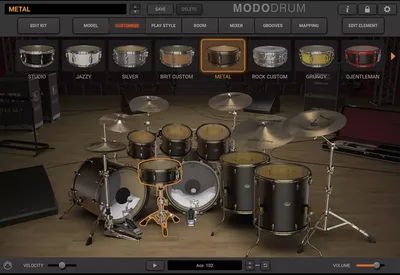
We were tracking a death-metal demo at 2am, needing a kick drum that sat somewhere between a click and a boulder, and the Metal kit in MODO DRUM delivered it in about four minutes of dial-in. No loading screens killing momentum. No hunting through 47 folders of samples. We adjusted the diameter from 22” to 24”, cranked the damping, dropped the tuning 15%, and the thing was done. That speed matters. This review is for producers who want to stop thinking about drums and start finishing tracks.
What the Metal Kit Actually Is (and What It Isn't)
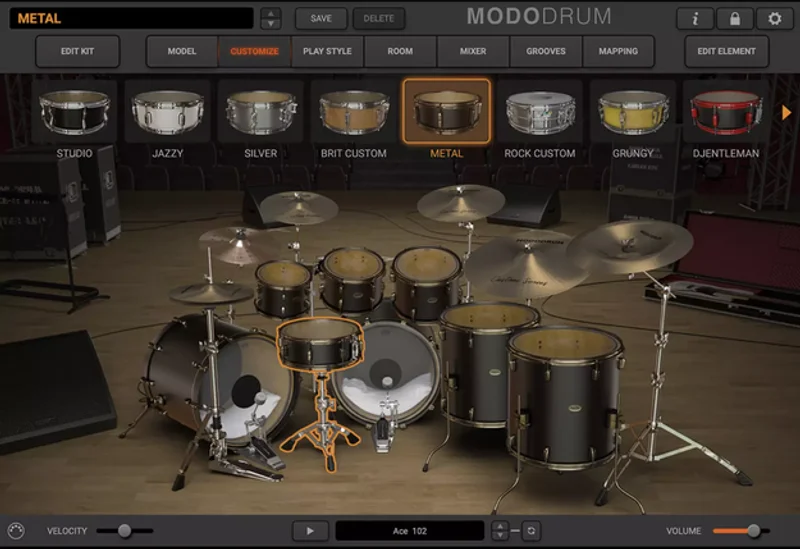
MODO DRUM Metal is a $49.99 add-on kit for IK Multimedia’s physically modeled drum engine. It’s an 8-piece shell pack with 6 custom cymbals, built for dark, aggressive tones. The modeling engine calculates drum physics in real time rather than playing back recorded samples.
It is not a Superior Drummer 3 replacement if you live and die by deeply layered multi-mic sample realism. It’s not the right call for jazz or acoustic folk either.
What it is: a fast, lean, endlessly tweakable metal kit that costs less than a decent crash cymbal.
Living With the Metal Kit Day-to-Day
Setup is clean. Install via IK Product Manager, authorize once, open in your DAW, done. We had it running in Logic Pro in under eight minutes.
The GUI is where MODO DRUM earns its reputation. You’re working with physical parameters: shell diameter, depth, damping material, head tension, beater type. Not sample layers. Drag a slider and the physics recalculate. We loved that. It feels closer to actually sitting behind a kit than scrolling through velocity layers in a browser.
The 1,400-plus grooves are sorted by genre and intensity. For metal specifically, there’s solid coverage of blast beats, double-kick patterns, and mid-tempo groove metal. We did hit an annoying gap: there’s no way to search grooves by BPM inside the browser, so finding patterns for a 195 BPM track meant scrolling manually.
The Djentleman kit, a separate option in the MODO DRUM ecosystem, is worth comparing here. Where the Metal kit has a fatter, more mid-forward kick, Djentleman goes razor-sharp and scooped. For Meshuggah-adjacent polyrhythm work, Djentleman wins. For death metal or sludge, the Metal kit is the call.
M1 native support landed in v1.5 and it shows. On an M2 MacBook Pro, we saw 4-7% CPU at typical metal tempos with full kit triggering. That’s light.
The Real Trade-Offs
The modeling technology is brilliant at tuning and damping control. It’s frustrating when you need that final 5% of transient aggression on the kick.
Here’s the honest breakdown: we ran the Metal kit kick against a Superior Drummer 3 kick from the Metal Foundry expansion. The SD3 sample had a sharper, more immediate transient crack at the attack. The MODO kick had a fuller, rounder low-end body. Neither is wrong. But for modern metal production where the kick needs to cut through down-tuned guitars in the 80-200Hz range, SD3 drew first blood on pure impact.
The cymbals are where modeling still has ground to cover. The 6 included custom cymbals sound usable, not inspiring. Ride articulations especially feel slightly flat compared to what you’d get from a library of recorded cymbals with 12 velocity layers and four mic positions. That’s the trade-off you accept for not managing a 40GB library.
Against the Field: How It Stacks Up
EZ Drummer 3 review is the easiest comparison. EZ Drummer wins on cymbal realism and drag-and-drop MIDI simplicity. MODO wins on customization depth and CPU footprint.
Addictive Drums 2 review is closer. AD2 sounds polished out of the box and has great metal expansions. MODO beats it on physical control. AD2 beats it on pre-built tone quality if you don’t want to tweak.
Superior Drummer 3 review is the outlier. SD3 is the most realistic virtual drum system on the market, but it costs 4x more, needs a serious SSD, and takes time to dial in. If you’re doing professional metal releases and need maximum realism, SD3 is the call. For demo work, bedroom production, or any project where you want drums handled fast, MODO Metal is smarter.
The Real Verdict
At $49.99, the MODO DRUM Metal kit is one of t he smartest purchases in virtual drum production for metal producers. The physical modeling makes tuning feel intuitive. The CPU load is light. The groove library covers the genre well enough.
We’d skip it if your priority is cymbal realism or that last 5% of kick transient bite on professional releases. We’d buy it if you want a fast, tweakable metal kit that doesn’t eat your drive or your RAM.
It’s not the most realistic metal drum plugin. It’s probably the most useful one at this price.
Score Breakdown
| Category | Score | Notes |
|---|---|---|
| Sound Quality | 3.8/5 | Strong body and tone; kick transient trails sample-based rivals |
| Value for Money | 4.5/5 | $49.99 for a physically modeled, fully customizable kit is hard to argue with |
| Ease of Use | 4.0/5 | GUI is intuitive; no BPM search in groove browser is annoying |
| Features | 4.0/5 | Physical modeling parameters are deep; 1,400+ grooves cover metal well |
| CPU Efficiency | 4.5/5 | M1/M2 native, light footprint, no large sample library needed |
| Overall | 4.1/5 | Best-in-class value for metal drum modeling; not the realism leader |
Alternatives to Consider
If the kick transient issue is a dealbreaker, Superior Drummer 3 Metal Foundry review is the professional-grade option. Sample depth and realism that MODO can’t match. Budget for drive space and a higher price point.
If you want something genre-specific and simpler, EZ Drummer 3 Metal review is worth a look. Less customization depth, faster workflow from zero, excellent cymbal samples.
For djent and modern progressive metal specifically, MODO DRUM Djentleman kit review is the sharper pick within the same ecosystem. Same engine, different personality.
The Metal kit’s closest internal competition is the Djentleman kit at the same price. Buy the Metal kit for sludge, death metal, and hard rock. Buy Djentleman for polyrhythmic, scooped modern metal. They’re not the same job.
If you’re undecided, download the free version of MODO DRUM first. It’s fully featured and will tell you everything you need to know about whether the engine is right for your workflow before you spend a cent.
Physical modeling for drums is still catching up to sample realism at the top end. But for $49.99 and practically zero drive space, MODO DRUM Metal is the smartest starting point for a metal drum rig we’ve tested at this price.
Frequently Asked Questions
Does MODO DRUM Metal Kit work as a standalone plugin or does it need the full MODO DRUM?
The Metal kit is an expansion for MODO DRUM, not a standalone product. You need the MODO DRUM engine to run it. The good news: MODO DRUM has a free version that's fully functional, so you can download that first and add the Metal kit for $49.99 without paying for the full bundle.
How does physical modeling compare to sample-based drums for metal production?
Physical modeling calculates drum physics in real time rather than playing back recorded audio. That means unlimited tuning control and zero disk streaming, but it can't perfectly replicate the complex transient layering of a recorded kit. For metal, the difference shows most on kick drum attack and cymbal detail. We'd call it 85% of the way to sample-based realism at a fraction of the storage cost.
Is the MODO DRUM Metal kit good for djent and progressive metal?
It works for djent, but we'd steer you toward the Djentleman kit in the same MODO DRUM ecosystem if that's your primary genre. The Metal kit has a fatter, rounder character. Djentleman is tighter and more scooped, which sits better under heavily palm-muted, down-tuned guitar work. Both are $49.99.
Does MODO DRUM Metal Kit support Apple Silicon natively?
Yes. IK Multimedia added M1 native support in version 1.5. We tested on an M2 MacBook Pro and CPU load stayed between 4-7% at 160 BPM with full kit triggering. No Rosetta 2 translation needed, which keeps the CPU footprint genuinely light.