Cinematic Cymbals by Have Audio is one of the most focused, texturally honest cymbal libraries available for Kontakt in 2026, and at $39 it's hard to argue with its price-to-content ratio for dark scoring work.
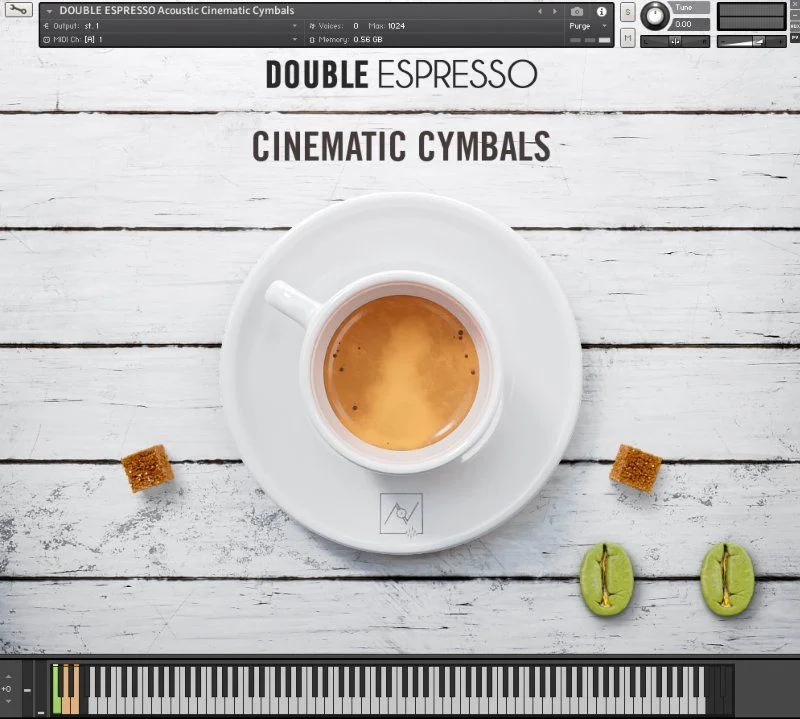
We loaded the Acoustic .nki first. A long bowed cymbal swell came in around C3. No attack transient to speak of, just this slow, shimmering wall of metallic air that kept widening. We held the key for eight seconds. The room breathed around it. We didn't touch anything for a while after that.
That's the moment this library earns its keep. Not in the FX patches or the Dystopian pad, though those have real value too. It's in those core acoustic sources, performed by Jim Black, one of New York's genuinely inventive percussionists, that you feel the library's personality.
This is built for film composers working in horror, industrial, Trent Reznor-adjacent territory, or any score that needs menace with texture. If you're scoring wedding videos, close the tab.
What It Is (and What It's Not)
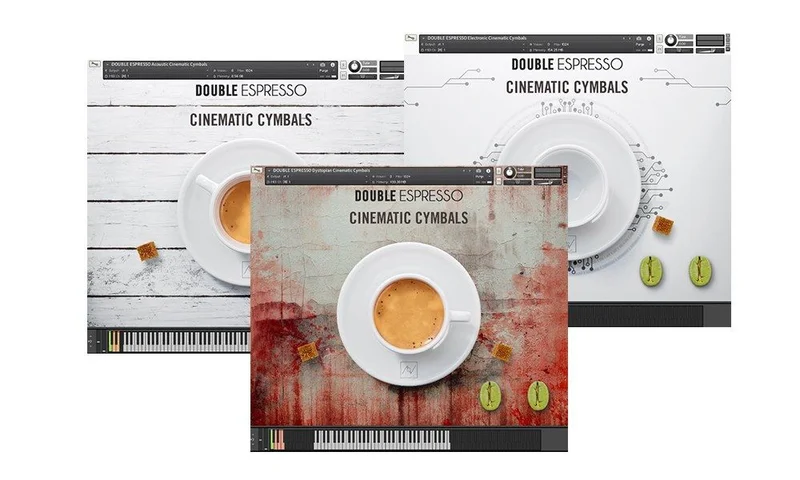
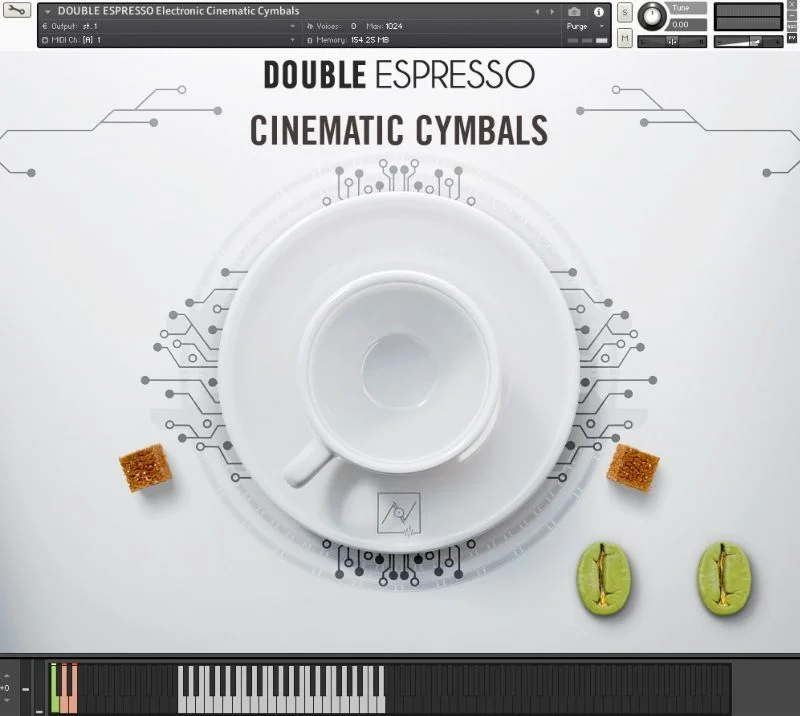
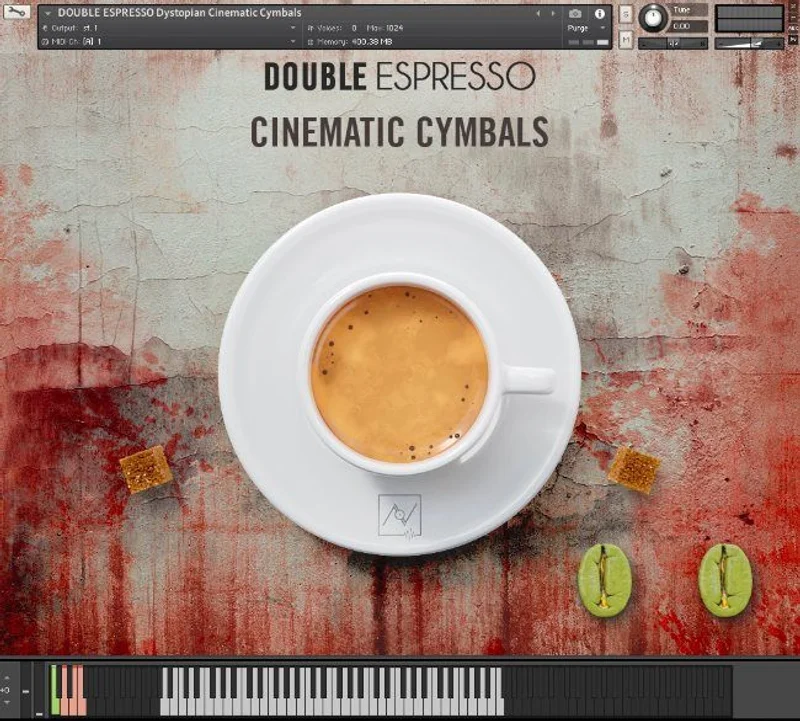
Cinematic Cymbals is a 620-sample library spread across three Kontakt instruments: Acoustic, Electronic, and Dystopian. The uncompressed size sits at over 1,700 MB. That's not a bloated number for what you get.
The sound banks cover bowed cymbals, reverse bowed cymbals, ghostly textures with super ball friction mallets, tuned bowed cymbals you can actually play chromatically, enchanted minor chords, a Dystopian pad, and a Stochastic pad with aleatoric behavior. That last one is genuinely clever for generative or indeterminate scoring.
What it's not: a general-purpose percussion library. You won't find impacts, hits, or anything rhythmically driven here. It won't replace a broad cinematic toolkit like Gravity 2. It exists specifically in the sustained, textural, ambient-horror corner of sound design. Know that going in.
It also won't run in Kontakt Player. Full Kontakt 5.6.8 or higher is required. That's a hard wall for some buyers and Have Audio is upfront about it.
Living With It
Setup is clean. Three .nki files, around 2 GB on disk, drop straight into your Kontakt browser. No iLok. No serial gymnastics. You're playing within five minutes of download.
The Acoustic edition is where we spent most of our time. The 446 samples here carry the most expressive range. Three keyswitches let you move between the bowed textures, the super ball material, and the tuned bowed cymbals. The keyswitch response is snappy enough that you can use it in a live performance pass without stumbling.
The tuned bowed cymbals deserve specific attention. They're playable across a usable register and hold their pitch convincingly. We layered one an octave below a string pad on a horror cue and it sat in the mix without fighting for space. That kind of low-frequency metallic shimmer is hard to fake with synthesis and hard to find sampled.
The Electronic and Dystopian editions take those same source recordings and run them through analogue modular processing and effects pedals. The result is less immediately musical but more directly useful for industrial and post-apocalyptic scoring. The Stochastic pad in particular generates results you can't fully predict, which is either frustrating or satisfying depending on your workflow. For us, mostly satisfying.
The built-in FX chain includes a filter, tape saturation, distortion, a convolution reverb, a "Metallic Echoes" IR effect, and a low-end drone. The convolution reverb sounds good. Not transcendent, but good. The Metallic Echoes IR is the standout: it adds a resonant, pitched decay that works brilliantly on the tuned sources. If you want to compare this kind of textural approach, it holds up well against considerably more expensive options.
One area where specialist reviewers have flagged issues: velocity crossfade implementation. Users report the transitions between velocity layers aren't always smooth, with occasional steppy behavior on the bowed sources when playing expressively. We noticed it. It's not a dealbreaker, but it's real.
The Trade-Offs
The honest story here is specificity versus versatility. Everything that makes Cinematic Cymbals good at what it does also makes it useless outside that zone.
The organic acoustic core is its clearest strength. Jim Black's performances have a human looseness that separates this from synthetically generated cymbal pads. You hear slight imperfections in the bowing that give the samples life. That's not a flaw. That's the point.
The FX suite is deeper than you'd expect at this price. Tape saturation and distortion on top of bowed cymbal sources produces genuinely usable harmonic distortion for darker cues. The low-end drone effect adds weight without muddying the midrange shimmer.
The trade-off is that the library doesn't scale well toward melodic work. The tuned sources cover useful territory, but the overall pitch range and expressiveness won't satisfy composers expecting something like a dedicated cinematic pad instrument. The velocity crossfade gaps make sustained melodic lines feel slightly mechanical in places.
For texture-forward work, those gaps matter far less. A horror sting or an industrial bed doesn't need perfect velocity transitions. A lyrical pad does.
Against the Field
Spitfire's cymbal and metals content within their larger libraries is more polished and has smoother velocity mapping, but it costs dramatically more and you're buying a lot of sounds you may never touch. Cinematic Cymbals is a precision instrument. Different tool for a different job.
Impact Soundworks has produced excellent metallic textures in their percussion libraries. Their programming is generally tighter. But they don't have Jim Black's extended technique performances, and the Have Audio material sounds more genuinely acoustic at its core.
Gravity 2 is the fuller cinematic toolkit comparison. It wins on breadth, rhythm, and production polish. Cinematic Cymbals wins on textural specificity and price. If you already own Gravity 2, this fills a gap it doesn't cover. If you own neither, Gravity 2 is the bigger foundational purchase.
For experimental and aleatoric scoring, nothing at this price point offers the Stochastic pad equivalent. That alone makes it interesting to composers building modular cinematic patch collections.
The Real Verdict
If you score horror, psychological thrillers, industrial soundscapes, or experimental film, buy this. It's focused, it's original, and Jim Black's performances are the real thing.
Skip it if you need broad percussion coverage, smooth velocity-mapped melodic instruments, or anything that runs in Kontakt Player. It won't bend to those needs and it won't pretend to.
At $39, the risk is low. The ceiling for what you can do with these textures in a dark score is genuinely high. We'd buy it again without hesitation for any project that lives in that specific emotional register.
Specs & Technical Details
| Developer | Have Audio |
| Price | $39 |
| Plugin Format | Kontakt Instrument (.nki) |
| OS Support | Mac / Windows |
| Activation | No iLok required; standard Kontakt library authorization |
| CPU Usage | Light to medium |
| Trial Available | No |
| Version Reviewed | N/A |
| Kontakt Requirement | Full Kontakt 5.6.8+ (Kontakt Player not supported) |
| Sample Count | 620 samples in .ncw format |
| Uncompressed Size | Over 1,700 MB across 3 instruments |
| Disk Space Required | Approx. 2 GB |
| RAM Recommended | 8 GB or more |
Score Breakdown
| Category | Score | Notes |
|---|---|---|
| Sound Quality | 4.5/5 | Jim Black's organic performances give these sources a textural authenticity that processed alternatives can't match |
| Value for Money | 4.5/5 | At $39 for this level of textural specificity and three distinct Kontakt instruments, the ratio is excellent |
| Ease of Use | 4.0/5 | Setup is painless; the built-in FX chain is intuitive; keyswitch navigation is clean |
| Features | 4.0/5 | Six sound banks, six built-in FX including Metallic Echoes IR and Stochastic pad cover real creative ground |
| CPU Efficiency | 4.0/5 | Loads and runs cleanly with no reported CPU strain; streaming behavior is standard Kontakt |
| Overall | 4.2/5 | A brilliant specialist tool for dark cinematic scoring, held back only by velocity crossfade gaps and the Kontakt Player exclusion |
Alternatives to Consider
Heavyocity Gravity 2 is the fuller cinematic percussion toolkit. Read our full Gravity 2 review to see whether the broader feature set justifies the step up in price. It wins on rhythm and production polish.
Baby Audio Cinematica Atoms Expansion approaches dark cinematic texture from a different angle, with processed organic sources and atmospheric layers. Our Cinematica Atoms review breaks down where it overlaps and where it doesn't.
ÆNIGMA by Beat/Zampler covers 64 cinematic patches including metallic and experimental textures in a non-Kontakt format. See our ÆNIGMA review if Kontakt dependency is a problem for your setup.
Cinematic Cymbals beats all three in one specific category: raw, human, extended-technique cymbal performance sampled at source. If that's what you need, nothing above replaces it.
This is one of those libraries that sits in a folder, gets opened for exactly the right cue, and absolutely delivers. That's enough. Buy it at $39, accept that it does one thing and does it with conviction, and don't expect it to be something it was never trying to be.
Related reviews: Glasis · Cathedral of Junk
Frequently Asked Questions
Does Cinematic Cymbals work with the free Kontakt Player?
No. This is one of the library's hard limits. You need the full version of Kontakt 5.6.8 or higher to run it. Kontakt Player will not load the .nki files. If you're on Kontakt Player only, this library is not an option for you until you upgrade.
What makes Cinematic Cymbals different from standard cymbal sample packs?
The source performances. Jim Black, a well-known New York percussionist, recorded extended techniques including bowing, super ball friction mallets, and aleatoric methods that produce sounds you won't find in standard percussion libraries. The Stochastic pad in particular generates unpredictable textural output that works well for experimental or indeterminate scoring. It's source-first, not synthesis-first.
Are the tuned bowed cymbals actually playable across a full range?
They're playable and hold pitch convincingly across a useful register for cinematic work. Specialist reviewers note velocity crossfade behavior can feel slightly steppy in places during expressive melodic lines. For texture and atmosphere work, that's rarely a problem. For lead melodic content, you'll want to supplement with a dedicated melodic instrument.
Is the built-in FX chain enough, or do you need external processing?
The built-in chain covers a filter, tape saturation, distortion, convolution reverb, the Metallic Echoes IR, and a low-end drone. That's a complete signal chain for most cinematic use cases. The Metallic Echoes IR is the strongest individual module. You can absolutely send these sources to external reverb or processing on top, but the library sounds finished without it.