
The Reverb & Delay Bundle from Black Rooster Audio is worth $49 if you want vintage-flavoured tape echo, spring and plate reverb in one install and don’t need deep surgical control. Skip it if you want every knob a hardware emulation could possibly offer.
Picture the session. You’ve got a vocal sitting dry and flat against a finished instrumental. You want a slapback with some grit, a plate that doesn’t wash out the consonants, and maybe a spring on the guitar bus.
That’s three different tools. Usually it’s three different purchases.
This bundle packs four plug-ins into one: TD-201, RO-SPR, RO-GOLD and RO-140. It’s built for bedroom producers, songwriters and mix engineers who want a vintage palette without a pile of separate licences. It’s wrong for anyone who needs the deepest possible feature set from a single reverb.
What's In The Box
Four plug-ins. Each one models a different piece of vintage hardware.
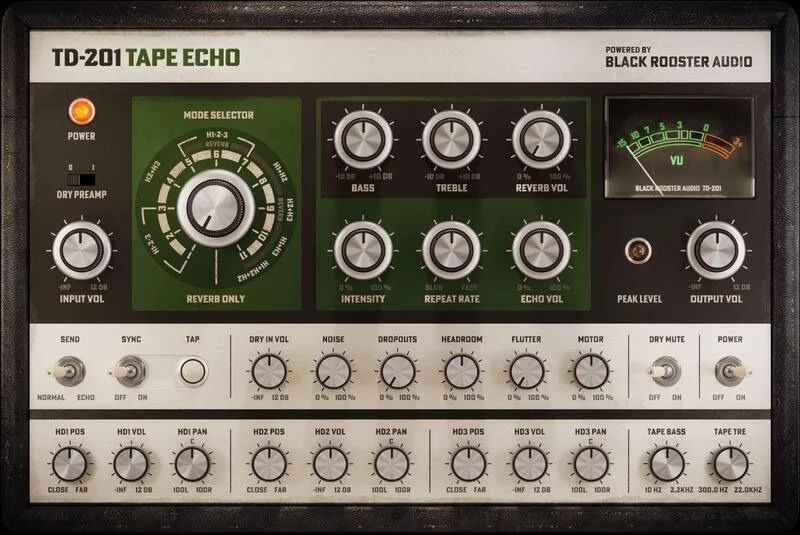
TD-201 is a tape echo. It has ping pong and deep space odyssey effect modes, plus what the developer calls countless customization options.
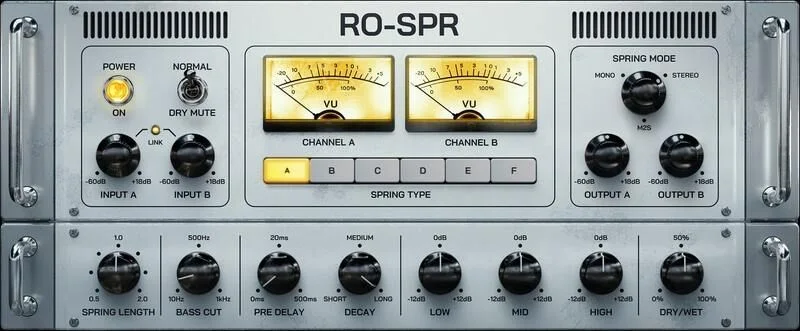
RO-SPR is a spring reverb with six spring types, a bass cut, a three-band EQ, and controls for spring length and mode.
RO-GOLD is modeled on gold-plate hardware, aiming for a mellow plate sound.
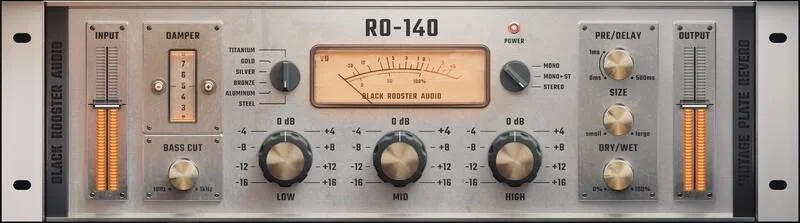
RO-140 is modeled on classic plate hardware and gives you six plate materials, dampening and pre-delay.
Under the hood, the plug-ins use real time SPICE type component based circuit simulation. They also model audio transformers, tube stages and passive filter networks. Oversampling adjusts itself automatically, using a low latency linear phase design.
On the Mac you need OSX 10.9 or newer, an Intel Core CPU or Apple Silicon M1/M2, and 1GB of RAM. Formats there are VST, VST3, AU and AAX, all 64bit.
On Windows you need Windows 7 or newer, an SSE2 compatible processor and 1GB of RAM. Formats are VST, VST3 and AAX.
Both platforms want a display of at least 1280x1024. HighDPI and Retina screens are supported.
Where It Fits In Your Workflow
Think of this bundle as your effects-return shelf. Four sends, four flavours, all in the box.
Set up the tape echo on one aux, the spring on another, and a plate on a third. Now you can throw any channel at any of them without opening a new plug-in every time.
That’s the whole appeal. It’s a ready-made set of sends.
Because owners report zero latency, you can leave these on during tracking. That matters if you monitor through your DAW and want a singer to hear a bit of plate while they perform.
Check your host first. Windows users running an AU-only workflow are out of luck, though AU is a Mac format anyway, so this rarely bites in practice.
Check your screen too. The minimum is 1280x1024, which is modest. But on a tiny laptop panel the interface may feel cramped.
What Does the TD-201 Tape Echo Do For Your Vocals and Guitars?
Throw it on a lead vocal and pick a short repeat. That’s the classic slapback move, and tape echo is where it lives.
The TD-201 is the bundle’s delay. The developer says it brings the unmistakable sound of a beloved tape delay unit into the 21st century. Users report warm, organic sounding delays with rich, vintage vibes.
Two effect modes stand out by name. Ping pong bounces repeats between the left and right sides. Deep space odyssey is the weird one, and we love that it’s there. It’s the mode you reach for when a bridge needs to dissolve into something strange.
Honest take: a tape echo lives or dies on character. Clean digital delays are everywhere. What you’re paying for here is the wobble and softness of the hardware idea. If your genre is polished pop with surgical, perfectly timed repeats, you may find this too characterful.
For lo-fi, psych, dub-leaning and indie work, it’s the right sort of messy.

Is the RO-SPR Spring Reverb Any Good?
Put it on a guitar and you’ll know in two seconds. Springs have a splashy, boingy quality, and this plug-in leans into it.
RO-SPR gives you six different spring types. That’s the main hook. Each type changes the character of the tank, so you can audition a few before committing.
There’s a bass cut, which matters more than it sounds. Springs on a full-range source can turn the low mids into soup. Rolling off the bottom before the reverb keeps your kick and bass from smearing.
The three-band EQ lets you shape the return itself. And spring length and mode controls let you decide how long and how wild it gets.
The developer says it adds character and psychedelic flair, and throws the listener back in time with a familiar yet mechanically roomy reverb. Fair enough. It’s not a subtle plug-in. A spring is a statement.
Use it on guitars, organs, a snare you want to sound a bit retro. Don’t use it where you want invisible space.
How Does RO-GOLD Handle a Dense Mix?
Now the plate you reach for when the mix is busy. Say you’ve got stacked vocals, a pad, and a busy hi-hat, and you need reverb that adds richness without turning the whole thing to fog.
RO-GOLD is modeled on million dollar gold-plate hardware. The developer says it delivers richness and density while maintaining clarity, and that it captures the true tone of a solid gold plate. The sound is described as mellow.
That mellow quality is the point. A plate that’s too bright fights with cymbals and sibilance. A mellow plate tucks behind the vocal.
One user who switched over from UAD reported it delivered the pure plate verb sound with more controls via band split. That’s a useful detail. Splitting the bands lets you treat low and high parts of the reverb differently, so you can keep the tail from muddying the bottom end.
It’s easy to dial in. The developer says it makes authentic vintage reverb easy to achieve, and owners report the same ease of use.
What Separates RO-140 From RO-GOLD?
Two plates in one bundle looks redundant. It isn’t, quite.
RO-140 is modeled on classic hardware, and the developer says it offers the ultimate reverb authenticity and captures the analogue unit’s sound and feel closely. Its controls are more hands-on: six plate materials, dampening and pre-delay.
Pre-delay is the big one for vocals. A gap of a few tens of milliseconds before the reverb starts keeps the dry voice clear and lets the plate bloom after the word lands. Dampening tames how much high end survives in the tail.
Here’s the catch, and we’ll be blunt about it. A reviewer notes you need a trained ear to hear the difference between the plate materials. Six choices sounds generous. In practice, many people will cycle through them and shrug.
That’s not a flaw so much as a reality of the hardware idea. But it means the materials selector is less of a selling point than it appears.
Another reviewer flags that the bundle lacks features compared to other EMT plugins, naming UAD’s EMT140. If you want every possible control on an EMT-style plate, this isn’t the maximalist option.
Does It Eat Your CPU?
No. This is where the bundle quietly wins.
One stress test on a Windows machine with an i3 processor and 8GB of RAM ran smoothly with low CPU usage. For a set of plug-ins doing real time circuit simulation, that’s a pleasant surprise.
The code is optimised with the SSE2 instruction set, and oversampling adjusts automatically. That auto-oversampling helps attenuate aliasing artifacts, per the developer, without you having to babysit a setting.
So you can run all four on separate sends in a big session and not watch your meter climb. That matters on older laptops and in dense projects.
Compare that to the usual worry with analogue-modeled reverbs, which can be CPU-hungry. Here, the worry mostly doesn’t apply.
Zero latency is the other practical win. Owners report it’s suitable for real-time monitoring or live settings. Plenty of reverbs force you to freeze or bounce before tracking. This one doesn’t.
Is the Reverb & Delay Bundle Worth $49?
Let’s talk value, because that’s the whole question here.
For $49 you get four plug-ins: a tape echo, a spring reverb, and two plates. Buying four separate tools of this type usually costs a lot more than one bundle. The maths favours the bundle if you’d use at least three of the four.
What’s missing at that price? Depth. The feature set is less comprehensive than some competing EMT plate implementations, and one reviewer says so outright. You won’t find an endless control surface here.
When is a cheaper or free alternative enough? If you only need one plain reverb and a basic delay, your DAW’s stock tools will do the job. Don’t pay for vintage flavour you won’t use.
When is paying justified? When you want character. Stock reverbs are clean and forgettable. The point of this bundle is a sound with grit, warmth and a bit of mechanical personality, ready on four sends.
Owners describe the whole thing as extremely easy to use, which also counts toward value. A tool you understand in five minutes gets used on more records than a deeper one you never learn.
The Rough Edges
Let’s be straight about what would make us hesitate.
The plate material differences are subtle. If you buy RO-140 expecting six dramatically different voices, you’ll be disappointed. A trained ear hears it. Most of us hear a small nudge.
The feature set is lean next to the most loaded EMT emulations. Power users who want every parameter exposed will feel boxed in. That’s annoying if you’re picky.
Windows format support is VST, VST3 and AAX only. No AU, which is fine because AU is Mac-only, but worth a glance at your host before you buy.
The system floor is modest at 1GB of RAM and a 1280x1024 display. Fine on modern gear. Older or smaller screens could feel tight.
And one more honest point. A bundle of vintage emulations is, by design, opinionated. If you want neutral, transparent space, look elsewhere.
Who This Is Really For
✅ Buy if you want a full vintage effects shelf (tape echo, spring, two plates) on four sends without juggling separate licences.
✅ Buy if you work on older or modest hardware and need low CPU use and zero latency for tracking.
✅ Buy if you value ease of use and want a sound you can dial in quickly rather than a deep manual.
❌ Skip if you want the most feature-rich EMT-style plate available, since reviewers say this one is lighter.
❌ Skip if you need clean, transparent, modern reverb and delay with no vintage character.
❌ Skip if you only need a single reverb or a single delay, because your DAW’s stock effects may already cover it.
Specs & Technical Details
| Spec | Detail |
|---|---|
| Developer | Black Rooster Audio |
| Price | $49 |
| Plugin Format | Mac: VST, VST3, AU, AAX (64bit). Windows: VST, VST3, AAX |
| OS Support | Mac (OSX 10.9+, Intel Core or Apple Silicon M1/M2) / Windows 7 or newer (SSE2 processor) |
| Activation | N/A |
| CPU Usage | Light (owners report low CPU use on an i3 with 8GB RAM) |
| Trial Available | N/A |
| Version Reviewed | N/A |
Score Breakdown
| Category | Score | Notes |
|---|---|---|
| Sound Quality | 4.0/5 | Owners report warm, organic delays and rich vintage vibes; plate materials are hard to tell apart. |
| Value for Money | 4.5/5 | Four plug-ins for one price covers tape, spring and two plates. |
| Ease of Use | 4.5/5 | Owners say it's extremely easy to use despite the hardware terminology. |
| Features | 3.0/5 | Lighter than some competing EMT plate plug-ins, per a reviewer. |
| CPU Efficiency | 4.5/5 | Smooth with low CPU use on an i3 with 8GB RAM; zero latency. |
| Overall | 4.0/5 | A friendly, light, characterful vintage bundle that trades depth for ease. |
The Verdict: Buy It For The Shelf, Not The Spec Sheet
Here’s where we land. At $49, the Reverb & Delay Bundle is a smart buy for anyone who wants a tape echo, a spring and two plates ready to go, running light, with zero latency.
It won’t win a feature war. A reviewer says it’s thinner than some rival EMT emulations, and we believe it. If you want to tweak every last parameter on a plate, you’ll hit the ceiling.
But most mixes don’t need a ceiling that high. They need a vocal that sits, a guitar with some splash, and a bridge that melts away on a tape echo. This bundle does that without fuss.
Buy it if you want a vintage effects shelf that gets out of your way. Skip it if you want the deepest plate emulation on the market, or clean modern space with no personality.
For the right producer, that’s a good deal. For the wrong one, hard pass.
Related reviews: Music Production Suite 9 · Can MTotalFXBundle Replace Your 108 Specialist Plugins?
Frequently Asked Questions
What plug-ins are in the Reverb & Delay Bundle?
Four plug-ins: TD-201 tape echo, RO-SPR spring reverb, RO-GOLD plate reverb and RO-140 plate reverb. Each models a piece of vintage hardware. They're sold together as one bundle by Black Rooster Audio.
Does the Reverb & Delay Bundle add latency?
Owners report zero latency. That makes it suitable for real-time monitoring or live settings. You can leave it running while you track instead of printing it later.
Will it run on an older computer?
Likely, yes. The minimum is 1GB of RAM on both Mac and Windows, plus a 1280x1024 display. One stress test on a Windows machine with an i3 and 8GB RAM ran smoothly with low CPU usage.
Which plug-in formats does it support?
On Mac you get VST, VST3, AU and AAX in 64bit. On Windows you get VST, VST3 and AAX. Check your host against those lists before buying.
Can you really hear the difference between the plate materials in RO-140?
A reviewer says you need a trained ear to notice it. The six materials are there, but the differences are subtle. Treat them as small tonal nudges rather than six dramatically different reverbs.