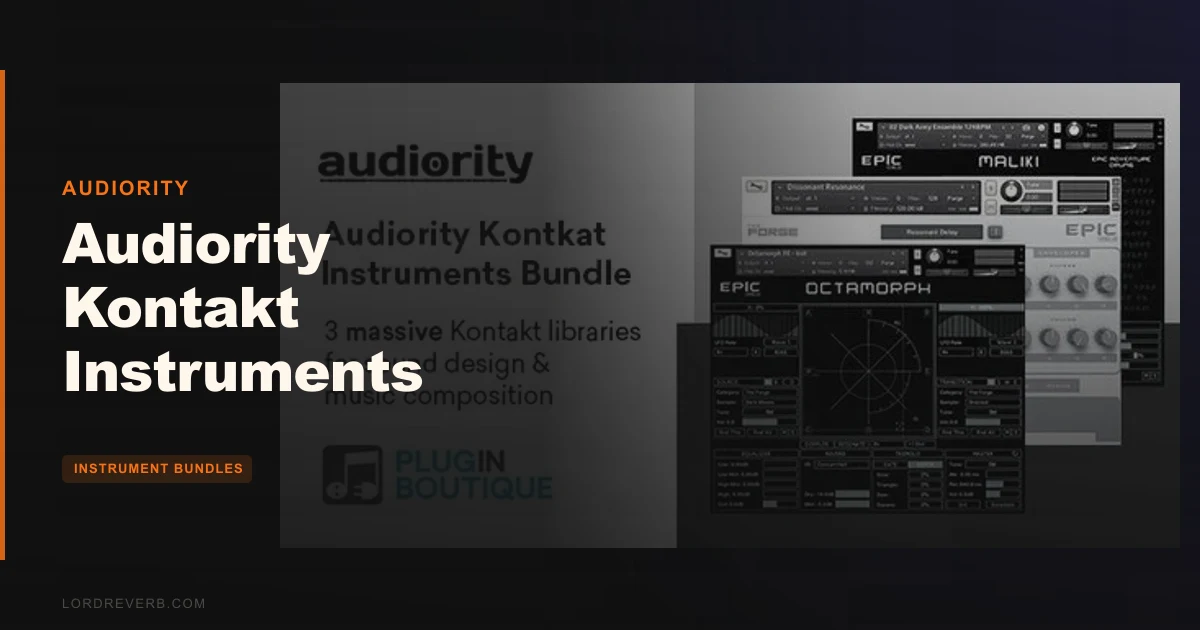
The Audiority Kontakt Instruments Bundle is the most coherent entry-level cinematic toolkit for Kontakt composers who build for picture, with three flagship instruments covering drums, drone morphing, and arranged loop themes for $229. If you score trailer cues, game cutscenes, or dark ambient beds and you've been stitching together individual Kontakt libraries one at a time, this bundle deserves a proper look. It's not built for pop producers or beatmakers. It's not subtle about that. The three main instruments, The Forge, Maliki, and Octamorph FE, each target a specific compositional problem that film and TV composers run into constantly: building tension, writing drum tracks, and filling the space underneath everything else. At $229 the scope is hard to argue with. But there are real caveats, and we'll get to them.
Where It Belongs
You're three hours into a game score cue. The action sequence needs a rhythmic bed that doesn't sound like a stock loop, a low drone that shifts as the scene shifts, and a drum hit that lands like something physical. That's exactly the problem this bundle was built to solve.
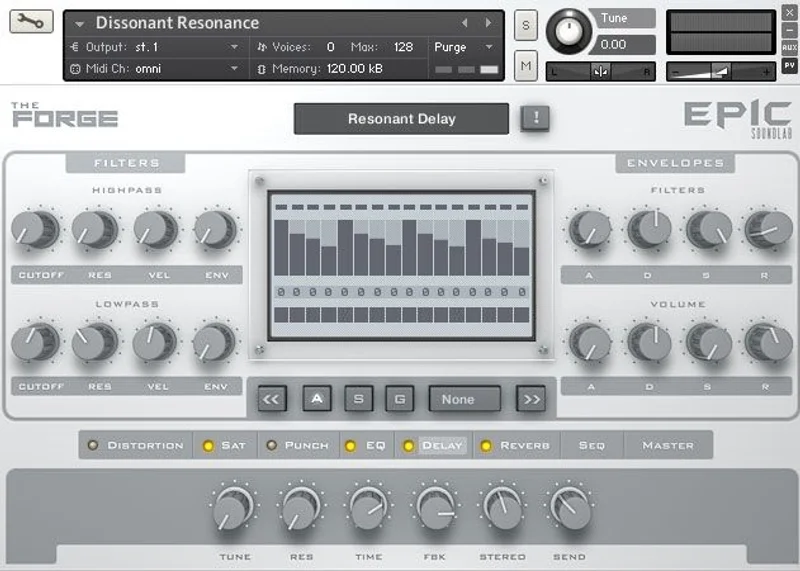
The Forge handles the widest ground. Its content list covers drones, designed and synthetic drums, impacts, melodic loops, risers and downers, SFX, sweeps, and multiple synth categories including pads, bass, and arp. That's a full cinematic palette inside one library. The 200+ patches span acoustic and synthetic territory, and the 3GB of open WAV files means you're not locked inside the Kontakt engine for everything.
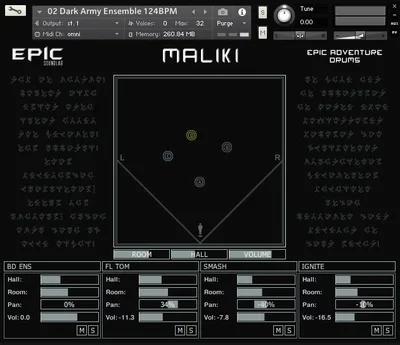
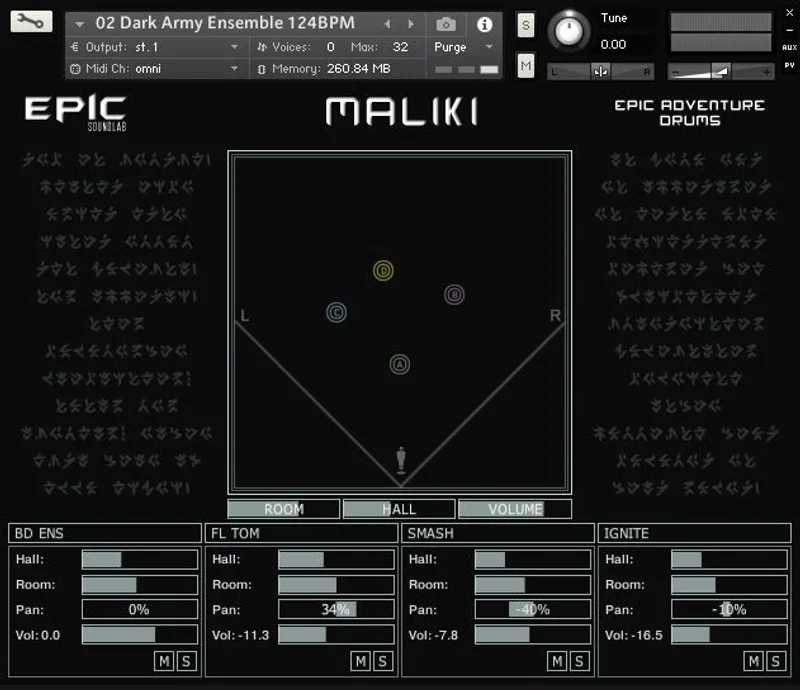
Maliki fits the composer who needs arranged drum content fast. Twenty themes, each with 10 sections, structured so sections build on each other as part of a music composition. You're getting something closer to a scored drum performance than a loop pack. The Virtual Stage feature and Mix Recall with 10 preset keyswitches mean you can place stems spatially and lock mixes for recall across a session without re-drawing automation.
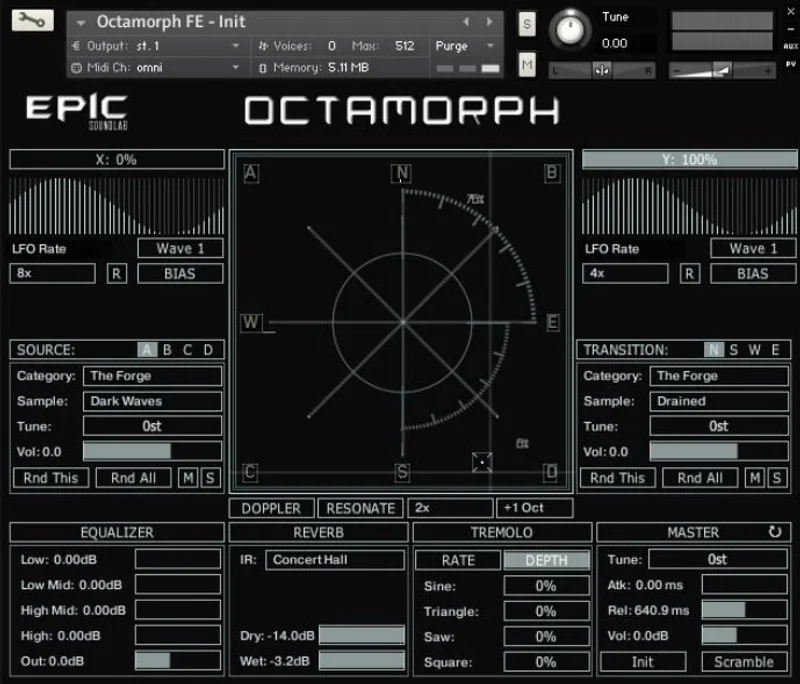
Octamorph FE is the specialist. Eight layers of cross-morphing drone content with an XY Radar Monitor for real-time blending sits at the centre. It's built for building complex soundscapes, morphing drones, and shapeshifting risers. The TouchOSC and Lemur template support tells you exactly who this was designed for: composers and sound designers who perform their textures live or automate them with external control.
Short answer on genre fit: dark cinematic, trailer, game score, ambient, horror, documentary tension. Anywhere texture and movement matter more than melody.
Where It Doesn't
Don't buy this for pop, R&B, or electronic music production. Nothing in the feature set or content description points there.
The drum content inside The Forge includes acoustic drums, but the focus is clearly designed and synthetic hits built for cinematic placement. If you need a punchy, organic drum kit for a straightforward record, Maliki's 4 hybrid drum instruments are interesting, but they're arranged around epic loop themes, not a standard kit layout for verse-chorus songwriting.
Melodic content exists inside The Forge, but it's listed alongside SFX, sweeps, and synth pads. This is a texture and tension library, not a melodic instrument collection. If you need playable leads or harmonic beds for mainstream production, the bundle leaves a real gap.
And critically: if you only own Kontakt Player, stop here. The full paid version of Kontakt 5.4.3 or higher is a hard requirement. Kontakt Player won't run this. That's a deal-breaker for anyone running the free version.
The Forge: The Backbone of the Bundle
The Forge is the anchor instrument. Everything else in the bundle either connects to it or draws from its sample pool. Getting your head around it first makes the rest of the bundle click into place.
The Advanced User Interface is where you start. Audiority built this with customisation at the front. You can load your own samples into the engine, which shifts The Forge from a content library into a creative tool. Load a sample you've recorded, shape it with the internal processing chain, and export back to your DAW. That's a different proposition from a standard Kontakt library.
The Internal Processing Chain
Six processing tools sit inside The Forge, and the combination is where the interesting work happens.
The Arpeggiator and Polyphonic Sequencer handle rhythmic generation. Stack those against the Rhythmic Gater and you've got three layers of rhythmic control running simultaneously. Play a drone patch through the Gater while the Sequencer fires underneath and the result is something that moves with a composition rather than sitting static in the background.
Unison/Voices Stack is about width and density. Push the voice count up on a synth pad and the stereo field expands. Pull it back for tighter, mono-compatible placement in a mix.
The Resonant Delay and Dual Engine Reverb sit at the end of the chain. Two reverb engines is a genuine design decision. Route short hits through one engine and longer tails through the other, or blend them for more complex spatial texture. The developer says the environment is flexible for customising every sound, and having two reverb stages available without reaching for a send in your DAW supports that.
The Content: What You're Actually Getting
Over 200 patches. Over 3GB of open WAV files. That WAV access is a detail worth pausing on.
Most Kontakt libraries lock their samples inside encrypted containers. The Forge gives you the WAVs in an open format. You can pull them directly into your DAW, chop them in a sampler, or process them outside Kontakt entirely. For sound designers, that's a satisfying level of access. For composers who want to own their sounds rather than rent them through a plugin, it matters.
The content categories are comprehensive for the genre. Drones and sweeps for tension. Impacts for hit points. Risers and Downers for transitions. Melodic loops, rhythmic loops, and warped loops for beds. SFX for design work. Synth Arp, Synth Bass, Synth Pads, Synth Poly, and Tuned Percussions for harmonic and rhythmic layering. It covers most of what a working picture composer reaches for across a session.
MIDI files are included too, which is easy to overlook. MIDI gives you the rhythmic and melodic ideas in editable form. Swap the instrument, change the key, adjust the timing. That's compositional raw material, not just a locked audio asset.
Maliki: Drums Built Like a Score
Maliki is the drum instrument, and it takes a different structural approach from most Kontakt drum libraries.
Twenty themes, each split into 10 sections. Each section is designed to grow as part of a music composition, which means the library is organised around arrangement logic rather than raw hits. That's a smarter structure for picture work where the energy needs to scale across a cue.
The Drum Instruments
Four acoustic and hybrid drum instruments sit at the core, powered by The Forge Lite. You can play the full mix of a theme or isolate individual stems. That stem access, combined with the Virtual Stage feature, means you can position each drum element in a three-dimensional space rather than working with a flat stereo bounce.
The Mix Recall system uses 10 preset keyswitches. Lock your stem balance and stage positioning to a keyswitch, then trigger it from MIDI as the cue develops. That's a workflow tool that actually maps to how picture composers work, where you need sections to shift quickly without rebuilding a mix from scratch.
1,600 WAV Loops and 660 MIDI Files
The numbers here are real. 1,600 WAV loops is a substantial library for a drum-focused instrument. 660 MIDI files gives you the patterns in editable form, routable to any drum instrument in your setup.
The MIDI files are the more underrated asset. Pull them into a session and route them to a drum synth, a different Kontakt drum instrument, or a hybrid sampler. The patterns were arranged by Maliki Ramia across 20 themed categories, so they carry musical intent rather than just utility.
That said, we'd be honest: without independent user reports on how these loops actually sit in a mix against other professional drum libraries, the value claim rests on the developer's own positioning. The content counts are real. The quality of execution is something you'll want to check in the trial before committing.
Octamorph FE: The Sound Design Engine
Octamorph FE is the most technically complex instrument in the bundle. It's also the one that makes least sense on paper and most sense once you're using it for its actual job: building and automating evolving textures.
Eight layers of content, all cross-morphable. The XY Radar Monitor sits at the centre of the interface and handles the spatial relationship between layers. Move through the XY space and the blend between layers shifts. Automate that movement and the texture evolves with the automation curve.
The LFO System
Two scripted LFOs, each with 9 waveforms. LFO Relative Position and LFO Bias are the controls that separate this from a standard LFO implementation.
Relative Position lets the LFO reference its position in the XY space rather than running as an absolute value. Bias shifts the waveform asymmetrically, so you can get a slow swell on one side and a faster attack on the other. These are controls that exist for a specific purpose: building risers and drone morphs that feel organic rather than mechanical.
The Scripted Riser Engine is a separate system dedicated entirely to riser generation. Loop or One-Shot mode gives you the choice between a continuous texture and a single-pass build. For trailer work where a riser needs to hit a specific endpoint, One-Shot mode with a defined duration is the right tool.
The Effects Chain
Doppler, Resonator, Equalizer, IR Reverb, and a Preset Scrambler. The Doppler effect on a morphing drone is a clever inclusion for anything that needs a sense of physical movement through space. The Resonator adds harmonic colouring without leaving the instrument.
LUFS Normalized Samples is a technical detail worth flagging. Normalization to LUFS rather than peak means the 8 layers will sit at consistent perceived loudness levels before you start morphing. That prevents the volume jumps you'd otherwise get when blending between layers with different dynamic profiles.
The Preset Scrambler is the wild-card tool. Press it and it randomises the preset configuration. That's a discovery tool, useful when you've exhausted the 100 included presets and want new starting points without building from scratch. Annoying if you accidentally hit it mid-session. Brilliant if you're stuck.
User Init and External Control
A dedicated "User Init" slot lets you load your own samples into Octamorph FE's 8-layer engine. That turns it from a content player into a processing framework you can feed with any material.
TouchOSC and Lemur template support is included. If you perform your textures live or control them from a tablet during a session, the infrastructure is already there without custom MIDI mapping.
The Technical Requirements: What You Actually Need
The hard requirement is Kontakt 5.4.3 or higher, full version. Not Kontakt Player. Not Kontakt 5.1. The full, paid version of Kontakt at 5.4.3 or above.
If you're already running Kontakt 6 or 7, you're covered. If you're on Player only, this bundle won't load. That's a real barrier for anyone coming from free instrument collections built on Kontakt Player compatibility.
Disk space is approximately 10GB. That's a concrete requirement and worth checking before purchase. A session drive that's 8GB free will cause problems on install. Clear the space first.
The bundle spans 8 products total. Installing and organising 8 separate Kontakt libraries into a coherent workflow takes time. Not a complaint, just a realistic expectation: plan for setup time, not just download time.
One thing the product page doesn't clarify: the specific activation method. Check the Plugin Boutique product page at the time of purchase for the current authorisation process before you buy.
Who Should Buy This: Three Reader Scenarios
The Working Picture Composer
You've got Kontakt already. You score for picture or games. You're constantly building out a library one instrument at a time and it's getting expensive.
For this reader, the bundle is a confident buy. Three instruments that address three distinct compositional problems, with enough content depth in each to use them as primary tools rather than supplements. The Forge's open WAVs, Maliki's arranged stems, and Octamorph FE's morphing engine each cover real gaps in a picture composer's signal chain.
The 660 MIDI files in Maliki alone have compositional value beyond the loops. You're getting something usable across multiple projects.
Verdict for this reader: buy it.
The Intermediate Producer Moving Into Scoring
You make beats or electronic music, you've started getting sync briefs, and you need cinematic tools. You have Kontakt because you bought it with another library.
The bundle fits you, but with a caveat. The Forge covers a wide content range and the arpeggiator and sequencer will map to your existing workflow. Octamorph FE has a learning curve: the XY morphing system and the LFO Bias control aren't intuitive on first load. Budget a few sessions just to get comfortable with the engine before you try to use it on a deadline.
Maliki's theme structure is also different from working with a standard drum kit. If you're used to programming kits hit by hit, the pre-arranged theme approach feels constraining at first. The 660 MIDI files give you a workaround: pull the patterns out and route them to an instrument you already know.
Verdict for this reader: buy it, but plan for the learning curve.
The Sound Designer
You build textures and effects for post-production, games, or installations. You need raw material you can reshape.
Octamorph FE was built for you. The 8-layer engine with User Init support means you can feed it your own recordings and process them through the morphing framework. The TouchOSC templates suggest real-time performance is part of the intended use. The Doppler and Resonator effects inside the engine add processing you'd otherwise reach for externally.
The open WAV files in The Forge add another angle. 3GB of raw samples you can pull into any sampler, granular processor, or spectral tool outside Kontakt entirely. That kind of open access is frustratingly rare in commercial Kontakt libraries.
Verdict for this reader: buy it.
The Beginner Who Doesn't Own Kontakt Yet
You're early in production. You've heard about Kontakt. You want a big library without spending too much.
Hard pass. This bundle requires the full version of Kontakt, which costs extra money before you even get to $229. That total commitment is harder to justify when you're still learning what you need. Start with a free or low-cost sampler, build your workflow, and come back to this when Kontakt is already in your setup for other reasons.
Verdict for this reader: skip it for now.
Against the Field
No independent head-to-head comparisons for this bundle exist from external reviewers. So here's an honest look at the wider category from general knowledge.
Spitfire Audio's LABS series offers free Kontakt-adjacent instruments in their own player. Individual instruments are free, but you build the collection one download at a time, and the cinematic depth of The Forge's content categories doesn't have a direct free equivalent. LABS wins on price for someone starting out. This bundle wins on depth and open WAV access.
Native Instruments' Komplete bundles include cinematic and sound design instruments at various tiers. Komplete is broader and includes synthesis tools beyond Kontakt instruments. If you need a complete production environment, Komplete covers more ground. If you specifically need a focused cinematic Kontakt toolkit, the Audiority bundle covers its target more directly and at a lower price point than most Komplete tiers.
best Kontakt instrument bundles for film composers
Also worth noting: if you're already invested in the Audiority ecosystem, this bundle connects directly with their other releases. The Forge Lite powers Maliki's drum instruments. Octamorph FE is built around the Drones section from The Forge. These aren't isolated products bolted together. The architecture is coherent.
The Honest Concern
There are no independent user reviews of this bundle. None. The coverage that exists is promotional. That means we're evaluating the content count, the feature list, and the developer's own positioning, with no external signal on how the library actually performs over time in real sessions.
That's not a reason to skip it. It's a reason to use the trial if one is available, check the content carefully before install, and understand that you're buying based on specification depth rather than community-validated quality. The numbers are real: 200+ patches, 3GB of open WAVs, 1,600 drum loops, 660 MIDI files, 100 Octamorph presets. The quality of execution behind those numbers is something you should verify before spending $229.
We'd also want you to check the tail behaviour in Octamorph FE at your session tempo before you rely on it for a deadline. Load a riser preset, set it to One-Shot, and run it against your cue's tempo and key. That's the honest pre-purchase test for this kind of instrument.
The Verdict
The Audiority Kontakt Instruments Bundle is a focused, coherent cinematic toolkit that earns its price if you're already inside the Kontakt ecosystem and you score for picture or games.
The Forge is the genuine anchor. A 200-patch library with open WAV access, six internal processing tools, and a content range that covers most of what a working picture composer reaches for is rare at this price point. Maliki adds arranged drum content with real compositional structure. Octamorph FE is a specialist morphing engine that handles the textural work that most composers stitch together from three or four separate tools.
The bundle doesn't work for everyone. No Kontakt Player support is a hard wall. The content is almost entirely cinematic in intent. If you're not scoring or doing sound design work, you'll spend more time looking for uses than finding them.
But for the working picture composer with Kontakt already installed? This is a buy.
Specs & Technical Details
| Developer | Audiority |
| Price | $229 |
| Plugin Format | Kontakt Instrument (requires full Kontakt 5.4.3 or higher) |
| OS Support | Mac / Windows (per Kontakt compatibility) |
| Activation | N/A, check Plugin Boutique at time of purchase |
| CPU Usage | N/A |
| Trial Available | N/A, check Plugin Boutique at time of purchase |
| Version Reviewed | N/A |
| Disk Space Required | Approximately 10GB |
| Instruments Included | 8 products (The Forge, Maliki, Octamorph FE, and others) |
| Total Patches | 200+ (The Forge alone) |
| WAV Files | 3GB+ open WAVs (The Forge); 1,600 loops (Maliki) |
| MIDI Files | 660 (Maliki) |
Score Breakdown
| Category | Score | Notes |
|---|---|---|
| Sound Quality | 4.0/5 | Content range is wide and genre-appropriate; no independent quality validation available |
| Value for Money | 4.0/5 | 8 instruments, 10GB+ of content, open WAV access, strong depth for the price |
| Ease of Use | 3.5/5 | The Forge and Maliki are accessible; Octamorph FE's XY morphing system has a real learning curve |
| Features | 4.5/5 | Six internal processing tools in The Forge, Riser Engine in Octamorph FE, Mix Recall in Maliki, serious feature depth |
| CPU Efficiency | 3.5/5 | No published figures; 8-layer morphing in Octamorph FE and dual reverb engines in The Forge suggest moderate-to-heavy load |
| Overall | 4.0/5 | A coherent cinematic toolkit with genuine depth, held back only by the full-Kontakt requirement and lack of independent user validation |
Alternatives to Consider
If the Kontakt requirement is the problem, Spitfire Audio LABS offers a growing collection of free cinematic instruments through their own player. You won't get the depth of The Forge's content categories or open WAV access, but the entry cost is zero and the quality of individual instruments is well-regarded.
If you need a broader production environment rather than a focused cinematic toolkit, Native Instruments Komplete bundles include cinematic and sound design instruments alongside synthesis and mixing tools. It's a different scale of commitment, but if you're building a production studio from the ground up rather than adding to an existing Kontakt setup, it covers more ground.
And if you're already using Audiority instruments, their VertiVerb VRS23 review is worth reading. Audiority's plugin design philosophy runs consistently across their catalogue, and knowing how they approach reverb gives useful context for how The Forge's Dual Engine Reverb fits into a bigger Audiority-heavy signal chain.
The Audiority bundle doesn't have a direct replacement at the same scope and price. For cinematic composers already inside Kontakt, nothing on that list replaces what you're getting here.
The bundle is the buy. The beginner without Kontakt is the one who should walk away. Everyone else: this is the kind of purchase you make once and stop thinking about.
Frequently Asked Questions
Does the Audiority Kontakt Instruments Bundle work with Kontakt Player?
No. This is one of the most important things to check before purchasing. The bundle requires the full paid version of Native Instruments Kontakt at version 5.4.3 or higher. Kontakt Player, which is the free version that ships with many third-party libraries, is not compatible. If you only have Kontakt Player, you'll need to upgrade to the full version before this bundle will load.
How much disk space does the Audiority Kontakt Instruments Bundle need?
Approximately 10GB of free disk space is required. That covers all 8 instruments in the bundle including The Forge's 3GB+ of open WAV files and Maliki's 1,600 WAV loops. Check your session drive before installing, not after downloading.
What is The Forge and why does it matter for this bundle?
The Forge is the anchor instrument in the bundle and the most fully featured of the three flagship libraries. It contains over 200 Kontakt patches, over 3GB of open WAV files, and six internal processing tools including an Arpeggiator, Polyphonic Sequencer, Rhythmic Gater, Unison/Voices Stack, Resonant Delay, and Dual Engine Reverb. The open WAV access is a standout feature: you can pull the samples directly into your DAW or any other sampler without being locked inside the Kontakt engine. Octamorph FE is also built around The Forge's Drones section, so understanding The Forge first makes the rest of the bundle make more sense.
Can I use my own samples with these instruments?
Yes, in two of the three main instruments. The Forge supports loading your own samples through its customisation framework, and Octamorph FE includes a dedicated "User Init" slot for exactly this purpose. Loading your own recordings into Octamorph FE's 8-layer morphing engine and processing them through the built-in Doppler, Resonator, and IR Reverb is one of the more interesting sound design applications of the bundle.
What is Octamorph FE best used for?
Octamorph FE is a specialist morphing instrument built for complex soundscapes, drones, and risers. Its 8-layer cross-morphing engine with an XY Radar Monitor lets you blend between layers in real time or via automation. The Scripted Riser Engine and One-Shot mode make it directly useful for trailer and game score transitions. TouchOSC and Lemur template support means you can control the morphing from a tablet without custom MIDI mapping. It has a learning curve, but the developer says it's built specifically for film, TV, games composers, and sound designers, and the feature set backs that up.
Is the Audiority Kontakt Instruments Bundle worth it for beginners?
Not if you don't already own the full version of Kontakt. The bundle costs $229 before you factor in the Kontakt licence, and the content is heavily weighted toward cinematic and sound design work rather than general music production. If you're new to production and haven't committed to Kontakt yet, the combined cost is a significant entry barrier. Build your workflow first, get Kontakt for another reason, then revisit this bundle when you're actively scoring or designing sounds for picture.