The claim you'll hear most about the Ample Sound 10in1 China Bundle is that it gives you an entire Chinese orchestral toolkit with professional articulation depth across all 11 instruments. That claim holds up. What the marketing doesn't mention is that getting those instruments running in your session involves a licensing and installation experience that will test your patience before you hear a single note.
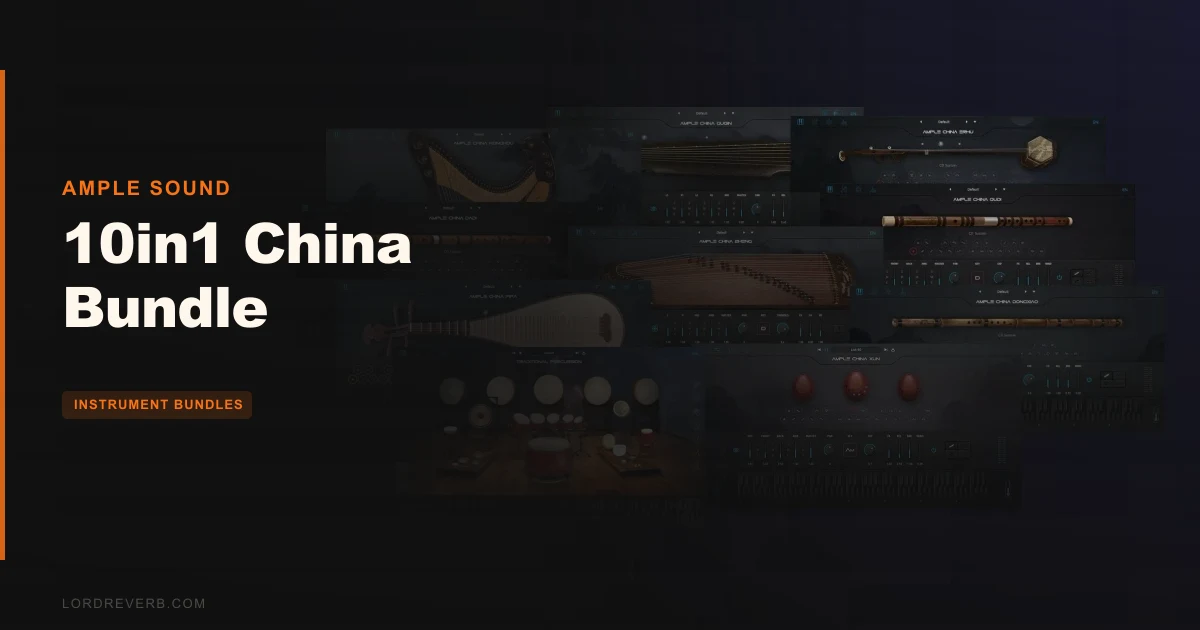
At $872, this is a serious investment. It covers Xun, Pipa, Erhu, Guqin, Hulusi, Dizi, Xiao, Zhongruan, Suona, Percussion, and Konghou. That's not a sampler pack. That's a studio section. The bundle pricing represents a 25-30% discount against buying each library separately, which is the number that makes this worth talking about seriously.
This review is built for film and game composers who need Eastern textures that go beyond a single showcase instrument. If you need one library for a Pipa solo, there may be sharper single-instrument options. If you need the whole conversation between instruments, this is where the value sits.
The Claim: A Full Chinese Orchestra in One Purchase
Ample Sound positions the 10in1 China Bundle as the definitive Eastern instrument solution for modern production. They say it's built for film scoring, game audio, and cross-cultural work. They say each instrument captures authentic performance nuance. The Erhu is supposed to have "soul." The Qudi is supposed to "breathe." The Konghou is described as the most advanced Konghou library available.
That framing sets a high bar. It's not claiming to be a cheap sketch tool. It's claiming pro-tier authenticity across a full ensemble of instruments, most of which get a single library from most developers, let alone eleven in a coordinated bundle. The question isn't whether the ambition is real. The question is whether the instruments can actually deliver at the depth a scoring session demands.
Owners and reviewers mostly say yes. The complaints aren't about sound quality or articulation coverage. They're about everything that happens before you get to actually play the thing.
What Holds Up: The Sound Is the Real Deal
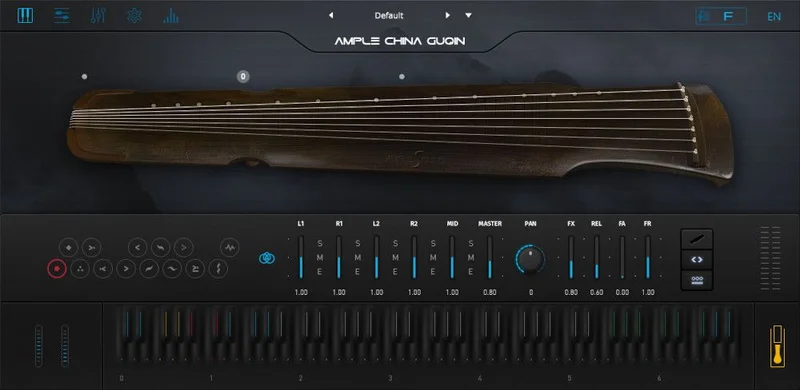
Start with the Guqin. Over 12 GB of samples for a 7-string zither, with 17 articulations and individual string sampling. That's not broad-strokes multisampling. That's the kind of depth where you can write a melody line and have it respond differently depending on which string you're theoretically playing it on.
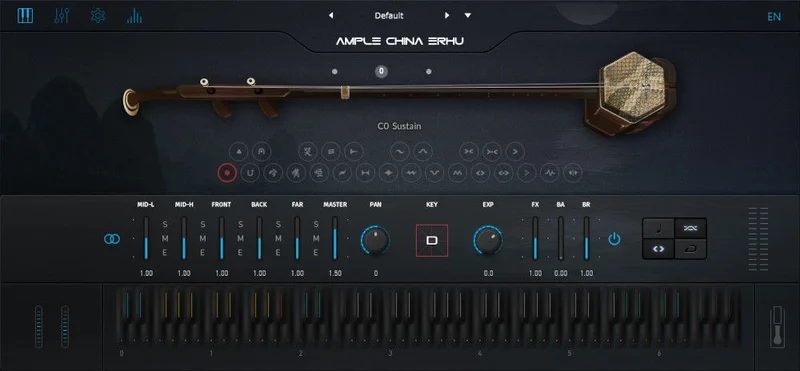
The Erhu is similarly serious. Over 7.6 GB of samples, 30 articulations covering Head, Body, Legato, and FX groups. You get expressive tremolos, ricochets, sighing, crying, pizzicatos, and trills alongside intelligent legato and customizable portamento. If you've tried to write a convincing Erhu part with a lesser library, you know how quickly the absence of that crying articulation exposes the fakery. Owners describe the articulation set as absolutely awesome, and given the breadth of what's here, that's not surprising.
The Zheng packs 8 GB across 13 deeply sampled articulations with a 5-microphone recording setup and 4 mic modes. Getting to dial in the room character on a Guzheng is not something most libraries offer. Reviewers have called it the most feature-rich Guzheng available.
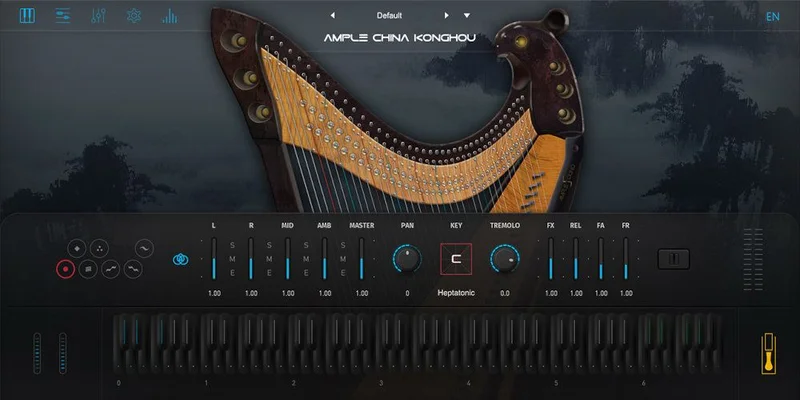
The Konghou, built on Ample Sound's 4.0 engine with a 76-string Peacock-type instrument and a dedicated glissando system, represents the kind of instrument most composers have never had access to in a sampler at all. Brilliant instrument choice.
The Traditional Percussion library covers 49 instruments across 19 slots with multi-mic sampling. That breadth matters when you're scoring a cue that needs to feel like a real percussion section rather than a single drum.
Owners consistently report the UI as clearer than what Three-Body Technology offers for comparable instruments. For a bundle this large, that clarity has real workflow value.
Going Deeper: What Each Instrument Actually Gives You
Wind Instruments: Dizi, Xiao, Qudi, and Hulusi
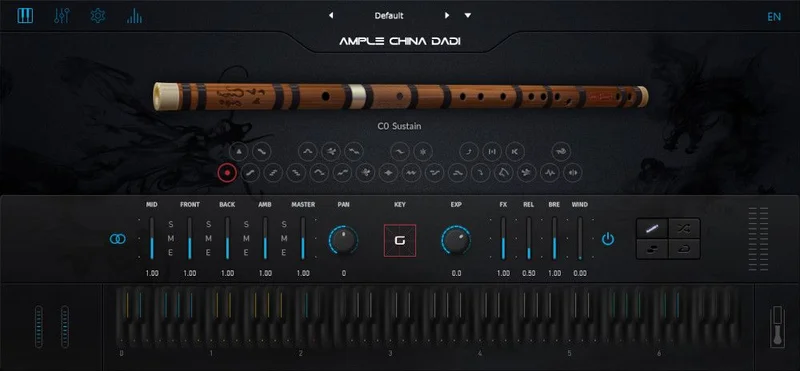
The Ample China Dadi library covers the Dizi with 5.8 GB of samples, layered legatos, expressive bends, and grace-note styles. It includes a Mirroring tool and adjustable wind layers. That wind layer control matters more than it sounds. Push the breath component up and you get a more raw, airy feel. Pull it back and the note sits cleaner. That's the kind of physical detail that makes a wind instrument feel inhabited rather than programmed.
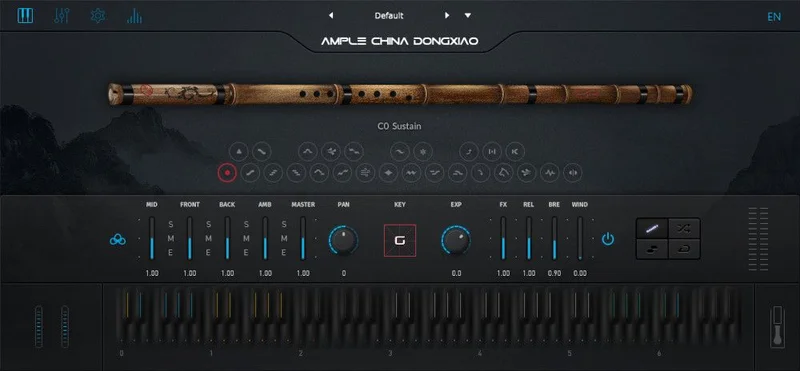
The Ample China Dongxiao covers the Xiao with 4.8 GB of samples and articulations across Head, Body, and Special FX groups. It's a quieter, more introverted instrument than the Dizi, and the library reflects that dynamic range.
The Ample China Qudi is the standout wind library on paper. At 4.4 GB, it features deep dynamic layers, intelligent legato behavior, endless articulation chaining, and voice-independent SAHDS modulation. That SAHDS system gives you direct control over each stage of a note's shape without breaking legato chains. Write a phrase on the Qudi and you can shape how each note blooms and fades without it feeling mechanical. That's hard to do with wind samples.
The Hulusi is part of the bundle but detailed specs aren't extensively documented separately. What owners report across the wind instruments is consistent: articulation depth, responsive legato, and presets that are actually tailored to the instrument's real tonal character rather than generic "Asian flute" patches.
Strings and Plucked Instruments: Pipa, Erhu, Guqin, Zhongruan, and Konghou
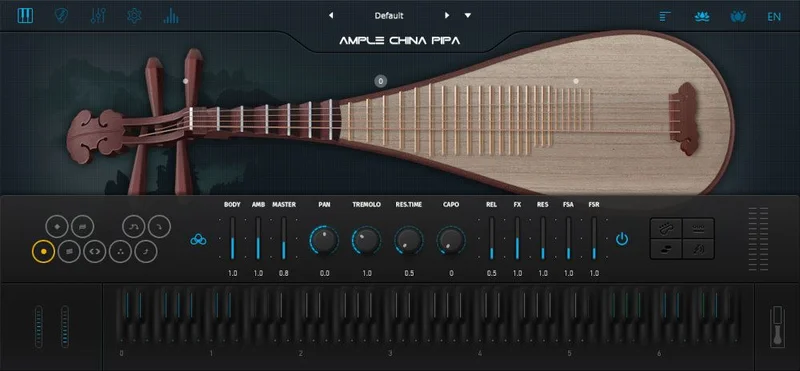
The Pipa comes in two versions: Master and Expert. The Expert version includes advanced tremolo and bend modeling alongside a powerful strumming engine with flexible legato. The tremolo on a Pipa is one of the most recognizable sounds in Chinese music, and getting it to feel right in a sampler is genuinely difficult. The bend modeling addresses the microtonal slides that are core to Pipa expression.
The Erhu's 30-articulation set is worth unpacking. You get head tones and body tones, which cover the registers of the instrument with different timbral characters. The Legato group handles the flowing melodic lines the instrument is known for, with intelligent legato and customizable portamento. The FX group covers extended techniques including expressive tremolos, ricochets, sighing, crying, pizzicatos, and trills, the kind of expressive human quality that makes an Erhu solo feel like it's communicating something rather than just demonstrating pitch accuracy.
The Guqin's custom-built 7-string Riffer with flexible tuning is an unusual feature for a traditional instrument library. It lets you work with the instrument in a more compositionally active way rather than just triggering single notes. The 17 articulations cover subtle resonance and expressive slides that the developer describes as nuanced, and owners back that description up.
The Konghou is 76 strings. Think harp-like but unmistakably Chinese, with a glissando system built specifically for the instrument's physical sweep patterns. If you've ever needed a Konghou in a cue and settled for a harp patch, that substitution is audibly wrong. This fixes that problem entirely.
Percussion: 49 Instruments Across 19 Slots
The Traditional Percussion library is the section that scores often need most and think about least. 49 instruments across 19 slots is a wide net. Multi-mic sampling means you're not locked into a single room character. Expressive articulations across the kit mean you're not stuck with a single velocity layer per drum.
Chinese percussion has enormous rhythmic and textural variety: frame drums, gongs, cymbals, woodblocks, temple blocks, opera percussion. The breadth of 49 instruments suggests the library doesn't collapse all of that into a single map but gives you meaningful differentiation across the range.
What Doesn't Hold Up: The Installation and Licensing Problem
Here's where this review has to be honest with you. The sound quality is not the issue. The issue is everything that happens before you get to hear the sound quality.
The installation process is consistently described by owners as "odd." That's a diplomatic word for what sounds like a workflow that wasn't designed with the user's experience as a priority. When you're deploying 11 separate libraries, each potentially with its own installer logic, an odd installation process isn't a minor quirk. It's hours of troubleshooting time before a single session opens.
The iLok licensing is per-machine. That means if you work across two machines, you're managing activations across two separate licenses. The documentation around this is reportedly inadequate. Owners have flagged this directly. For a bundle at $872, the expectation of clear, thorough licensing documentation isn't unreasonable. Getting it wrong means your expensive libraries are offline on a deadline.
Then there's the internet requirement. The first time you open a project that uses one of these plugins, it needs an internet connection. That's not unusual for modern sample libraries, but it's an extra variable in a studio environment and it's worth knowing before you're on a laptop in a room with spotty WiFi, trying to open a session for a client playback.
No comprehensive reviews of the complete bundle are available; only individual instrument reviews have been published. Individual instruments have been reviewed and praised. But how the 11 libraries perform together as a system, how they interact in a template, how the CPU load stacks when you're running four of them simultaneously in a mix, that information isn't out there yet. That's a real gap.
Frustrating? Yes. Enough to skip it? For the right buyer, no. But it's not something we'd leave out of this review.
The Value Argument: Is $872 Justified?
This is the central question for most buyers. At $872 for the bundle, the per-instrument cost works out to roughly one-eleventh of the total. The developer cites a 25-30% saving versus buying each library separately. That framing only matters if you actually need most of the 11 instruments.
If you need three of these instruments and have no current or foreseeable use for the other eight, buying individual libraries is the smarter move. The bundle's value is entirely dependent on breadth of use. Composers working in Chinese, East Asian, or cross-cultural genres who regularly need multiple instruments in the same session are the ones for whom the math works.
Compare the alternative: licensing three separate high-quality Chinese instrument libraries from different developers, managing three different activation systems, and dealing with three different UI philosophies in a single session. The bundle consolidates all of that under one developer's ecosystem with a consistent interface that owners describe as clear and well-designed.
The 25-30% discount is real. But the question isn't whether you're saving money. The question is whether you need what you're saving money on. Be honest about your use case before the purchase.
What's missing at this price? Clear installation documentation. A multi-machine licensing option or at least better documentation of what per-machine iLok means in practice. A trial period for a bundle this large would be appropriate. Whether a trial exists is worth checking directly with Ample Sound before committing.
Who Gets the Promised Result
Composers scoring film and TV with Chinese or East Asian cultural settings. Game audio teams building soundscapes for games set in historical or fantastical China. Cross-cultural producers who blend Chinese instrumentation with electronic or Western orchestral production. These are the people who will use 8 of the 11 instruments regularly enough to justify the bundle price.
If you're a hip-hop producer who wants one Erhu loop source, this is too much investment. If you're a Western orchestral composer who occasionally needs "something Chinese" for one cue per year, the breadth here exceeds what you'll use.
The UI clarity advantage matters for specialists. When you're writing at speed in a session and need to find the crying portamento on the Erhu in 30 seconds without reading a manual, a clearer interface than the competition delivers is a real time saving. That's a workflow benefit that compounds across a career's worth of sessions.
Skip it if you need only one or two of these instruments. Skip it if iLok per-machine licensing is incompatible with your studio setup and you don't want to investigate the workarounds. Skip it if the installation process sounds like something you don't have the patience or time to work through on a deadline week.
Putting It in Practice: Three Scenarios You'll Actually Face
You're scoring a battle sequence. You need the Suona cutting through a percussion bed, with the Erhu carrying the emotional countermelody underneath. Load the Erhu's crying articulation and push the portamento speed down. That melodic line will start to lean and stretch between notes the way a real player phrases. Add the Suona on a separate track and dial in the head articulations for the bright, piercing attacks that cut above the drum layer. That texture is exactly what this bundle is built for.
You're building a contemplative scene, something that needs the Guqin's ancient weight. Pull up the library, find the sul tasto adjacent articulations in the resonance group, and play a sparse ascending line. The individual string sampling means each note has its own physical character. Sustain one note while a new one enters and you hear the sympathetic resonance between strings that makes the Guqin sound like a living object rather than a sample trigger.
You're on a deadline and you open a project for the first time on a studio machine. No internet connection. The plugin won't fully initialize. That's the scenario the installation and licensing issues create. Know this going in. Have a plan. If you're in a studio environment with a stable connection and time to establish the libraries before crunch, this won't catch you. If you travel with a laptop and work in unpredictable network environments, build your template at home first and test every library before you're on location.
Comparing to the Alternatives
Three-Body Technology is the name that comes up most often alongside Ample Sound for Chinese instrument libraries. Reviewers describe them as equal quality in the market. Where Ample Sound has the UI clarity advantage in owner reports, Three-Body Tech has its own dedicated following. If you've already committed to Three-Body's ecosystem and are happy with the interface, switching to Ample for the bundle discount alone may not be worth the transition.
Orange Tree Samples gets mentioned for lead instrument parts. The description from reviewers is that Orange Tree offers a more authentic feel for single lead lines. If your use case is primarily a Pipa or Erhu solo instrument for one specific production context, Orange Tree may be worth auditing against the individual Ample Sound library rather than the bundle.
Impact Soundworks is noted as an alternative for instrument libraries in this space. Impact Soundworks is worth auditioning if you're evaluating options at the bundle investment level.
The Verdict
The 10in1 China Bundle delivers on its core promise. The sound quality is real, the articulation depth is real, and the per-instrument value at $872 with the bundle discount is a legitimate argument. For composers who regularly work with Chinese instrumentation, this is probably the most efficient way to build a complete palette in a single purchase.
But the licensing and installation experience is a real cost that doesn't show up in the price. It's the kind of friction that makes you love the instruments when they're running and hate the setup process that got you there.
Our verdict: buy it if you'll use at least 7 of the 11 instruments in real work. The breadth, the articulation depth across ensembles like the Erhu, Guqin, and Zheng, and the UI consistency make this a complete Chinese instrument solution at this price point. But sort out your licensing situation before you're in a session. The sound is worth the patience. The installation shouldn't require this much of it.
Specs & Technical Details
| Developer | Ample Sound |
| Price | $872 |
| Plugin Format | VST2 / VST3 / AU / AAX / Standalone |
| OS Support | Mac (10.9+) / Windows (7/8/10/11, 64-bit) |
| Activation | iLok (per-machine) |
| CPU Usage | N/A |
| Trial Available | N/A |
| Version Reviewed | N/A |
Score Breakdown
| Category | Score | Notes |
|---|---|---|
| Sound Quality | 4.5/5 | Articulation depth and sample size across 11 instruments is genuinely impressive; owners back this consistently |
| Value for Money | 4.0/5 | 25-30% bundle discount is real, but only delivers value if you'll use the breadth of instruments |
| Ease of Use | 3.5/5 | UI clarity praised over competitors, but installation and licensing process is a documented problem |
| Features | 4.5/5 | SAHDS modulation, glissando systems, 5-mic recording, and 30-articulation Erhu set a high bar |
| CPU Efficiency | N/A | No data available |
| Overall | 4.2/5 | Outstanding instrument content held back by avoidable friction in the setup and licensing experience |
Alternatives to Consider
Three-Body Technology offers Chinese instrument libraries described by reviewers as equal quality to Ample Sound in the current market. If you're already in their ecosystem, the UI comparison favors Ample Sound, but Three-Body's instruments are a legitimate alternative at comparable depth. Worth auditing side by side before committing to the bundle.
Orange Tree Samples gets specific praise for lead instrument authenticity. If your work centers on a single Chinese instrument performing melodic lines rather than an ensemble context, Orange Tree may serve that use case more directly than a bundle built for breadth.
Impact Soundworks is an alternative instrument library developer worth including in your evaluation at this investment level. Impact Soundworks is worth researching as an alternative before committing to this bundle.
The honest alternative comparison: none of these developers offer a 11-instrument Chinese ensemble bundle in a single purchase that reviewers have documented at this quality level. The closest competitive threat to the 10in1 China Bundle is building your own toolkit from individual libraries across developers. That gives you more control per instrument and potentially better single-instrument depth in specific cases. It also means managing multiple licensing systems, multiple UIs, and no coordinated discount. The bundle's real competition is that DIY approach, and for the right composer, the consolidation wins.
If the installation issues and per-machine iLok constraint make the bundle wrong for your setup, building from individual Ample Sound libraries and buying only the instruments you need is a valid path. You lose the bundle discount but gain the ability to pick your entry points.
Frequently Asked Questions
What instruments are included in the Ample Sound 10in1 China Bundle?
The bundle contains 11 Chinese instrument libraries: Xun, Pipa, Erhu, Guqin, Hulusi, Dizi, Xiao, Zhongruan, Suona, Traditional Percussion, and Konghou. Each is a full library with its own articulation set and sample content, not a lite version. The Guqin alone contains over 12 GB of samples, and the Erhu contains over 7.6 GB.
Is the 10in1 China Bundle worth the price compared to buying instruments separately?
The bundle offers a 25-30% discount versus purchasing each instrument library individually. That discount is meaningful if you'll regularly use most of the 11 instruments. If your productions only need two or three Chinese instruments, buying those individually is the more economical choice. The value case is built entirely on breadth of use.
What DAWs and plugin formats does the bundle support?
The bundle supports VST2, VST3, AU, AAX, and Standalone operation. That covers Pro Tools, Logic, Ableton, Cubase, Reaper, and most other major DAWs. Windows requires a 64-bit system running Windows 7, 8, 10, or 11. Mac requires OS 10.9 or higher. An Intel i5 processor or higher is required.
How does the iLok licensing work for this bundle?
Activation is per-machine via iLok. Owners report the documentation around the licensing process is inadequate, which has caused confusion during setup. If you work across multiple machines, confirm the per-machine terms and any transfer or deactivation process directly with Ample Sound before purchasing. The first project load also requires an internet connection.
How does the Ample Sound 10in1 China Bundle compare to Three-Body Technology's Chinese instrument libraries?
Reviewers describe Three-Body Technology as equal quality in the market for Chinese instruments. Where the Ample Sound bundle has an advantage is UI clarity: owners consistently describe the Ample interface as cleaner and more navigable than Three-Body's approach. The 11-instrument bundle format is also specific to Ample Sound; Three-Body's libraries are typically purchased individually.
Can you use the 10in1 China Bundle without an internet connection after setup?
The internet connection requirement applies specifically to the first time you open a project containing one of the plugins. After initial activation and project establishment, offline use should be possible, though the per-machine iLok constraint still applies. If you work in environments with unreliable internet access, build and save your templates while connected before going offline. Confirm the specific offline behavior with Ample Sound for the most current terms.