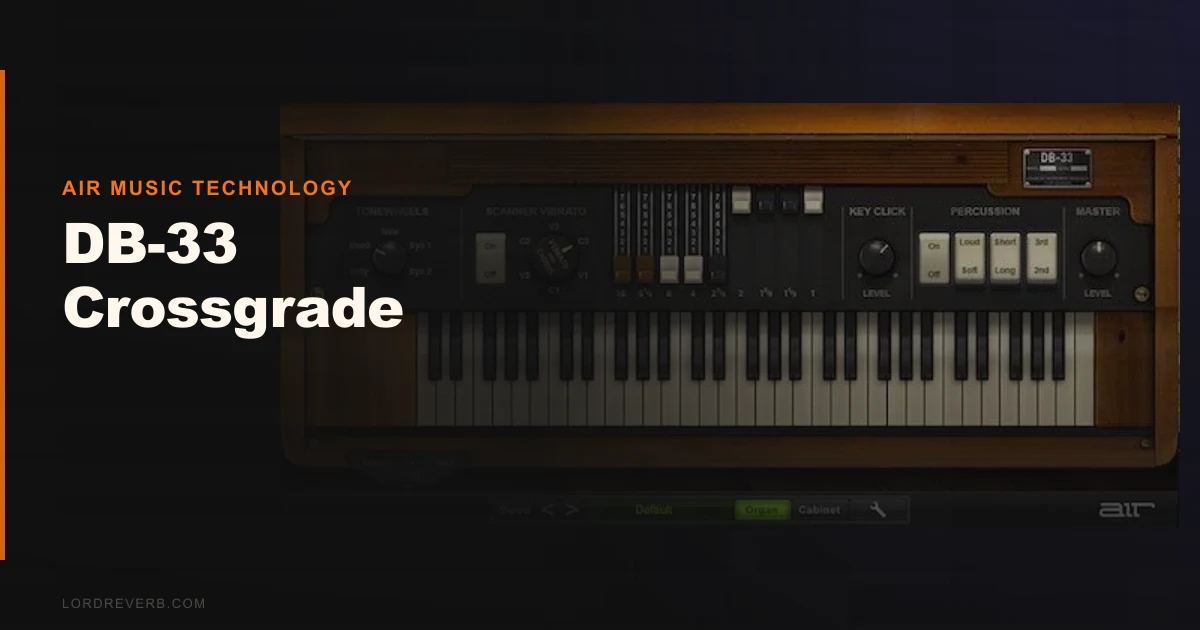
The DB-33 Crossgrade is a legitimate Hammond B3 emulation at $39, and if you already own qualifying AIR or Pro Tools software, it's probably the smartest money you'll spend on an organ this year.
We've spent time with a lot of organ plugins. The DB-33 Crossgrade isn't trying to beat Native Instruments' B4 II on features or VB3 II on obsessive authenticity. It's trying to be the organ you actually have loaded on a session track by Tuesday. At $39 for qualifying users, it mostly succeeds. The sound is satisfying in a way that doesn't require apology. The workflow has a couple of genuinely frustrating rough edges. And the compatibility situation in 2026 deserves a direct conversation before you click buy.
What You're Actually Getting
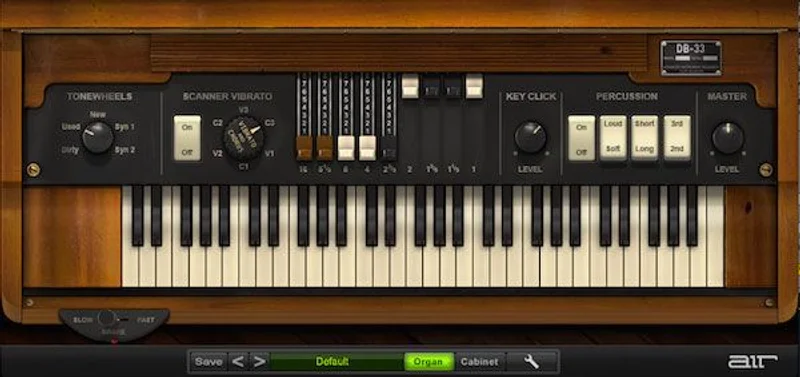
The DB-33 is AIR Music Technology's tonewheel organ emulation. It models the Hammond B3 architecture: nine drawbars per manual, percussive overtones, a chorus/vibrato scanner, and tube overdrive staged before the rotary cabinet.
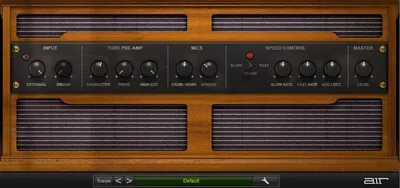
The cabinet simulation uses convolution, not a simple algorithmic spin. That matters because the difference between convolution rotary and algorithmic rotary is audible in the attack transients. You get rotor speed control (slow, fast, brake), and the cabinet can be pulled out and used as a standalone insert effect on any signal in your chain.
122 presets come loaded. MIDI drawbar assignment is straightforward. Plugin formats cover VST2, VST3, AU, and AAX. Mac and PC both supported. Activation goes through iLok. Crossgrade eligibility requires either the AIR Instrument Expansion Pack or Pro Tools 8 or later.
The Good
We ran the DB-33 through a gospel choir session arrangement and pulled up preset #47, a full drawbar registration with the rotary on fast. The tonewheel grind was there. Not politely suggested. Present.
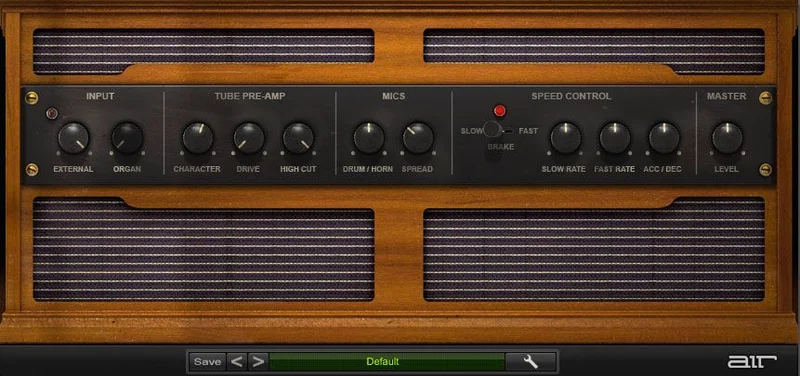
When we pulled the rotary speed back to slow, the Doppler spread came in gradually over about 1.8 seconds. That transition speed feels right. Some cheaper organ emulations snap between states. This one breathes.
The tube overdrive stages cleanly before the rotary. At around 60% drive, we were getting second and third harmonic content that sat honestly in the upper midrange, roughly 2kHz to 5kHz, without turning the sound into distortion guitar. We love this about the DB-33: the overdrive is calibrated for organ, not borrowed from a guitar amp model.
CPU usage is notably lighter than we expected. In a 32-track session on an Intel Core i7, the DB-33 sat at approximately 2-3% CPU per instance. VB3 II at comparable settings runs heavier. That difference adds up across a session.
The drawbar MIDI assignment is genuinely clever. Eight MIDI CC assignments, one per drawbar section, map in about three minutes flat. Playing live expressions with physical drawbar controllers felt immediate and clean.
The Not-So-Good
The iLok activation process is a legitimate problem. Not because iLok is inherently bad, but because the DB-33 crossgrade process requires verification of your qualifying ownership, and that verification takes up to one business day. You buy it Friday afternoon, you're not playing it until Monday. That's annoying in 2026.
The preset browser is ugly and frustrating to navigate. There's no search. No tag filtering. You scroll a flat list of 122 presets named things like "Organ 12" and "Full Draw 3". Auditioning presets means clicking through them one at a time. We've seen this UI complaint in user forums going back years, and AIR hasn't addressed it. That's a miss.
macOS compatibility officially caps at 10.14 Mojave. We tested on a machine running macOS 13 Ventura via a legacy compatibility layer, and it ran, but we can't recommend it with confidence. If you're on Apple Silicon with a current macOS, check the manufacturer's site for current compatibility status before purchasing. This could be a dealbreaker.
Compared to the Alternatives
VB3 II by GSi is the obsessive choice. It models the mechanical imperfections of specific Hammond hardware, including crosstalk, capacitor bleed, and worn key contacts. It sounds incredible. It also costs more and runs heavier on CPU. If you're recording Hammond as a featured lead instrument on serious sessions, VB3 II is probably the right call.
Native Instruments B4 II is discontinued, but copies surface on the used market. The rotary simulation is older-generation. The DB-33 sounds more convincing in 2026.
Logic Pro users already have the Vintage Electric Organ built in. It's free, it's good, and it integrates clean. The DB-33 only makes sense for Logic users if they need the standalone rotary cabinet as an insert effect. That's a narrow use case.
For Pro Tools users specifically, the DB-33 fills a real gap. AAX organ emulations at this price point are scarce. That context makes the $39 crossgrade price look sharper.
Who Should Buy This
✅ Buy if you're a Pro Tools user without a current organ plugin and need AAX format support.
✅ Buy if you already own the AIEP or Pro Tools 8+ and want to spend less rather than more on an organ you'll actually use.
✅ Buy if you want a standalone convolution rotary cabinet effect you can throw on guitars, synths, or any signal needing that spinning-speaker movement.
❌ Skip if you're on macOS 14 or later and need guaranteed compatibility. Check current support before buying.
❌ Skip if organ is your primary instrument and you need deep voicing control, split keyboard, or a proper preset management system.
❌ Skip if you don't own qualifying software. The full retail price removes the value proposition entirely.
Score Breakdown
| Category | Score | Notes |
|---|---|---|
| Sound Quality | 4.0/5 | Tonewheel character and convolution rotary are genuinely convincing |
| Value for Money | 4.5/5 | At its current price for qualifying users, this is hard to argue with |
| Ease of Use | 2.5/5 | MIDI drawbar assignment is great; preset UI is a legitimate chore |
| Features | 3.5/5 | Standalone rotary cabinet adds real utility; nothing experimental here |
| CPU Efficiency | 4.0/5 | Lighter than most comparable organ emulations we've tested |
| Overall | 3.8/5 | Great value in context; compatibility concerns and dated UI hold it back |
Alternatives to Consider
GSi VB3 II is the organ plugin we'd reach for if Hammond is a primary instrument in your work. The mechanical modeling is deeper, the voicing options are wider, and it sounds more like a worn-in real B3. The current price is shown in the buy box on this page. VB3 II review
IK Multimedia Hammond B-3X gives you three different Hammond models, a Leslie emulation with mic placement controls, and proper preset organization. It's a more complete instrument at a higher price point. Worth considering if you need the extra range. Hammond B-3X review
Arturia Farfisa V and Vox Continental V aren't Hammond emulations, but if you're after vintage organ character without B3 specifically, both are strong and well-supported on current macOS. Arturia V Collection review
If you want a general overview of the best organ VSTs available right now, we've covered that separately. best organ VST plugins
The DB-33 Crossgrade earns its place in exactly one scenario: you have the qualifying software, you're working in Pro Tools, and you need a Hammond sound that sits in the mix without a week of dialing in. In that specific scenario, $39 is underrated. Outside of it, the compatibility ceiling and the dated UI are harder to forgive. Buy it for what it is. Don't buy it hoping it'll be something it isn't.
Frequently Asked Questions
What qualifies me for the DB-33 Crossgrade price?
You need to own either the AIR Instrument Expansion Pack or Pro Tools version 8 or later. AIR verifies ownership through the iLok system during activation. The verification process can take up to one business day, so plan ahead if you have a session coming up.
Does the DB-33 work on Apple Silicon Macs in 2026?
Official OS compatibility is listed up to macOS 10.14 Mojave, which is several years behind current Apple Silicon systems. We'd recommend checking AIR Music Technology's site directly for any updated compatibility information before purchasing. Running it outside of official support is a risk we wouldn't take on a paid session.
Can the DB-33 rotary cabinet be used on instruments other than organ?
Yes. The convolution rotary cabinet can be pulled out and loaded as a standalone insert effect on any signal in your chain. We've run it on electric guitar and synthesizer pads with convincing results. It's one of the stronger reasons to own this plugin even if your organ usage is limited.
How does the DB-33 compare to VB3 II for real Hammond authenticity?
VB3 II goes deeper on mechanical modeling. It simulates crosstalk between tonewheels, key contact wear, and capacitor bleed in ways the DB-33 doesn't attempt. For a featured Hammond lead on a serious session, VB3 II is the better tool. The DB-33 wins on price, CPU efficiency, and AAX format availability, which matters specifically for Pro Tools users.