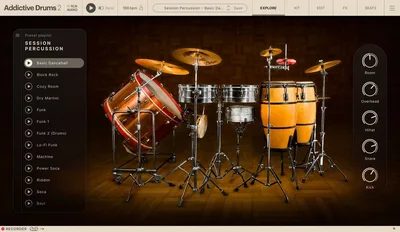
The Session Percussion ADpak from XLN Audio is a 15-instrument exotic percussion expansion for Addictive Drums 2, priced at $89. We loaded it mid-session on a Latin-tinged R&B track that already had a programmed kit underneath. We needed congas and a Brazilian Caixa that didn't sound like a stock loop pack. What we got was something more interesting than expected, and also more limited than the marketing implied.
We were building a pre-chorus breakdown. The main kit had stepped back. We needed texture: something percussive, slightly loose, and authentically South American without turning the track into a genre study. The pandeiro preset loaded fast. The transient hit exactly where we wanted it at around 2–3kHz, with a clean snap that didn't need a high shelf to cut through. That was the good news.
The frustrating news came about twenty minutes later when we went looking for a cowbell or a clave to build a rhythmic layer underneath. They're not here. At 15 instruments total, this pack asks you to love what it brought and forgive what it left home.
This review is for producers already running Addictive Drums 2 who want a fast way to add Latin, world, or hybrid percussion to genre-crossing productions. If you don't own AD2, stop reading here. The ADpak format only works inside that host.
First Impressions
Installation through XLN Audio's download manager is clean and takes under five minutes. Once the pack is authorised, it appears inside AD2's kit browser under ADpaks. No hunting through folders.
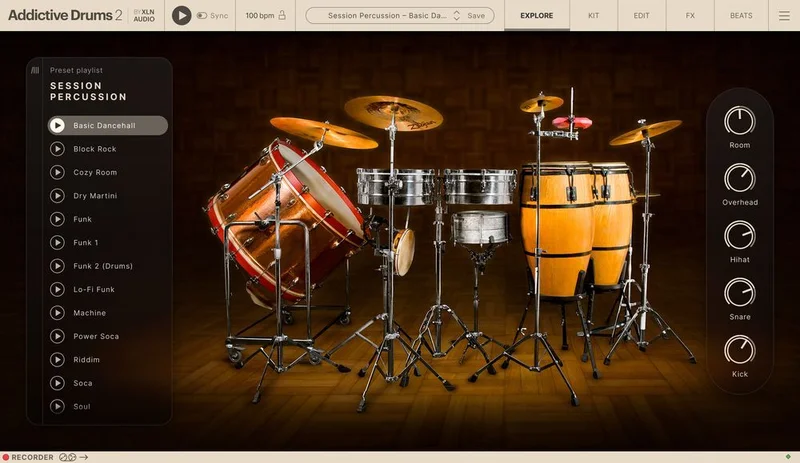
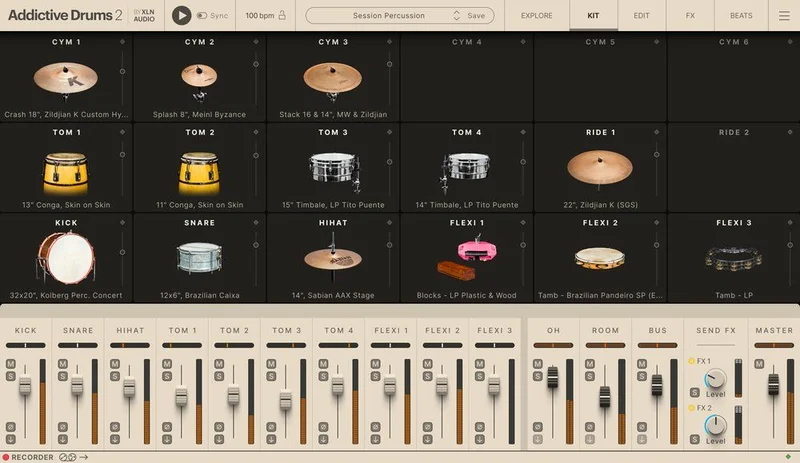
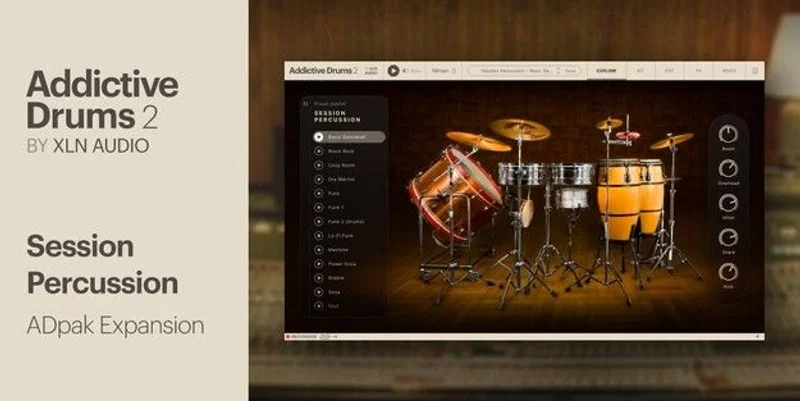
Opening the library, we immediately noticed the visual presentation matches the standard AD2 interface. No new UI to learn. The instruments map to the kit positions you'd expect: kick slot, snare slot, hi-hat, toms, and cymbals, except all of them are replaced by exotic percussion equivalents.
The orchestral bass drum sits in the kick slot and has real low-end weight: something below 80Hz with a slower attack than a standard kick, closer to 40–50ms. The timbales land in the snare slot. The congas split across the tom positions. It's intelligently mapped. We were playing patterns within three minutes of loading.
First impression: this sounds like it was recorded properly. The Neve 8048 console and vintage Neumann microphone pedigree shows up in the top end. There's no digital harshness. The room sound from Swedish Gramophone Studio is present but not overbearing, sitting maybe 8–10dB below the direct signal depending on the preset.
Getting It Into a Real Workflow
We tested this across three different session types: an Afrobeats-influenced pop track, a Hip Hop beat with live percussion layering, and a straight-up Latin pop arrangement. The pack delivered differently in each.
In the Afrobeats session, the Dancehall presets loaded with pattern-ready grooves that felt rhythmically authentic. We didn't write a single MIDI note manually for the first 30 minutes. That's satisfying when you're on a deadline.
The Hip Hop session exposed the first real friction. We wanted to layer the pandeiro under an 808 pattern. The pandeiro's low-frequency content sits around 200–250Hz, which muddied up fast against the 808 tail. We pulled a broad cut at 220Hz with a Q of 0.9, around 3.5dB, and it cleared. That's one EQ move, not a disaster. But it's worth knowing you'll need it.
The Latin pop session was the pack's strongest showing. The congas, timbales, and Caixa worked together as a cohesive kit. We did miss claves badly. We ended up pulling a separate one-shot from a different library and triggering it manually. That broke the workflow. On a full-priced expansion that positions itself as a full exotic kit, claves should be non-negotiable.
One more friction point: because this is an ADpak and not a standalone plugin, you can't use it in a session where you don't want AD2's full CPU overhead. On a loaded session, AD2 was pulling around 4–6% CPU just sitting idle. Light, but present.
What It's Genuinely Good At
The recording quality is the strongest argument for this pack. We compared the congas directly against a free SFZ-format conga library we've used for years. The difference was immediate and honest: the free library had a boxy resonance around 400Hz that required notch filtering. The Session Percussion congas sat naturally without correction.
That comes down to the signal chain. Neve 8048 consoles add a subtle harmonic sheen in the 3–6kHz range. It's not distortion, it's presence. Vintage Neumann capsules capture transient detail above 8kHz that cheaper mic setups smear. You hear both of those things when you A/B the congas at moderate velocity.
The playability model is also clever. XLN built this to function as a complete kit, not a sample browser. Every instrument has velocity layers and round-robin variation. Hard hits on the timbales don't just get louder, they change character. The attack sharpens. The overtones shift. That's what makes programmed percussion feel like someone actually played it.
Preset genre coverage across vintage, Latin pop/rock, Hip Hop/R&B, and Dancehall means you're not locked to one style. We pulled a Dancehall preset into the Afrobeats session and it worked immediately with minor BPM adjustment. That's the versatility the marketing talks about, and it's real.
The Rough Edges
15 instruments is thin. We love the pandeiro and the Brazilian Caixa. We genuinely wish cowbells, claves, agogo bells, and guiro were included. These aren't edge cases for Latin or Afro-Caribbean production. They're essentials.
The instrument count was clearly a boundary decision, not an oversight. XLN likely wanted to keep the pack focused. But focused and incomplete aren't the same thing
. When a producer hits the cowbell slot and there’s nothing there, they leave the session to find one elsewhere. That’s annoying.
There's also the community silence problem. Zero user reviews on KVR Marketplace as of mid-2026. That's not damning on its own, but it means there's no accumulated wisdom about velocity quirks, MIDI mapping workarounds, or genre-specific tips. You're on your own with the manual.
The price tag sits in uncomfortable territory. It's not expensive enough to feel premium, but it's not cheap enough to be a casual add-on. At that price, we'd expect at least 20 instruments and a broader MIDI pattern library.
Who This Is Really For
✅ Buy if you already own Addictive Drums 2 and regularly produce Latin pop, R&B, or Dancehall tracks that need authentic percussion fast.
✅ Buy if you want exotic percussion that plays like a kit rather than a sample browser, with velocity response and round-robin that hold up in real sessions.
✅ Buy if recording quality matters more to you than instrument count, and you're willing to supplement missing sounds from other libraries.
❌ Skip if you don't own Addictive Drums 2. There's no version of this that works without it.
❌ Skip if you need comprehensive Latin percussion coverage with claves, cowbells, and agogo bells. You'll be frustrated within one session.
❌ Skip if you're working in a genre where this pack has no presets, like orchestral or cinematic work. The character is specific, and it won't adapt cleanly.
Score Breakdown
| Category | Score | Notes |
|---|---|---|
| Sound Quality | 4.0/5 | Neve 8048 and vintage Neumanns deliver honest, mix-ready transients with no cheap harshness |
| Value for Money | 3.0/5 | The price feels steep for only 15 instruments, and missing essentials like claves and cowbells hurt the score |
| Ease of Use | 4.0/5 | Installs fast, maps logically inside AD2, playable within minutes of loading |
| Features | 3.0/5 | Kit-style playability is clever, but instrument breadth is too narrow for the price |
| CPU Efficiency | 4.0/5 | Runs inside AD2's existing footprint with minimal additional overhead |
| Overall | 3.8/5 | Strong recordings let down by incomplete instrumentation and thin community support |
Alternatives to Consider
If you want to stay inside the AD2 ecosystem but need broader percussion coverage, XLN's own Fairfax Vol. 2 ADpak adds a different character and slightly wider sound palette. It's worth comparing before committing to Session Percussion.
Outside the ADpak format entirely, Native Instruments' Session Guitarist series takes a similar "playable instrument, not sample browser" approach to acoustic instruments. See how that philosophy works for acoustic guitar in our Session Guitarist Acoustic Sunburst Deluxe review.
If you need nylon-string textures to complement your percussion arrangements, we covered the Session Guitarist Picked Nylon in detail. It pairs surprisingly well with hand percussion for Latin-style tracks.
For producers looking at world instrument libraries more broadly, our Ample Ethno Ukulele review covers how Ample Sound handles ethnic instruments with similar goals around playability and authenticity.
The honest close: if you own Addictive Drums 2 and you've been stacking hand percussion one-shots manually, Session Percussion ADpak will save you real time. The recordings are good enough that you'll stop reaching for other libraries for congas and timbales. But you will reach for other libraries for everything it's missing. At $89, that stings more than it should.
Buy it when it's on sale. At the discounted price that periodically appears on the XLN site, it's an easy yes for AD2 users in Latin and R&B production. At full price, you're paying for quality you'll appreciate and instrument count you'll resent.
Frequently Asked Questions
Does the Session Percussion ADpak work as a standalone plugin?
No. It requires an existing Addictive Drums 2 license to function. The ADpak format loads only inside the AD2 host. If you don't own AD2, this pack has no use to you at any price.
What genres are the presets designed for?
XLN built presets across four style areas: vintage drums, Latin pop/rock, Hip Hop/R&B, and Dancehall. We found the Hip Hop/R&B and Latin pop presets the most usable in real sessions. The Dancehall presets translated well into Afrobeats contexts with minimal adjustment.
Are MIDI patterns included with the Session Percussion ADpak?
The pack includes preset grooves playable within AD2's pattern engine. Exact MIDI pattern count isn't published in XLN's current product documentation. We'd recommend checking the XLN Audio site directly or contacting their support for specifics before purchasing if this matters to your workflow.
What instruments are missing that you'd expect in a Latin percussion pack?
Cowbells, claves, agogo bells, and guiro are the most obvious gaps for producers working in Latin or Afro-Caribbean styles. At least one user in published feedback flagged the cowbell absence directly. We hit the clave problem on our second session with the pack. If these are critical to your work, you'll need a supplementary library.