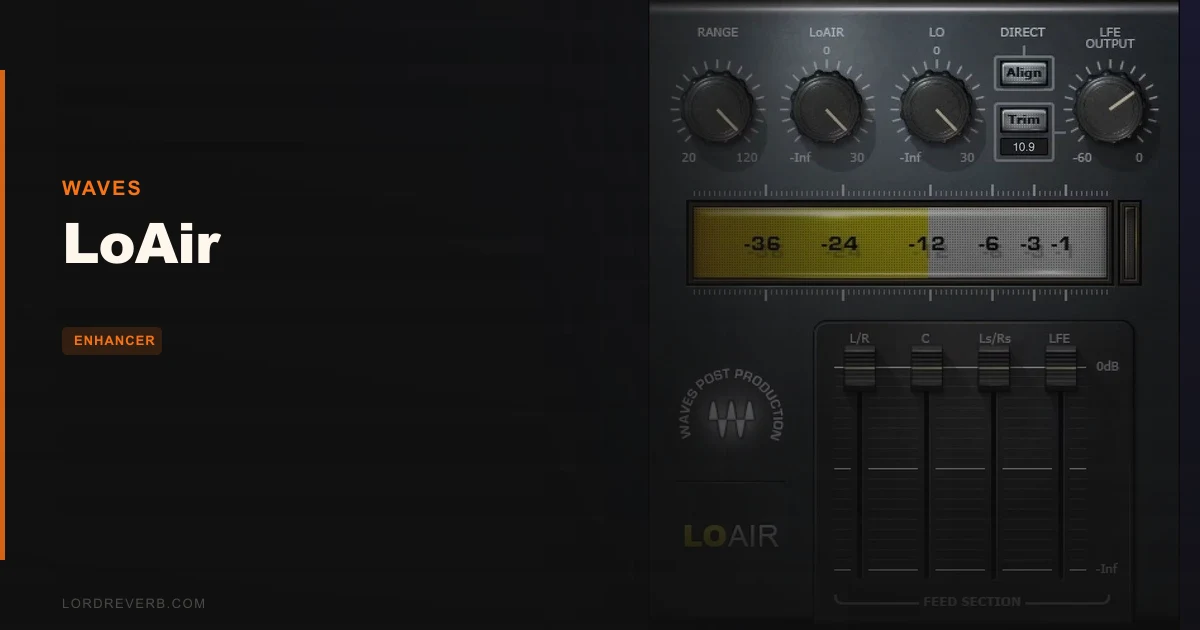
LoAir gets compared to Ren Bass and Maxx Bass constantly, and that comparison is worth getting straight before anything else: those two create upper harmonics so your bass translates on small speakers, while LoAir goes the other direction, synthesizing actual subharmonics an octave below the source. That's not a subtle distinction. It changes what this plugin is for, who it's right for, and whether $29.99 makes sense for your setup. This review lands here: LoAir is genuinely useful for electronic production and post-production work, frustrating in acoustic and band contexts, and the kind of plugin where the monitoring quality in your room matters as much as the tool itself. It's for producers who already understand their low end.
How It Compares Out of the Box
Stack LoAir next to Ren Bass or Maxx Bass and you're looking at two different philosophies, not two versions of the same thing. Ren Bass and Maxx Bass generate psychoacoustic harmonics in the upper range so that earbuds and laptops "hear" bass that isn't physically there. LoAir actually synthesizes frequencies below the original signal, one octave down.
That means reviewers are right when they say LoAir ensures bass translates across multiple speaker systems and earbuds. But the mechanism is opposite to what Ren Bass does. Steinberg Tonic, the other common comparison, is also focused on subharmonic synthesis rather than EQ-style processing, so it sits closer to LoAir in concept.
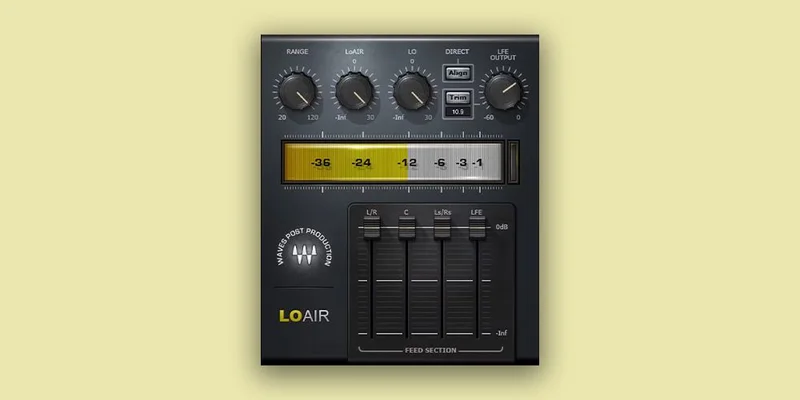
Out of the box, LoAir's interface is intuitive. Surround capability up to 5.1 is built in, which is a real differentiator if you're in post. The mono and stereo components cover standard music production. That breadth of format support is something neither Ren Bass nor Maxx Bass offers at this scope.
Performance Deep Dive
LoAir filters polyphonic material and lowers it by one octave. That's the core mechanism. Push it on a simple sine-wave kick and it behaves predictably. Load up something with a complex, shifting envelope and you'll start to see the inconsistency owners describe: perceived sound weight shifts as the amplitude varies, and you don't always get what you expected.
Your kick drums in an electronic session? Put LoAir across the channel and ease the sub synthesis in slowly. Owners specifically report success recovering oomph from acoustic kicks that have been high-passed too aggressively. That's a satisfying fix for a genuinely annoying problem. But dial it too far and your low end turns to mush. A heavy metal guitarist reported muddy mixes with excessive use, and that tracks: dense, transient-heavy material gives the subharmonic synthesis nothing clean to work with.
CPU and RAM usage appear minimal, with at least one reviewer noting no crashes in Logic Pro with low resource draw. But crash reports do exist, and they're tied to plugin updates specifically. That's a real reliability concern for a live or time-sensitive session. Automation is fully supported, and 24-bit/192kHz operation is on board.
Where It Wins
Electronic producers get the clearest wins here. You're working with a 909 kick that lacks weight below 60Hz. Load LoAir, synthesize the sub, and you've got a signal that moves air without touching the original sample. That's genuinely clever processing when it's dialled in correctly.
Post-production is the other strong case. Field recordings lose low-end constantly, whether through location noise reduction or mic limitations. LoAir restores that body without you needing to reach for a shelf boost and hope. The LFE track creation from stereo and 5.0 surround sources is a workflow win that neither Ren Bass nor Maxx Bass touches.
Surround support up to 5.1 at $29.99 is hard to argue with for the right user. If you're doing cinematic work or game audio and need subharmonic synthesis without paying for a dedicated post-production suite, this covers it.
Where the Competition Wins
If your goal is bass translation on consumer devices, Ren Bass and Maxx Bass win. Full stop. They're built for that specific problem and they solve it without the muddiness risk that LoAir carries when overused.
Steinberg Tonic, in the subharmonic synthesis lane, is reportedly more focused on that core task rather than LoAir's broader multi-format approach. Whether that focus produces more consistent results is something you'd want to verify in your own session.
Acoustic and live contexts go to the competition too. Owners find LoAir more applicable to electronic and cinematic material than acoustic drums and bass. If your work is live recording, rock, folk, or jazz with real acoustic sources, this plugin will frustrate you more than it helps. Overshoot the settings once in a dense mix and you're rebuilding headroom from scratch.
Who Should Buy Which
- ✅ Buy if you work in electronic music and need to synthesize sub-bass from sampled or programmed drums with consistent, simple envelopes.
- ✅ Buy if you do post-production or game audio and need to build LFE tracks from stereo or 5.0 surround sources.
- ✅ Buy if you regularly recover field recordings that lost their low-end to noise reduction or location mic limitations.
- ❌ Skip if your sessions are mostly acoustic instruments. The inconsistency with complex envelopes will cost you more time than you save.
- ❌ Skip if your monitoring setup isn't solid. Without reliable low-end reference, you'll consistently over-apply it and wonder why everything sounds bloated.
- ❌ Skip if plugin stability is non-negotiable. The crash reports tied to updates are real, and a live performance context is not the place to find out.
Specs & Technical Details
| Developer | Waves |
| Price | $29.99 |
| Plugin Format | VST, AU (Mac only), AAX |
| OS Support | Mac (Monterey 12, Ventura 13, Sonoma 14, Sequoia 15) / Windows 10 or later |
| Activation | N/A |
| CPU Usage | Light (owner reports) |
| Trial Available | N/A |
| Version Reviewed | N/A |
Score Breakdown
| Category | Score | Notes |
|---|---|---|
| Sound Quality | 3.5/5 | Works cleanly on simple electronic sources; inconsistent with complex, varied envelopes |
| Value for Money | 3.5/5 | Surround support and multiple components at $29.99 is fair for the right workflow |
| Ease of Use | 3.5/5 | Intuitive interface but limited guidance on parameter balance makes it easy to abuse |
| Features | 4.0/5 | Mono, stereo, 5.0, and 5.1 surround components plus full automation and 24-bit/192kHz support |
| CPU Efficiency | 4.0/5 | Minimal RAM and CPU draw reported; crash risk after updates is the main concern |
| Overall | 3.5/5 | Solid tool for electronic and post-production work; too inconsistent and risky for acoustic or live contexts |
Alternatives to Consider
Ren Bass is the go-to if your problem is bass translation on earbuds and laptop speakers. It generates upper harmonics, not sub frequencies, so it solves a different problem. But if you've been reaching for LoAir to make bass audible on small speakers, Ren Bass is what you actually want.
Maxx Bass works on the same upper-harmonic principle as Ren Bass. The two are worth comparing directly if psychoacoustic bass enhancement rather than subharmonic synthesis is your real need. Neither does what LoAir does, but both do their own thing more consistently in acoustic and mixed-genre contexts.
Steinberg Tonic is worth looking at if you want subharmonic synthesis with a tighter focus on that core task. If LoAir's multi-format, multi-use scope feels like more than you need, Tonic's narrower approach may suit a simpler workflow.
The Honest Verdict
LoAir at $29.99 is a genuinely useful plugin dropped into the wrong hands constantly. Electronic producers and post engineers who need to build sub-bass or recover lost low-end from clean, simple sources will get real value from it. Sound designers working in surround will love the LFE creation tools.
But it's not forgiving. Use it on a dense acoustic rock mix without excellent monitoring and you'll wish you hadn't. The crash history tied to updates is an annoying asterisk that Waves needs to address. And the inconsistency with complex polyphonic material means you can't treat it like a set-and-forget utility.
Know your source material, trust your monitors, and keep a light touch on the dial. That's the only context where this plugin earns its place in a signal chain.
Frequently Asked Questions
What is the difference between LoAir and Waves Ren Bass?
LoAir synthesizes actual subharmonic frequencies one octave below your source signal. Ren Bass creates upper harmonics so that bass feels present on small speakers that can't reproduce low frequencies. They solve opposite problems. If you need real sub-bass generated, LoAir is the right tool. If you need bass to translate on earbuds, Ren Bass is the one to reach for.
Is LoAir stable on modern operating systems?
Reports are mixed. At least one reviewer noted no crashes and low resource usage in Logic Pro. But owner reports also include frequent crashes, often tied to plugin updates. If you're in a critical session or live performance environment, it's worth testing a full update cycle before you rely on it.
Does LoAir work for acoustic instruments and live-recorded drums?
Owners find it more applicable to electronic and cinematic material than acoustic sources. The plugin can struggle with complex, varied envelopes, which is exactly what acoustic drums and live bass produce. Some users do report recovering low-end from acoustic kicks that were over-filtered, but results are inconsistent. For acoustic work, careful moderation and good monitoring are non-negotiable.