Here’s the regret scenario: you buy BASiS for $74.96, lean on the slap basses for a funk arrangement, and the samples let you down. Owners and reviewers report exactly that, and it’s the first thing to know before you click buy.
Plenty of buyers also run into a second snag. The top of the keyboard is reserved for keyswitching, so any part that lives high up the neck fights the instrument’s layout.
And the third? CPU. Reports say the load is significant even though it runs inside the Kontakt player, and that sits oddly next to other owners calling it stable.
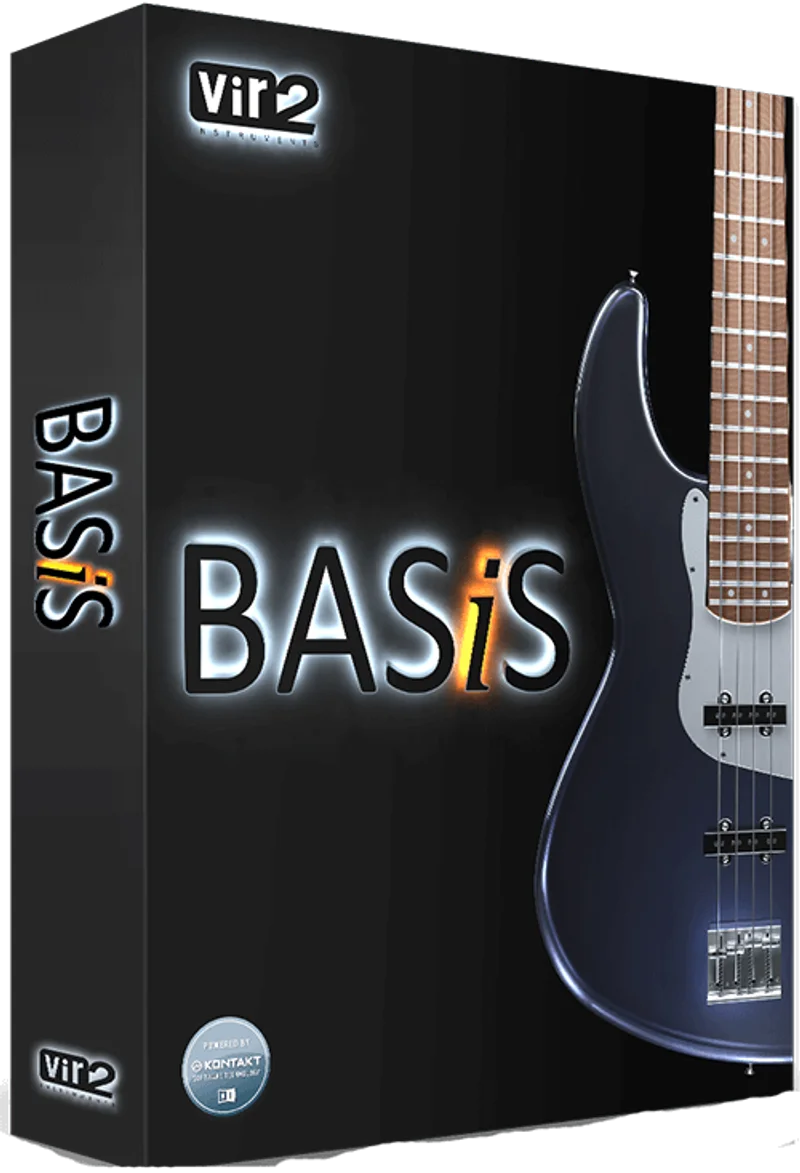
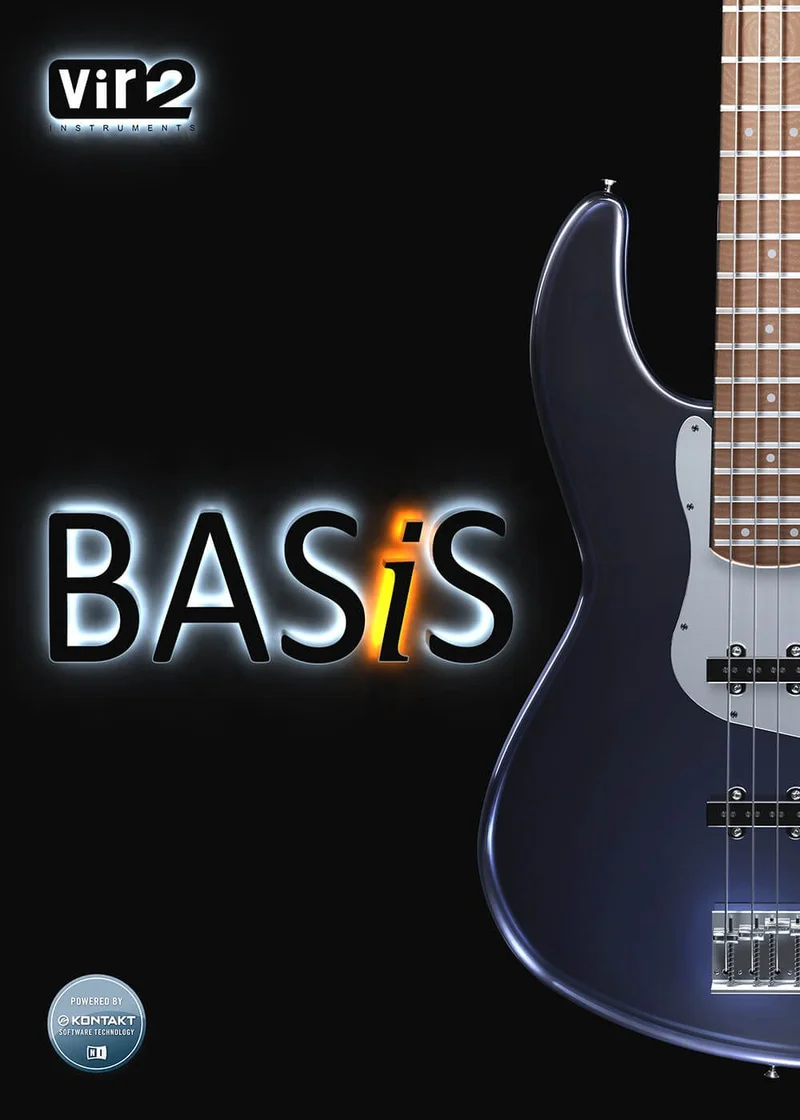
BASiS is a Kontakt bass library from Vir2 Instruments with over 7 GB of 24-bit samples. It’s built for producers who want electric, fretless, upright and synth basses in one place. Whether it suits you depends on which basses you’ll lean on most.
Who Ends Up Regretting This
Funk and slap players get hit first. Reviewers report that the jazz and slap bass samples are poor quality, and the library does ship three slap basses plus a jazz bass. If slap is the reason you’re shopping, that’s a real warning.
Players who live in the upper register will feel boxed in. That region is given over to keyswitching, which limits front-and-center playing up there.
Anyone who wants to open a bass and play in thirty seconds should think twice. Owners describe an overwhelming array of options that takes time to learn.
Finally, if you want the maximum realism possible, users point to Chris Hein Bass as more detailed. BASiS is broad. Depth is where it gets compared unfavourably.
What Owners Actually Say
The praise clusters in a few places. Owners say the old-school basses, Hofner and Precision, sound really great in a mix. MusicMan and Jazz Bass articulations come up as particularly good.
Slides and bass effects get a thumbs up too.
Stability gets mentioned kindly. One owner reports it very clean on CPU and stable on PC with Cubase 4. Another reports significant CPU consumption despite the Kontakt Player optimization. Those two reports pull in opposite directions, so check it on your own machine.
The legato work earns respect. Owners report full legato with physically correct vibrato, with real-time control over vibrato character, speed and strength.
The complaints are narrower but sharper. Jazz and slap samples, the keyswitch-eaten upper register, the CPU, and the learning curve. That’s the list.
Honestly? It’s a library with a clear split personality. Some basses are loved, others are not.
What You Actually Get
The developer calls BASiS a breakthrough with incredible attention to detail, and the most diverse collection of basses in virtual instruments. That’s marketing, so weigh it as such. The feature list underneath is real and long.
There are over 100 patches across electric, fretless, upright and synth basses. The electric lineup covers Jazz Bass, P-Bass, Rickenbacker and Musicman. Historic models include a Motown bass, a gospel bass, Jaco’s Fretless and a Hofner bass.
You also get one upright and three slap basses.
Over 100 of those patches are synth basses. If you’re wondering how they stack up, users compare the synth patches to Omnisphere as competitive.
How the Direct and Amped Blend Works
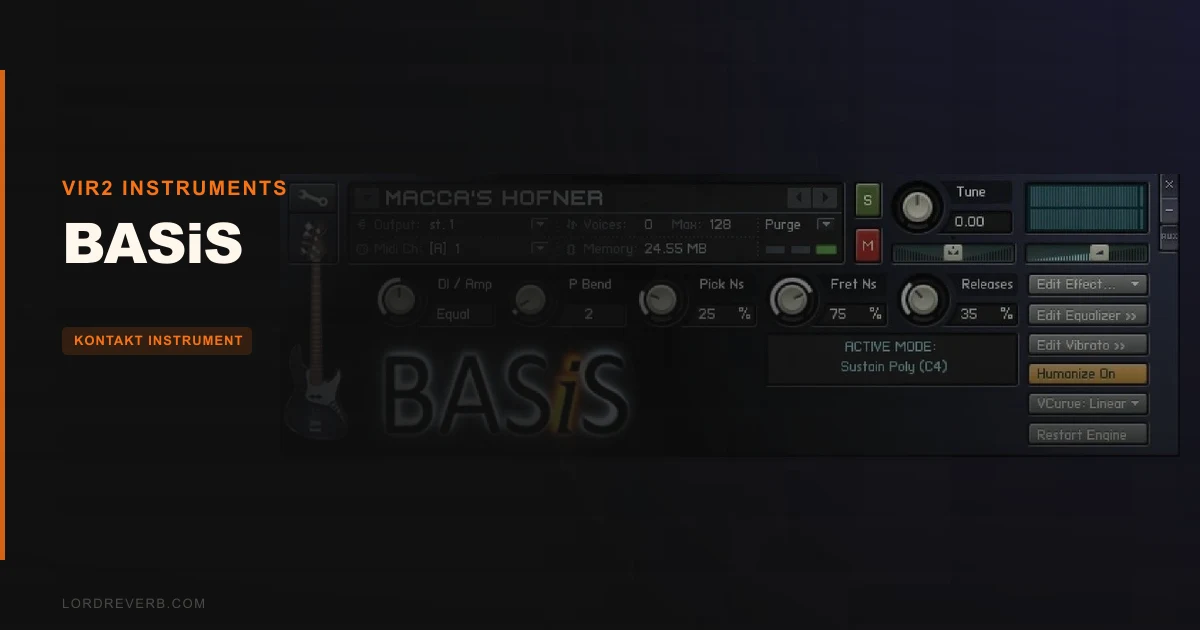
Electric basses are sampled from both direct input and amped perspectives. You get DI and amp blending control, so you decide how much of each lives in your tone.
Pull the DI up and you get the clean low end for a mix that needs definition. Pull the amp up and the grit arrives.
The phase-aligned upright
The upright is sampled with direct input and a phase-aligned tube mic output. Phase-aligned blending is available for both the electric and upright basses, so blending the two sources shouldn’t smear the low end.
That’s the right way to build a blend control. Plenty of libraries skip it and you hear the comb filtering the moment you move the fader.
The Playing Engine: Velocity, Humanizing and Legato
Multiple velocity layers are included, and the velocity curve is adjustable. Tailor it to your keyboard and you stop fighting a controller that’s too stiff or too soft.
A seamless humanizing feature is built in to prevent the machine-gun effect. Repeated notes on one pitch are where sample libraries give themselves away, so this matters on any driving eighth-note line.
Custom legato
A custom legato tool is designed for finger-smooth playing. Play overlapping notes and the transitions are meant to behave like a player’s fingers, not retriggered samples.
Vibrato modeled on real players
The vibrato engine is customizable, with character vibrato modeled after real bass players. Owners report full legato with physically correct vibrato, with real-time control over character, speed and strength.
I love that this exists on a bass library. It’s a detail most competitors ignore.
Articulations and Noise Detail
The articulation list is broad: harmonics, hammer-ons, pull-offs, slides, slaps, rakes and falls. Release layers are included, plus finger releases for authentic bass playback.
Pick and fret noise
Pick noise and fret noise both have controls. Randomized pick noises, release samples and fret noises keep repeats from sounding identical.
The fret noise is described as intelligent, responding to fretboard position. Play low on the neck and you get a different squeak than you do up high.
Pitch bend
Pitch bend range is adjustable. Small thing. Handy when you’re automating dips for a bluesy bend.
Effects and EQ Inside the Instrument
You get an EQ plus a chain of onboard effects. The list: octaver, compression, saturation, lo-fi, distortion, limiter, phaser, flanger, chorus, reverb and delay.
An octaver is the one I’d reach for first, for thickening a synth line or dropping a part down an octave without a second track.
Dial in saturation and compression in the box and you can shape the bass before it ever hits your DAW chain. For a lot of arrangements that saves you reaching for a third-party plugin.
Still, every effect you stack adds load. And CPU is the area where reports turn negative.
The Keyswitch Problem
Here’s the layout snag in detail. The upper register is reserved for keyswitching. Owners flag that as a limit on playing front and center in that range.
Picture a bass part that climbs to a melodic hook high on the neck. You’ll hit the keyswitch zone and have to rearrange the part or transpose your approach.
Annoying. Not fatal, but you should know before you plan a lead-bass part.
CPU, Stability and the Install Footprint
Install needs 8 GB of free drive space for over 7 GB of content. Minimum RAM is 2 GB, with 4 GB recommended.
You need Kontakt version 4 or higher. Mac needs OS X 10.4.x or later and a 2.0 GHz processor or faster. Windows needs XP SP2 or higher, 32-bit or 64-bit, also with a 2.0 GHz processor or faster.
Owner reports on load conflict. One says it’s very clean and stable on PC with Cubase 4. Others report significant consumption despite the Kontakt Player optimization.
Frustrating, because that’s not a spec you can read off the box. Run the demo content on your own project before you commit.
Historically, copy-protection also prevented editing in full Kontakt 3. That’s old news for most buyers, but it tells you this library has been around a while.
The Learning Curve
Owners call the array of options overwhelming and say effective use takes a learning curve. With over 100 patches, DI and amp blending, a vibrato engine, articulation switching and a stack of effects, that tracks.
Budget an afternoon. Don’t buy it the night before a deadline.
The payoff is real if you stick with it. But it’s a payoff you earn, not one that arrives in the first preset.
The Smarter Route
Not every buyer should land on BASiS. If realism is the goal, users report Chris Hein Bass as more detailed for ultimate realism. If you want a sampled bass with strong character, users report Scarbee Black Bass as having realistic character versus other alternatives.
If your real need is synth bass, compare against Omnisphere, which users describe as competitive with the BASiS synth patches.
Trilogy is an older classical sampling instrument that people bring up as a comparison. It’s a reference point more than a recommendation.
Here’s the quick view of where each alternative wins and loses:
| Product | Strongest point | Weakest point |
|---|---|---|
| BASiS | Breadth: electric, fretless, upright and 100+ synth patches | Slap and jazz samples reported poor; CPU concerns |
| Chris Hein Bass | Reported as more detailed for ultimate realism | , |
| Scarbee Black Bass | Reported realistic character | , |
| Omnisphere | Competitive synth bass patches | A synth first, not a bass-guitar library |
Buy or Wait?
Buy BASiS at $74.96 only if you want one library covering old-school electric tones, fretless and upright, and you’re fine with a learning curve. The Hofner, Precision, MusicMan and Jazz Bass articulations are where it earns its keep.
Skip it if slap is your reason for buying. Skip it if you play a lot in the upper register, or if your machine is already struggling with CPU.
Specs & Technical Details
| Spec | Detail |
|---|---|
| Developer | Vir2 Instruments |
| Price | $74.96 |
| Plugin Format | Kontakt library (Kontakt 4 or higher) |
| OS Support | Mac OS X 10.4.x or later; Windows XP SP2 or higher (32-bit and 64-bit) |
| Activation | N/A |
| CPU Usage | Reports conflict; significant per some owners |
| Trial Available | N/A |
| Version Reviewed | N/A |
| Library Size | Over 7 GB, 24-bit |
| Disk Space | 8 GB free |
| RAM | 2 GB minimum, 4 GB recommended |
| Processor | 2.0 GHz or faster (Mac and Windows) |
Score Breakdown
| Category | Score | Notes |
|---|---|---|
| Sound Quality | 3.0/5 | Hofner, Precision, MusicMan and Jazz Bass articulations praised; jazz and slap samples reported poor |
| Value for Money | 3.0/5 | Huge patch count, but weak spots in slap and a narrow keyboard layout |
| Ease of Use | 2.3/5 | Owners report an overwhelming option set and a real learning curve |
| Features | 3.7/5 | DI/amp blending, humanizing, legato, vibrato engine, effects chain |
| CPU Efficiency | 2.5/5 | Reports conflict; significant consumption flagged despite optimization |
| Overall | 2.8/5 | Broad and deep, uneven in the places many players care about most |
Alternatives to Consider
Chris Hein Bass
Users report it as more detailed for ultimate realism. If your priority is a convincing performance over a wide menu, this is the comparison to make first.
Scarbee Black Bass
Users report realistic character versus other alternatives. It’s the pick if you want a bass with a recognizable voice.
Omnisphere
Users compare the BASiS synth patches to it as competitive. Choose it when synth bass is the goal and you don’t need fingerstyle realism.
The Last Word
BASiS is a wide, fussy library that’s great on old-school electrics and shaky on slap. At $74.96, buy it for the Hofner and the MusicMan, and look elsewhere if slap is the point.
Related reviews: Rytmik 2 · Bazzazian Tapes Review
Frequently Asked Questions
What do I need to run BASiS?
You need Kontakt version 4 or higher. Install takes 8 GB of free drive space. RAM minimum is 2 GB, with 4 GB recommended.
Which operating systems does it support?
Mac systems need OS X 10.4.x or later and a 2.0 GHz processor or faster. Windows needs XP SP2 or higher, in 32-bit or 64-bit, with a 2.0 GHz processor or faster.
Are the slap and jazz basses any good?
Owners and reviewers report the jazz and slap bass samples as poor quality. The library includes three slap basses, so check them against your genre before buying. The old-school electrics get far better reports.
Is BASiS heavy on CPU?
Reports conflict. One owner calls it very clean on CPU and stable on PC with Cubase 4, while others report significant consumption despite the Kontakt Player optimization. Test it on your own machine.
Does it include synth basses?
Yes, over 100 synth bass patches. Users compare them to Omnisphere as competitive, which makes them a handy bonus alongside the electric, fretless and upright basses.