Bazzazian Tapes is a $49 Kontakt instrument built around melodic samples processed through vintage tape machines, high-end rack gear, and boutique pedals, and it earns its price tag for producers who want that sound fast, but hits a ceiling hard if you want more than presets.
We were finishing a boom-bap instrumental at around midnight. The chord stabs we'd been trying to dial in with a stock Rhodes kept sounding too clean, too present. We needed something that felt like it had been sitting in a crate since 1994.
We loaded Bazzazian Tapes, scrolled through maybe eight presets, landed on a warm keys patch with audible tape flutter, and the chord sat in the mix immediately. No EQ. No saturation bus. That was satisfying. But it also told us everything we needed to know about what this instrument is and what it isn't.
First Impressions: What You Actually Get When You Open It
Installation runs through Native Access. If you're already on Kontakt 7.4 or higher, it loads without friction. Free Kontakt Player works too, which matters at this price point.
The interface is clean. Four tabs across the top: Sound, FX, Sequencer, Macros. Everything is accessible without hunting. The six macro controls sit front and centre, mapped to the most useful parameters per preset: tape speed, flutter amount, filter cutoff, reverb mix, that kind of thing.
It looks like it was designed for producers who don't want to spend twenty minutes reading a manual. That's not a criticism. For $49, approachability is the right call.
First sound we played? Warm. Slightly woozy. Distinctly lo-fi without being cartoonish about it. The tape processing here doesn't feel bolted on as an afterthought.
Getting It Into a Real Workflow
Drop it on a MIDI track, pick a preset, and you're making sound in under thirty seconds. That's the honest answer to how it integrates.
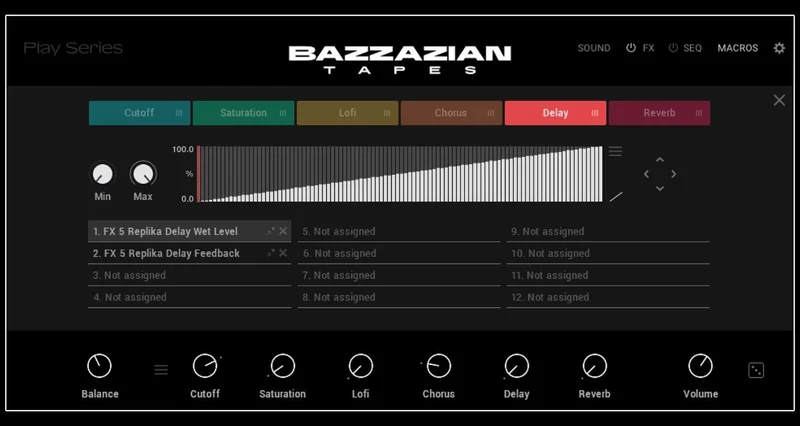
The two sound source layers give you some blend flexibility. You can mix a plucked melodic element against a pad or texture underneath, and the six macros let you shift the character without going into the Sound editor. For quick sketching, that's genuinely useful.
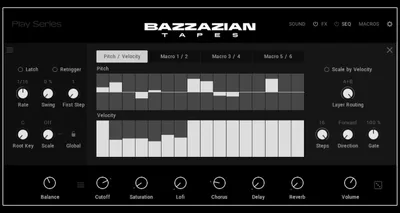
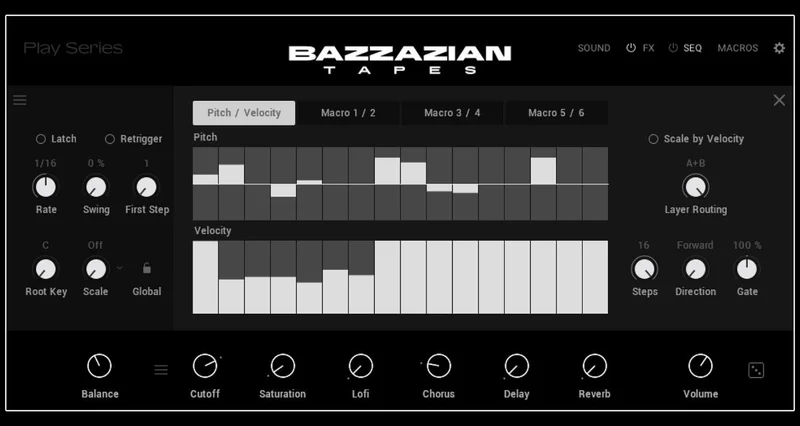
The 16-step sequencer is where things get interesting. We programmed a simple ascending phrase, added velocity modulation across the steps, and got a looping motif that would've taken longer to draw in a piano roll. It's not a replacement for MIDI programming, but it accelerates the idea phase.
The friction shows up when you want to go deeper. We tried editing one of the layers directly in the Sound tab and found the options thin. You can adjust tuning, pan, and some basic envelope shaping. That's it. There's no granular manipulation, no layered sampling, no way to import your own samples into the architecture.
If you're using Kontakt instruments for beat-making, Bazzazian Tapes fits best as a texture and melody source, not a workhorse sampler.
What It's Genuinely Good At
The tape processing is the headline, and it earns it. The character comes from Bazzazian's archive of instruments recorded through actual hardware: vintage tape machines, high-end rack processors, boutique pedals. You're not listening to a plugin approximating tape. You're listening to tape.
We ran a preset vibraphone patch through a send with a light plate reverb at about 1.3 seconds. The attack of each note came through intact. The decay had that slightly uneven flutter that tape introduces, sitting around 0.3 to 0.5Hz in feel without being obvious about it. It sounded like a sample pulled off a 1970s session reel.
The 150 presets cover more ground than most Play Series instruments at this price. We found useful patches across keys, mallet instruments, guitar textures, and lo-fi pads. Maybe 40% of them we'd actually use on a record. That's a higher hit rate than we expected.
The macros are clever. Six controls, but they're mapped contextually per preset rather than globally. On a guitar patch, Macro 3 might be wow depth. On a pad, it's filter resonance. It means you're always turning something relevant.
At $49, it competes directly with lo-fi Kontakt instruments roundup. Nothing at this price gives you this specific tape heritage authentically.
The Rough Edges
The two-layer architecture is the main limitation. Compared to Native Instruments Drift review or Para, which give you more modulation depth and voice architecture, Bazzazian Tapes is shallow. That's not surprising at $49, but you will hit the ceiling.
The sequencer velocity modulation feels thin. You can adjust velocity per step, but there's no swing quantization and no way to tie steps for longer phrases. We wanted to build a more complex melodic line and had to take it back to the piano roll.
Annoying: presets don't tag by BPM or key. With 150 patches, scrolling becomes the workflow. A simple metadata filter would fix this.
No standalone mode. You need Kontakt 7.4 or Kontakt Player. If you're on an older version, factor in that cost. That said, the free Kontakt Player works, so for most people th
is isn’t a blocker.
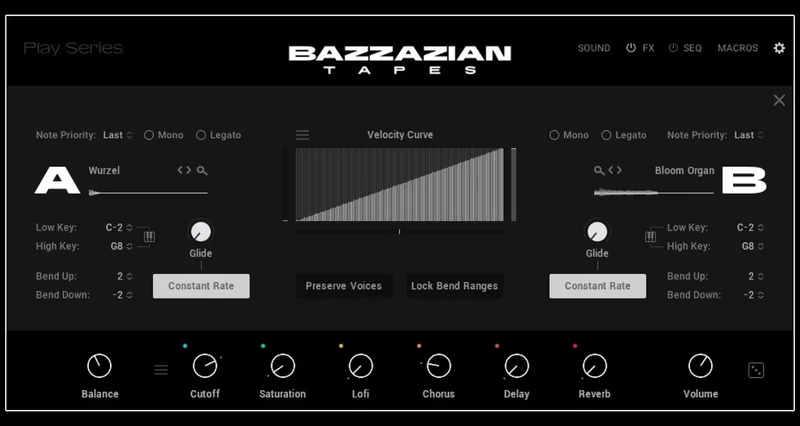
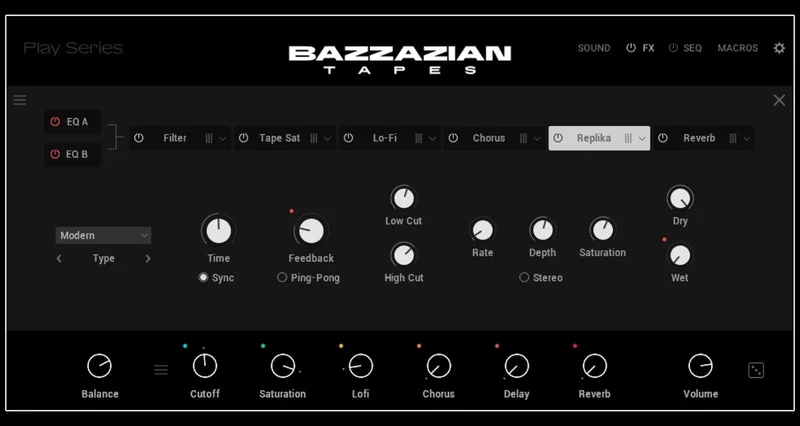
We also wish the FX tab had a few more options. The reverb, delay, and saturation chain is solid but fixed. You can't reorder the signal path or add additional processing within the plugin itself.
Who This Is Really For
Be honest with yourself before you buy this.
- ✅ Buy if you make lo-fi hip-hop, boom-bap, or neo-soul and want authentic tape character without building a processing chain yourself
- ✅ Buy if you want a fast melodic idea generator and the 16-step sequencer appeals to your sketching process
- ✅ Buy if you're new to Kontakt instruments and $49 is a low-risk entry into the library
- ❌ Skip if you want deep sound design control or the ability to manipulate the underlying samples
- ❌ Skip if you need a versatile instrument that works across multiple genres: the vintage aesthetic is baked in hard
- ❌ Skip if you're already sitting on lo-fi sample packs and Kontakt libraries that cover this sonic territory
Score Breakdown
| Category | Score | Notes |
|---|---|---|
| Sound Quality | 4.0/5 | Tape processing is the real deal; preset quality is high for the price |
| Value for Money | 4.5/5 | $49 for authentic tape-processed melodic content is hard to argue with |
| Ease of Use | 4.5/5 | Six macros and clean layout make it fast; zero learning curve |
| Features | 3.0/5 | Two-layer architecture and limited sequencer hold it back from serious sound design |
| CPU Efficiency | 4.0/5 | Runs light; no issues running multiple instances in a session |
| Overall | 3.9/5 | Brilliant for its lane; overrated if you want a flexible instrument |
Alternatives to Consider
If you want more sound design depth at a similar price, look at Native Instruments Drift review. Drift gives you a more complex modulation architecture and works across a wider genre range. It's a fuller instrument, though it doesn't have Bazzazian Tapes' specific tape-recorded source material.
For producers who want lo-fi character but prefer a sample-based approach rather than a Kontakt instrument, best lo-fi sample packs 2026 covers free and paid options that might actually serve you better if you work primarily in clips rather than MIDI.
If you're building out a full Kontakt library and want something that complements Bazzazian Tapes with more rhythmic content, check best Kontakt drum instruments for hip-hop. Pairing a solid drum library with Bazzazian Tapes covers most of what a boom-bap beat needs.
Our Call
Bazzazian Tapes does one thing and does it well: it puts authentic tape-processed melodic instruments in your session for $49 with almost no setup time. We'd buy it. We have bought it.
But we'd be lying if we said it's anything other than a texture and melody tool. The sound design ceiling is low. The sequencer is a sketch tool, not a composition environment. And that vintage aesthetic is so thoroughly baked in that you'll struggle to use this on anything that needs to sound clean or modern.
Buy it if your productions live in the lo-fi, boom-bap, or neo-soul space. Skip it if you already have that corner covered or if you need your Kontakt budget to stretch into more versatile territory.
At $49, it's not a commitment. It's a crate dig. Sometimes you find the record you needed. Sometimes you find it six months later. Either way, the price doesn't hurt.
Frequently Asked Questions
Does Bazzazian Tapes require a full Kontakt license?
No. It runs on the free Kontakt Player, which you can download through Native Access. You do need Kontakt 7.4 or higher, though. If you're on an older version, update before you buy or factor in whether an upgrade makes sense for your setup.
What genres work best with Bazzazian Tapes?
Lo-fi hip-hop, boom-bap, neo-soul, and chill beats are the obvious targets. The tape processing is baked into every preset, so anything that needs to sound clean or modern is a hard fit. If your productions lean vintage, it works. If they don't, it'll fight you.
How does the 16-step sequencer actually work?
It's a melodic phrase sequencer, not a drum step sequencer. You assign pitches to each of the 16 steps and set velocity per step. The sequencer then loops the phrase in time with your DAW. It's fast for generating motifs. It's limited for complex melodic writing because there's no step tie function and no swing control built in.
Is Bazzazian Tapes worth buying in 2026 or is it outdated?
The source material was recorded through real vintage hardware, so it doesn't age the way a software emulation might. What you're buying is a library of tape-processed sounds, and those sounds don't expire. The interface is a little basic by current Play Series standards, but at $49 it still delivers more authentic tape character than most alternatives at the price.