The United Plugins Bass Bundle is a solid deal at sale pricing, a questionable one at full price, and the right call for producers who need a flexible bass processing chain without a premium budget.
We tested this across hip-hop, electronic, and live-recorded bass sessions. The bundle includes Bassment (the full multi-effect bass processor), Bassment Core (the stripped version), and BassRift (a bass-focused saturation and distortion tool). United Plugins runs aggressive sale campaigns, so the real-world entry point is often much lower than the list price. That changes the math significantly. If you’re reading this during a sale, keep reading. If you’re looking at full retail, read carefully before clicking buy.
What You're Actually Getting
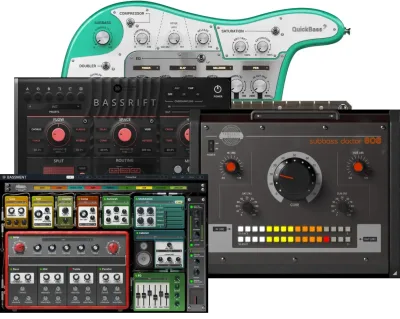
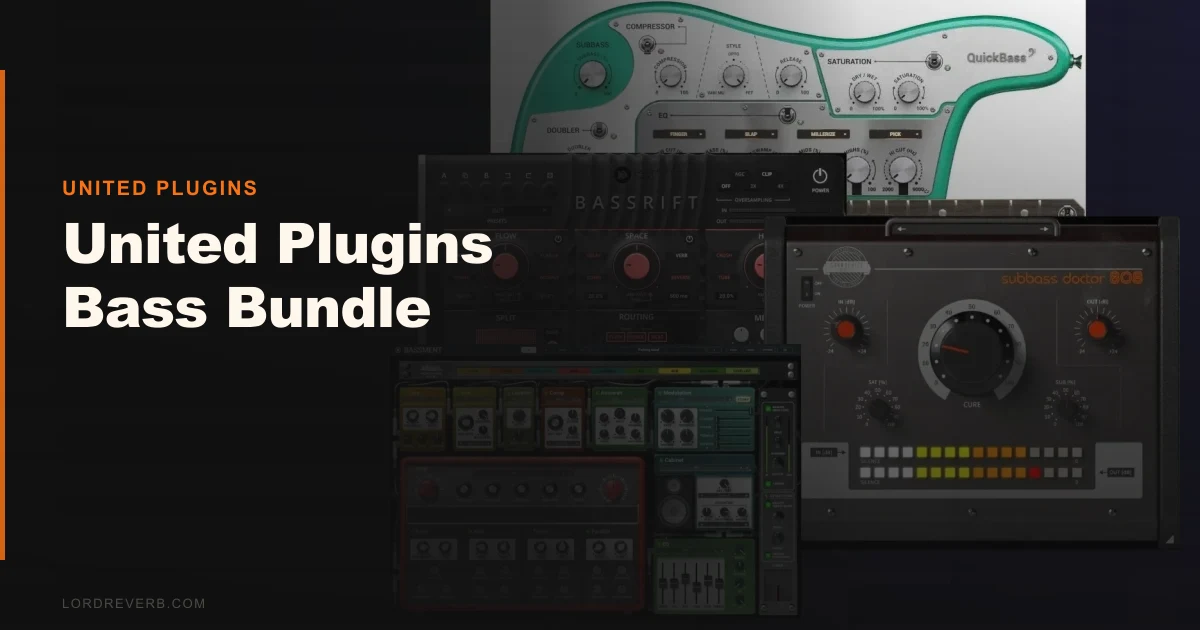
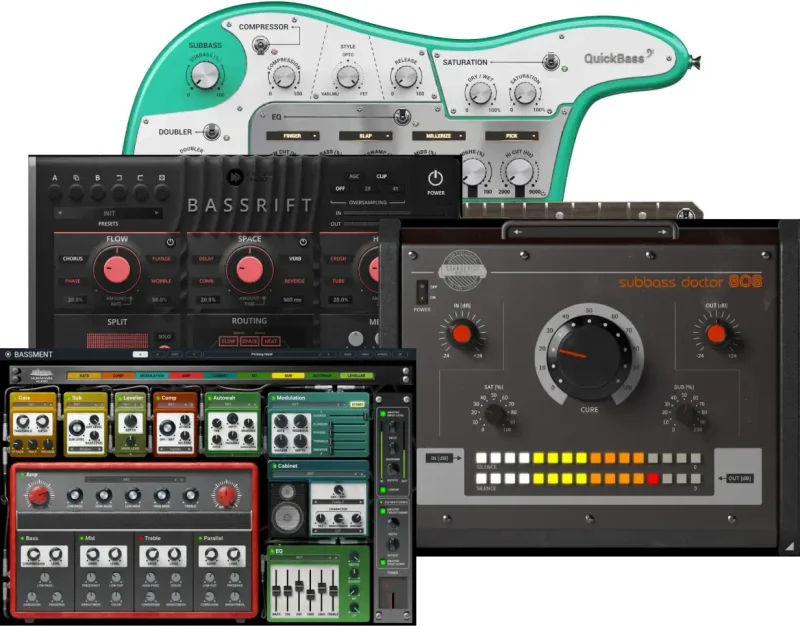
Bassment is the headline plugin. It covers amp simulation, cabinet emulation (15 types, over 200 models), EQ, compression, and a chromatic tuner in a single signal chain. That’s a genuinely complete bass processing stack in one window.
BassRift handles the dirt side. It’s a dedicated bass saturation and distortion unit with harmonic blending, designed to add edge without killing low-end weight. Think of it as the plugin you reach for when a clean DI sounds too polite.
Bassment Core is the same engine with fewer cabs and no EQ matching. It’s the entry point, but it’s limited enough that you’ll want the full Bassment quickly.
The bundle is available in VST3, AU, and AAX. Mac and Windows both supported. Activation runs through United Plugins’ iLok-free license system, which we appreciate.
The Good
The cabinet library is where Bassment earns its keep. 200+ models across 15 cabinet types means you can move from an SVT-style grind to a clean-focused modern cab without leaving the plugin. We loaded a dry DI bass recording in a hip-hop session and cycled through six cabs in under two minutes. Three of them worked immediately with minimal EQ adjustment. That speed matters.
The EQ matching feature is underrated. We ran a reference bass tone from a commercial track into Bassment’s matching tool, and it pulled the low-mid weight into the right neighborhood in one click. We still trimmed 2dB at 280Hz manually after, but the starting point was useful.
BassRift is clever in a way we didn’t expect. Running it on a sub-heavy synth bass in an EDM context, we blended the second harmonic up by about 30% and suddenly the bass translated on laptop speakers without touching the fundamental. That’s a real workflow win.
The built-in tuner isn’t a novelty. It’s accurate and visible. Not having to open a separate tuner plugin during a session is a small but satisfying quality-of-life detail.
The Not-So-Good
CPU usage is frustrating. United Plugins doesn’t publish benchmark numbers, and that’s annoying for a reason: in our sessions, running two instances of full Bassment alongside a moderately loaded template pushed CPU noticeably harder than comparable plugins at the same price point. We didn’t hit dropout, but we noticed it. Brainworx bx_bass_finalizer and Waves Bass Rider don’t make you think about your buffer size. Bassment sometimes does.
Bassment Core feels like a bait product. It’s priced cheaply, it’s often on sale for near-free, and it’s missing enough of the full Bassment’s functionality to feel deliberately incomplete. We wish United Plugins had drawn a cleaner line between the two.
Full retail pricing is hard to defend. At full price, the bundle sits uncomfortably close to better-established amp sim collections that have more independent validation, more granular controls, and stronger CPU optimization.
The UI looks dated. Nothing is broken. Everything works. But in 2026, the visual design sits noticeably behind iZotope, Arturia, or Native Instruments equivalents.
Compared to the Alternatives
Brainworx Ampeg SVT-VR Classic is the serious competitor for the amp simulation side. It’s one cab, one amp, no distortion toolkit, but the authenticity of that single SVT model is a level above what Bassment delivers. It costs more, it does less on paper, and it sounds more convincing in a mix where you need a specific character. For genre-specific work where SVT tone is the answer, Brainworx wins.
Softube Bass Amp Room offers three amp models and a tighter, more focused interface. It’s CPU-friendlier in our experience. The cab selection is narrower than Bassment’s 200+ models, but the amps feel more tactile to dial in.
Native Instruments Guitar Rig 7 Pro handles bass processing as part of a broader amp sim ecosystem. More CPU-intensive, more expensive, more complex. If you’re already in the NI world, you probably don’t need this bundle.
The honest comparison: for the price United Plugins charges during sales, none of the above compete on value. At full price, all three beat it on quality-to-cost ratio.
For producers already exploring United Plugins’ other bundle offerings, the Bass Bundle follows the same pattern: brilliant on sale, harder to justify at retail.
Who Should Buy This
✅ Buy if you’re a bedr oom producer who needs a complete bass chain without buying five separate plugins.
✅ Buy if you catch it on one of United Plugins’ regular 80%+ off sale events.
✅ Buy if you produce hip-hop or electronic music and need harmonic saturation tools to make sub bass translate on smaller speakers.
❌ Skip if you’re a recording engineer working on professional sessions where clients will notice the difference between this and a Brainworx or Softube equivalent.
❌ Skip if CPU efficiency is a priority. Your sessions are already loaded.
❌ Skip if you’re buying at full price expecting a premium amp simulation experience. You’ll be disappointed.
Score Breakdown
| Category | Score | Notes |
|---|---|---|
| Sound Quality | 3.5/5 | Bassment cab library is strong; amp character lacks the authenticity of premium competitors |
| Value for Money | 4.5/5 | At sale pricing, the depth of tools per dollar is hard to beat in this category |
| Ease of Use | 4.0/5 | Single-window bass chain with EQ matching makes setup fast; UI feels dated but functional |
| Features | 4.0/5 | 200+ cab models, EQ matching, tuner, and dedicated saturation tool covers the full bass processing workflow |
| CPU Efficiency | 2.5/5 | No published benchmarks; real-world use runs heavier than comparable plugins in this tier |
| Overall | 3.9/5 | Strong sale buy for budget producers; falls short at full price against premium alternatives |
Alternatives to Consider
Brainworx bx_ampeg SVT-VR Classic. One amp, one sound, done right. If you need the SVT character specifically, this is the plugin. It doesn’t try to be everything. Read our full Brainworx bass plugins breakdown for the detailed comparison.
Softube Bass Amp Room. Three amps, tighter CPU footprint, and an interface that feels more premium. Works best for rock and recorded bass where amp character matters more than flexibility.
Native Instruments Guitar Rig 7 Pro. Handles bass processing inside a larger amp sim ecosystem. Overkill if bass is your only need. Worth it if you also process guitars ITB.
For producers who’ve already grabbed United Plugins’ other bundles, check our United Urban Bundle review to see how the brand’s value proposition holds up across categories.
The Bottom Line
We’ve seen this product at a very low price for Bassment Core and the full bundle even lower during United Plugins’ sales. At that price, it’s an easy yes. You get a complete bass processing chain, 200+ cab models, a usable saturation tool in BassRift, and an EQ matching workflow that actually saves time. The CPU overhead is annoying, and the UI won’t impress anyone, but the tools work.
At full price? Harder sell. The sound quality gap between this and Brainworx or Softube becomes too wide to ignore when the price gap closes. Set a price alert, wait for a sale, and buy it then.
This is the wrong plugin for session engineers mixing major-label albums. It’s the right plugin for the producer who needs a capable bass chain today and does not want to spend a lot on a single-purpose amp sim.
Frequently Asked Questions
What's the difference between Bassment and Bassment Core?
Bassment Core is the stripped-down version with fewer cabinet models and no EQ matching functionality. Full Bassment gives you 15 cabinet types, 200+ cab models, the complete EQ section, and the matching tool. Bassment Core is useful as a free starting point, but you'll outgrow it quickly if you're doing serious bass work. The upgrade to full Bassment is worth it during a sale.
Is the United Plugins Bass Bundle good for electronic music production?
Yes, particularly for translating sub-heavy bass patches to smaller speakers. BassRift's harmonic blending lets you boost upper harmonics on a synth bass without touching the fundamental, which is exactly what you need when mixing for ear buds and laptop speakers alongside a full-range system. We used it on 808s in a hip-hop context with strong results.
How does United Plugins handle activation and licensing?
United Plugins uses their own license system without requiring iLok. You activate through their account portal. It's straightforward and iLok-free, which removes a common pain point. You can check their site for machine limits and offline activation options, as policies can change with updates.
Should I wait for a sale before buying the United Plugins Bass Bundle?
Yes. United Plugins runs discounts of 75-86% multiple times per year. The full bundle at sale price regularly drops to a small fraction of the list price. At that price, the value calculation is simple. At full retail, the same money spent on a single Brainworx or Softube plugin will likely serve you better if sound quality is the priority.