
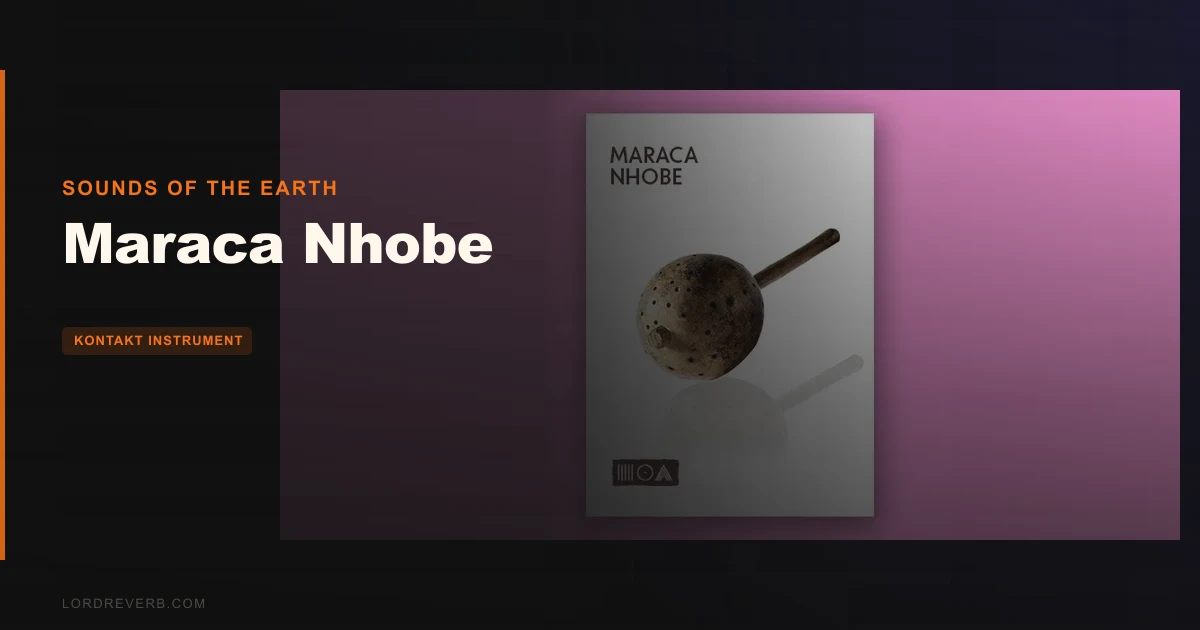
Maraca Nhobe is a Kontakt instrument built around a single authentic Costa Rican indigenous maraca, and at $6.90 it's one of the most affordable ways to bring genuine ceremonial percussion into a production that actually needs it.
Picture the moment: you're building a ritual soundscape, something slow and hypnotic, and every synthetic shaker or loop-library maraca you drop in sounds processed and flat. It has none of the character the scene demands. That's exactly when you'd reach for this.
This isn't a general-purpose shaker plugin. It's not trying to be. It's a focused tool for a specific cultural instrument with a specific sound. If you need broad Latin percussion coverage, look elsewhere. If you need this instrument in particular, read on.
What This Actually Is (and What It Isn't)
The Maraca Nhobe is one of the oldest instrument families in Costa Rica. It's a shaking idiophone, a handle with a resonating chamber filled with percussion seeds that vary depending on the ritual context.
The sound is bright, shrill, and high-pitched, shaped by handmade holes in the body. That handmade quality isn't a polite way of saying inconsistent. It means the instrument has natural acoustic variation baked in at the source.
What it's not: a trap hi-hat replacement, a pop shaker, or a general percussion utility. Owners who grab this expecting a versatile modern percussion tool will be frustrated. It's built for trance-inducing soundscapes, ceremonial arrangements, and ethnomusicology-adjacent work. That specificity is the point.
The 180 sample files packed into 75MB cover the instrument's character without bloating your drive. best Kontakt instruments for world music
Where It Fits When You're Actually Building Something
You're scoring a documentary segment, something about indigenous ritual or ancient ceremony. Or you're producing ambient and drone music where texture matters more than tempo. Drop the Maraca Nhobe into your Kontakt 7 instrument rack and start working through the 5 mic options.
Those 5 microphone positions aren't just a marketing bullet. They let you shift the instrument from close and dry, where that shrill attack is right in your face, to something more roomy and atmospheric. That's useful when you're trying to push it back in a mix without EQ surgery.
The bright, high-pitched character means it will cut through a dense low-mid arrangement without needing much help. Sit it against a low drone or a bass-heavy pad and it claims its own space almost automatically.
For trance-based or hypnotic compositions, loop a simple rhythmic pattern and let the natural seed variations in the samples do the work. The handmade nature of the source instrument gives you micro-variation that a programmed shaker plugin simply won't give you. how to layer percussion in Kontakt
It's not a writing tool you'll abuse across fifty sessions. It's the one you open when the brief specifically calls for something that feels like it came from a different world.
For the Sound Designer
You want cultural authenticity and unusual timbres. The bright, shrill attack is genuinely hard to synthesize convincingly, and the ceremonial provenance gives you something to reference in liner notes and credits. Buy it.
For the Film and TV Composer
If you score documentary, drama, or anything touching indigenous Central American culture, this belongs in your library. At $6.90, there's no reason to skip it. Buy it.
For the Ambient or Drone Producer
The trance-inducing quality Sounds of the Earth describe isn't marketing copy. A bright shaking idiophone over a slow evolving pad is a legitimate compositional move. Buy it, then spend an hour with the mic options.
For the General Beatmaker or Pop Producer
This is probably not your tool. If you need a shaker for a pop mix, there are broader percussion libraries that cover more ground. Skip it, or wait until a project calls for it specifically.
The Trade-Offs Worth Knowing Before You Buy
The Kontakt 7 requirement is the one that will genuinely annoy a section of buyers. The free Kontakt Player won't cut it. You get demo mode only, which means you can't use this in a real session without the full retail version. If you're on Player, this is a hard stop. free Kontakt Player vs full Kontakt: what's the difference
The Pulse installer is a minor irritation. It adds a step, and if you're used to drag-and-drop libraries, it's mildly annoying. Not a dealbreaker. Just know it's there.
For a single instrument with a focused role, 180 Kontakt sample files feels like solid coverage. But if you're the kind of producer who wants round-robin variety across eight velocity layers and a dozen articulations, this isn't built to that spec. The instrument does what it does, and it doesn't try to be more than that.
That focus is both the product's strength and its limit. It's a clever, honest decision for a niche instrument. But it means the replay value is tied entirely to how often your projects actually need this specific sound.
The Real Verdict
At $6.90, the Maraca Nhobe is a brilliant buy for anyone working in sound design, film scoring, or world music production where cultural accuracy matters. The 5 mic options, the authentic ceremonial source, and the compact 75MB install make it an easy yes for the right producer.
It's the wrong buy if you need Kontakt Player compatibility, if you want a versatile shaker library, or if your music rarely touches ceremonial or indigenous textures. Know what you're buying. If it fits, it fits well.
For a documentary score or an ambient project, it's an easy purchase. For anything else, wait for a project that demands it.
Specs & Technical Details
| Developer | Sounds of the Earth |
| Price | $6.90 |
| Plugin Format | Kontakt Instrument (.nki) |
| OS Support | macOS 10.10 or later (Intel Core 2 Duo) / Windows 7, 8, 10 (Intel Core 2 Duo or AMD Athlon 64) |
| Activation | Pulse Installer required |
| CPU Usage | Light (75MB, single instrument) |
| Trial Available | Demo mode via free Kontakt Player (not fully functional) |
| Version Reviewed | N/A |
Score Breakdown
| Category | Score | Notes |
|---|---|---|
| Sound Quality | 4.5/5 | Authentic, handcrafted source with natural variation baked in |
| Value for Money | 4.5/5 | Hard to argue with the price for a focused, culturally specific instrument |
| Ease of Use | 3.5/5 | Pulse installer and Kontakt 7 requirement add friction before you even start |
| Features | 3.5/5 | 5 mic options is genuinely useful; 22 audio files is modest for advanced use |
| CPU Efficiency | 4.5/5 | 75MB footprint, runs light, minimum spec requirements are low |
| Overall | 4.0/5 | Brilliant for its target user; irrelevant for everyone else |
If you score for picture, produce ambient work, or build soundscapes where this world exists, the Maraca Nhobe earns its place. It's underrated by producers who haven't needed it yet, and loved by the ones who have. best plugins for ambient and ceremonial music production
Skip it if you're on free Kontakt Player. Skip it if your sessions never touch ceremonial or indigenous textures. Everyone else: add it and forget the price exists.
Related reviews: Retropolis · Viola Da Gamba Review
Frequently Asked Questions
Does Maraca Nhobe work with the free Kontakt Player?
No. The free Kontakt Player runs Maraca Nhobe in demo mode only, which means it won't function fully in a real session. You need the full retail version of Kontakt 7 or later to use it properly. That's a firm requirement, not a suggestion.
What kind of music is Maraca Nhobe actually built for?
It's built for ceremonial, ritual, ambient, and ethnomusicology-adjacent work. The source instrument is a Costa Rican indigenous maraca used in cleansing rituals, and that character comes through in the recordings. Film composers, documentary scorers, and sound designers will get the most from it. Pop and beatmaking producers will likely find it too specific for regular use.
How does the 5 microphone options feature actually work in practice?
The 5 mic positions let you shape the instrument's placement in a mix without relying entirely on reverb or EQ after the fact. You can go close and present for a dry, cutting sound, or pull back to something more roomy and atmospheric. That kind of control at the instrument level saves processing later down your signal chain. Check what your notes say about the exact mic types before committing to a mix position.