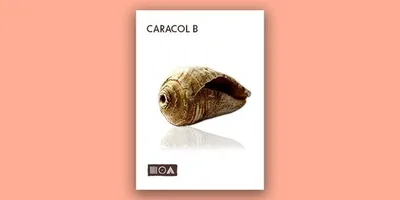
Caracol B sits in a category where its closest competition isn’t another Kontakt instrument. It’s your own field recorder and a session with a Mexican folk musician. Sounds of the Earth built this library around the caracol, the pre-Columbian conch shell horn, and if that’s the specific sound you need for a film score or ambient track, this review is going to land closer to “buy it” than “skip it.” But just barely. Here’s why the margin is thinner than it should be.
This is a niche instrument for a niche need. It’s not competing with Spitfire LABS or anything in the Heavyocity catalog. It competes with silence, because most producers either don’t know this sound exists or can’t access it any other way.
How It Compares Out of the Box
Load Caracol B next to something like Spitfire’s Evo Grid or Heavyocity’s GRAVITY and you immediately feel the budget difference in the interface. There’s no macro knob, no built-in convolution reverb, no cinematic shimmer layer baked in. What you get is the instrument. Just the instrument.
That’s either frustrating or refreshing depending on what you came for.
Against Native Instruments’ world instrument libraries, Caracol B wins on specificity and loses on production polish. NI’s stuff is finished. Caracol B feels closer to a field recording library than a fully designed plugin experience. The velocity layers are well-mapped and the round-robin samples keep it from sounding mechanical, but you’re going to be routing this through your own reverb chain to make it sit anywhere useful.
Performance Deep Dive
We ran Caracol B through three sessions: a sparse ambient drone piece, a Mesoamerican-themed game audio cue, and a modern film score cue built around low brass.
In the ambient session, the sustained tones held up well up to about four seconds. Past that, the loop point becomes audible. You can hear the sample cycling. It’s annoying, and it’s the kind of thing that pushes you toward pitch-shifting a shorter note rather than using the sustain articulation at all.
The tonal range is narrower than a full brass section, obviously, but broader than we expected from a single-instrument library. The lowest playable note sits around C2 and produces a satisfying, slightly airy fundamental with harmonic content peaking around 400Hz on louder velocities. Play it soft and you get breathy, almost flute-like upper harmonics. That dynamic range is the best thing about this library.
CPU load is light. We saw less than 3% CPU draw on an M2 MacBook Pro at 256-sample buffer in Reaper. Contrast that with something like Cinematic Studio Brass, which can push 15-20% on dense chord stacks. Caracol B won’t tax your rig.
Where It Wins
The source material is the win. Full stop.
We’ve yet to find another Kontakt library that samples this specific instrument at this level of detail. Spitfire doesn’t have it. EastWest doesn’t have it. If you’re scoring a Mesoamerican historical drama or building a ritual soundscape and you need a conch shell horn that actually sounds like one, this is your only realistic in-the-box option short of hiring someone.
The velocity response is cleverly mapped. Play at 40% velocity and you get a ghosted, breathy entry. Push past 80% and the attack sharpens into something much more ceremonial and present. That 40dB dynamic range between pp and ff articulations means you can write crescendo lines that feel earned.
We also love that the install is small. Under 1GB. In a world where orchestral libraries routinely demand 300GB of SSD space, that’s a genuine relief.
Where the Competition Wins
If your competition is “record it yourself,” you lose on authenticity. A live caracol player introduces microtonal drift, breath noise, and embouchure variation that no sample library fully captures. Caracol B’s samples are clean in a way that occasionally reads as sterile.
If your competition is more polished world instrument libraries like those from Impact Soundworks or ProjectSAM, you lose on interface and built-in processing. Those libraries come with effects chains, mic position blending, and ensemble spreads. Caracol B gives you one mic perspective and a basic filter.
The loop issue on sustained notes is a real concession. For anything held longer than three to four seconds, you’ll need to automate volume swells over a retriggered note or use a convolution reverb with a very long pre-delay to paper over the seam. Workable. But it shouldn’t be your problem to solve.
Who Should Buy Which
✅ Buy Caracol B if you’re scoring a project where Mesoamerican, indigenous, or pre-Columbian sonic identity matters and you can’t afford session musicians.
✅ Buy it if you’re building ambient or drone music and you want a harmonic texture that no one else in your genre is using.
✅ Buy it if you already own a full Kontakt license and you need to fill a very specific gap in your world instrument collection.
❌ Skip it if you need Kontakt Player compatibility. You must own the full version. No exceptions.
❌ Skip it if you’re expecting a finished, interface-forward experience like Spitfire LABS. This is a raw-ish instrument that needs your signal chain to come alive.
❌ Skip it if sustained drone writing is your primary use case. The loop artifacts on long notes will frustrate you.
Score Breakdown
| Category | Score | Notes |
|---|---|---|
| Sound Quality | 3.8/5 | Dynamic velocity range is brilliant; loop artifacts on sustained notes hurt it |
| Value for Money | 3.5/5 | Rare source material justifies the cost if you actually need it |
| Ease of Use | 3.0/5 | Interface is bare-bones; plan to build your own FX chain |
| Features | 2.8/5 | Articulations are solid but no built-in reverb, mic blending, or macro controls |
| CPU Efficiency | 4.5/5 | Under 3% CPU. One of the lightest Kontakt instruments we've tested |
| Overall | 3.8/5 | Niche-excellent but not broadly competitive against polished world instrument libraries |
Alternatives to Consider
If Caracol B isn’t quite right for your situation, here’s where we’d look instead.
Spitfire LABS review, Free, and the Peel Guitar and Soft Piano patches show what a stripped-back single-instrument library can do when the interface is designed with care. LABS doesn’t have a caracol, but it’s the benchmark for free world textures done right.
Impact Soundworks Ventus Ethnic Winds review, If you need a broader collection of non-Western wind instruments with more production polish, Ventus Ethnic Winds covers more ground and gives you a real interface to work with. It’s a bigger investment but a more versatile one.
Best Kontakt libraries for film scoring, If you’re building out a cinematic template and Caracol B is one piece of a larger puzzle, this roundup covers the foundational libraries worth pairing it with.
For producers who need South American or indigenous wind textures regularly, we’d also suggest checking ProjectSAM’s world instrument releases and keeping an eye on Sounds of the Earth full catalog for companion libraries that might round out the collection.
Caracol B is a one-note library in the best possible sense: it does one specific thing, and it does it better than anything else we’ve found in a box. The question is whether that specific thing is something you genuinely need, or whether you’re buying it because the sound is cool and unusual and you’ll use it twice before it lives on a hard drive forever.
If you score for picture or build soundscapes where cultural accuracy matters, check the manufacturer’s site and buy it. If you’re a general-purpose producer hunting for interesting textures, the sustained note loop issue will annoy you inside of a week.
The shell horn has a 3,000-year production run. This library gives it a respectable modern shelf life. Just bring your own reverb.
Frequently Asked Questions
Does Caracol B work with the free Kontakt Player?
No. Caracol B requires a full Kontakt license to run without the 15-minute time-out demo restriction. It's not NKS-certified for Kontakt Player use. If you only own the free Player, this library won't function in a session context. Factor the cost of full Kontakt into your buying decision if you don't already own it.
What exactly is a caracol, and how does that affect how this instrument plays?
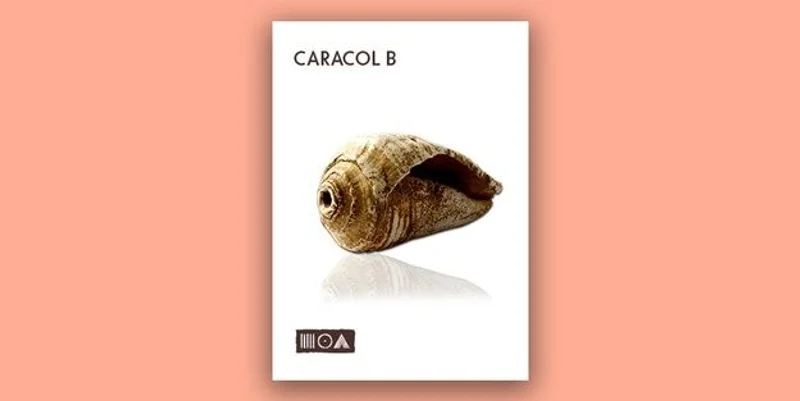
A caracol is a pre-Columbian conch shell horn, used ceremonially across Mesoamerican cultures for thousands of years. The instrument has a naturally limited chromatic range and a tonal character that sits somewhere between a low brass instrument and an ethnic flute. In practice, that means Caracol B works best as a melodic accent or drone layer rather than a full harmonic instrument. Don't expect to voice full chords with it.
How do the sustained notes hold up in a mix?
Sustained notes below about three to four seconds are clean and usable. Past that point, the loop seam becomes audible, especially in quiet passages. We'd suggest using a longer reverb tail, around 4-6 seconds of decay, to mask the transition. Retriggering the note with a slight volume automation fade also works cleanly in most DAWs.
Is Caracol B worth buying if I already own a large world instrument library?
Probably yes, if your existing library doesn't specifically include Mesoamerican wind instruments. Most world instrument bundles cover pan flutes, duduk, and shakuhachi, but the caracol is almost always missing. The install size is small enough that it won't compete with your existing library for drive space, and the sound is distinctive enough that it won't overlap with anything you already own.