Hopkin Alt Alt Beats Every Weird String VST in 2026
By Salvatore Tomaselli·2 albums, 6 singles as Lord Reverb. Now I test the gear that made them.
·Updated October 4, 2026
Affiliate disclosure: Some links in this article are affiliate links. If you buy through them we earn a small commission at no extra cost to you. We only recommend products we genuinely believe in — our editorial opinions are never influenced by affiliate relationships. Full policy
⭐
Score4.1 / 5
⏱
Read time8 min read
4.1/5
★★★★☆
Best forAmbient, cinematic, and experimental producers who need organic texture that sits without fighting
Price at Plugin Boutique, checked Oct 10, 2026. It can change. Affiliate link: we earn a commission at no extra cost to you.
✓ Pros
+Utterly unique chorusing character that no synth pad can replicate
+Three articulations with 8x round robin keep it from sounding looped
+20 built-in ambient pads ready to drop straight onto a cue
+The intro price is borderline absurd for what you get.
✗ Cons
−Requires full Kontakt 6.2.2 or later, no Player support
−Narrow genre appeal, hard to use in anything uptempo or rhythmic
−Limited to one acoustic source, less flexible than broader string libraries
Alt Alt is one of the most genuinely strange and satisfying string instruments we've loaded into Kontakt in years, and at $39 it's a steal for ambient and cinematic producers who want something that sounds like nothing else in their library.
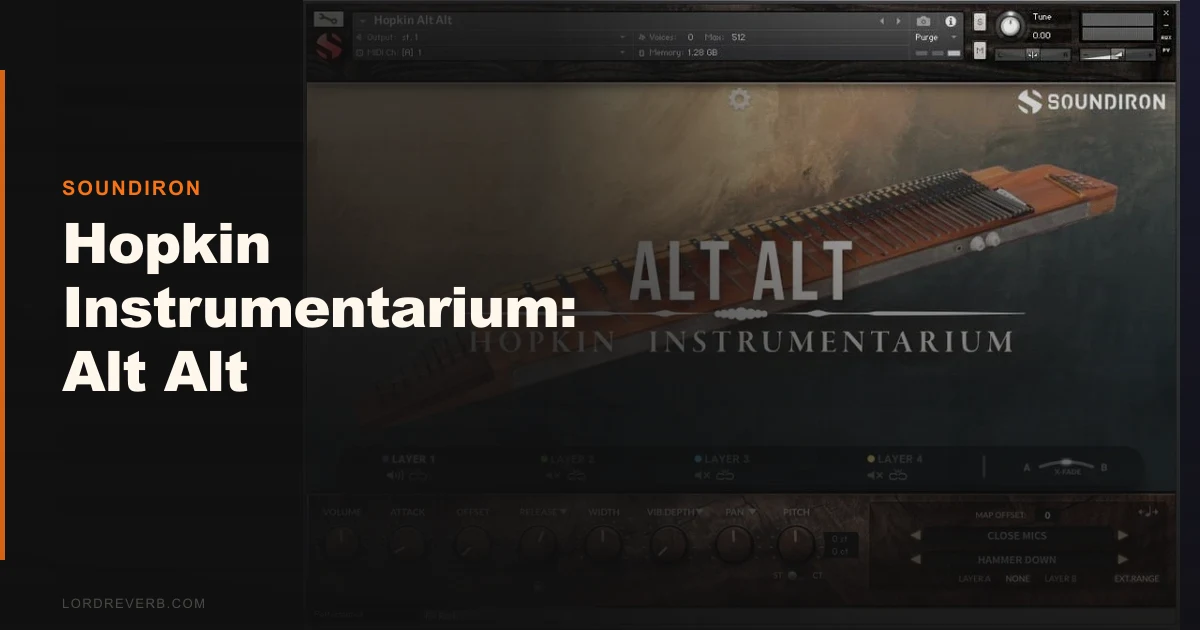
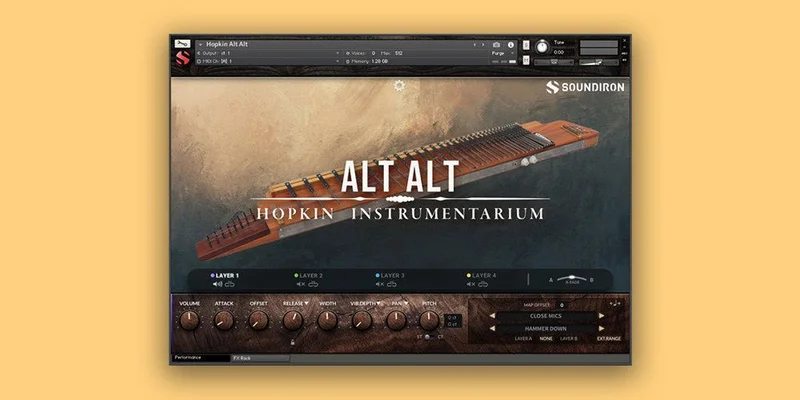
The Alt Alt is a physical instrument built by Hopkin Instrumentarium, a one-person workshop that's been making over 110 original acoustic instruments since 1974. Soundiron recorded it, mapped it, and wrapped it in one of their cleaner Kontakt interfaces. The result is a library you'll either use constantly or never touch, depending on what you make.
This review is for producers who work in ambient, drone, neo-classical, or cinematic scoring. If that's you, keep reading. If you're building hip-hop sample packs, this isn't your call.
What You're Actually Getting
The Alt Alt is a 16-string instrument. Twelve strings run at the same pitch, creating that thick, beating chorusing effect when they go slightly out of tune with each other. Four additional strings are tuned an octave above. That's the whole trick, and it's a brilliant one.
The physical instrument also has 36 spring-mounted bars covering a full chromatic scale. Soundiron sampled three playing techniques: slow strums, fast strums, and hammer-down hits. They recorded from two stereo microphone positions, with 8 round-robin variations and 6 velocity layers per note.
That's roughly 288 samples per note before you factor in mic blending. Thorough work.
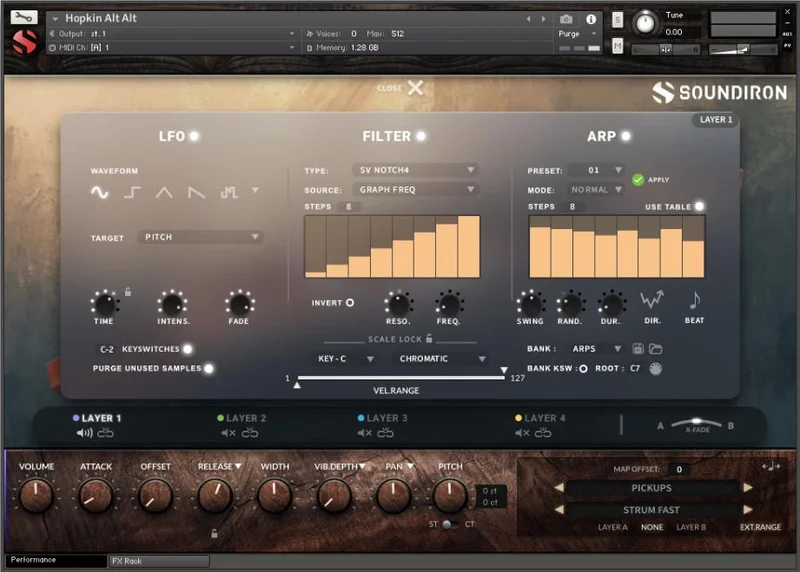
The Kontakt interface gives you swell, attack, release, vibrato, filter, and pitch controls. There's also an LFO system that tempo-syncs to your DAW. The 20 included ambient pads and evolving drone presets are built from the acoustic source itself, not layered synths.
The Good
The sound is the whole argument. We loaded the default patch and played a simple Dm voicing at around -6dB input. What came back had this wide, beating shimmer that no chorus pedal plugin has ever matched. It sounds alive because it is. Twelve strings fighting to stay in tune with each other create movement you can't program.
We dropped it onto a mid-section in a cinematic cue that needed something between a string pad and a music box. The slow strum articulation at medium velocity settled perfectly in the 2-5kHz range without masking the lead. No EQ needed. It sat.
The round-robin implementation is solid. Eight variations per velocity layer means you can sustain a pedal tone for 30+ seconds in a slow ambient piece without hearing a loop repeat. That's satisfying to discover and annoying to lose when cheaper libraries skip it.
The LFO tempo sync is a clever touch. We locked it to 1/4 note, automated the filter depth, and got a pulsing texture that tracked the cue without any MIDI programming. Two minutes of work, usable result.
The 20 ambient presets aren't filler. Three of them went directly into a project we were finishing. That almost never happens.
The Not-So-Good
No Kontakt Player support. Full stop. You need the full version of Kontakt 6.2.2 or later. That's a real wall for producers who haven't bought into the Native Instruments ecosystem. Annoying, and Soundiron can't change it without rebuilding the library in a different format.
The genre ceiling is low. We tried pushing Alt Alt into a mid-tempo electronic track. It doesn't work. The sustain is too slow to read rhythmically, and the chorusy shimmer competes with pads that already own that frequency space. It's a texture instrument, not a melodic lead instrument.
Three articulations is a light selection. Slow strums, fast strums, and hammer-down hits cover the basics, but there's no muted technique, no harmonics, no percussive body hit. For $39 standard pricing that's acceptable. For a pricier library it would feel thin.
We also wish the two mic positions had clearer labeling inside the interface. The difference between them is audible but the names don't tell you much about character.
Compared to the Alternatives
Strezov Sampling's Afflatus Chapter I is the comparison most people reach for when they want organic string texture in Kontakt. It's a full orchestral string section, far more flexible, and costs significantly more. If you need strings that can carry a melody, go there. Alt Alt doesn't compete in that lane.
Native Instruments' Mysteria covers spectral, otherworldly vocal textures in a similar ambient space. Different sound source, similar use case. We'd keep both if budget allows. Mysteria runs in Kontakt Player, which gives it an access advantage.
For ambient Kontakt instruments, Soundiron's own catalog is worth checking. Their Olympus Choir Micro (free) does for voices what Alt Alt does for strings: a single-source, no-frills texture tool that earns its CPU slot.
Nothing else in our library sounds like Alt Alt. That's the honest comparison. Twelve strings at the same pitch beating against each other is a physical phenomenon. No plugin models it convincingly.
Who
Should Buy This
✅ Buy if you score atmospheric, ambient, or drone-based music and want a string texture that isn't a synth pad.
✅ Buy if you already own full Kontakt and are looking for character instruments at a reasonable price.
✅ Buy if you want something that sounds handmade and imperfect in a way that reads as intentional, not cheap.
❌ Skip if you need Kontakt Player support. It won't load.
❌ Skip if your work is uptempo, rhythmic, or genre-driven. Alt Alt won't dial in there.
❌ Skip if you're looking for a full chromatic string instrument with multiple playing positions and articulation depth. This isn't that.
Score Breakdown
Category
Score
Notes
Sound Quality
4.5/5
The chorusing character is irreplaceable and captures a real physical phenomenon
Value for Money
4.5/5
The intro price for a uniquely recorded instrument with 20 usable presets is hard to argue against.
Ease of Use
3.5/5
Interface is clean but mic position labeling could be clearer
Features
3.0/5
Three articulations is light; LFO system and swell control help, but more playing techniques would lift this
CPU Efficiency
4.0/5
Single source, no convolution-heavy processing; sits comfortably in a full session
Overall
4.1/5
A brilliantly specific tool that earns its slot for ambient and cinematic work
Alternatives to Consider
Strezov Sampling Afflatus Chapter I is the serious upgrade if you need a full orchestral string palette. More articulations, more mic positions, and a much wider orchestral string Kontakt libraries range. It costs significantly more. Worth it if strings carry your arrangements.
Native Instruments Mysteria occupies a similar ambient/experimental space using vocal textures instead of strings. Runs in free Kontakt Player, which Alt Alt doesn't. If the Kontakt Player restriction is blocking you, Mysteria is a strong alternative for cinematic texture instruments.
Soundiron Olympus Choir Micro is free and uses the same design philosophy: one acoustic source, texture-focused, light on CPU. A good companion in the same Soundiron Kontakt library family, and it costs nothing to try first.
None of these replace the Alt Alt's specific chorusing character. They're alternatives, not substitutes.
Our Verdict
Alt Alt is the kind of instrument you buy and forget about until the session needs it. Then it's the only thing that works.
We've had it in the library for a few weeks and it's already appeared on two ambient pieces and one cinematic cue where the brief was "something that sounds like it was found, not programmed." That brief is hard to fill with synthesis. It's easy with this.
The Kontakt Player restriction is a real problem for producers who don't own full Kontakt. That's worth saying clearly. If you're in that camp, this library doesn't exist for you unless you upgrade. That's frustrating and Soundiron doesn't control it, but it's still a barrier.
For everyone already running full Kontakt 6.2.2 or later and working in ambient, drone, neo-classical, or film scoring: buy it at the intro price. Don't overthink it.
Twelve strings at the same pitch, slightly imperfect, beating against each other. That's the whole pitch. It's enough.
Frequently Asked Questions
Does Alt Alt work with Kontakt Player?
No. Alt Alt requires the full version of Kontakt 6.2.2 or later. It won't load in the free Kontakt Player. This is a firm requirement, not a version quirk. Check your Kontakt version before buying.
What is the Alt Alt instrument physically?
The Alt Alt is an original instrument built by Hopkin Instrumentarium, a one-person workshop active since 1974. It has 16 strings: 12 tuned to the same pitch and 4 tuned an octave above. It also has 36 spring-mounted bars covering a full chromatic scale. The intentional slight pitch variation between the 12 unison strings creates the instrument's signature chorusing effect.
How many articulations and samples does the library include?
Three articulations: slow strums, fast strums, and hammer-down hits. Each is recorded from two stereo mic positions with 8 round-robin variations and 6 velocity layers. The library also includes 20 ambient pads and drone presets built from the same acoustic source.
What genres is Alt Alt actually useful for?
Ambient, drone, neo-classical, and cinematic scoring are the strong fits. The slow attack and chorusing character make it hard to use in uptempo or rhythmic contexts. If your work lives in slower, textural spaces, it earns its CPU slot. If you work in hip-hop, pop production, or anything beat-driven, look at a different string library instead.
The short version
Hopkin Instrumentarium: Alt Alt · 4.1/5
Buy it if:Ambient, cinematic, and experimental producers who need organic texture that sits without fighting
Utterly unique chorusing character that no synth pad can replicate
Three articulations with 8x round robin keep it from sounding looped
20 built-in ambient pads ready to drop straight onto a cue
Biggest drawback:Requires full Kontakt 6.2.2 or later, no Player support
Salvatore Tomaselli has spent twelve years in studios as a producer, mix and mastering engineer. He's worked across genres, tested hundreds of plugins, and built more signal chains than he can count. Salvatore started writing for LordReverb because most gear coverage is either sponsored fluff or spec-sheet copy-paste. He tests everything before writing about it. No gear gets a pass just because it's popular.
Community
What's in your stack?
Every artist on LordReverb has a setup. Show yours. DAW, plugins, hardware, the lot. Free, takes 2 minutes.