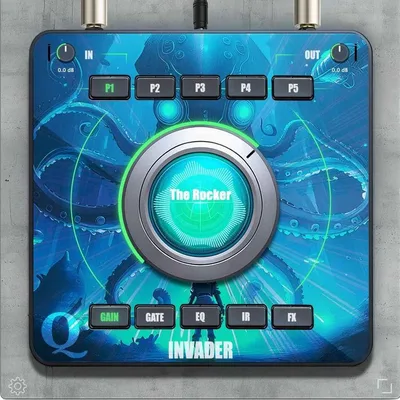
The honest doubt about the Q-Series Invader bundle is this: does it actually do something Bias FX or AmpliTube can’t, or is “AI-driven LivingAmpSim” just marketing dressing on a standard amp sim and IR loader?
Based on what we tested, the answer is somewhere in the middle. The Invader is not a scam and it’s not a breakthrough. It’s a focused, well-packaged hard rock tool that does its specific job faster than most competitors, but it doesn’t do much more than that.
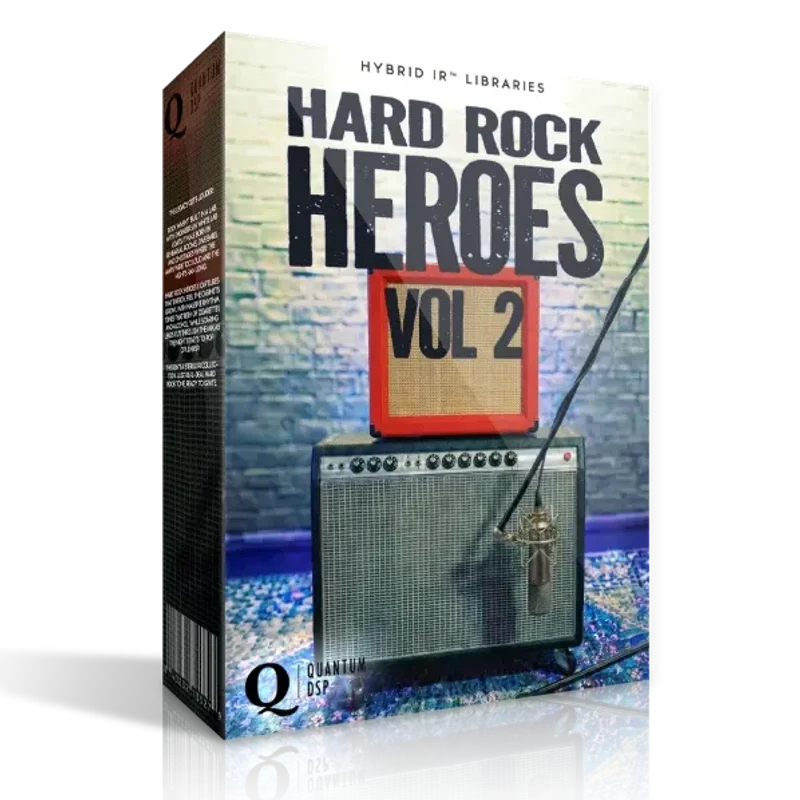
The bundle pairs the Q-Series Invader plugin with the Hard Rock Heroes Vol 2 IR expansion. Together you get 18 onboard IRs built into Invader plus 35 additional IRs from the Vol 2 pack. That’s 53 impulse responses covering vintage combo amps through modern high-gain cabinet stacks.
This is for hard rock and metal producers who want plug-and-play tone without spending an afternoon building a signal chain.
Does the Invader Actually Deliver on Its Promise?
Quantum DSP built the Invader around their Q-Series format, which they market as the LivingAmpSim. The idea is that the plugin adapts its tonal response using AI neural processing rather than static circuit modeling.
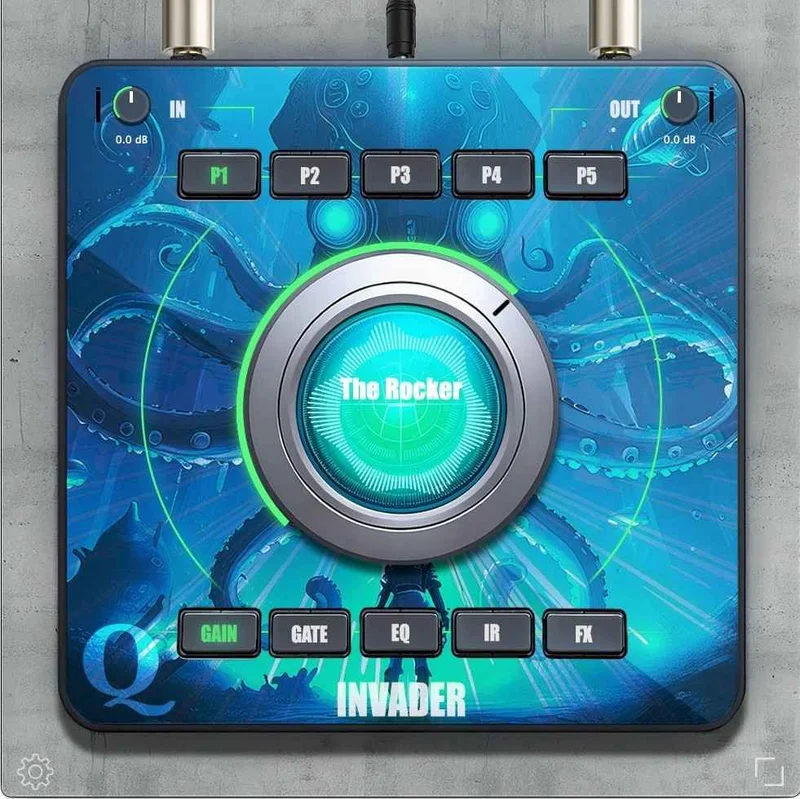
In practice, what you notice first is Q-Tone EQ sitting right there in the UI. It’s a real-time EQ layer built into the amp stage, not a separate insert you have to add after the cabinet. That’s genuinely useful. You’re shaping tone at the source rather than correcting a cab IR after the fact.
The dual gain channels give you two distinct amp characters to switch between. One handles edge-of-breakup crunch. The other pushes into modern high-gain territory.
Does it deliver? For hard rock rhythm guitars, yes. For the kind of clean tones or blues-forward playing the amp sim marketing sometimes implies it covers, less so.
Where the Invader Bundle Actually Shines
The strongest moment we had with this bundle was tracking a chunky dropped-D riff through the high-gain channel with one of the Vol 2 stack IRs loaded. The low end came in tighter than we expected. The 2kHz bite that hard rock guitar needs to cut through a dense mix was there without carving it in manually. We did nudge a gentle 1dB cut around 400Hz to clean up some boxiness, but that’s a one-move adjustment, not a rescue operation.
The 35 Hard Rock Heroes Vol 2 IRs are where the money sits in this bundle. Quantum DSP describes them as tuned for “bigger low end and tighter attack,” and that tracks. We compared three of the stack IRs against the 18 onboard Invader IRs on the same riff. The Vol 2 IRs have a noticeably tighter transient envelope. The attack is faster by a perceptible margin. Not night-and-day, but you feel it when playing rhythmically complex parts.
Standalone mode is also a legitimate strength. Load it without your DAW for rehearsal or direct tracking, and it just works.
Where It Falls Short
Here’s what we wish Quantum DSP would own up to: the AI framing is frustrating because it’s vague.
“Neural technologies” and “LivingAmpSim” appear in the marketing without any spec to back them up. No latency figures for the neural processing. No comparison data. No before/after demonstration of what the AI layer changes versus standard convolution. We’ve seen this before and it’s annoying every time.
The Vol 2 IR library also has a tonal overlap problem. Of the 35 IRs, a meaningful cluster of them sit in a similar frequency range: scooped mids, emphasized low-end shelf around 80-100Hz, presence boost around 4-5kHz. That’s a house sound, not a library. If that house sound is your sound, great. If you need more variety, you’ll hit a wall.
There’s also no published CPU usage data. We’d want to know the draw at 44.1kHz and 96kHz before committing this to a dense session.
How It Stacks Up Against Bias FX 2 and AmpliTube 5
Bias FX 2 from Positive Grid is the direct competitor here. Bias FX 2 review Bias FX 2 gives you full amp modeling with separate cabinet, mic, and room controls. The signal chain is deeper. The tone-shaping options are wider. If you want to get surgical, Bias FX 2 wins on flexibility.
AmpliTube 5 from IK Multimedia AmpliTube 5 review covers more amp types and has a larger licensed gear library. It’s the better choice for producers who move between genres.
The Invader bundle wins on speed and focus. If you make hard rock and metal and you don’t want to build a rig from scratch every session, the Invader gets you to a working tone faster. That trade-off is real and it matters for some workflows.
Neither Bias FX 2 nor AmpliTube 5 markets itself around hard rock specifically. The Invader does. That focus shows in the IR curation, even with the overlap problem we flagged.
Is the Bundle Price Fair?
We can’t give you a number here because Quantum DSP doesn’t publish pricing in a way that survives a search. Check the manufacturer’s site for current pricing before buying.
What we can say is that value depends entirely on how often you record hard rock guitar. If it’s 70% of your sessions, the focused IR library and the Q-Tone EQ integration justify the cost. If hard rock is occasional, a broader platform like Bias FX 2 gives you more per dollar across more use cases.
Score Breakdown
| Category | Score | Notes |
|---|---|---|
| Sound Quality | 3.8/5 | Vol 2 IRs are tighter and more usable than the onboard set; tonal overlap is a real limitation |
| Value for Money | 3.3/5 | Hard to judge fairly without a published price; competitive if focused on hard rock exclusively |
| Ease of Use | 4.3/5 | Q-Tone EQ integration and dual channels make tone dialing fast and intuitive |
| Features | 3.5/5 | Solid for hard rock but thin outside that lane; AI claims lack supporting specs |
| CPU Efficiency | N/A | No published data; we'd want 44.1kHz and 96kHz draw figures before calling it session-safe |
| Overall | 3.8/5 | A genuinely useful hard rock tool let down by vague AI marketing and IR library overlap |
Alternatives Worth Considering
Bias FX 2 by Positive Grid. Bias FX 2 full review Deeper signal chain, more amp types, better for producers who want to build tones from scratch. More CPU-hungry, but the flexibility earns it.
AmpliTube 5 by IK Multimedia. AmpliTube 5 review Better genre coverage and a larger licensed cabinet library. More expensive entry point but pays off if you track multiple styles.
Neural DSP Archetype series. Neural DSP plugin reviews Artist-specific amp sims with published latency specs and a free trial. More transparent about what their neural modeling does. If the AI angle matters to you, Neural DSP backs it up.
The Invader bundle is the most genre-focused of the three options. That’s its only advantage. It’s also its biggest limitation.
Buy it if: Hard rock and metal rhythm guitars are your primary output and you want to go from empty track to usable tone in under two minutes without building a signal chain.
Skip it if: You record across genres, you need to verify CPU draw before committing to a plugin, or you want more than 35 IRs with genuine tonal variety.
The satisfying thing about this bundle is that it does one thing at a focused, professional level. The frustrating thing is that Quantum DSP wrapped it in claims they don’t quantify. Strip out the LivingAmpSim language and what you have is a well-curated, hard-rock-specific IR loader with a clever EQ stage. That’s worth buying. The fiction around it is not.
Frequently Asked Questions
What is the difference between the onboard Invader IRs and the Hard Rock Heroes Vol 2 expansion?
The Invader ships with 18 IRs covering a range from vintage combo amps to modern cabinet stacks. The Hard Rock Heroes Vol 2 pack adds 35 IRs tuned specifically for tighter attack and bigger low-end shelf, aimed at arena-ready hard rock and metal tones. In our testing, the Vol 2 IRs had a noticeably faster transient response on rhythm parts. There is tonal overlap between the two libraries, but the Vol 2 set is the stronger option for high-gain rhythm work.
Can I use the Q-Series Invader without a DAW for live performance?
Yes. The plugin includes standalone mode, which means you can run it directly on your computer without opening your DAW. This makes it usable for rehearsal or direct live tracking. Whether it's stable enough for actual live performance depends on your audio interface latency and computer setup, so test your specific rig before relying on it on stage.
How does the Q-Tone EQ work inside the Invader?
Q-Tone EQ is built into the amp stage rather than sitting as a separate post-cabinet effect. This means you're shaping the tone before it hits the impulse response, which changes how the IR responds compared to a standard EQ placed after the cabinet. In practical terms, it gives you tighter control over how the cab IR reacts to your playing. It speeds up tone dialing significantly compared to adding a separate EQ plugin after the cab loader.
How does the Q-Series Invader bundle compare to Neural DSP plugins?
Neural DSP plugins publish their latency figures and offer free trials for most of their Archetype series. The Q-Series Invader does not provide comparable technical transparency. Neural DSP also tends to have tighter artist-focused tone libraries with more audible variation between presets. The Invader wins on workflow speed for hard rock specifically, but Neural DSP wins on accountability and verifiable specs. Neural DSP Archetype series compared