ShapeMod is a volume modulation plugin that draws a rhythmic envelope over your audio to create ducking, pulsing, and breathing effects without a sidechain trigger. It costs $19 and it's built for producers who want that pumping, rhythmic movement on a bass, a chord stab, or a pad and don't want to set up a ghost kick sidechain just to get there.
Quick verdict: At $19, ShapeMod is a genuinely useful tool for a specific job. It's not trying to replace a full-fat LFO modulator or an advanced envelope shaper. It draws a volume shape, syncs it to your tempo, and stays out of the way. If you mostly need rhythmic ducking with light CPU overhead, it earns its slot in the session. If you want complex modulation routing or deep macro control, it'll frustrate you.
What It Actually Does (and Where It Stops)
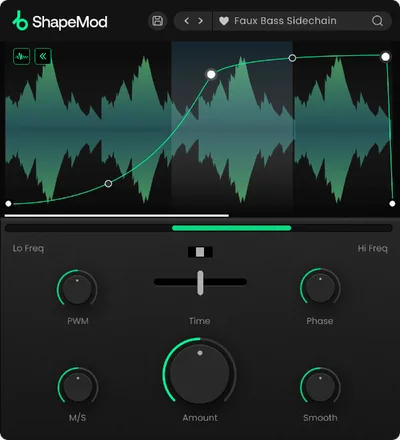
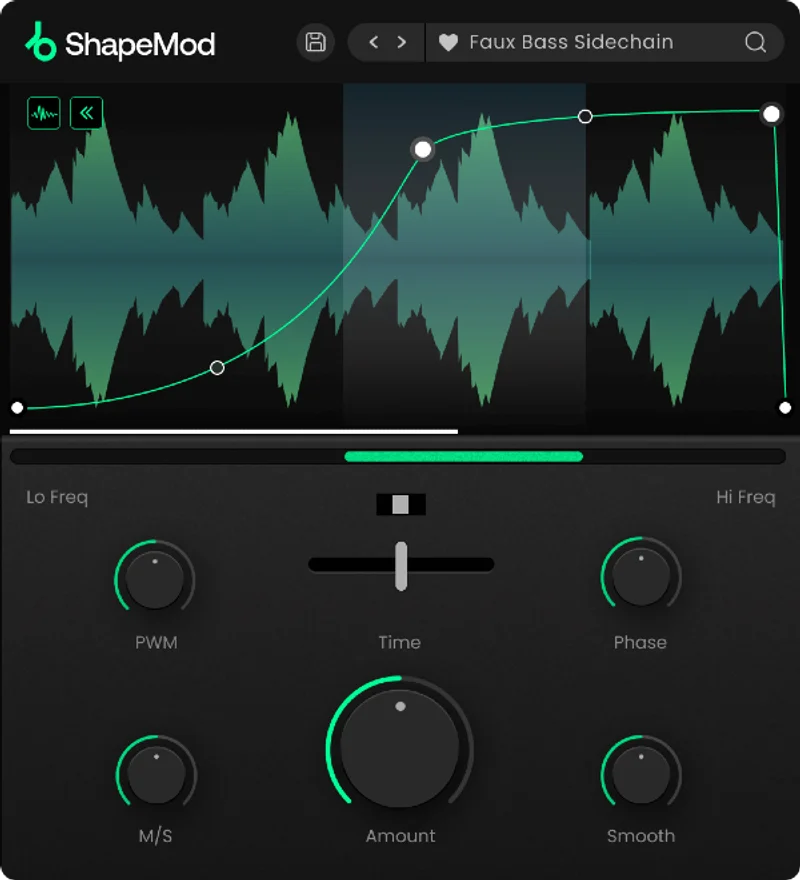
ShapeMod puts a tempo-synced volume envelope on a track. You draw a shape with as many nodes as you need, set the time division anywhere from 1/32 to 32 bars, and it chews through the signal on repeat.
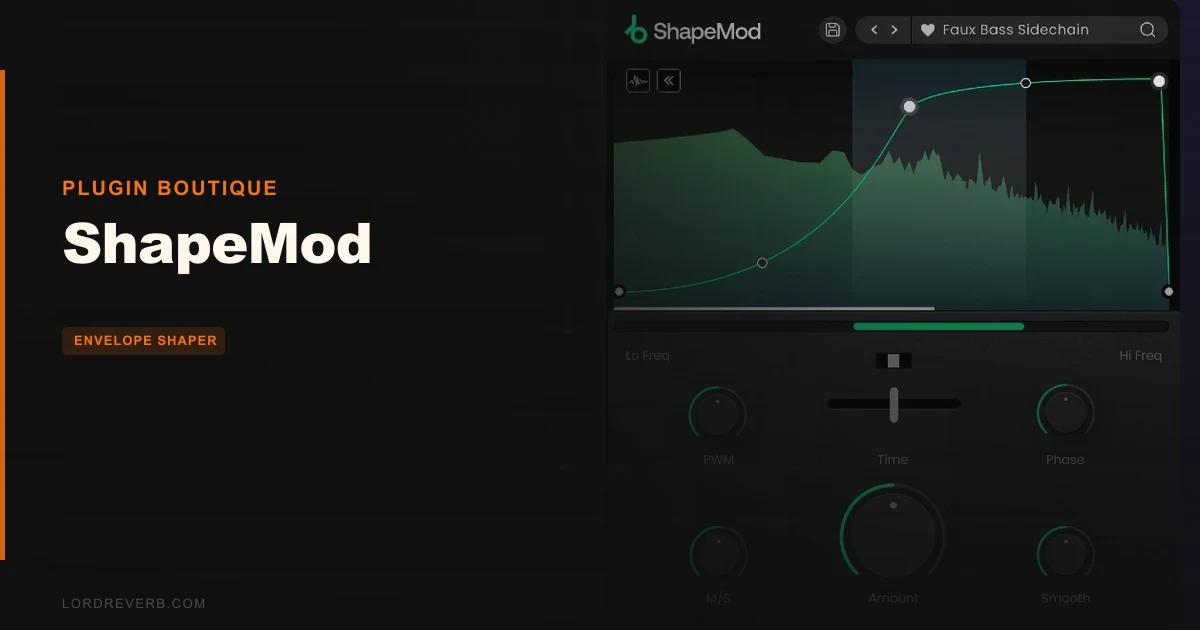
The controls are direct. An amount knob dials in how deep the cut goes. A smoothing control prevents the clicks that hard envelope edges cause. Phase shifts where the cycle starts. Pulse width modulation adds an analogue feel. Frequency band focusing via hi and lo sliders lets you shape only a chunk of the spectrum rather than the full signal.
What it's not: a sidechain compressor with attack and release curves. It's not reactive. It doesn't listen to a kick and respond. It runs on a clock, and if your performance drifts from the grid, the envelope doesn't follow.
Owners describe it as simple and lightweight. That's accurate. It's also a fair warning. This is a one-trick plugin that does its trick cleanly.
Where It Fits In Your Session
Say you've dropped a chord stab into the mid-section of a track and it's sitting flat. No movement. Just hanging there. You want it to breathe, to pulse on the quarter note, to push into the drop. That's the exact moment you reach for ShapeMod.
Drop it on the chord stab's channel. Pull up one of the 75 presets, find something close to a quarter-note duck shape, and adjust the amount.
The mid/side balance control is underrated for this kind of work. Lock the effect to the sides only and your mono content stays solid while the stereo spread pumps. On a wide synth pad, that's a satisfying trick.
The spectrum analyzer and moving waveform display give you a visual read on what's happening to the signal, which helps when you're dialling in the frequency band focusing. The lo and hi sliders let you aim the effect at part of the spectrum, which is useful on a bass when you want pulsing in the mids without disturbing the low end.
For sidechain ducking techniques, ShapeMod handles the simple cases fast. For anything that needs to react dynamically to another source, you're looking at a different tool.
The Trade-Offs
The envelope start and end points can be unlinked, and the flip control reverses playback direction. Those are genuinely clever additions for a plugin at this price.
But users have flagged a missing grid and limited tempo configuration, and honestly that's annoying for producers who like to draw shapes with precision. If you want to snap nodes to exact subdivisions visually, you'll be working more by ear than by eye.
The feature set is basic compared to heavier envelope shaper plugins, so what you see is what you get.
The 30-day internet check on Rent to Own and Beatport Studio licences is worth knowing about before you commit. It's not a dealbreaker, but it's the kind of thing you wish you didn't find out mid-session at a studio with a locked-down network.
For volume automation alternatives, the flexibility gap is real. Still, nothing here feels like a design failure. It's a focused plugin that knows its lane.
The Real Verdict
If quick rhythmic ducking is part of your regular workflow, $19 is a straightforward call. ShapeMod does the job, and owners describe it as simple and lightweight. Reviewers report it's easy to use for ducking and pulsing.
But if you're after a deep modulation tool that reacts, routes, and scales with a complex session, skip it. There are more capable options worth your money. ShapeMod is for the producer who wants a utility drawer tool, not a centrepiece. For that specific role, it's worth picking up.
Specs & Technical Details
| Developer | Plugin Boutique |
| Price | $19 |
| Plugin Format | VST / VST3 / AU (macOS only) / AAX / Standalone |
| OS Support | macOS 10.15 or higher (Apple Silicon native) / Windows 7 or higher |
| Activation | Internet connection required every 30 days for Rent to Own / Beatport Studio |
| CPU Usage | Light |
| Trial Available | N/A |
| Version Reviewed | N/A |
Score Breakdown
| Category | Score | Notes |
|---|---|---|
| Sound Quality | 3.5/5 | Smoothing control removes pops and clicks |
| Value for Money | 4.0/5 | At this price point it covers the use case without waste |
| Ease of Use | 4.5/5 | Owners and reviewers report ease of use |
| Features | 3.0/5 | Basic but complete for volume-only modulation |
| CPU Efficiency | 4.5/5 | Owners describe it as simple and lightweight |
| Overall | 3.5/5 | A reliable utility tool that doesn't overpromise |
ShapeMod lands where it should for what it is: a lean, low-friction volume modulation tool that handles rhythmic ducking quickly and gets out of the way. It won't satisfy producers who want modulation depth or reactive processing. But if you've ever built a sidechain ghost track just to get a chord pad to pulse, this is the smarter shortcut. For best cheap plugins for producers, it deserves a look.
Related reviews: SPL Mo-Verb Plus Review
Frequently Asked Questions
Does ShapeMod work as a true sidechain compressor?
No. ShapeMod runs a clock-synced volume envelope rather than responding to an incoming audio trigger. It creates ducking effects that sound like sidechain compression, but it doesn't react dynamically to another source. If your track has timing variations or live performance feel, a reactive sidechain setup will track better.
Can you use ShapeMod in Ableton Live on Windows?
Yes. ShapeMod supports VST and VST3 formats on Windows, and Ableton Live accepts both. AU format is macOS-only, but that doesn't affect Windows users working in Live. Load it as a VST3 and it'll sit in your signal chain the same way.
What's the tempo sync range in ShapeMod?
It syncs from 1/32 to 32 bars, with straight, dotted, and triplet rhythm options. That covers everything from fast, choppy gating effects to slow swells that breathe over a full phrase.
Is ShapeMod useful on drums or just melodic elements?
It works on any audio. Owners most commonly report using it on bass lines, synth chords, and pads, but there's nothing stopping you from running it on a drum bus to create rhythmic volume patterns. The frequency band focusing makes it possible to affect only part of the spectrum.
Does the mid/side control affect mono compatibility?
The mid/side balance lets you focus the modulation on either the mid or side signal independently. Aiming the effect at the sides leaves the mid signal alone, which is the safer choice when you want movement without disturbing the centre of the mix. Mono compatibility itself isn't documented, so check it with your own material.