Moments: Vocal Clouds is a focused, well-built vocal atmosphere instrument that earns its $79 price tag for composers who want textural depth without building a choir from scratch.
Moments: Vocal Clouds is a joint release from Soundiron and Native Instruments, and it does one thing well: it turns vowels, hums, whispers, and extended vocal techniques into playable atmospheric beds. It’s not a choir library. It’s not a phrase engine. It sits in a third category that’s harder to define but easy to hear.
The library runs in Kontakt or Kontakt Player 8.8.1 or later. That’s a real requirement, not a footnote. If you’re on Kontakt 7 or older, you’re locked out until you update.
At $79, this targets producers who need scene-setting textures on a budget, not sound designers who want granular control over every overtone.
What You're Actually Getting
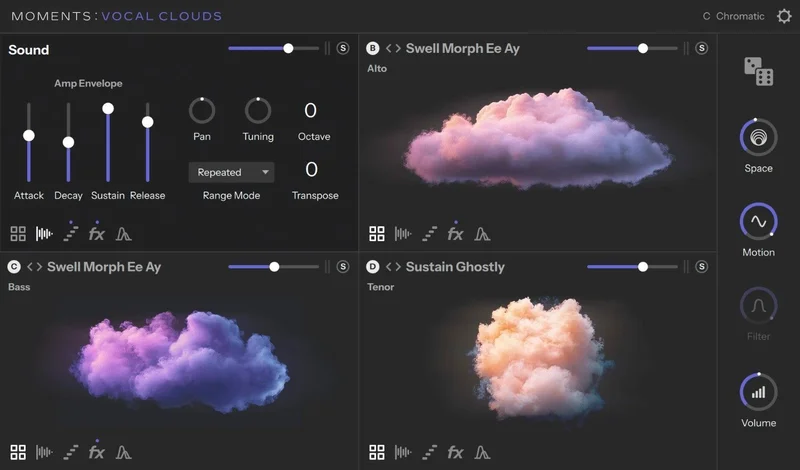
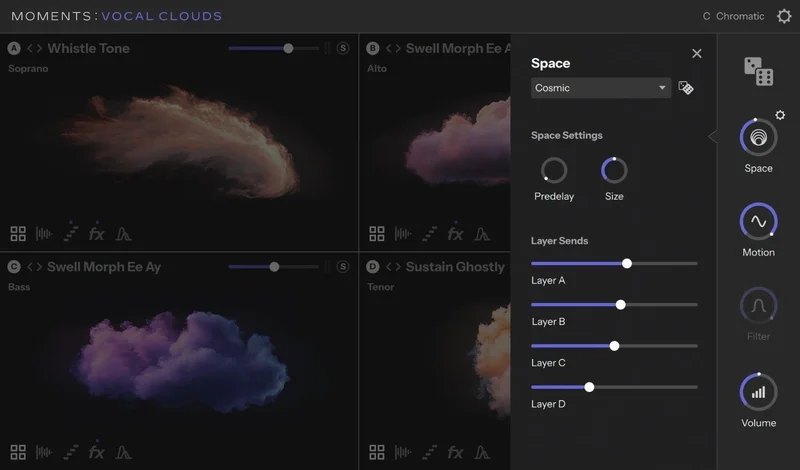
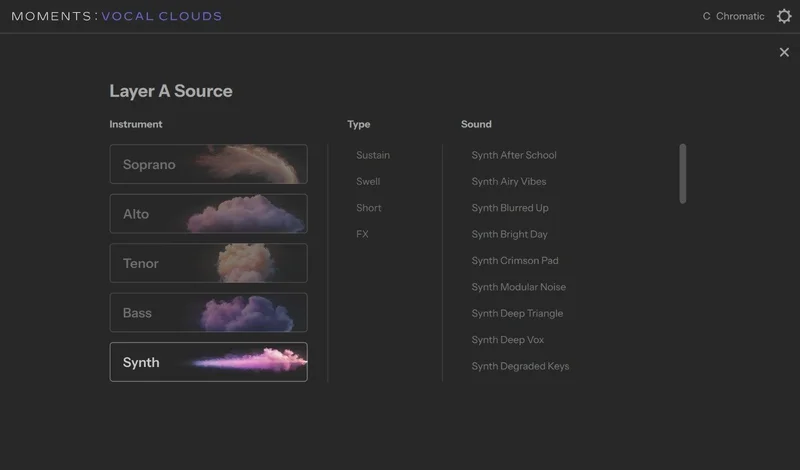
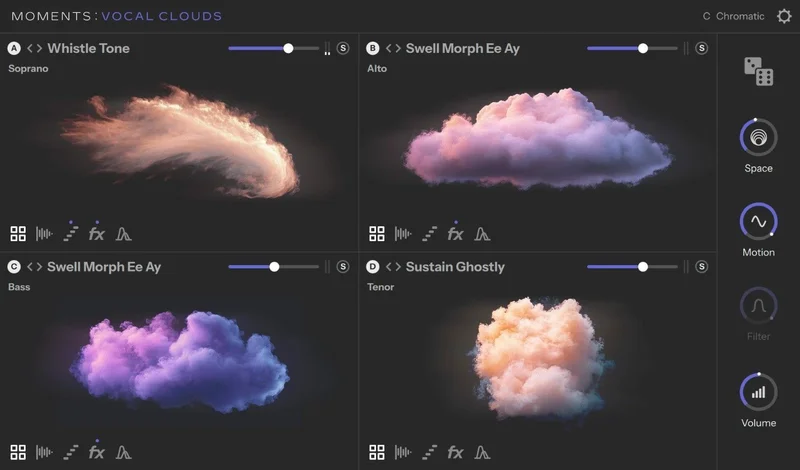
The engine uses four voice layers: soprano, alto, countertenor, and basso profundo. Each layer plays back recorded vocal content including vowel sustains, hums, whisper textures, growls, and whistle tones. Soundiron recorded these as sustained, blendable sources rather than melodic phrases, which is a smart choice.
You get 80 presets across 2.39 GB of sample data. That’s a lean footprint compared to full orchestral vocal libraries that push 30 GB or more.
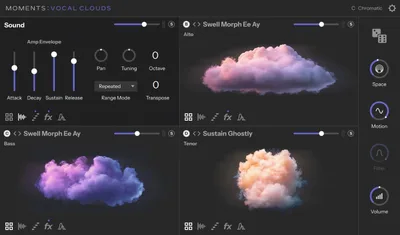
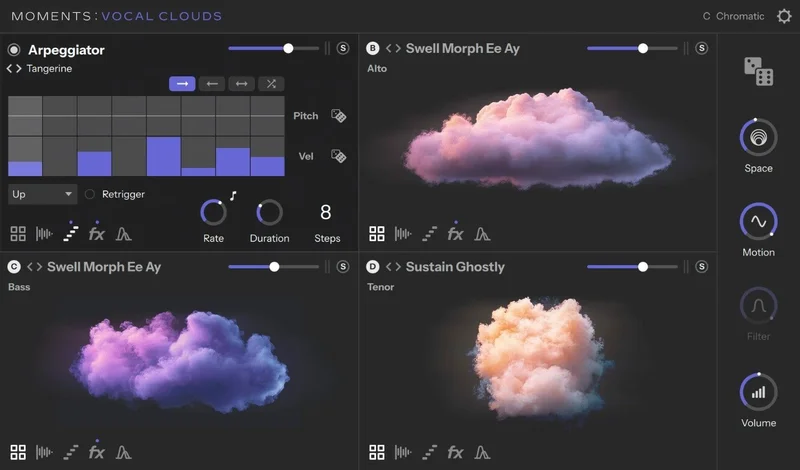
The interface exposes macro controls, a randomization system that shuffles layer blends and modulation, and per-layer arpeggiators that add rhythmic pulse to any preset. NKS metadata is baked in, so Kontrol keyboard users get automatic parameter mapping.
It’s a texture instrument first. Think of it as a best Kontakt instruments for ambient music with a vocal focus.
The Good
The per-layer arpeggiator is the best feature in the box. We loaded the “Hollow Choir” preset and engaged the arpeggiator on just the soprano layer at a sixteenth-note rate. The other three layers held a static pad underneath. What came back sounded like a composed cue, not a preset. That kind of speed-to-result is what you’re paying for.
The voice architecture covers the full harmonic range. Soprano content sits above 1kHz and adds air without weight. The basso profundo layer fills sub-bass register movement that would otherwise need a synth to handle. Together, the four voices create blends that sit in a mix without fighting anything.
We love the randomization button. Hitting it five times on the same preset produced five genuinely different textures. That’s not common. Most randomization systems shuffle parameters without musical judgment. This one seems to stay in sensible ranges.
The whistle tones and growl articulations are underrated. Most vocal libraries skip extended techniques entirely. These add a level of expressiveness that pushes the instrument beyond pure ambience.
CPU load sat around 4 to 6% on an M2 MacBook Pro at 128-sample buffer. Light. You can run multiple instances without watching the meters.
The Not-So-Good
The 2.39 GB library size is frustrating when you start exploring what’s missing. There are gaps in the vowel coverage. Certain vowel-to-vowel transitions feel abrupt, particularly in the countertenor layer, where moving from an “ooh” sustain to an “aah” has a noticeably mechanical crossfade.
The interface offers macro controls but hides per-voice EQ and dynamic shaping behind Kontakt’s native edit mode. That’s annoying if you want to roll off some boxy midrange on the alto layer without affecting the full mix. You can do it, but the workflow breaks.
No standalone operation is a genuine limitation. If your studio setup uses Kontakt as a plugin inside your DAW, this is fine. If you wanted to use Moments in a live or hybrid performance context outside a DAW, you’re out.
The whisper textures, while interesting, record with a slightly elevated noise floor. At loud mix volumes it’s inaudible. In quiet, exposed passages it occasionally pokes through. A high-pass filter in your signal chain at around 80Hz handles it, but you shouldn’t need a workaround on a $79 product.
Compared to the Alternatives
iZotope VocalSynth 2 is the obvious comparison and it’s a different tool entirely. VocalSynth processes your existing audio or a MIDI input through synthesis modes. It’s a vocal effect first. Moments is a sample playback instrument. They’re not actually competing for the same slot in your signal chain. You could stack them.
Soundtoys Deconstruct review takes a spectral decomposition approach, extracting tonal and noise content from audio. Brilliant for experimental processing, but it needs source audio to work. Moments plays from scratch.
For pure competitive comparison, Output Substance and ILIO Ethera Gold 2.5 both offer vocal atmosphere beds. Ethera Gold is larger at a higher price and includes lead vocal articulations that Moments skips. Substance lean
s more synthetic. Moments sits between them: more organic than Substance, less ambitious than Ethera Gold, and significantly cheaper than both.
For $79, it’s the honest entry point into best vocal texture plugins for cinematic scoring.
Who Should Buy This
✅ Buy if you score trailers, games, or sync-ready cues and need vocal beds that don’t compete with lead instruments.
✅ Buy if you produce ambient or experimental pop and want a vowel layer that sits 3 to 4dB behind your lead vocal without sounding like a choir choir.
✅ Buy if you already own Kontakt 8.8.1 or later and want a fast texture tool at $79.
❌ Skip if you want a full choir library with section control, legato phrases, and lyric flexibility. This is the wrong tool.
❌ Skip if you’re on an older version of Kontakt and don’t want to update. The 8.8.1 requirement is hard.
❌ Skip if you need per-voice EQ, dynamics, and mic-position blending. Moments keeps those controls out of reach.
Score Breakdown
| Category | Score | Notes |
|---|---|---|
| Sound Quality | 4.0/5 | Organic and blendable, though countertenor crossfades are mechanical |
| Value for Money | 4.0/5 | $79 for a focused, fast-to-deploy tool is fair |
| Ease of Use | 4.0/5 | Macros and randomization are genuinely fast; per-voice editing is buried |
| Features | 3.5/5 | Per-layer arpeggiators and four voice types cover the basics; extended techniques are a bonus |
| CPU Efficiency | 4.5/5 | Light footprint, runs multiple instances without drama |
| Overall | 4.1/5 | Delivers fast, genre-fluid vocal textures at a fair price with a few interface irritations |
Alternatives to Consider
If you need a step up in choir depth and articulation control, look at Ethera Gold 2.5 review. It goes further into lyrical phrases and has more mic positions. The price is higher, but the scope justifies it for scoring work.
For a synth-plus-sample hybrid approach to vocal textures, Output Substance review is worth comparing. It leans more electronic but has a wider sound-design palette.
If you want vocal processing rather than vocal playback, VocalSynth 2 review is the better fit. It transforms your existing audio rather than playing back recorded voice content.
Moments: Vocal Clouds is the kind of plugin that disappears into a cue and makes the whole thing feel bigger. We’d put it in a cinematic or ambient template without hesitation. The interface irritations are real but they don’t break the tool. The Kontakt 8.8.1 requirement is the only dealbreaker, and that’s on you to check before checkout.
At $79, if you score scenes or produce ambient beds and you’re on a current Kontakt version, buy it. If you want a lyrical choir with phrase playback and mic blending, look elsewhere. This isn’t that.
Frequently Asked Questions
Does Moments: Vocal Clouds require the full paid version of Kontakt?
No. It runs in both the free Kontakt Player and the full paid Kontakt, but you need version 8.8.1 or later in either case. If you're on an older Kontakt, you'll need to update through Native Access before the library will load. Activation goes through Native Access as well.
Can I use Moments: Vocal Clouds without a Native Instruments Kontrol keyboard?
Yes, fully. The NKS integration is an added bonus for Kontrol keyboard users who want automatic parameter mapping. The instrument works in any DAW that supports Kontakt as a plugin. MIDI controller, standard keyboard, or even step-sequenced MIDI clips all work fine.
Is Moments: Vocal Clouds suitable as a lead vocal layer or is it background only?
It's designed as a texture layer, not a lead instrument. The vowel sustains and extended techniques sit well 3 to 4dB behind a lead vocal without lyrical competition. If you push it forward in a mix as the primary voice, it will likely feel atmospheric rather than purposeful. That's not a flaw. It's what the tool was built for.
How does the randomization feature work in Moments: Vocal Clouds?
The randomization system shuffles layer blends, modulation depths, and macro positions across the four voice layers. It stays within musically reasonable ranges, which means the results are usable rather than chaotic. We've hit the randomize button on a single preset and got genuinely different textures five times in a row. For inspiration or for breaking out of preset-dependency, it's one of the better implementations we've tested in a Kontakt instrument at this price point.