The real question about Loot Audio's Blossom isn't whether it sounds good, it does, it's whether a Kontakt instrument with a focused ambient palette is worth the shelf space when your library already has three other texture tools gathering dust.
Blossom is a generative ambient Kontakt instrument built around XY pad morphing, spectral tone shaping, and a soft optical compression character that keeps things sitting together without you touching a fader. It's built for composers, sound designers, and producers who need evolving textural beds fast. Not for everyone. But for the right session, it earns its price.
We ran it through three different project types over two weeks: a lo-fi beat session, a short film cue that needed atmospheric underscore, and a live ambient set running Kontakt inside Ableton. Here's what we found.
Does Blossom Actually Deliver What It Promises?
Loot Audio positions Blossom as a tone-shaping ambient instrument, not a sample playback tool. That distinction matters. The spectral processing here adapts based on what you're playing, not just what preset you've loaded. Hold a low minor chord and the upper frequencies pull back slightly. Play something brighter and the engine opens up. It's subtle, but it stops the library from sounding static.
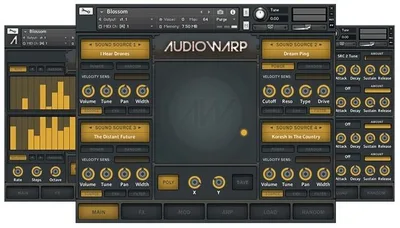
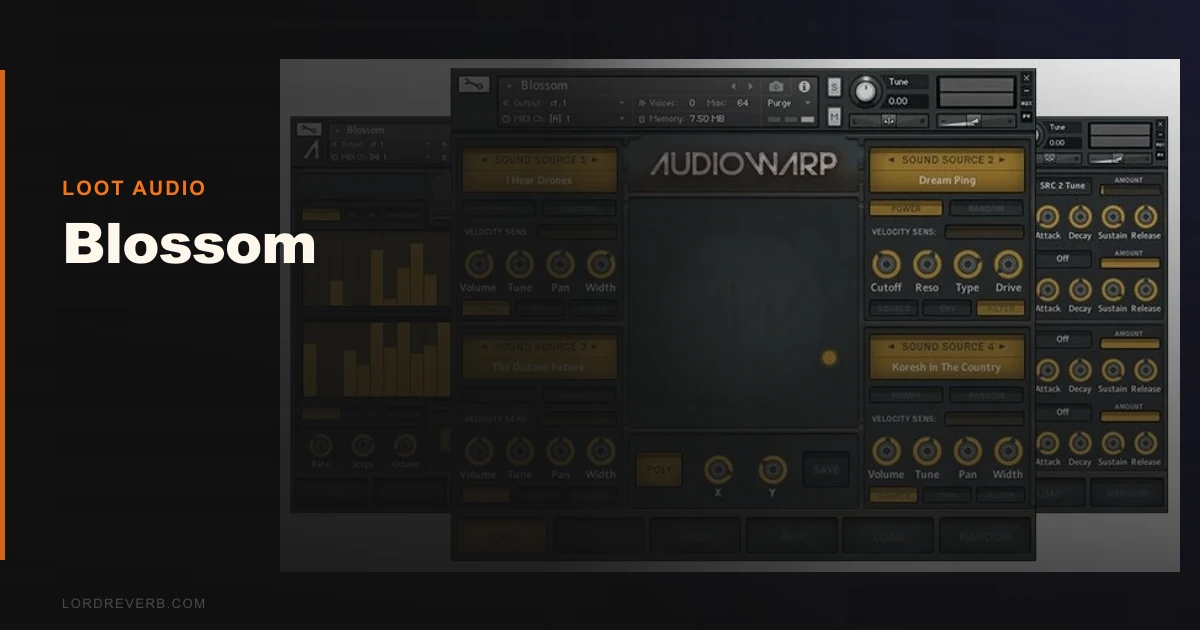
The XY pad morphing is the feature that made us sit up. You're blending between distinct sound sources in real time, and the transitions are smooth enough to use in a live context without jarring jumps. We tested this in a 90-minute ambient set and had zero moments where the morph felt mechanical.
Where it falls short of its own promise is depth. After about four sessions, you've heard most of what Blossom does. The generative looping works well, but the compositional range is tighter than the marketing suggests.
Where Blossom Shines
The XY pad is the strongest argument for buying this. We loaded a film cue that needed a 40-second build from sparse texture to full atmospheric wash. We recorded one pass of XY movement and had something usable in eight minutes. No layering multiple instances, no automation drawn on twenty tracks.
The spectral tone shaping does real work. It's not a filter you're manually adjusting. Play staccato and the spectral character tightens. Hold longer notes and there's a gentle bloom in the upper mids, around 2-4kHz, that adds presence without you touching EQ. That behaviour is the closest thing Blossom has to a genuinely clever design decision.
The tube circuit emulation brings a soft optical compression character to the output. We'd describe it as "warm" in the traditional sense, which here means: harmonic content concentrated in the 2nd and 3rd order, with transients that land gently rather than spiking. It does sweeten without adding obvious colour. For cinematic underscore, that's exactly what you want.
Multi-machine licensing across Windows and macOS is handled without a dongle. We installed it on three machines. No frustrating activation limit errors. That's more than some pricier tools manage.
Where It Falls Short
Blossom needs the full version of Kontakt 5.7.1 or higher. No Kontakt Player support. That's a hard wall. If you're running Komplete Start or borrowing a Player license, Blossom won't load. We've seen this frustrate buyers more than any other limitation in this price bracket.
The sound palette is focused to the point of being constraining. This is an ambient instrument with a clear aesthetic: soft, evolving, cinematic. That's not a criticism on its own. But after a dozen sessions, you'll notice you're reaching for it less. The generative loop engine doesn't randomise enough to keep things surprising over time.
There's no standalone mode. You're always inside a DAW with Kontakt hosted. For studio work that's fine. For live performers running a more minimal rig, it's annoying.
We also wish the documentation was clearer on the spectral adaptation engine. How much is it reacting versus cycling? We couldn't get a straight answer from the interface alone.
How Blossom Stacks Up Against the Competition
The closest direct comparison is the Rast Sound ambient Kontakt libraries, which overlaps on workflow. Rast Sound's approach is more sample-forward with less real-time processing. Blossom's XY morphing and adaptive spectral shaping give it an edge for live performance and improvised sessions. Rast Sound wins on sheer variety of sound sources.
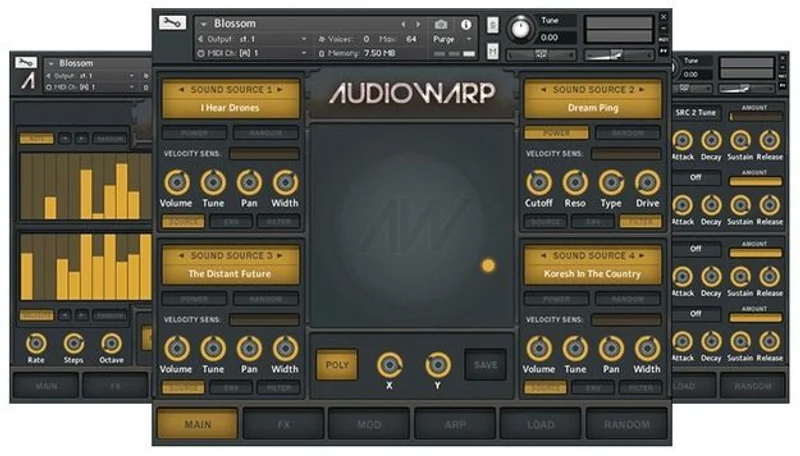
AudioWarp's Blossom Kontakt instrument is different enough in concept that it's not a direct competitor, despite the name overlap. AudioWarp skews toward melodic content. Loot Audio's version is resolutely textural.
Fo r producers who want something that lives outside Kontakt entirely, oeksound Bloom is worth a look. It's a different category, adaptive frequency-based processing rather than a playable instrument, but the ambient workflow overlap is real. Bloom offers a 20-day unlimited trial. Blossom does not.
If your main need is textural ambience for film scoring inside your DAW, Blossom is a credible option. If you need broader sound design range, look at Native Instruments Straylight instead.
Is the Price Fair?
Blossom is priced honestly for what it delivers. It's not trying to be a premium library. The XY morphing and adaptive spectral behaviour are features you'd pay more for elsewhere.
The caveat is the Kontakt full version requirement. If you already own Kontakt, $79 is a reasonable bet on a tool that'll genuinely speed up ambient session starts. If you'd need to buy or upgrade Kontakt to use it, the math gets ugly fast. Don't make that jump just for Blossom.
Score Breakdown
| Category | Score | Notes |
|---|---|---|
| Sound Quality | 4.0/5 | Adaptive spectral shaping and smooth XY morphing produce genuinely usable results |
| Value for Money | 3.5/5 | Fair value if you already own Kontakt full version; poor if you don't |
| Ease of Use | 4.0/5 | XY pad and preset surfing keep the learning curve short |
| Features | 3.0/5 | Focused feature set that starts to feel thin after multiple sessions |
| CPU Efficiency | 4.0/5 | Light footprint in standard use; heavier with multiple generative loops running |
| Overall | 3.8/5 | Solid for its niche, but the narrow palette and Kontakt dependency limit its reach |
Alternatives to Consider
If Blossom's sound palette feels too narrow, Native Instruments Straylight is the upgrade path. It's more expensive, but the granular morphing engine covers far more textural ground and still works within Kontakt.
For something that gets you generative ambient textures without the Kontakt dependency, Eventide Blackhole runs as a standalone VST and has its own character worth hearing. Different tool, overlapping use case.
Producers building ambient beds specifically for sync and film work should also check our best Kontakt instruments for ambient music roundup, where Blossom places mid-tier in a strong field.
Blossom is a satisfying tool inside a tight lane. If that lane is yours, the price is money well spent. If you're buying it hoping to stretch it beyond ambient underscore and slow textural work, you'll be disappointed inside a month. Skip it if you don't already own Kontakt full. Buy it if you do and you spend real session time in the ambient and cinematic space. The XY morphing alone will pay back the time you'd have spent layering tracks manually.
The producers who'll love this are the ones who already know what they want. The ones who need it to be everything will find it's not quite enough.
Frequently Asked Questions
Does Blossom by Loot Audio work with Kontakt Player?
No. Blossom requires the full version of Kontakt 5.7.1 or higher. It won't load in the free Kontakt Player, which is one of the more frustrating limitations at this price point. If you're running Komplete Start or any Player-only Kontakt license, you'll need to upgrade before Blossom will open.
How many machines can I install Blossom on?
Loot Audio offers multi-machine licensing, and we installed it across three systems without hitting an activation wall. There's no hardware dongle required. Check the current license terms on Loot Audio's site, as the specific machine limit can vary with library updates.
Is Blossom good for live performance?
Yes, with caveats. The XY pad morphing is smooth enough for live use, and we ran it through a 90-minute ambient set without issues. You'll need Kontakt hosted inside a DAW or a live host like Ableton. There's no standalone mode, so your rig needs a laptop or desktop running the full software stack.
How does Blossom's spectral tone shaping actually work?
The spectral engine adapts dynamically to your playing behaviour, not just your preset selection. Sustained low notes pull back the upper frequency content slightly, while brighter or shorter articulations open the spectral character up. The exact processing is not fully documented in the interface, but the effect is audible and consistent. It works best when you're playing expressively rather than programming static MIDI blocks.