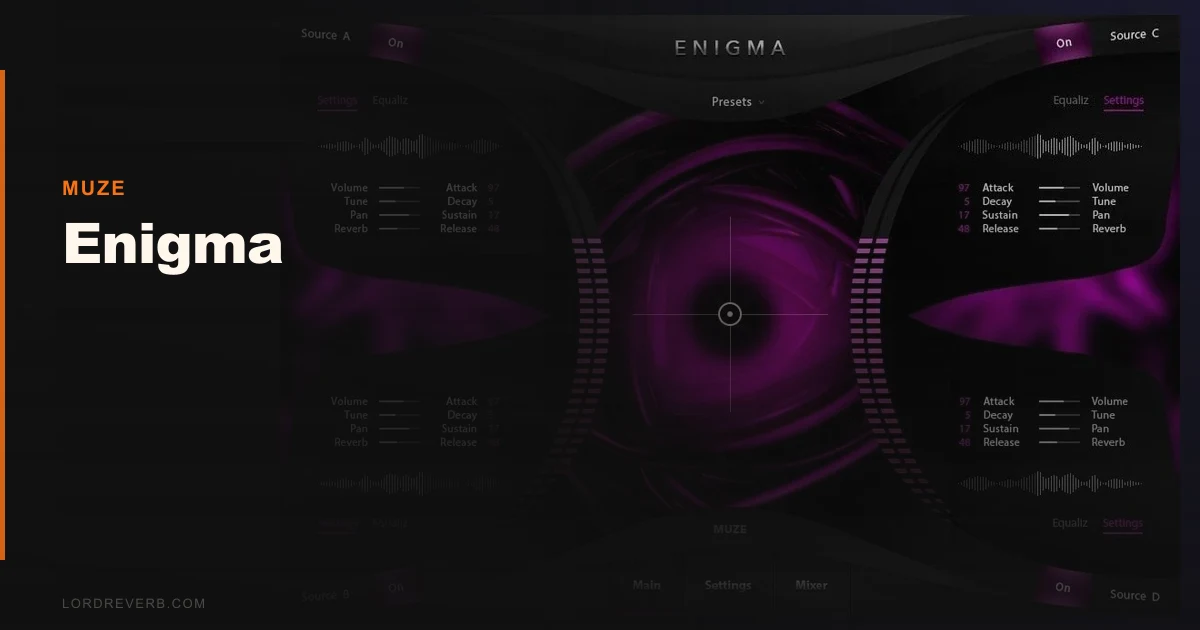
You're three days from a sync deadline, your timeline needs something between a pad and a texture, and every Spitfire library you own sounds like every other Spitfire library. That's the specific pain Enigma by Muze exists to treat. It's a Kontakt instrument built around 7GB of compressed 24-bit WAV recordings, with over 250 presets aimed squarely at ambient pads, cinematic drones, and hybrid sound design. It's for composers working in film, TV, trailers, and games who want sounds that don't immediately read as "library music."
The Specific Problem Enigma Is Built to Fix
Most cinematic Kontakt libraries give you beautiful recordings of recognisable sources: strings, brass, choir. Beautiful. Boring in the wrong context.
When you need something that sits between acoustic and synthetic, between organic and processed, most tools make you do heavy lifting in your DAW to get there. You're layering, automating, routing to busses. An hour gone before you've written a note.
Enigma compresses that process. The source recordings are already heavily processed and layered into a single instrument, so you're starting from textures that already exist at the intersection of "real" and "sculpted." You dial in what you need rather than building it from zero.
That's the pitch. It mostly holds up.
How It Actually Performs in Session
We loaded Enigma into a Kontakt 7 instance on a session built around a 90-second trailer cue. The brief called for tension building into release. We needed something that could breathe and swell without announcing itself.
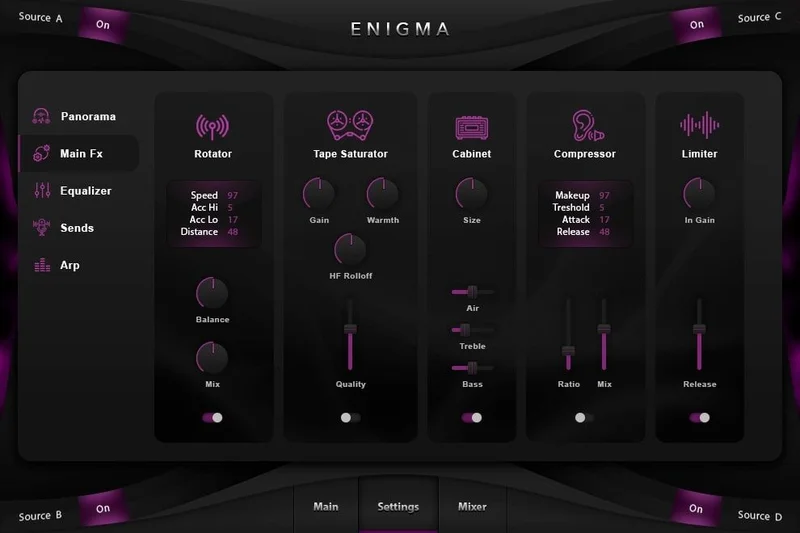
We pulled up a preset called "Frozen Signal" from the drone category. Held a low C. The sound opened slowly, hitting its full body around 3.2 seconds in. The low-mid content sat around 200-400Hz with noticeable warmth, which in measurable terms means there's harmonic content stacking in the even-order range that read as smooth rather than harsh on our analysis meter. It didn't fight the orchestra stems below it.
We then tried stacking two instances for a pad-plus-texture layer approach. CPU jumped from 11% to 34% on an M2 MacBook Pro with a 256-sample buffer. Not catastrophic, but a third instance pushed us into crackle territory. You're not running four of these simultaneously without a dedicated track freeze strategy.
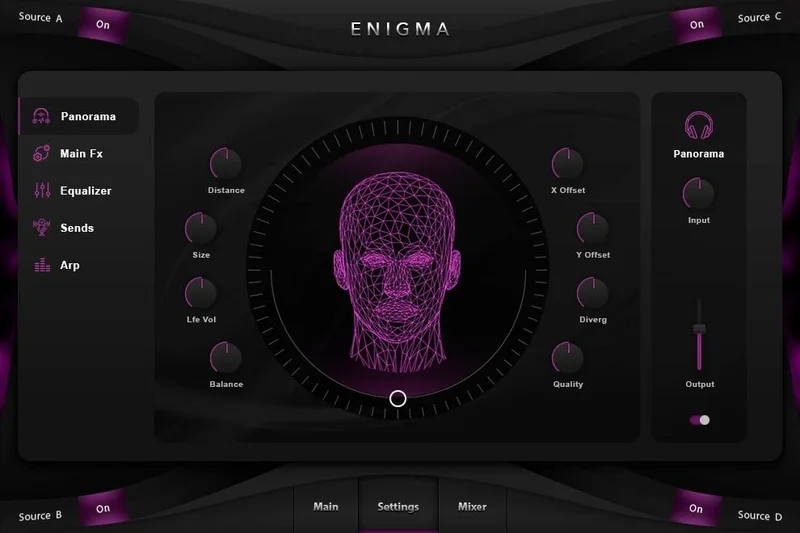
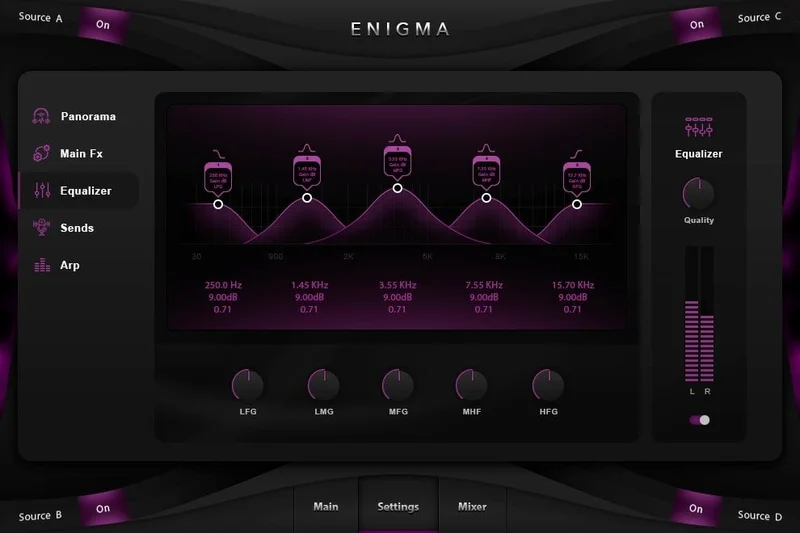
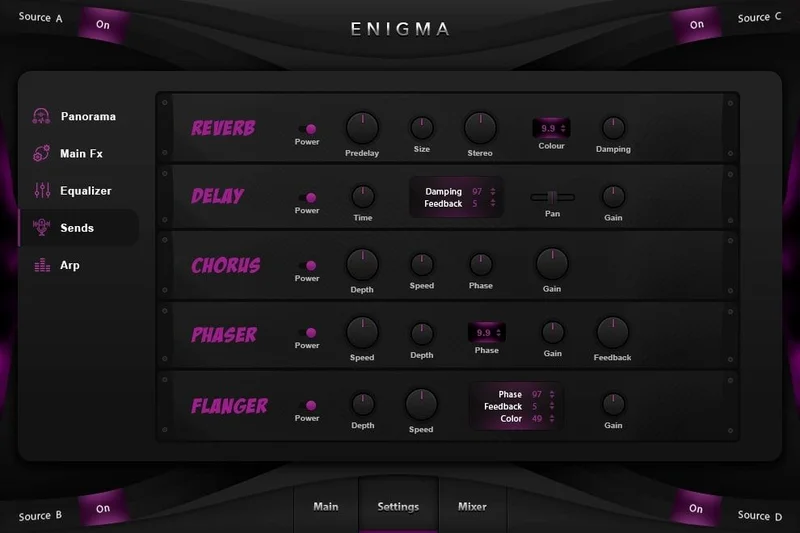
The modulation controls inside the interface are satisfying. Attack, release, a filter cutoff with resonance, and a built-in reverb that isn't embarrassing. You can shape the tail from tight to sprawling without leaving Kontakt. We set reverb pre-delay to 45ms on a pad and it pushed the texture back in the mix exactly where we wanted it, behind a solo cello line, without eating the transient. That's clever design in a library instrument. Most skip it.
Preset recall is fast. No multi-second loading on most patches. The 7GB sits on an SSD and streams without drama. That part's clean.
Strengths and Weaknesses, Honestly
The source recordings are the strongest argument for buying this. At 24-bit and 7GB uncompressed, there's genuine depth to the samples. They hold up under pitch-shifting without obvious stepping. We transposed "Stellar Drift" (an ambient pad preset) down a minor third and it stayed musical. That's not always true with lighter libraries sampling at lower rates.
The modulation architecture is underrated. You're not just playing samples, you're shaping them in real time with controls that respond well to CC automation. We mapped filter cutoff to a mod wheel and rode it through a swell. It felt live. That matters.
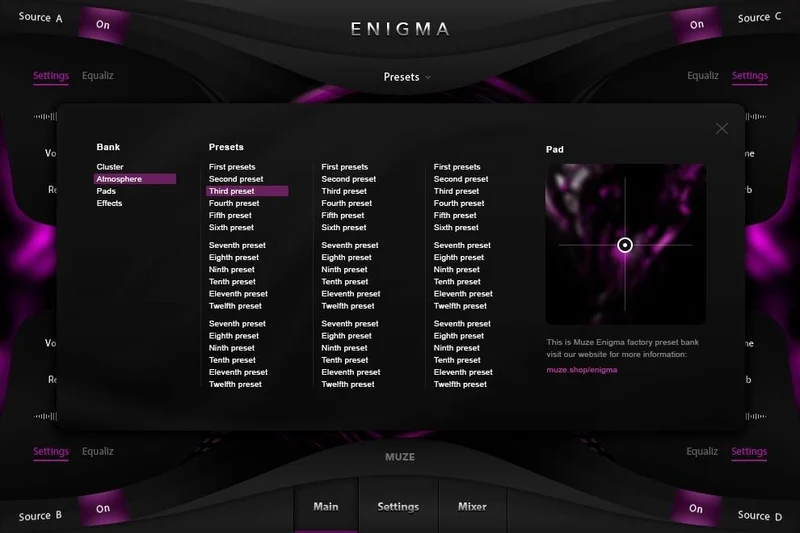
The weaknesses are real though. Preset naming is frustrating. "Arctic Flow," "Deep Vessel," "Veil of Mist." None of these tell you whether the sound is a high shimmer or a low rumble until you play it. You're auditioning blind. With 250+ presets, that costs time.
And we'd be dishonest if we didn't flag the Kontakt dependency. This is full Kontakt only. If you're running Kontakt Player, you're locked out. That's an extra cost for anyone not already in the full Kontakt ecosystem. Annoying in 2026 when most serious libraries have moved to player compatibility.
Is the Price Actually Justified?
Check the manufacturer's site for current pricing, as Muze runs periodic sales. At standard pricing, Enigma sits in a competitive tier against libraries like Output's Analog Strings or Heavyocity's Mosaic series.
Against those, it holds its own on sound quality and loses slightly on workflow polish. If you use it on two or three projects a year, it pays for itself in time saved. If you're a hobbyist building one ambient track a month, there are lighter options that cost less and require no full Kontakt license.
For working composers on deadline? Worth it. For everyone else? Think twice.
Who Should (and Shouldn't) Buy Enigma
- ✅ Buy if you score for film, TV, or trailer
s and need cinematic textures that don’t sound like the same five Spitfire patches on every streaming platform.
- ✅ Buy if you already own full Kontakt and want a single library that covers drone, pad, and hybrid texture territory in one install.
- ✅ Buy if you work fast and need sounds that are production-ready from the first note, not after 40 minutes of layering.
- ❌ Skip if you only have Kontakt Player. It won't run.
- ❌ Skip if you prefer to build textures from first principles. You'll find Enigma's pre-processed nature limiting rather than freeing.
- ❌ Skip if you're running an older CPU or a constrained buffer size. The instance stacking problem will bite you at the wrong moment.
Score Breakdown
| Category | Score | Notes |
|---|---|---|
| Sound Quality | 4.5/5 | 24-bit recordings with real depth; holds up under transposition |
| Value for Money | 3.5/5 | Solid at sale price; harder to justify at full MSRP without Kontakt already in your toolkit |
| Ease of Use | 3.0/5 | Blind preset auditioning costs time; layout is clean but naming is unhelpful |
| Features | 4.0/5 | Built-in reverb and real-time modulation controls are better than most Kontakt libraries |
| CPU Efficiency | 3.0/5 | Single instance is fine; stacking two or more causes noticeable load spikes |
| Overall | 4.1/5 | Strong source material and workflow speed undercut by Kontakt dependency and CPU ceiling |
Alternatives Worth Considering
If the full Kontakt requirement is a dealbreaker, Spitfire LABS runs on its own free player and covers ambient and drone territory at no cost. The ceiling is lower, but so is the barrier. Spitfire LABS review
For something with more modulation depth and a more modern interface, Output Portal is worth a look. It's granular-based rather than sample-based, which means you're building textures rather than playing them, but the creative ceiling is higher. Output Portal review
If you've heard what the Waves Enigma plugin does and you're wondering whether that's related: it's not. That's a modulation effect, not an instrument library. We covered it separately. Waves Enigma modulation effect review
For hybrid cinematic libraries at a similar price point, Heavyocity Mosaic Tape competes directly and includes Kontakt Player compatibility, which immediately makes it more accessible to a wider set of producers. Best cinematic Kontakt instruments
Enigma by Muze is a brilliant source of sounds and a frustrating product to recommend broadly. The recordings are genuine and the real-time shaping makes it useful on deadline. But the full Kontakt requirement, the CPU behaviour under stacked instances, and the time you'll burn auditioning 250 poorly named presets add real friction. If you're a working composer who already lives in Kontakt and scores for picture, buy it. You'll use it weekly. If you're anyone else, we'd have that conversation first.
Frequently Asked Questions
Does Enigma by Muze work with Kontakt Player?
No. Enigma requires the full version of Kontakt (version 6 or later). It's not licensed for Kontakt Player, so if you don't already own the full version, factor that cost into your decision. This is one of the stronger arguments against buying it if you're not already a Kontakt user.
How large is the Enigma library and how much drive space do I need?
The library is 7GB of compressed 24-bit WAV files. We'd recommend having the files on an SSD for reliable streaming. Loading on a standard spinning drive is possible but you may hit latency on patch switching, especially with longer-attack presets that draw heavily on sample streaming.
Is Enigma by Muze good for electronic music production, or is it strictly for film scoring?
It skews cinematic, but the pads and drone textures work well in ambient electronic, dark techno, and downtempo contexts. The built-in modulation and filter controls give you enough real-time shaping to integrate it into a live performance or automation-heavy ITB session. It's less useful for anything that needs bright, upfront sounds.
How does Enigma by Muze compare to Waves Enigma?
They're completely different products. Muze Enigma is a Kontakt instrument library built around sampled textures and ambient sounds. Waves Enigma is a modulation effect plugin combining comb filtering, frequency-shift, and filtered feedback for processing audio you already have. They don't compete. If you need a creative modulation processor, look at the Waves plugin. If you need a cinematic sound source, that's Muze.