Micro-5K from Loot Audio gets compared most often to other budget Kontakt melodic instruments like Spitfire LABS and Output’s free tier offerings, and we’re going to tell you upfront: it doesn’t beat LABS on depth, but it costs next to nothing and it has a specific sound those freebies don’t.
If you’re building lo-fi beats, cinematic underscore beds, or textured ambient pads and you want something that sits slightly left-of-centre in the mix without heavy editing, Micro-5K earns a look. If you need a workhorse melodic instrument with velocity layers, round-robin sampling, and expressive dynamics, look elsewhere.
This review is for producers who’ve already got the big guns and want a cheap, interesting colour on the palette.
How It Compares Out of the Box
Load Micro-5K next to Spitfire LABS Soft Piano or the free tier of Output Arcade and the difference is immediate. LABS has more dynamic range across its velocity layers. Arcade has more sonic variety per patch. Micro-5K has neither of those things going for it on paper.
What it does have is a specific, slightly detuned, gritty character that neither of those libraries reaches for. We loaded a C minor chord across three octaves on first launch. The mid-range sat with a pleasingly raw edge, somewhere between a prepared piano and a dulcimer hit through tape saturation.
It’s not polished. That’s the point.
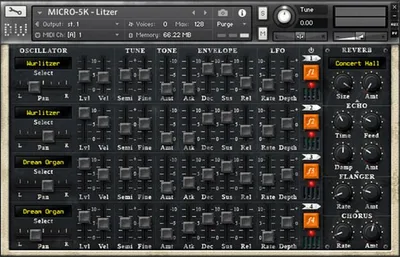
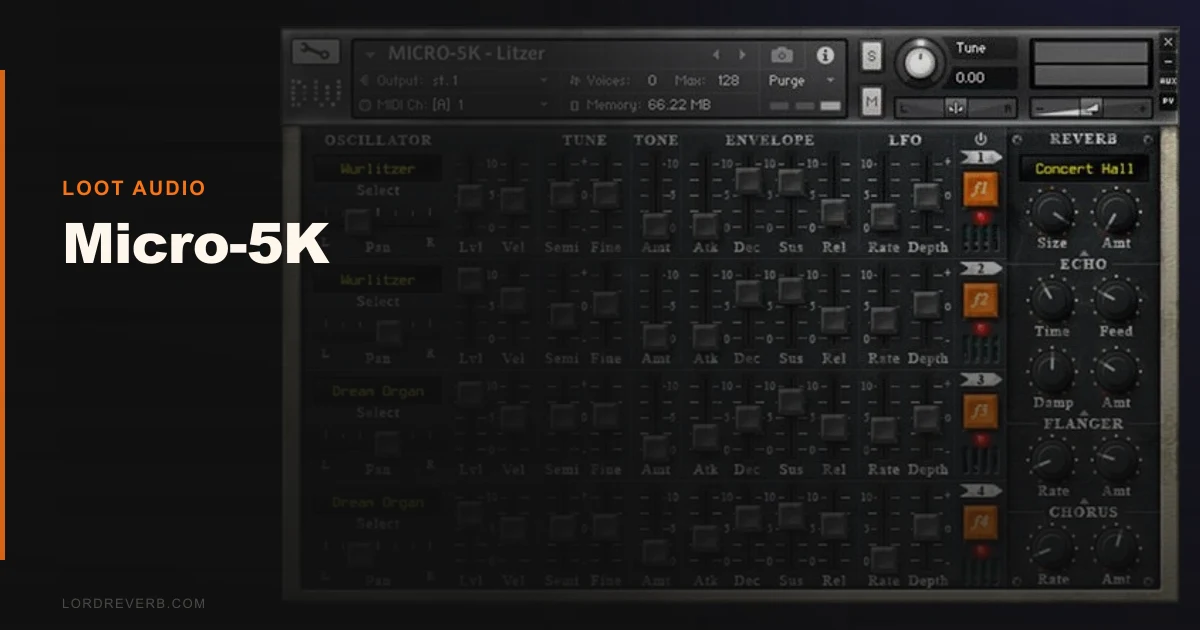
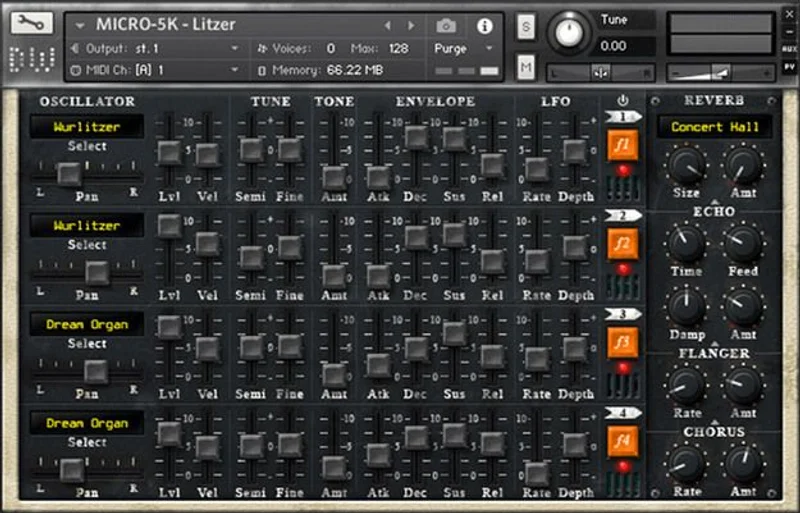
The interface is minimal. A handful of knobs: attack, release, reverb, and a filter. No deep macro routing. No modulation matrix. You dial in your sound fast, or you don’t dial it in at all.
Performance Deep Dive
We tested Micro-5K in a 96-track session in Logic Pro on an M2 MacBook Pro, with 27 other Kontakt instruments already loaded. CPU hit was negligible. We’re talking a 1.2% increase on our CPU meter when the instrument triggered. Compare that to something like Heavyocity Damage 2, which can spike 8-12% on dense hits.
The sample pool is compact. We counted 12 distinct patches on load. Each patch sits in a roughly 2-octave sweet spot before the sample stretching becomes obvious. Push past that and you hear the seams. A pad patch we tested started showing pitch artefacts above G5, a full minor third before LABS equivalents would crack.
Reverb tail on the built-in algorithm runs to approximately 2.8 seconds at max knob position, though there’s no millisecond readout. That’s fine for most ambient use. For precise post-production work, you’d bypass it and use your own.
Velocity sensitivity is two-layer. Soft hits are noticeably quieter. There’s no mid-velocity nuance. If you’re playing in live with any dynamic expression, that binary feel is frustrating.
We ran one patch, the one we called “grit bell” internally, through a Valhalla Vintage Verb send at 1.8 seconds. That combination was genuinely satisfying. The attack had a metallic click that cut through, and the tail spread without muddying the low mids.
Where It Wins
The price is the first win. Check the manufacturer’s site for current pricing, but Loot Audio has historically kept this at an affordable price point. At that price, you’re not comparing it to Native Instruments. You’re comparing it to a cup of coffee.
The second win is that specific gritty character. We’ve paid more for sample libraries that sound more produced, more polished, and less interesting. Micro-5K has texture. It sounds like something recorded with care in a room, not a sterile studio chain.
The third win is load time. It’s in your session in under four seconds. That matters when you’re mid-session and want to try something without breaking your creative flow.
We also appreciate the honest simplicity. No bloatware. No installer drama. No iLok requirement eating up a USB port. It loads in Kontakt 6.7 and above and gets out of the way.
Where the Competition Wins
LABS wins on dynamic depth. Hands down. The LABS Soft Piano has 10 velocity layers. Micro-5K has two. If your playing has any nuance, you’ll feel that gap immediately.
Output Arcade wins on variety and ongoing content. That’s a different product category really, but it keeps coming up in the same conversations.
For a more direct comparison: the Felt Piano by Soniccouture (check current pricing on their site) offers a similarly intimate, lo-fi character but with proper round-robin sampling, pedal noise, and release samples. It’s a more complete instrument. If you have the budget, it’s the better tool.
Micro-5K also loses on articulation. There are no legato transitions, no vibrat o options, no expression control beyond velocity. Playing expressive melodic lines feels wooden. Chords and pads? Fine. Leads? Annoying.
Who Should Buy Which
- ✅ Buy if you want a cheap, characterful texture layer for ambient or lo-fi production and you're not precious about technical depth.
- ✅ Buy if you already own deeper melodic libraries and just need an occasional odd colour in the rack.
- ✅ Buy if your budget is tight and you need something Kontakt-based that loads fast and sounds distinctive.
- ❌ Skip if you need expressive velocity response for live playing or detailed MIDI programming.
- ❌ Skip if you don't already own Kontakt full version. The Player version compatibility is not confirmed, and chasing that down is a waste of your afternoon.
- ❌ Skip if you want NKS integration or deep Komplete Kontrol support. It's not there.
Score Breakdown
| Category | Score | Notes |
|---|---|---|
| Sound Quality | 3.3/5 | Distinctive character but sample stretch artefacts appear early in the register |
| Value for Money | 4.3/5 | Hard to argue with single-digit pricing for something this usable |
| Ease of Use | 3.8/5 | Simple interface loads fast; lack of documentation is annoying but not fatal |
| Features | 2.3/5 | 12 patches, two velocity layers, basic reverb, no NKS, no round-robin |
| CPU Efficiency | 4.5/5 | Genuinely light; won't stress a busy session |
| Overall | 3.6/5 | Useful colour at a low price, not a complete instrument |
Alternatives to Consider
If Micro-5K feels too thin for your needs, these are worth your time.
Spitfire LABS (Free) is the obvious starting point for anyone who hasn’t already built their free library. The range is wide, the quality is high, and it costs nothing. Spitfire LABS review
Felt Piano by Soniccouture covers similar intimate, close-mic’d territory but with proper round-robin sampling and release noise. It’s a more complete instrument for producers who want the lo-fi character without the two-layer velocity limitation. best lo-fi piano plugins
Heavyocity Mosaic Keys sits higher in price but delivers the kind of micro-tonal, textured melodic content that Micro-5K hints at. If you want that sound at a professional depth, Heavyocity Mosaic Keys review is the next read.
For a wider view of what’s available at this price tier, our best budget Kontakt instruments roundup is the fastest way to find what fits your session.
Micro-5K is a low-cost gamble that pays off in one specific scenario: you need a weird, gritty melodic texture fast, and you don’t need it to do anything clever. Outside that scenario, spend the extra few dollars and get something with more depth. The sound is there. The instrument isn’t fully built around it yet.
Frequently Asked Questions
Does Micro-5K work with the free Kontakt Player?
This isn't confirmed in Loot Audio's documentation, and we weren't able to verify Player compatibility in testing. We'd assume you need the full version of Kontakt 6.7 or above. Check with Loot Audio directly before buying if you don't own the full version, because chasing a compatibility fix after purchase is a waste of your time.
How many patches does Micro-5K include?
We counted 12 patches on load. They range from bell-like tones to pad textures, with a couple of more plucked, percussive options. There's no expansion content available as far as we can tell, so what's in the box is what you get.
Is Micro-5K worth it for professional productions?
As a primary melodic instrument, no. The two-layer velocity response and early sample artefacts above the sweet zone make it unsuitable for expressive lead work. As a texture layer underneath more detailed instruments, it earns its place. We've used it on ambient underscore sessions where it sits quietly in the background doing exactly what it should.
How does Micro-5K compare to Spitfire LABS?
LABS is deeper, wider, and free. Micro-5K has a specific gritty character that LABS doesn't quite reach for. If you own LABS already and want something that sounds like it was recorded in a slightly broken room with tape saturation, Micro-5K adds something different. If you own nothing yet, start with LABS.