Ensemblia Percussive is a Kontakt-based percussion library with over 200 instruments, an 8-beat arranger, and 600+ pre-built patterns. It's designed for film composers who want textured, organic rhythmic beds without spending an hour building them from scratch. At $235, it lands in a specific lane, and it's worth being honest about whether that lane is yours.
We were fifteen minutes into scoring a tense 90-second trailer cue, needing a layer of irregular, world-flavoured percussion underneath a string ostinato. Rather than reaching for a drum machine or a generic loop pack, we loaded Ensemblia Percussive into a fresh Kontakt instance. Within two minutes we had a 6x16th sextuplet pattern running with a djembe and a metal shaker in the same beat, live-switching to a second unit with a drier snare groove on the B section. That's the pitch for this instrument: fast, organic, and built for composers who think in cues, not clips.
What Opening It for the First Time Actually Feels Like
Installation is clean. The 1.3GB of compressed content (around 3,500 samples recorded at 44kHz/24-bit) loads without drama through Native Access. Kontakt 5.6.8 or higher is required, but the free Kontakt Player works fine.
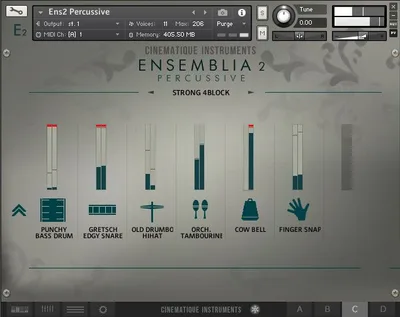
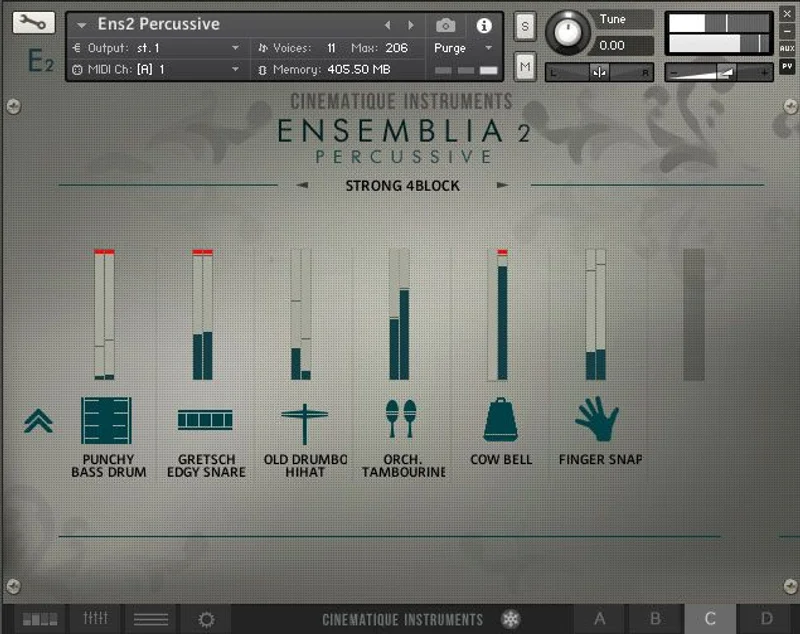
The GUI is icon-based and minimal. It's self-explanatory in a way that most Kontakt instruments aren't. The instrument browser is organised by category with a pre-listen function, so you're auditioning a gong or a snare before committing it to a slot. That saves real time. The 7+1 mixer sits below the arranger, and every channel has pan, tune, length, delay, reverb, a 3-band EQ, and envelope compression. It's a lot for one screen. Somehow it doesn't feel crowded.
First impression: this is a serious tool wearing casual clothes. We loved that immediately.
Getting It Into a Real Workflow
The multi-beat arranger is where Ensemblia Percussive earns its money. Eight independent beats, each divisible into 4x16th notes, 8x32nd notes, 3x8th triplet notes, or 6x16th sextuplets. You can mix subdivisions across the same pattern, which is where things get interesting and slightly addictive.
The 4-unit setup means you have four complete, independent beat engines in one GUI instance. We set unit one as a dense sextuplet texture, unit two as a sparse 4x16th pulse, and switched between them live during playback. The transitions were immediate. No glitches, no awkward rescheduling. That's satisfying in a way that takes you by surprise the first time it works.
The 600+ pre-assembled beats in the file browser are a genuine shortcut. Most are usable straight away. Some need instrument swaps, which is fast using the category browser. The friction point is when you want to go deeper into velocity automation per step: the arranger gives you dynamic control, but it's not a full step-sequencer in the DAW sense. Producers expecting Geist2-style granularity will hit a wall.
Trigger keys let you play instruments manually on top of running patterns. We used this to add a single rimshot hit on a downbeat. It worked cleanly and recorded into the DAW without re-triggering the pattern. Clever feature.
What It's Genuinely Good At
The sample quality is the foundation everything else rests on. Michael Askill recorded these instruments in Brisbane with a close, dry signal: no natural reverb contamination from a large hall. You're adding the room yourself using the per-track reverb or your own chain. That's the right call for scoring work where you're matching room acoustics to picture.
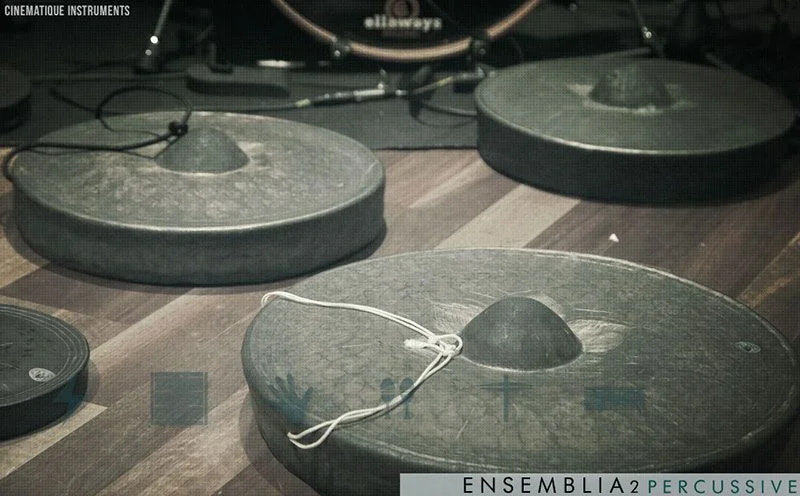
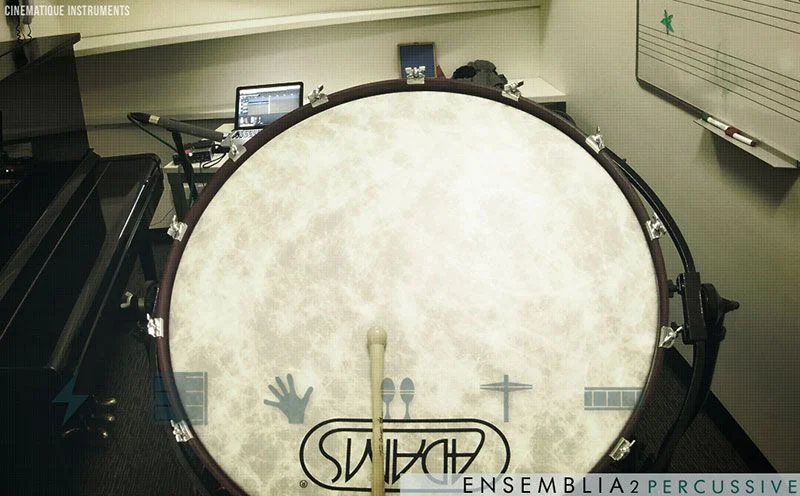
The instrument spread is impressive. Twenty-five snares, 24 big drums, 27 toms and ethno drums, 29 cymbals, 15 shakers, gongs, singing bowls. Each recorded in 3-10 velocity layers and 4-8 round robins. At the upper end of those ranges you get convincing machine-gun-proof cymbal rolls and snare flams. At the lower layers, softer hits feel genuinely soft, not just attenuated.
The 3D matrix panning on the mixer is underrated. We panned a shaker hard left in the X-axis and pulled it back in the Z-axis. It disappeared behind the other instruments in a way that a normal stereo pan doesn't replicate. For spatial scoring this is a real tool.
The Live FX keys are a bonus. Five effects triggerable from keys during playback. It's a performance feature that works especially well if you're recording live takes into your DAW rather than drawing automation.
The Rough Edges
The beat editor is the main limitation. For film composers sketching ideas, it's excellent. For producers who want precise velocity curves per step, full note-length editing, or probability-based triggers: look elsewhere. The arranger is powerful but it has opinions about how you should work.
Kontakt dependency is real. This isn't a complaint about Ensemblia specifically. It's something to factor into your setup. If you're already running multiple Kontakt instruments in a template, you're managing that overhead. It's not a heavy instrument, but it's also not a standalone plugin.
We'd also flag that the documentation could be sharper on CPU specifics. There's no published CPU or RAM figure beyond the sample content size. In our sessions it ran without complaints alongside four other Kontakt instances at a 512 buffer. That's a good sign, but we'd rather have a number.
The 10 single-instrument patches (snares only, cymbals only, etc.) are useful but load as separate Kontakt instances. Annoying if you want everything in one patch for live work.
Who This Is Really For
- ✅ Buy if you score to picture and need fast, textured, organic percussion without loop libraries
- ✅ Buy if you're a non-percussionist who wants to write convincing rhythmic parts without programming a drum grid note-by-note
- ✅ Buy if you already own Kontakt 5.6.8+ and want an instrument that pulls double duty as a sound design tool and a composition aid
- ❌ Skip if you want a full drum machine replacement with step-level probability and velocity lanes
- ❌ Skip if you're working on hip-hop, EDM, or any genre where sample-accurate beat design matters more than organic texture
- ❌ Skip if you don't own Kontakt. The free Player works, but you need to budget for that requirement in your setup
Specs & Technical Details
| Developer | Cinematique Instruments |
| Price | $235 |
| Plugin Format | VST3 / AU / AAX (via Kontakt) |
| OS Support | Mac / Windows |
| Activation | Native Access / NI Serial |
| CPU Usage | Light to medium (no published spec; performed well at 512 buffer alongside 4 other Kontakt instances) |
| Trial Available | No |
| Version Reviewed | Ensemblia 2 (Percussive) |
| Content Size | 1.3GB compressed / ~3,500 samples at 44kHz/24-bit |
| NKS Support | Yes (Maschine and Komplete Kontrol S-Series) |
Score Breakdown
| Category | Score | Notes |
|---|---|---|
| Sound Quality | 4.5/5 | Close, dry recordings with genuine velocity and round-robin depth; Michael Askill's performances are the real asset |
| Value for Money | 3.5/5 | Solid for film composers; harder to justify for producers who'll use 20% of the content |
| Ease of Use | 4.5/5 | Icon-based GUI, pre-listen browser, and 600+ presets lower the barrier significantly |
| Features | 4.0/5 | 8-beat arranger, 4-unit live switching, 3D matrix panning, and Live FX keys cover a lot of ground |
| CPU Efficiency | 3.5/5 | No published spec; ran comfortably in our tests but Kontakt overhead applies |
| Overall | 4.0/5 | A well-built, genuinely useful percussion library for its intended audience |
Alternatives to Consider
If you want a deeper kit-building experience with more granular mixing, Superior Drummer 3 is the benchmark. It's heavier on CPU and costs more, but it gives you full stem mixing and a vast microphone library.
Geist2 from FXpansion is worth looking at if you want a hybrid approach: loop-slicing, step sequencing, and sample loading in one plugin. It won't give you Ensemblia's organic world-percussion depth, but it's more flexible as a beat-production tool.
For purely cinematic textures without an arranger, Damage 2 by Heavyocity covers orchestral and hybrid percussion with a different character. More processed, more modern. Less "acoustic ensemble." Best Kontakt instruments for film scoring
Ensemblia Percussive wins when the brief is "organic rhythm, fast." It loses when the brief is "full control over every hit." Know your brief before you buy.
At $235, this is a no-hesitation purchase for composers already deep in Kontakt-based scoring workflows. If you're on the fence, the honest answer is: if you write to picture and you've ever spent 40 minutes trying to make a loop library feel human, this will solve that problem. If you're a beat producer who wants total sequencing freedom, it won't.
Related reviews: TAPED Reversed & Hiss Review
Frequently Asked Questions
Do I need the full version of Kontakt to run Ensemblia Percussive?
No. Ensemblia Percussive works with the free Kontakt Player. You need version 5.6.8 or higher. Both the full paid version and the free Player version support it fully, with no feature restrictions on the instrument's side.
How many instruments and beats does Ensemblia Percussive include?
It ships with over 200 percussive instruments spread across categories including 25 snares, 24 big drums, 27 toms and ethno drums, 29 cymbals, and 15 shakers, plus gongs and singing bowls. The pre-assembled beat library contains over 600 patterns accessible via the file browser.
Can I use Ensemblia Percussive for live performance?
Yes. The 4-unit structure lets you switch between four independent beat setups on the fly. Trigger keys let you play instruments manually over a running pattern. Live FX keys add real-time effect triggering during playback. It's a workable live setup inside a Kontakt host.
Is Ensemblia Percussive compatible with Maschine and Komplete Kontrol?
Yes. It supports Native Instruments NKS format, which means full integration with Maschine and the Komplete Kontrol S-Series keyboards. Browsing, parameter mapping, and light guide support all work through the NKS framework.