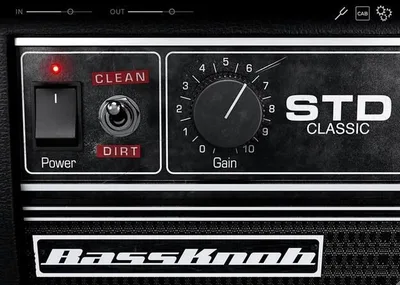
The doubt is fair: can a plugin with one main knob and two channels actually replace a real Ampeg SVT rig on a record? On BassKnob STD, yes. Not always, not for everyone, but enough times to make the $49.99 price tag feel reasonable.
Bogren Digital built this around a specific target: rock and metal producers who are tired of spending 40 minutes dialling in a bass tone before they've written a single riff. The plugin models an Ampeg SVT head into a classic 8x10 cabinet. That's the foundation. Everything else is built on top of it to stay fast and stay out of your way.
We tested it on two sessions: a four-piece rock record with a clean DI bass, and a death metal demo with an active five-string. Here's what we found.
Does It Actually Deliver the SVT Sound?
Bogren Digital released BassKnob STD in August 2022. The tech underneath it is called IRDX, which stands for Impulse Response Dynamix. It uses machine learning to capture not just the static frequency print of an Ampeg SVT, but the way that amp responds dynamically as the signal changes.
That distinction matters. Most IR-based bass sims capture a single snapshot: the amp at one volume, one EQ setting, one moment in time. IRDX captures how the amp breathes. When you dig into a low B string, the response shifts the way a real SVT does, with the low mids compressing slightly around 200-250Hz and the top end opening up.
Does it sound exactly like a real SVT into a 8x10 in a live room? No. Miked amps have air. This doesn't. But at mix volume, in a track with guitars and drums, it sits convincingly. That's the test that counts.
Where BassKnob STD Shines
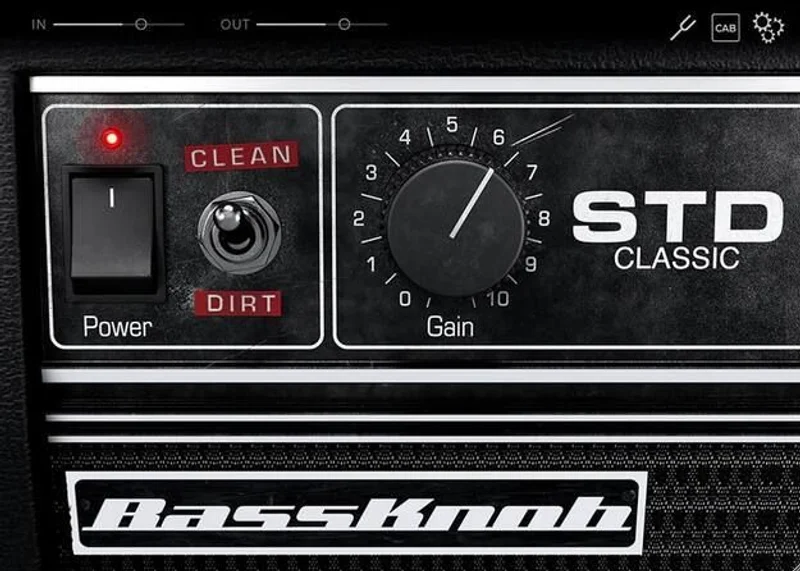
The Clean channel is where we spent most of our time. We ran a passive P-bass DI through it at around 9 o'clock on the Tone knob. The result was a thickened, slightly compressed low-mid presence that pushed the bass forward without fighting the kick. No EQ adjustments needed on the channel strip afterward.
That's the satisfaction here. One knob controls the frequency response modulation. Counterclockwise pulls toward a darker, fatter SVT tone. Clockwise opens the top end. It's a genuinely clever reduction of what would normally be a five or six-band EQ decision, and it works because the IRDX model is doing the heavy lifting underneath.
The Dirt channel earns its place on metal sessions. We pushed a 5-string active bass into it with the Dirt knob at 12 o'clock and the result was a gritty, saturated grind sitting around 800Hz-1.5kHz. It cut through a dense guitar wall without needing a separate overdrive or distortion pedal plugin in the chain. That's one less plugin, which matters.
CPU draw is light. In our tests on a mid-spec M1 Mac running Logic Pro 10.8, BassKnob STD held around 2-3% CPU on a single instance. Run six on a full band session and you're still inside comfortable territory.
Where It Falls Short
The simplicity that makes BassKnob STD fast is also what limits it. There's no mid-frequency control. You can't scoop the 400Hz mud that some bass DIs carry, and you can't add the 1kHz presence boost that finger-style playing often needs. The Tone knob approximates both, but it's a single axis on a two-dimensional problem.
We tried running a funk bass session through it. The clean tone was usable, but not great. The frequency response modulation is tuned for rock body and metal grind. A slap bass line at 4kHz presence? Annoying to get there. You'd need an EQ after it, at which point you're doing the work the plugin was supposed to skip.
The IRDX machine learning layer also adds colour you can't switch off. On some passes, it did things to transient behaviour we didn't ask for. That's frustrating when you're trying to preserve the natural pick attack on a fingered line. It's not broken. It's just opinionated.
No latency figure is published by Bogren Digital. In our session, we noticed no perceivable tracking latency, but we couldn't verify a specific sample count. That gap in documentation is annoying for producers doing live tracking sessions.
How It Stacks Up Against the Competition
The honest answer is there aren't many direct competitors doing exactly this. Most bass amp sims give you a full pedalboard, three amp heads, eight cabinets, and a mic position knob. BassKnob STD deliberately doesn't.
IK Multimedia's MODO BASS 2 is the obvious alternative for anyone who wants more control. It models the physical behaviour of bass strings and offers 14 bass instruments, but it costs significantly more and takes real time to dial in. If you're a producer who wants to sculpt tone from the ground up, MODO BASS 2 wins. If you want a credible SVT in 30 seconds, BassKnob STD wins.
Neural DSP's Parallax gives you a full bass rig with more tonal flexibility and better clean/dir ty blending options. The current price is shown in the buy box on this page. It's a stronger tool for engineers who want to mix bass guitar ITB, but it requires more time and attention to get right. BassKnob STD doesn't. That's the trade.
Is the Price Fair for What You Get?
At $49.99, yes. We'd buy it. There's a 14-day free trial, which removes the guesswork. The best sale price we have seen is lower than the regular price. At that sale price, it is a no-brainer for any rock or metal producer. At full price, it's still reasonable for what it delivers on those specific sessions.
If you're outside rock and metal territory, the calculus changes. For jazz, funk, or R&B bass production, $49.99 gets you closer to the right tool with other bass tone plugins. Don't buy it for versatility. Buy it because you work in a specific lane and want speed.
Score Breakdown
| Category | Score | Notes |
|---|---|---|
| Sound Quality | 4.0/5 | Convincing SVT simulation with dynamic IRDX response; falls short of a miked cab in a live room |
| Value for Money | 4.0/5 | Fair at $49.99 and a strong buy at its sale price with the 14-day trial removing all risk. |
| Ease of Use | 4.5/5 | One-knob design delivers usable tones in under a minute; intentionally minimal |
| Features | 3.0/5 | Clean and Dirt channels cover the basics; no mid control or cab blending limits flexibility |
| CPU Efficiency | 4.5/5 | Light draw tested at 2-3% per instance on M1; stacks easily on multi-track sessions |
| Overall | 4.1/5 | A focused, honest bass sim that does one thing well and doesn't pretend to do everything |
Alternatives to Consider
Neural DSP Parallax: More flexible signal chain with full cab and mic control. Works best for engineers who want to build a full bass rig ITB. More complex, more control. The current price is shown in the buy box on this page.
IK Multimedia MODO BASS 2: Physical string modelling across 14 instruments. It's the right call for producers who need genre range, not just rock and metal. Read our MODO BASS 2 review before you decide. More powerful and more time-consuming.
Ignite Amps SHB-1: Free. Solid clean SVT-style tone without the IRDX layer. If you're on a tight budget and just need a workable bass amp sim, check the best free bass plugins before paying anything.
The riff recorder and tuner built into BassKnob STD are worth a mention. They're not the reason to buy it, but the tuner is accurate and the riff recorder catches ideas during a session without you bouncing out to a separate tool. Underrated conveniences.
If you produce rock or metal, keep a bass DI clean, and hate spending an hour on bass tone before you've tracked a single take: buy BassKnob STD. At $49.99, it's priced fairly and the trial removes every excuse not to test it first. If you need control over your mids, or your sessions live outside rock and metal, skip it and put that money toward MODO BASS 2 or Parallax instead.
The bottom line: it's a tool built for a specific job. It does that job well. Don't ask it to do anything else.
Frequently Asked Questions
What amp does BassKnob STD actually model?
It models an Ampeg SVT head running into a classic 8x10 cabinet. Bogren Digital uses IRDX technology, which stands for Impulse Response Dynamix, to capture the dynamic response of that rig rather than a static IR snapshot. The result is a simulation that responds differently as you play harder or softer, the way a real SVT does.
Is BassKnob STD worth it for genres outside rock and metal?
Probably not. The frequency response modulation is tuned specifically for rock body and metal grind. We tested it on a funk session and found the clean tone usable but limited. For jazz, R&B, or slap bass, you'd spend more time fighting the plugin's personality than you'd save. Look at MODO BASS 2 or a broader amp sim instead.
How much CPU does BassKnob STD use?
Light. In our tests on an M1 Mac running Logic Pro 10.8, a single instance ran at approximately 2-3% CPU. You can stack six instances on a dense session without performance issues on a modern machine. Bogren Digital doesn't publish official CPU specs, so results will vary by system.
Does BassKnob STD have a free trial?
Yes. Bogren Digital offers a 14-day free trial. Download it, run it through your actual sessions, and decide from there. We'd always recommend trialling a bass sim on your real material before buying, since tone is subjective and depends heavily on your specific bass and signal chain.