Waves Enigma gets compared to Phaser plugins constantly, and that comparison is wrong. It's not a phaser. It's something stranger, and whether that's a reason to buy it or skip it depends entirely on what you need from a modulation tool in 2026.
We tested it against MXR Phase 90 emulations, Soundtoys PhaseMistress, and U-He Satin's phaser section. Those three are where most producers land when they want movement in a signal. Enigma sits in a different category, and this review will tell you exactly when that matters and when it doesn't.
The short version: at full price, hard pass. On sale, it's a clever oddity worth owning if you do sound design or want textures that modern DAW stock plugins can't touch. If you're mixing pop records and need a smooth phase sweep on a guitar bus, close this tab and grab PhaseMistress instead.
How Enigma Compares Out of the Box
Open Enigma next to PhaseMistress and the difference is immediate. PhaseMistress shows you a clear, visual phase graph. You see the notch move. You hear it move. It makes sense in about four minutes.
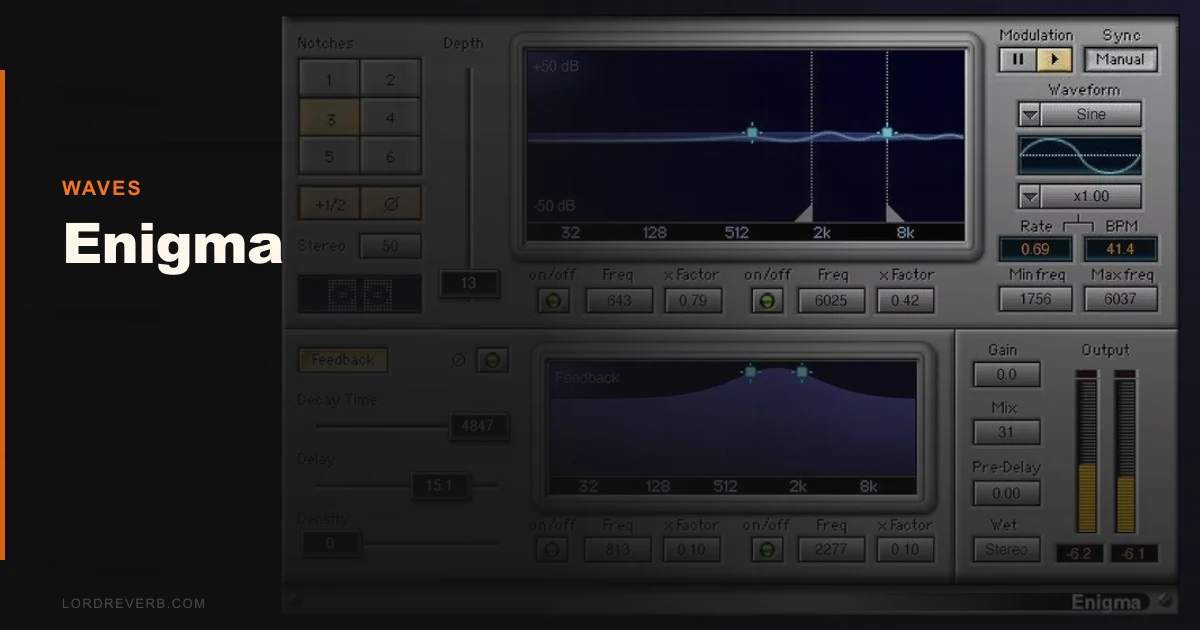
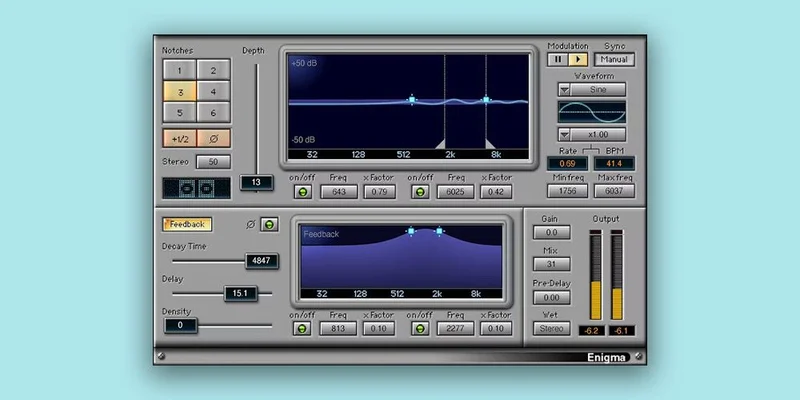
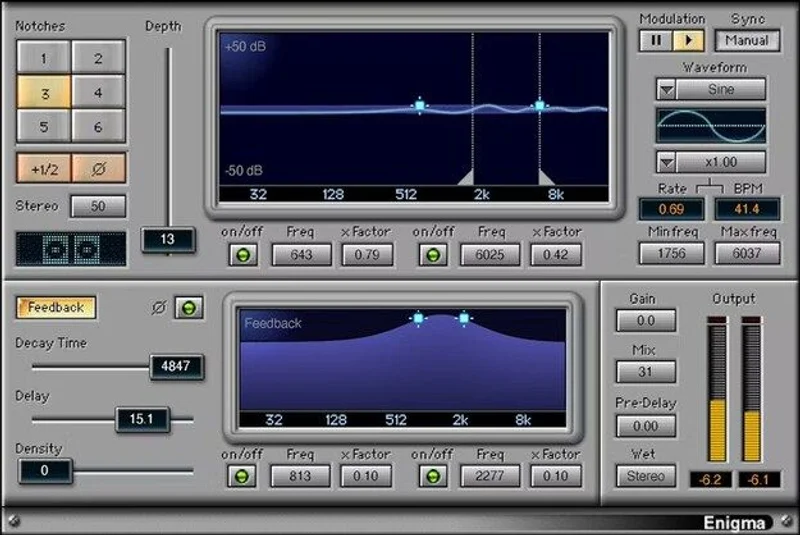
Enigma gives you a wall of knobs with labels like "FB Delay", "Depth", and "Spread" and no visual representation of what's happening to your frequency content. We spent a frustrating first 30 minutes turning knobs and listening hard before anything clicked.
Where PhaseMistress is a sports car with a clean dashboard, Enigma is a vintage modular rack with scratched panel labels. You'll get somewhere interesting with both. One of them will take three times as long.
Against Satin's phaser section, Enigma wins on depth and weirdness but loses on workflow speed. Satin's phaser is integrated, visual, and fast to dial in. Enigma demands patience it doesn't always reward.
Performance Deep Dive
Enigma runs 12 algorithms built around a core notch filter system combined with short delay feedback loops and LFO modulation. That combination is the whole point. Most phasers modulate a set of all-pass filters. Enigma modulates notch filters, which cuts frequency bands rather than shifting phase relationships. The sonic difference is audible and real.
We ran a sustained synth pad through algorithm 7 at around 40% depth with the feedback delay set to 18ms. The result was a resonant, almost vocal movement that no phase shifter we own has replicated. That moment was the clearest argument for Enigma's existence.
CPU usage is inconsistent. On a static session with eight instances, we saw 4-6% CPU draw per instance on an M2 MacBook Pro running Logic 10.8. That's medium-to-heavy. On dense sessions with lots of automation, we saw it spike above 9% on a single instance, which is annoying and hard to predict.
Latency compensation works in most modern DAWs. We had no issues in Logic or Ableton 12. Older DAW sessions flagged alignment issues that needed manual correction, which points to the legacy architecture underneath.
The 12 algorithms range from subtle chorus-adjacent movement through to full drone-inducing feedback territory. About 4 of the 12 are genuinely useful on a regular basis. The rest are specialist tools you'll pull up twice a year.
Where Enigma Wins
Enigma wins on texture work. Full stop.
We put it on a long vocal sample for an ambient track, set algorithm 9 with the notch depth at 65% and a slow LFO rate of 0.3Hz. The vocal turned into a breathing, morphing atmosphere in about 90 seconds of tweaking. Nothing in our rack of phasers touched that result without heavy chaining.
It also wins on drone production. Route a single oscillator through Enigma with feedback dialled up past 70% and the delay time set short at 8-12ms. You get harmonically rich self-oscillation that sits under a mix like it was always there. Satisfying in a way that's hard to explain until you hear it.
The phaser plugin comparison case for Enigma is also price. During a Waves sale, which happens constantly, the argument against it gets thin for anyone doing sound design or ambient work.
No other plugin at that price point does what algorithm 7 does. That's not hype. That's just true.
Where the Competition Wins
PhaseMistress wins on everything that isn't weird sound design.
For modulated guitar buses, synth leads needing movement, or vocal doubling effects, PhaseMistress is faster, more visual, and more predictable. We'd reach for it first on 80% of mix tasks.
U-He Satin wins on workflow integration. It's part of a larger tape emulation chain, and the phaser section responds to the rest of the signal path in ways that feel musical without forcing it.
Enigma also loses on documentation. The manual is thin. There are no in-plugin tooltips. For a plugin this unintuitive, that's a real problem. We wish Waves had invested more in helping users understand what the notch filter network is actually doing to their signal.
On 64-bit native support, the situation is murky. Waves runs it through their Central system, which smooths over some compatibility issues, but we hit one crash in Reaper 7 that we couldn't reproduce or explain. Worth knowing before you stake a session on it.
Who Should Buy Which
- ✅ Buy Enigma if you do ambient, drone, or experimental sound design and need textures outside the normal phaser palette.
- ✅ Buy Enigma if you're grabbing it on sale and already own a go-to phaser for mix work.
- ✅ Buy Enigma if algorithm 7 or 9 style notch modulation is something you've been trying to find elsewhere without success.
- ❌ Skip Enigma if you need a clean, intuitive phaser for standard mix duties. PhaseMistress does it better.
- ❌ Skip Enigma if you're running a CPU-limited setup. The unpredictable spikes will cost you.
- ❌ Skip Enigma if you work primarily in Reaper or an older DAW without testing the trial first. Compatibility isn't guaranteed.
Score Breakdown
| Category | Score | Notes |
|---|---|---|
| Sound Quality | 4.0/5 | The notch modulation system produces genuinely unique textures |
| Value for Money | 3.5/5 | At sale price it's a steal; at MSRP the case weakens fast |
| Ease of Use | 2.0/5 | No visual feedback, thin manual, steep learning curve |
| Features | 3.0/5 | 12 algorithms sounds impressive; only 4 get regular use |
| CPU Efficiency | 2.5/5 | Unpredictable spikes make it risky on dense sessions |
| Overall | 3.6/5 | Brilliant for its niche, frustrating outside it |
Alternatives to Consider
Soundtoys PhaseMistress is our first recommendation for anyone who wants phaser effects for standard mix work. Visual, fast, musical. The current price is shown in the buy box on this page. phaser plugins overview
Waves MetaFilter is worth considering if you liked what you read about Enigma's notch filter approach but want something with better visual feedback and a more modern interface. It's in the same Waves ecosystem. Waves plugin reviews
u-He Satin covers phaser duties inside a broader tape emulation plugin. If you want movement in your signal and also want tape colour, it's a smarter single purchase. The current price is shown in the buy box on this page.
For producers exploring multi-band dynamics alongside modulation tools, our MWaveShaperMB review covers a plugin that pairs well with Enigma on layered sound design work.
If you're building out a full vocal processing chain, the Deluxe Vocal Bundle vs Waves comparison is worth reading before you spend money on individual Waves plugins.
Enigma is a specialist tool that got accidentally filed under "phaser plugins". The producers who love it are using algorithm 9 on ambient vocal stems at 2am, not sweeping guitar buses on a pop record. If that's you, catching it on the next Waves sale is one of the better decisions in ITB sound design. If it's not you, save the money. The plugin deserves to be owned by someone who'll actually use it.
Frequently Asked Questions
Is Waves Enigma actually a phaser plugin?
Not in the traditional sense. Most phasers modulate all-pass filters to create phase shifts. Enigma uses a notch filter network combined with short delay feedback loops and LFO modulation. The result is sonically related to phasing but produces different frequency behaviour. Think of it as a phaser's strange cousin.
Does Waves Enigma work on modern DAWs in 2026?
Mostly yes. We tested it on Logic 10.8 and Ableton 12 without major issues using the Waves Central v14 build. We hit one unexplained crash in Reaper 7 that we couldn't reproduce. If you're on a non-standard DAW, use the trial before buying. The legacy architecture underneath can create edge-case problems.
Is Enigma worth buying at full price?
At MSRP, the value case is weak against modern alternatives like PhaseMistress or u-He Satin. At Waves sale pricing, it's a different conversation, especially for sound designers. We'd wait for a sale. Waves runs them constantly and the price drops reliably.
What's the best use case for Enigma?
Ambient textures, drone production, and experimental sound design. We got our best results using the notch modulation algorithms on sustained synth pads and long vocal samples. It's not the right tool for clean mix phasing on guitars or synth leads. For those tasks, a standard phaser plugin will serve you faster and better.