Lil' Chubby Expansion Pack (for Attracktive) Review
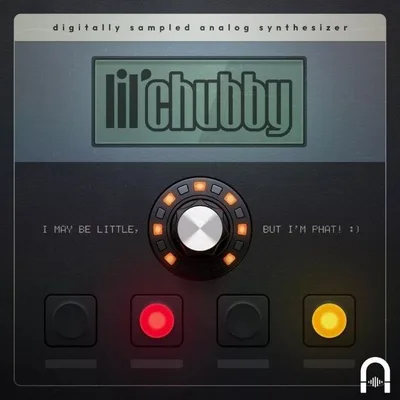
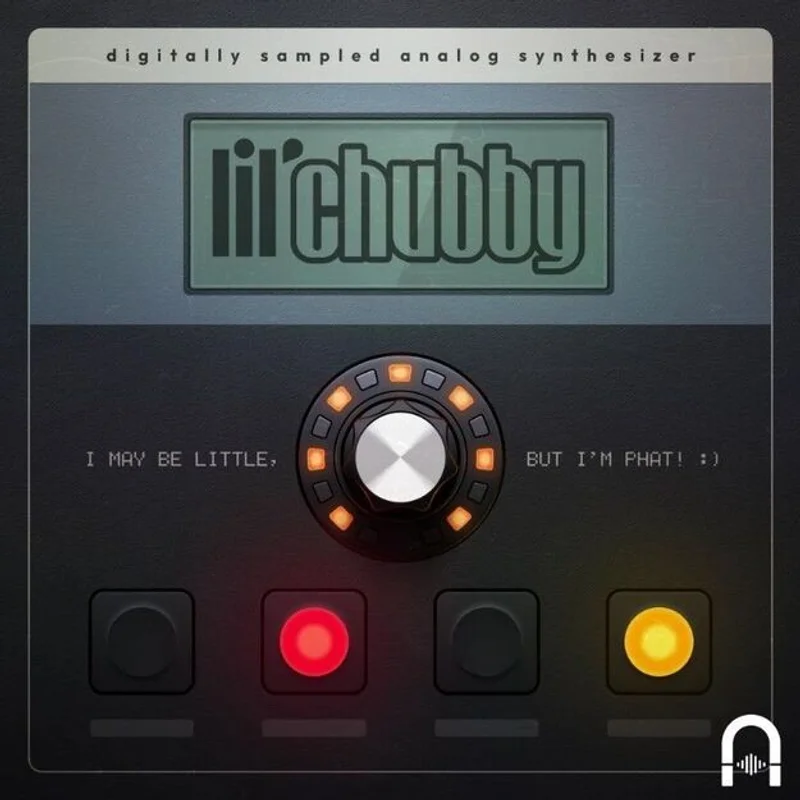
The Lil' Chubby Expansion Pack is a 2 GB, 80-preset sample pack for Tracktion's Attracktive sampler, built around recordings of the Moog Little Phatty synthesizer. It has a full price and a discounted sale price. That's the whole pitch.
We loaded it up mid-session on a lo-fi hip-hop track that needed a bass line with more character than our go-to subtractive patches were giving us. The track sat around 87 BPM. We needed something with a little wobble in the low-mids, something that felt played rather than programmed.
About three presets in, we found it. A thick, slightly overdriven bass patch with a slow filter sweep built in. It wasn't perfect out of the box, but it was the right raw material. That told us something useful about what this pack is and what it isn't.
This review is for producers who already own Attracktive, are eyeing the Tracktion ecosystem, or are wondering whether a $20 Moog-flavored sample pack is worth the space on their drive.
First Impressions: Smaller Than the Marketing Suggests
Installation is straightforward. You get a 2 GB download, the samples load directly into Attracktive, and the 80 presets appear in the browser. No serial codes. No iLok. No drama.
The preset library is organized by type: basses, leads, pads, and some weirder textural patches Tracktion loosely calls "quirky hooks." That last category is either a love or a hate depending on your sessions. We found maybe six of them actually useful.
The Moog Little Phatty lineage is audible. The Little Phatty launched in 2007 as a scaled-down Voyager, keeping the 24 dB Ladder filter and dual oscillators. Those two things are responsible for most of the warmth people associate with the Moog name. The samples here carry that low-mid density. Not a plugin emulation, actual samples. That matters.
First impression: it's fine. Better than fine for the price. Not a revelation.
Getting It Into a Real Workflow
Here's the friction. You need Attracktive. That's not surprising, but it's worth saying clearly: if you're not already in the Attracktive ecosystem, this pack costs you more than $20 before you hear a single sound.
We ran the bass presets through a session in Bitwig. Loading time per preset averages around two seconds on an M2 MacBook Pro. Not instant, but not annoying either.
The sampler integration is where things get interesting. Attracktive lets you remap velocity layers, adjust filter cutoff, and tweak the amplitude envelope directly without leaving the plugin. We took that lo-fi bass patch and rolled the filter cutoff down to about 60%, added a 40ms attack. It went from "warm lead" to "chest-thump bass" in under a minute. That kind of fast shape-shifting is where sample-based instruments beat soft-synths for workflow speed.
One frustration: the preset naming is inconsistent. "Chubby Bass 04" tells you nothing about the character. We had to audition almost everything before building a short-list. That takes time in a live session.
The Attracktive sampler review goes deeper on the host instrument itself. Worth reading before you commit to the ecosystem.
What It's Genuinely Good At
The low-mid body. We ran a Lil' Chubby bass patch against a similar patch from a competing Moog-style soft synth. At 200Hz the Lil' Chubby preset had a natural warmth that the soft synth sounded like it was working hard to fake. Actual sampled hardware has a density in the 150-400Hz range that modeled synthesis still struggles to replicate convincingly.
We tested the lead presets on a synth-pop arrangement. The brightness peaks around 3kHz without getting shrill. You can sit a Lil' Chubby lead over a dense mid-section without it disappearing or cutting ears. That's a real-world win.
Eighty presets is a lot for $20. For context, some competitors charge more for fewer presets in a similar Moog-inspired category. The 4,500 underlying samples also mean velocity and dynamic response feel layered rather than flat. Hit a key softly and you get a different tonal character than when you hit it hard. That's satisfying.
For lo-fi, indie pop, funk, and laid-back hip-hop, this pack is genuinely underrated. It's not trying to be a concert grand. It's trying to be a fun, warm, slightly cheeky synth voice. It succeeds.
The Rough Edges
There are no independent professional reviews of this pack. None. All existing coverage is marketing copy from Tracktion and retailer listings. We're writing the first critical take here, which means we're also working without a broader reference frame from other engineers who've lived with it across different sessions.
That's not automatically a red flag. It does mean you're buying on spec to some degree.
The "quirky" presets are a problem. About 12 of the 80 presets feel like they were designed for a product demo rather than a real track. Wobbly arpeggiated patches with a lot of pitch modulation and not much practical application. Novelty sounds that'll entertain you for 30 seconds and then sit unused. That's 15% of the library you'll probably never touch.
Two gigabytes is also a slightly odd footprint in 2026. No t large enough to feel comprehensive, not small enough to call lightweight. It sits in an awkward middle.
And the macOS 10.13 minimum compatibility spec is starting to age. If you're on a current Apple Silicon machine, check that your Attracktive version is properly optimized before buying into the expansion.
Who This Is Really For
- ✅ Buy if you already own Attracktive and want a warm Moog-flavored palette fast without building patches from scratch.
- ✅ Buy if you produce lo-fi, indie pop, funk, or chill hip-hop and want analog bass and lead character at a price that doesn't hurt.
- ✅ Buy if you're buying into BoxPro anyway. As part of that bundle, Lil' Chubby effectively costs you almost nothing per pack.
- ❌ Skip if you don't own Attracktive. The additional cost makes this a different proposition entirely.
- ❌ Skip if you need a full-featured Moog emulation with mod matrix, real-time synthesis, and deep sound design. This is samples, not a synthesizer. best Moog emulation plugins covers that territory.
- ❌ Skip if genre-specific Moog libraries exist for your style. There are more focused packs for EDM and cinematic scoring that'll serve you better.
Score Breakdown
| Category | Score | Notes |
|---|---|---|
| Sound Quality | 3.5/5 | Real Moog Little Phatty samples carry genuine 24dB Ladder warmth; not a soft synth approximation |
| Value for Money | 4.0/5 | 4,500 samples and 80 presets at $20 is hard to argue with; BoxPro makes it near-free |
| Ease of Use | 3.0/5 | Poor preset naming costs you browsing time; preset organization could be smarter |
| Features | 3.0/5 | Solid content count but about 15% of presets lean novelty; no standalone use without Attracktive |
| CPU Efficiency | 4.5/5 | Sample playback is light; won't tax even a mid-spec machine |
| Overall | 3.6/5 | Genuinely useful for the right producer in the right ecosystem; limited appeal outside it |
Alternatives Worth Looking At
If you want a proper synthesizer rather than a sample pack, Arturia Mini V review is our starting point for Moog-style analog emulation. The mod routing is deeper, the sound design ceiling is higher, and it doesn't require a host sampler.
For producers specifically chasing that Little Phatty bass character in a more flexible format, best analog synth plugins for bass covers five options across a wide price range with real sonic comparisons.
If the BoxPro bundle is on your radar, Tracktion BoxPro bundle review looks at all 14 packs together, which changes the value calculus significantly.
Buy It, or Leave It?
On discount, Lil' Chubby is a sensible add-on if you're already using Attracktive. The Moog Little Phatty samples deliver a low-mid character that's genuinely harder to fake with synthesis. The bass presets especially are worth the money.
At $20 full price, it's still fair. Not brilliant. Fair.
If you're not in the Attracktive ecosystem, this isn't the pack that should bring you in. And if you produce EDM, cinematic, or anything that needs real-time synthesis control, you'll hit the ceiling of what samples can do faster than you want to.
But here's the honest summary: we came in skeptical of a $20 pack with zero independent reviews and left with a handful of bass patches we'll actually use. That's not nothing. It's just not everything the Moog name implies.
Frequently Asked Questions
Does Lil' Chubby work without Attracktive?
No. The pack is built exclusively for Attracktive and BioTek 3. You can't load it into Kontakt, HALion, or any other sampler. If you don't own Attracktive, you'll need to factor that cost in before the pack is usable.
Is Lil' Chubby actually sampled from a real Moog Little Phatty?
Tracktion's marketing positions it as derived from the Moog Little Phatty lineage, emphasizing the 24 dB Ladder filter and dual oscillator character. The product is sample-based rather than a software emulation, which means the recordings capture actual hardware behavior. We'd describe the low-mid density as consistent with recorded Moog hardware rather than modeled synthesis.
Is the BoxPro bundle worth it just for Lil' Chubby?
No. Don't buy BoxPro for one pack. BoxPro is worth considering if you want broad coverage of the Attracktive ecosystem across many packs, presets and samples. Buying it for a single 2 GB expansion is poor math.
How does Lil' Chubby compare to dedicated Moog emulation plugins?
They do different things. Lil' Chubby gives you pre-recorded snapshots of Moog sounds, fast to deploy, zero synthesis overhead. Dedicated emulations like Arturia Mini V or the free VCV Rack modules give you a full synthesis engine you can dial in from scratch. If you need to design sounds, use an emulation. If you need Moog flavor fast in a session, Lil' Chubby is quicker.