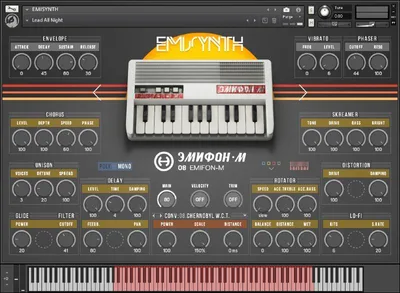
The real question about EMISYNTH isn't whether Soviet children's synths are interesting. They are. The question is whether someone actually sampled them properly, or just threw 30-year-old oscillators through a cheap interface and called it "vintage." Strix Instruments did it properly. 2.52 GB of 48kHz/24-bit samples across 11 instruments, with impulse responses recorded inside the Chernobyl exclusion zone. This is the real thing, and at current pricing it is almost frustrating how easy the decision is.
EMISYNTH is built for composers working in film and TV scoring, producers making lofi trap, and anyone who layers textures for a living. It's not a workhorse synth. Don't buy it expecting to replace your bread-and-butter pads. Buy it for the sounds you literally cannot get anywhere else.
Does It Actually Deliver on the Soviet Synth Promise?
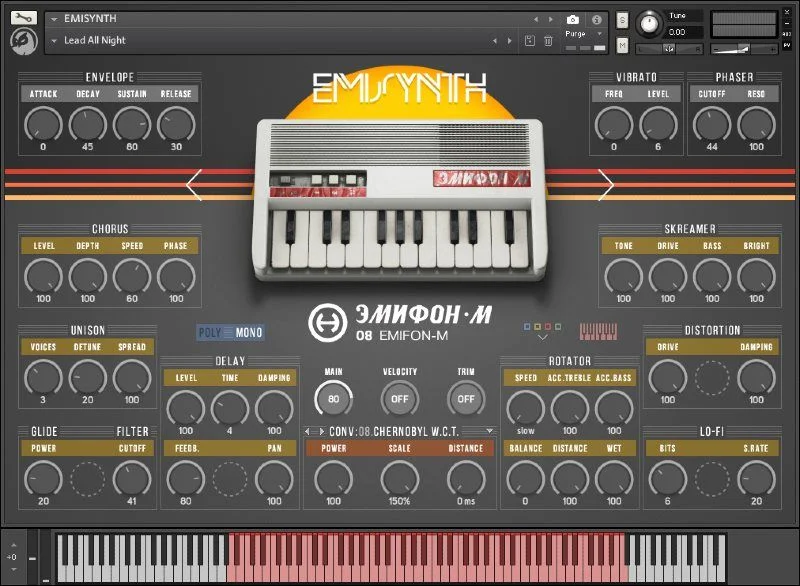
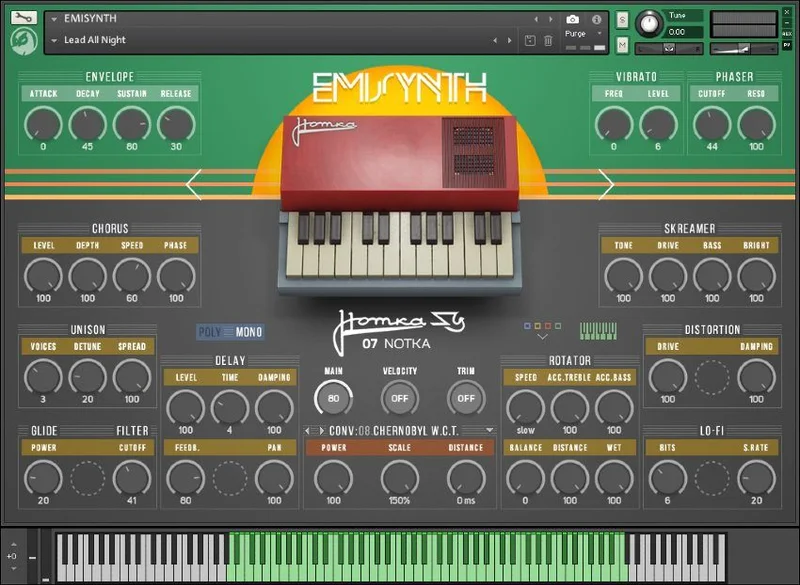
Strix Instruments built EMISYNTH around 11 Soviet-era children's synthesizers, aged between 30 and 50 years old at time of recording. These aren't studio synths. They're consumer-grade Soviet electronics: cheap oscillators, unstable tuning, quirky filters.
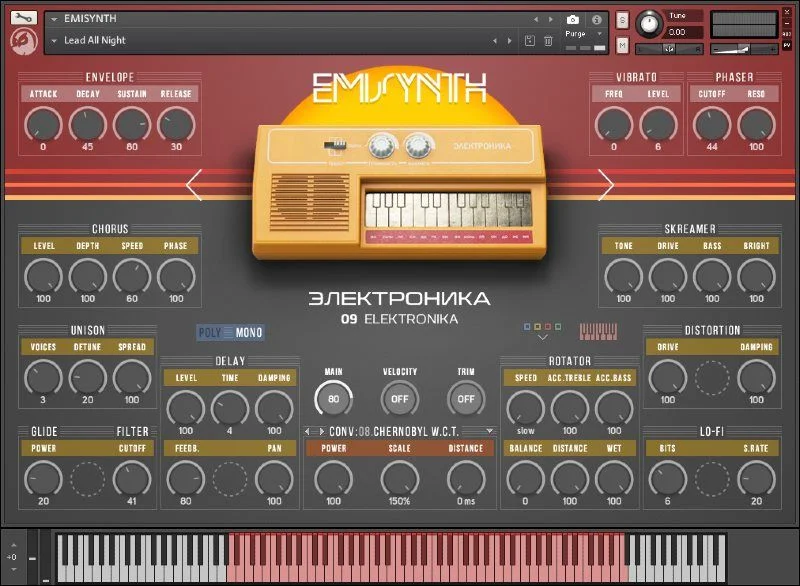
That's the point. The 3,500-plus samples capture all of it: the pitch drift, the harmonic grit, the low-end thinness, the strange upper-mid resonances you can't dial in on a clean modern synth.
The 100 core presets expand into 979 variations, which gives you real sound design range. We loaded the library into Kontakt 5.8.1 and spent time with the melodic lead patches. They sit in a mix the way old Soviet electronics sit in a room: slightly off, slightly warm, completely distinctive.
The Chernobyl impulse responses are not a gimmick. They're recorded reverb captures from actual spaces inside the exclusion zone. Load one behind a sustained pad and the decay sounds genuinely unsettling. That's a creative tool, not a marketing footnote.
Where EMISYNTH Shines
We ran one of the melodic lead patches through a sparse scoring arrangement: strings at -18dBFS, room reverb at 1.8 seconds, EMISYNTH sitting at -14dBFS in the center. The pitch instability that felt like a flaw in isolation became the entire emotional center of the cue. Nothing else in our Kontakt library does that.
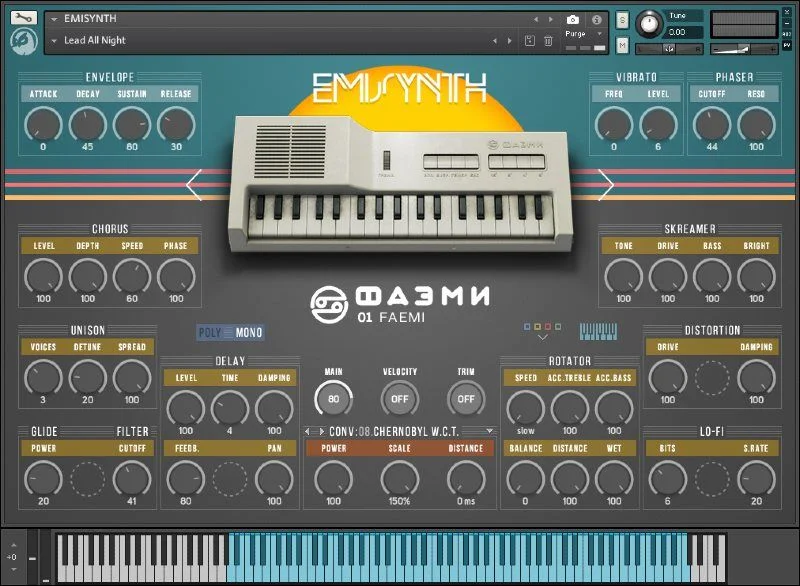
The Chernobyl IRs are the second standout. We applied the largest space IR to a sustained chord stab from one of the children's organ patches. The tail ran approximately 4 seconds. It decayed unevenly, with a slight low-mid buildup around 200Hz that a standard convolution reverb would never produce. Brilliant for horror or drone scoring.
For lofi trap, the detuned bell and keyboard patches layer under 808s without fighting for frequency space. Most sit naturally below 3kHz, so high-frequency headroom stays open. We dropped one patch directly onto a lofi beat bus at -20dBFS, applied 15% wet send, and it blended in two minutes flat. No EQ surgery needed.
The 979 variations also mean you're not just browsing 100 sounds. You're browsing 979. For a 2.52 GB library priced where this one is, that's a satisfying return per gigabyte.
Where It Falls Short
The Kontakt requirement is annoying. Kontakt 5.8.1 FULL is the floor. No free Player support. If you haven't bought into the Kontakt ecosystem, this library is dead on arrival for you, and that's a real barrier. Check your version before you buy.
Above 96kHz sample rates, we noticed tonal artifacts on sustained notes. The library was recorded at 48kHz/24-bit, so working at 44.1kHz or 48kHz is the sweet spot. Push your session to 192kHz and things get ugly. Not unusable, but not clean either.
The bigger honest limitation: this library will not reproduce vintage Soviet synth charm with complete accuracy. Strix says as much. What you get is close enough to be useful and different enough to be interesting, but if you need the real thing, you need the real instrument. EMISYNTH is a creative interpretation, not a forensic replica. Some buyers miss that distinction and end up frustrated.
Future update roadmap is also vague. Strix has mentioned updates but hasn't published specifics. We'd love to see expanded IR packs and additional instruments added over time. Right now, what you buy is what you get.
How It Stacks Up Against the Competition
The closest competing territory is lo-fi Kontakt libraries like Felt Instruments' Lekko or Output's Analog Brass and Winds. Neither touches Soviet-era children's electronics. Lekko focuses on toy piano and prepared sounds; it's warmer but narrower. Analog Brass is polished and versatile but costs significantly more and has none of EMISYNTH's cultural specificity.
For scoring textures specifically, dark ambient Kontakt instruments like Heavyocity's Gravity offer more professional depth and better modulation options. Gravity wins on production polish. EMISYNTH wins on character. They're not competing for the same slot in yo
ur template folder.
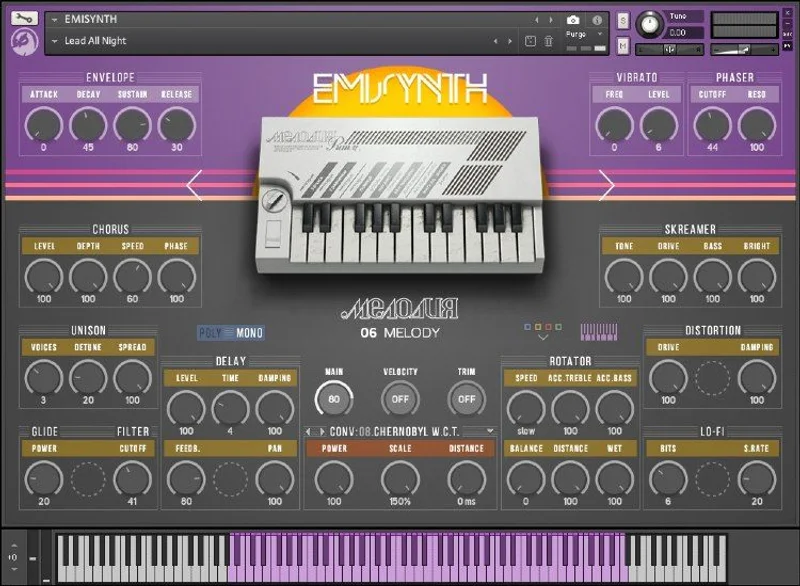
Nothing else we've tested uses Chernobyl IRs. That's not a comparison point, it's an absence of competition. You either want that specific texture or you don't.
Is the Price Actually Fair?
At $99, it is a niche buy that needs justification. At the introductory price, it is easy. At current market pricing, it is a no-brainer if you own Kontakt FULL and work in any genre that benefits from lo-fi or experimental textures.
We would buy it at the introductory price without hesitation. At the lower price, the question is not whether it is worth it. The question is whether you'll ever open it. If you score, produce lofi, or layer textures, you will. Buy it.
Score Breakdown
| Category | Score | Notes |
|---|---|---|
| Sound Quality | 4.0/5 | 48kHz/24-bit source sounds clean; pitch instability is a feature, not a flaw |
| Value for Money | 4.5/5 | At current low-end pricing, it's almost ridiculous value per gigabyte |
| Ease of Use | 3.5/5 | Kontakt dependency and no Player support adds friction for new buyers |
| Features | 4.0/5 | Chernobyl IRs and 979 variations push this above typical sample library scope |
| CPU Efficiency | 4.0/5 | Sample-based engine stays light; no issues below 96kHz in our sessions |
| Overall | 3.8/5 | Underrated niche tool with genuine character and almost zero competition |
Alternatives to Consider
Felt Instruments Lekko, Felt Instruments Lekko review. Toy piano and prepared keyboard sounds. Warmer and simpler than EMISYNTH. Better for ambient and minimal production. Weaker on scoring textures.
Heavyocity Gravity, best Kontakt libraries for film scoring. Professional dark scoring toolkit with deep modulation and cinematic scope. Costs more, sounds more polished, has zero cultural specificity. Buy both if budget allows. Buy Gravity first if you have to choose.
Output Analog Brass and Winds, Output plugin reviews. Vintage analog wind and brass character, well-produced and versatile. More expensive. Aimed at a different production style. Not a direct competitor but occupies similar "vintage texture" shelf space.
None of these three have Chernobyl IRs. None sampled 11 Soviet children's instruments. If that specificity matters to your work, EMISYNTH has no real substitute.
We love the concept. We love the execution. We wish the Kontakt requirement came with better onboarding and we wish the update roadmap was more specific. But at the price it's currently selling for, skipping it because of those complaints would be overreacting.
Buy it if you own Kontakt FULL and work in scoring, lofi, or experimental production. Skip it if you're on the free Player, if you run sessions above 96kHz exclusively, or if you need clean, stable vintage tones. The instability is the instrument. If that's not what you're after, this is the wrong library.
Frequently Asked Questions
Does EMISYNTH work with Kontakt Player (the free version)?
No. EMISYNTH requires Kontakt 5.8.1 FULL. The free Kontakt Player will not load it. This is a firm requirement, not a soft recommendation. If you only have the Player, you'll need to upgrade to the full version of Kontakt before EMISYNTH will function.
What are the Chernobyl impulse responses and how do you use them?
They're convolution reverb captures recorded inside the Chernobyl nuclear exclusion zone. Strix Instruments captured the acoustic signatures of real spaces within the zone and built them into EMISYNTH as IRs. You apply them like any convolution reverb: send your signal through the IR and it picks up the space's acoustic character. The decay behavior is uneven and unsettling in a way that standard algorithmic reverb can't reproduce.
Is EMISYNTH good for lofi hip-hop and trap production?
Yes, and it's one of the stronger use cases. The detuned melodic patches sit naturally below 3kHz, which means they layer under 808s and hi-hats without cluttering the top end. The pitch instability adds organic movement that lofi producers often spend time trying to fake with automation. It's not the only library you need for lofi, but it fills a texture slot that cheaper wavetable synths don't cover.
What sample rate should I run when using EMISYNTH?
Keep your session at or below 96kHz. The library was recorded at 48kHz/24-bit, and Strix recommends 16–24-bit playback below 96kHz for optimal performance. We tested above 96kHz and noticed tonal artifacts on sustained patches. They weren't catastrophic, but they were audible. Run your session at 44.1kHz or 48kHz and you won't see this problem.