Soundiron's Solo Duduk sits in a small, contested category, and two names come up every time it does: 8Dio's Silk and Sonuscore's Duduk. This review is going to land in a specific place: Solo Duduk is the most playable of the three note-for-note, but it's also the most frustrating to actually live inside. Whether that trade-off works for you depends entirely on what you're building and how much patience you have for a UI that fights back.
The library runs in Kontakt 6.2.2 full retail (no Player support), costs $24.50, weighs in at 4.2 GB installed, and gives you 2,545 stereo samples at 24-bit / 48 kHz. It's built for composers scoring film, TV, or world-music productions who need a duduk they can actually play chromatically. If you just want something to drop in and sound convincing in thirty seconds, that's a different answer.
How It Compares Out of the Box
Solo Duduk is rawer, closer, and more exposed than some competing libraries. That's not a flaw, it's a character choice, but you need reverb from the start or it sounds isolated in an uncomfortable way.
Against Sonuscore's Duduk, the contrast is different. Sonuscore's Arc control makes vibrato swell almost automatic, which is satisfying for slow, emotional passages. But push Sonuscore into faster melodic runs and it starts to struggle. Solo Duduk doesn't have the same emotional-immediacy shortcut, but it handles quicker lines with more control. Owners consistently call it the most playable note-by-note option in the category, and that reputation is earned.
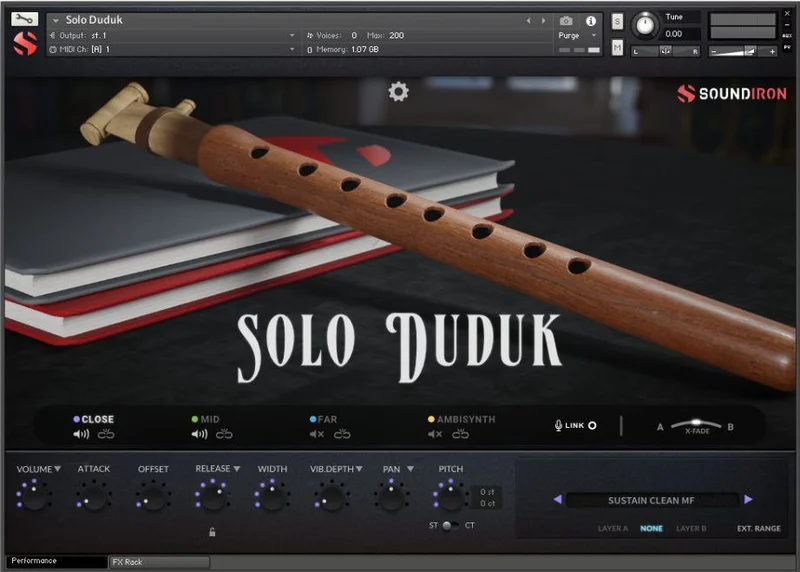
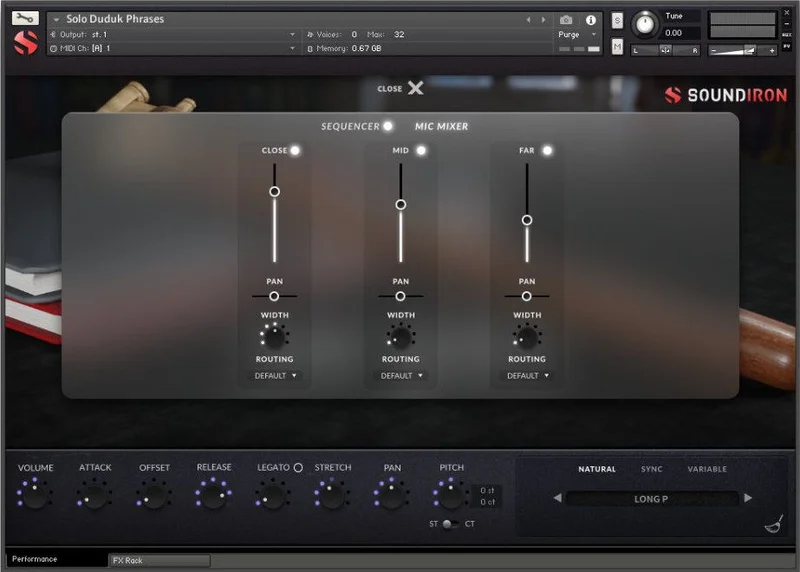
The 19 articulations cover serious depth. Close, Mid, and Far mic positions give you staging options for flexible placement control.
Performance Deep Dive
The 19 key-switchable articulations cover true legato, clean sustains, vibrato sustains, staccato, phrases, expressions, and effects. That's a serious spread. The true legato is where the library makes its strongest argument: transitions between notes are smooth in a way that actually convinces the ear on slow melodic lines.
The Expression knob controlling reed buzz intensity is convincing on slow lines and works well with wind controllers. Push past moderate velocity, though, and the instrument starts to thin out and harden in a way that sounds more synthetic than acoustic. That's a real ceiling.
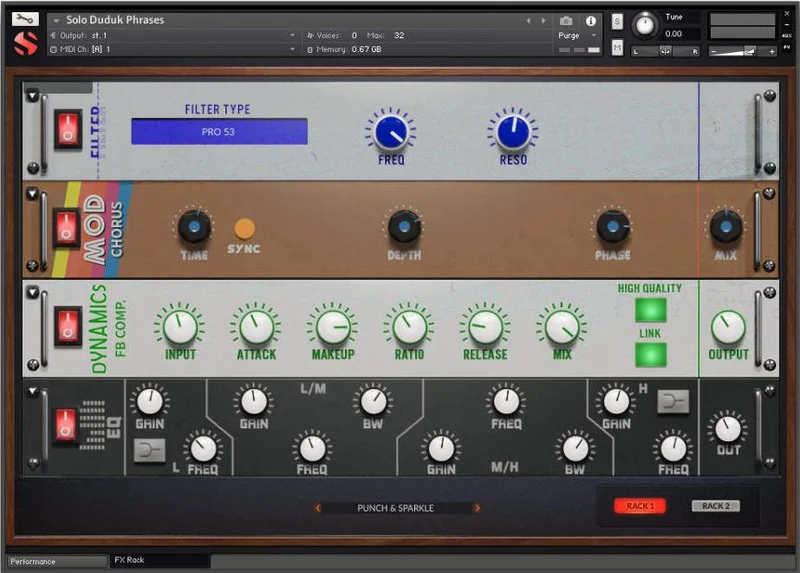
The 20 custom FX and ambient presets, plus a full convolution reverb with custom rooms, halls, and chambers, mean you can get spatial quickly. But owners report that ambiences are missing from some downloads, so check your install before your session depends on them. The mic mixing setup assigns mics between layers rather than giving you direct level faders, which is an annoying workflow constraint that slows things down.
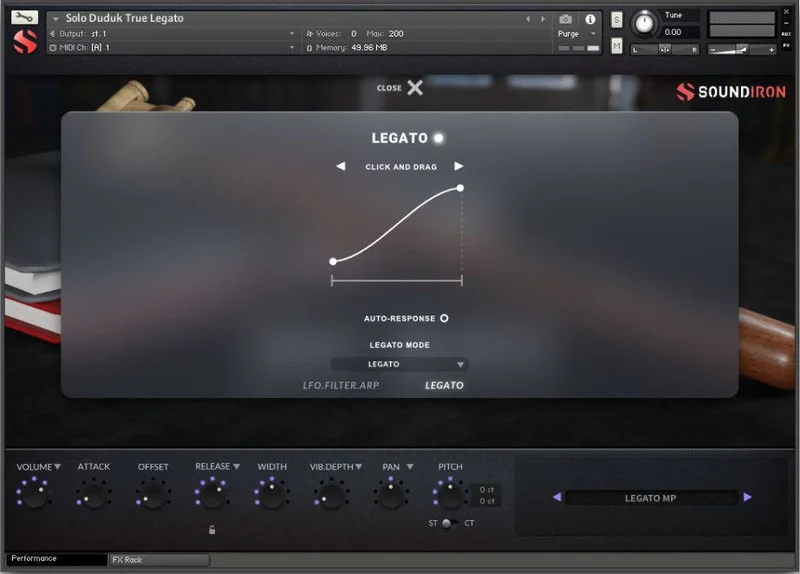
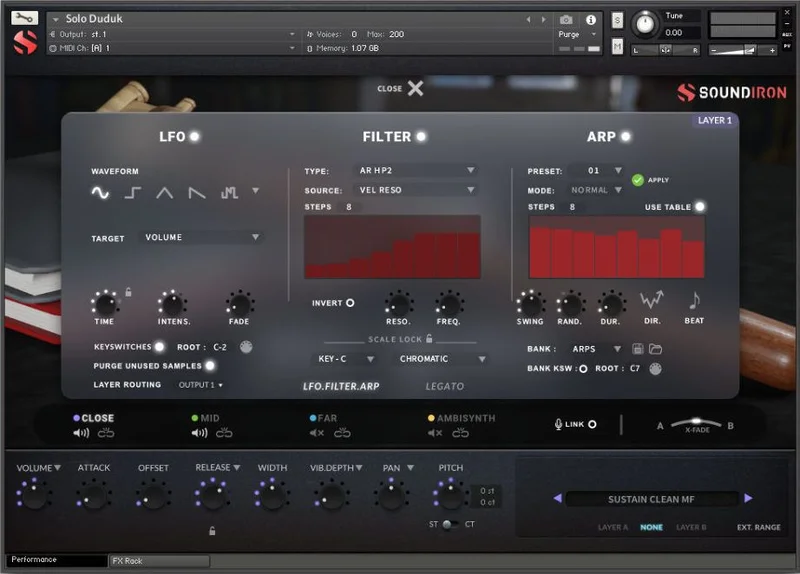
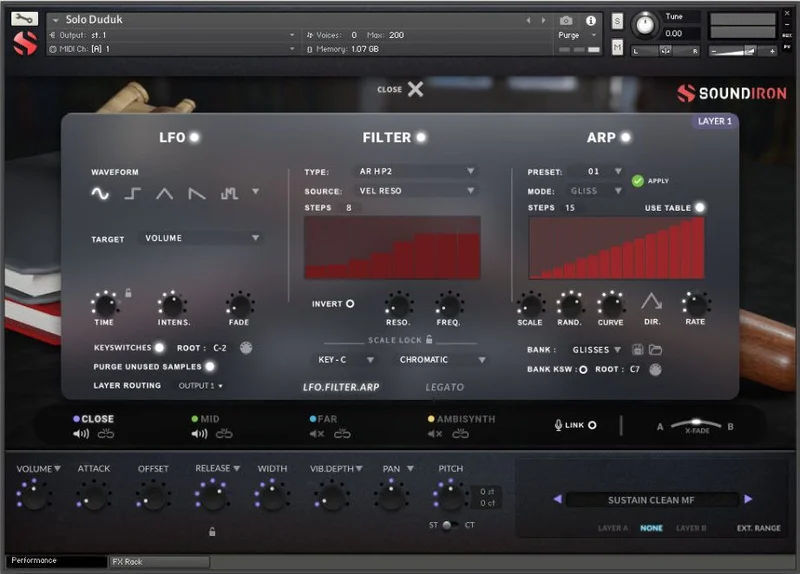
The UI is the honest low point. The layer design is described by owners as nearly unintelligible. There are LFO, filter, glide, and arpeggiator controls on the interface, but the documentation for how the layers interact is thin. If you walk away from a project and come back a week later, you may not remember what you built.
Where It Wins
Chromatic playability is where Solo Duduk is genuinely ahead. If your production calls for a melodic duduk line across multiple octaves, this library handles it more gracefully than the alternatives. The legato engine is clever, and the transitions don't clunk or glitch the way some cheaper libraries do mid-phrase.
The Expression reed buzz control is convincing on slow lines. It delivers the kind of detail that makes a cue feel lived-in rather than programmed.
Nineteen articulations at $24.50 is also an honest value proposition in terms of raw coverage. The three mic positions give you placement options without reaching for a third-party IR library immediately.
Wind controller users get more out of this than keyboard players. The expressive dynamics respond well to breath and pressure data, which is a real differentiator if that's your setup.
Where the Competition Wins
8Dio's Silk wins on polish and mix-readiness. If you're working in a dense orchestral arrangement and need the duduk to sit without fighting everything else, Silk's production quality does that work for you. Solo Duduk asks more of the mix engineer.
Sonuscore's Duduk wins on emotional immediacy. The Arc vibrato control gives slow, lyrical passages an automatic expressiveness that Solo Duduk requires more manual work to achieve. If your cues are predominantly slow and atmospheric, Sonuscore gets you there faster with less frustration.
Both competitors are easier to navigate. The Sonuscore interface is more intuitive; Silk's preset logic is more predictable. Solo Duduk's layer system is the weakest UI in the comparison, and that's not a minor issue when you're mid-session trying to dial in a specific sound quickly.
The requirement for external reverb to sound naturalistic is also a real workflow cost. The built-in convolution reverb helps, but owners are clear that the dry sound needs treatment.
Who Should Buy Which
- ✅ Buy Solo Duduk if you need a chromatic, note-by-note duduk and prioritise legato smoothness over ease of use.
- ✅ Buy Solo Duduk if you use a wind controller and want expressive reed buzz dynamics that respond to breath data.
- ✅ Buy Solo Duduk if you want maximum articulation coverage at $24.50 and are willing to invest time learning the layer system.
- ❌ Skip Solo Duduk if you need a library that sounds great dry out of the box with no external reverb.
- ❌ Skip Solo Duduk if your cues are predominantly slow and atmospheric and you want emotional expressiveness without manual setup. Sonuscore handles that better.
- ❌ Skip Solo Duduk if a confusing UI kills your creative momentum. The layer system is genuinely frustrating and the documentation won't save you.
Specs & Technical Details
| Developer | Soundiron |
| Price | $24.50 |
| Plugin Format | Kontakt Instrument (.nki), requires Kontakt 6.2.2 full retail |
| OS Support | Mac (OSX 10.12 or higher) / Windows (7 or higher) |
| Activation | N/A |
| CPU Usage | N/A |
| Trial Available | N/A |
| Version Reviewed | N/A |
Score Breakdown
| Category | Score | Notes |
|---|---|---|
| Sound Quality | 4.0/5 | Legato and reed buzz are convincing; high-velocity tones thin out and need external reverb |
| Value for Money | 3.5/5 | 19 articulations and three mic positions at this price point is fair; UI friction costs real time |
| Ease of Use | 2.5/5 | Layer design is nearly unintelligible and documentation is thin; workflow frustration is real |
| Features | 4.0/5 | 19 articulations, 24 presets, 20 FX presets, three mic positions, full FX rack |
| CPU Efficiency | N/A | Not verifiable from available data |
| Overall | 3.5/5 | Strong instrument held back by a genuinely difficult interface and inconsistent download completeness |
Alternatives to Consider
| Library | Best For | Weakest Point | Wins Over Solo Duduk When... |
|---|---|---|---|
| 8Dio Silk | Dense orchestral mixes needing a polished, mix-ready top end | More produced sound means less raw character | You need the duduk to sit in a full arrangement without fighting other instruments |
| Sonuscore Duduk | Slow, atmospheric, emotionally immediate passages with automatic vibrato swell via Arc control | Limited to slow playing; faster melodic runs expose its limits | Your cues are predominantly slow and lyrical and you want expressive results without deep programming |
If you're writing solo melodic lines where the duduk is the focal point of a cue, Solo Duduk is the right tool. If it's a texture sitting under strings, Silk earns its place. If the whole cue is a slow elegy and you need to work fast, Sonuscore gets you there with less grief.
Solo Duduk at $24.50 is a library that rewards the composer willing to spend real time with it. The legato engine and reed buzz Expression control are the best in this comparison for detailed, chromatic playing. But the layer system is legitimately annoying, the UI will confuse you mid-session, and the dry sound needs reverb before it breathes properly in a mix. Buy it if you do a lot of note-by-note duduk writing and you use a wind controller. If you're looking for a fast emotional result on slow cues, Sonuscore fits better. If you want polished and mix-ready, Silk is the one.
Frequently Asked Questions
Does Solo Duduk work with Kontakt Player?
No. It requires the full retail version of Kontakt 6.2.2 or higher. Kontakt Player won't load it. If you're running Native Access without a full Kontakt licence, this library isn't accessible to you.
How does the Expression knob actually work?
The Expression knob controls reed buzz intensity, which simulates the physical behaviour of the duduk's wide double reed. Owners find it most convincing on slow melodic lines and when paired with a wind controller sending breath data. At high velocity or on faster passages, the effect becomes less natural and the instrument can tip into sounding synthetic.
Are the missing ambiences a known issue?
Some owners report that ambience content is absent after download, which suggests an installation or download integrity issue rather than a deliberate omission. It's worth verifying your download is complete before your session depends on those presets. Checking with Soundiron support directly is the right move if content appears to be missing.