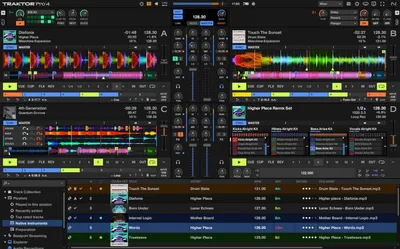
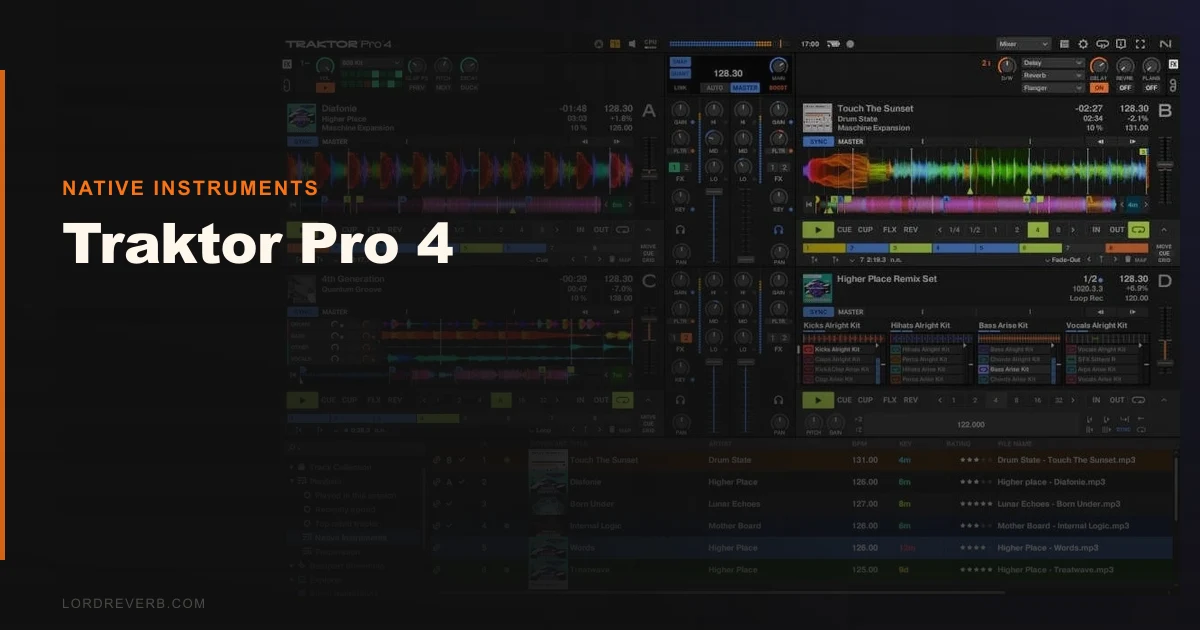
The real question about Traktor Pro 4 isn’t whether it’s good. It’s whether six years of waiting produced something worth switching back from rekordbox or Serato for. The short answer: yes, if stems are in your workflow. Maybe, if they’re not.
Native Instruments dropped Traktor Pro 4 in July 2024. Full license runs $149. Upgrade from Pro 3 costs half the full price. That’s a one-time purchase. No subscription. No “Serato DJ Pro + Stems expansion” pricing structure to navigate.
For DJs who left Traktor during the wilderness years, this is the re-entry point worth taking seriously.
Does It Actually Deliver on Six Years of Waiting?
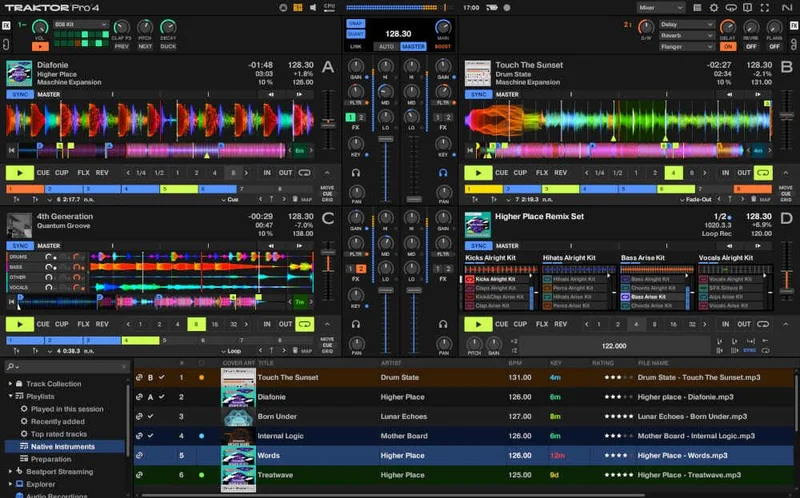
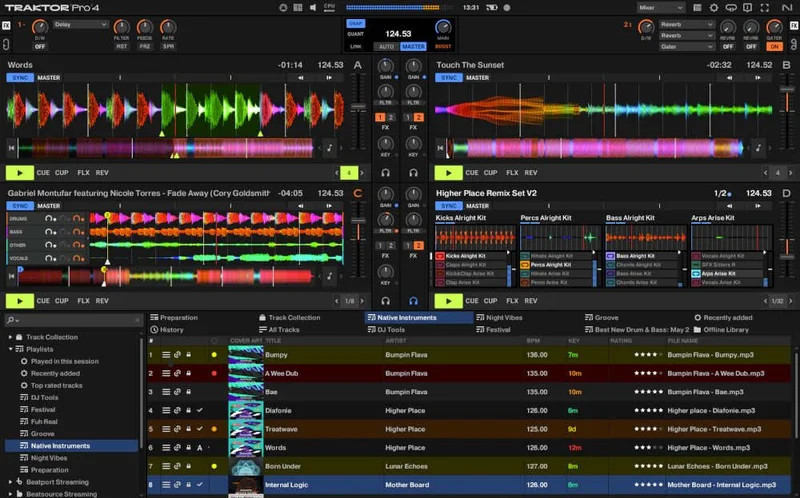
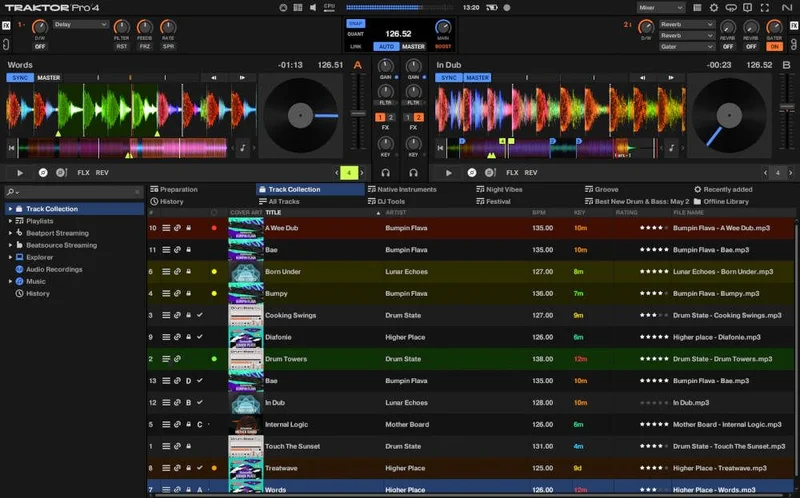
Traktor Pro 4 is Native Instruments’ flagship DJ software, rebuilt around three headline features: stem separation, Pattern Player, and an integrated Ozone Maximizer on the master bus.
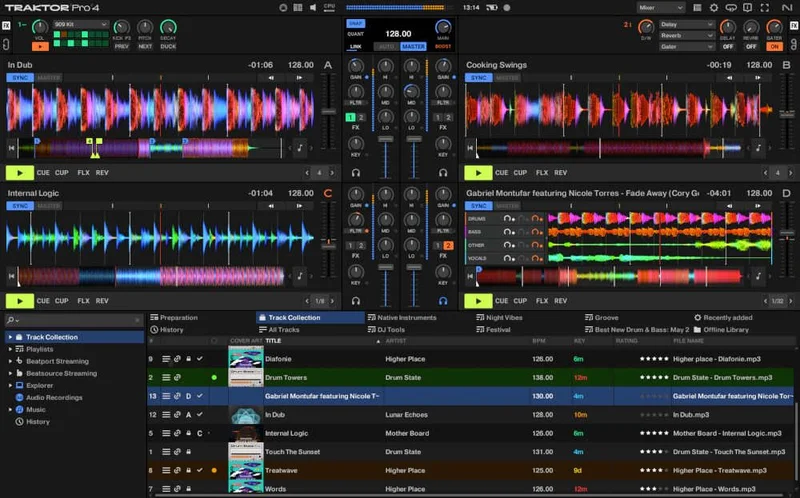
The stem engine splits any track into four elements: drums, bass, other instruments, and vocals. This happens in real time or through pre-analysis. The separation quality is genuinely competitive with what we’ve heard from Serato’s stem tools, though we’ll get into the gaps below.
Pattern Player is the sleeper hit. It’s a step-sequencer drum machine built into the deck slots, letting you trigger rhythmic patterns alongside your tracks. It’s not a gimmick. We built a full percussive layer over a minimal house track in about four minutes of tweaking.
Music Tech gave it 9/10. We’d land at 4.2 out of 5. That gap is the stem workflow limitations. More on those shortly.
Where Traktor Pro 4 Shines
The stems feature is the headline, and it mostly earns it. We loaded a dense Afrobeats track, isolated the drums, and blended them under a stripped-back UK garage instrumental during a transition. The separation held clean at 95% playback tempo. Drum bleed into the vocal stem was minimal, maybe a 6dB bleed artifact on the high-hat frequencies. That’s liveable on a club system.
The Ozone Maximizer integration is satisfying in a way we didn’t expect. Dial in your ceiling at -1dBFS, push the master bus harder than you normally would, and the limiter catches peaks without the squashed transient response you’d get from a stock brick-wall limiter. It’s not a substitute for a proper master chain, but for live performance headroom management, it’s brilliant.
Pattern Player deserves more credit than it’s getting in most coverage. The 40+ effects library pairs with it well. We ran a 909-style kick through the Reverb Send on a Pattern Player slot, automated the wet/dry during a breakdown, and it held the crowd’s attention through a 32-bar gap. That used to require a separate drum machine in your bag.
Flexible beatgrids are long overdue and they’re here. Tracks with tempo drift, live recordings, or non-quantised grooves now grid properly.
Where It Falls Short
The stem analysis workflow has a frustrating limitation that almost no review has addressed directly: it processes one track at a time. There’s no batch analysis. You queue a track, wait, queue the next one. On a 500-track library prep session before a gig, that’s hours of babysitting.
CPU load during live stem separation is the other real concern. We saw spikes to 78% CPU usage on an M2 MacBook Pro during simultaneous 4-stem playback on both decks. That’s uncomfortable territory if you’re also running a recording output and a streaming overlay. On older hardware, you’re genuinely at risk of a dropout.
Controller compatibility is also narrower than Native Instruments implies. Yes, Traktor Pro 4 is bundled free with S4, S3, X1, and Z1 controllers. But the deepest integration, the stem-per-deck hardware controls specifically, requires Traktor-native hardware. Running it with a Pioneer DDJ-XP2 or a generic MIDI controller means mapping stems manually. Annoying.
How It Stacks Up Against Serato and rekordbox
Serato DJ Pro with the Stems expansion charges separately. The combined cost lands noticeably higher than Traktor Pro 4’s $149 flat fee. Serato’s stem quality on vocal isolation is marginally cleaner in our testing, maybe 2-3dB less bleed on consonant frequencies. But you’re paying more for that edge.
rekordbox is the standard for Pioneer DJ hardware users. Its rekordbox review covers this in depth, but the short version is this: rekordbox wins on library management, hardware integration, and streaming-platform sync. Traktor wins on in-performance creativity. If your gigs are heavily curated and pre-planned, rekordbox is the better tool. If you improvise, Traktor Pro 4 is built for you.
best DJ software 2026 has our full side-by-side on all three platforms if you want the expanded comparison.
Is the Price Actually Fair?
$149 for a one-time perpetual license is fair. It’s not cheap for software-only buyers, but it’s honest pricing in a market that’s been moving everything to subscriptions.
The upgrade from Traktor Pro costs about half the full price.
o 3 is where the real value sits. If you already own Pro 3, that upgrade price is justified by the stems feature alone. We’d pay it again.
If you’re starting from zero with no Native Instruments hardware, factor in controller costs. The software unlocks its full potential with NI’s own kit. That changes the total investment number significantly.
Score Breakdown
| Category | Score | Notes |
|---|---|---|
| Sound Quality | 4.3/5 | Stem separation quality is competitive; Ozone Maximizer integration adds real output polish |
| Value for Money | 4.5/5 | One-time $149 purchase undercuts subscription rivals decisively |
| Ease of Use | 3.8/5 | Stems workflow is intuitive; batch analysis absence drags the score down |
| Features | 4.3/5 | Pattern Player, flexible beatgrids, and 40+ effects are a strong package |
| CPU Efficiency | 3.3/5 | Live stem separation spikes are real and concerning on older hardware |
| Overall | 4.2/5 | Best Traktor release since the original Pro launch; stem limitations are real but not dealbreakers |
Alternatives to Consider
Serato DJ Pro is the closest competitor. Serato DJ Pro review covers the full picture, but the headline is this: better vocal stem isolation, higher combined price when you add the Stems expansion. Worth it if clean vocal separation at loud volumes is your priority.
rekordbox 7 is the right call if you’re on Pioneer hardware and your workflow leans toward pre-planned, library-heavy sets. rekordbox vs Traktor has the direct comparison. Creative improvisation goes to Traktor. Library management goes to rekordbox.
VirtualDJ 2024 is worth a look if you need video mixing or want the most flexible MIDI mapping available. It handles stems too, and controller support is broader. VirtualDJ review has our testing notes.
Should You Buy Traktor Pro 4?
We ran a three-hour live set stress test: simultaneous 4-stem playback on both decks, Pattern Player running a percussive loop, Ozone Maximizer at -1dBFS ceiling, recording output active. CPU hit 78% twice. We had one near-dropout on a dense stem transition. We adjusted our stem pre-load settings and finished clean.
That’s the honest picture. It’s not bulletproof. But it’s better than any previous Traktor version by a wide margin, and it’s better than we expected given the six-year gap.
Buy it at $149 if stems and creative performance are part of your approach. Buy the upgrade from Pro 3 without overthinking it.
Skip it if you’re on older hardware (pre-2020 Intel laptops will struggle), or if you’re fully embedded in the Pioneer ecosystem and happy with rekordbox. Traktor Pro 4 doesn’t solve those problems. It just makes everything else it does considerably better.
The one-price model isn’t just a feature. After years of subscription creep across every software category we cover, it feels like a statement. Native Instruments heard the frustration. Traktor Pro 4 is their answer.
It mostly works.
Frequently Asked Questions
Does Traktor Pro 4 require a subscription?
No. Traktor Pro 4 is a one-time purchase at $149 for a full license, or half that if you are upgrading from Traktor Pro 3. There's no ongoing subscription fee. That puts it in a different pricing category from some rivals that charge monthly or require paid expansions for stem features.
How good is Traktor Pro 4's stem separation compared to Serato?
Our testing found Traktor's stem separation competitive across drums, bass, and the "other instruments" category. Serato has a slight edge on vocal isolation clarity, roughly 2-3dB less frequency bleed on consonant-heavy vocal passages. The gap is real but small. For most live performance use cases, both perform adequately on a loud club system.
Can I use Traktor Pro 4 with Pioneer DJ controllers?
Yes, with a significant catch. Basic functionality maps to Pioneer and generic MIDI controllers, but the deepest stem-per-deck hardware controls are built for Native Instruments' own hardware: the S4, S3, X1, and Z1. You'll be doing manual MIDI mapping for stems on non-NI hardware, which takes time to set up properly.
Does Traktor Pro 4 handle live stem separation without pre-analysis?
It can, but pre-analysis is strongly recommended. Real-time stem separation during playback creates significant CPU load. We measured spikes up to 78% on an M2 MacBook Pro running dual-deck stems simultaneously. On older hardware, live separation without pre-analysis is a dropout risk. Pre-analyse your library before any performance where stems are part of your set.