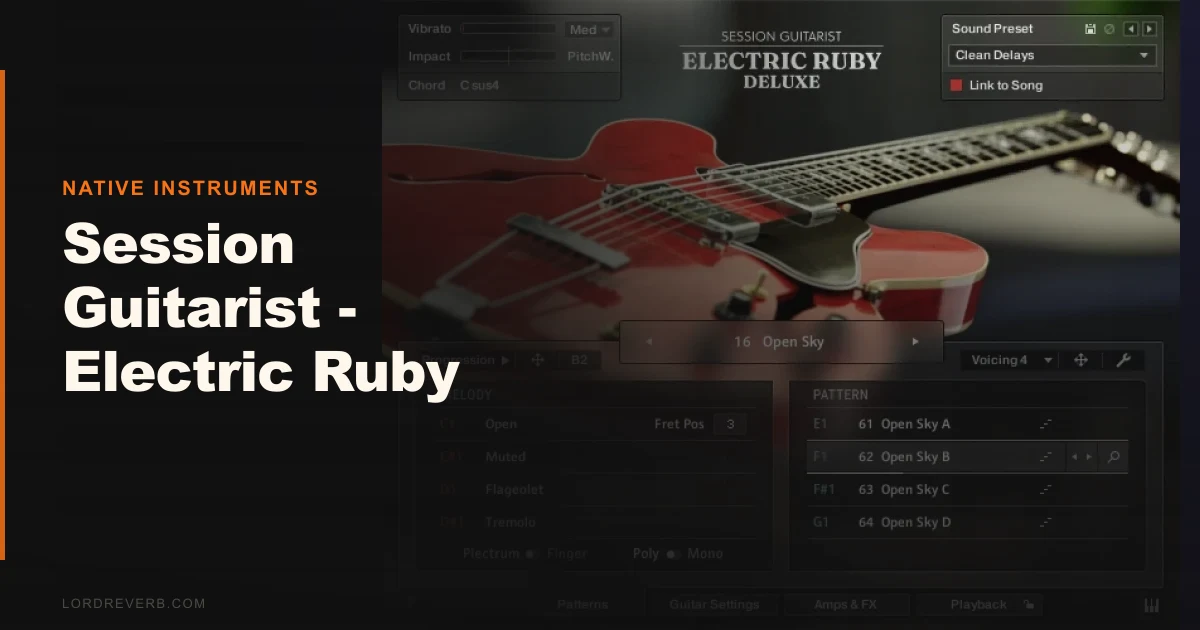
You've got a jazz-inflected R&B track that needs a hollowbody guitar part, and your budget doesn't stretch to booking a session player. You try a dry MIDI guitar plugin. It sounds like a diagram of a guitar, not an actual one. Session Guitarist Electric Ruby Deluxe exists to fix exactly that problem. It's Native Instruments' 10th-anniversary entry in the Session Guitarist series, built around a 1969 USA-made hollowbody with two P-90 pickups, and it's priced at $149 USD. If you produce jazz, blues, or soul-adjacent music in the box, keep reading.
The Problem Every ITB Producer Knows
Fake guitar sounds fake. Everyone in the room knows it. The pick attack is wrong, the palm mutes are too uniform, and the vibrato hits on the beat like a metronome instead of like a human being with opinions.
The Session Guitarist series has always tried to close that gap by using real performances rather than individually sampled notes stitched together. Electric Ruby Deluxe pushes that further. Four professional session guitarists recorded 232 patterns on a genuine 1969 hollowbody. That's not marketing copy. That's the actual instrument in the signal chain, with real fingers making real choices.
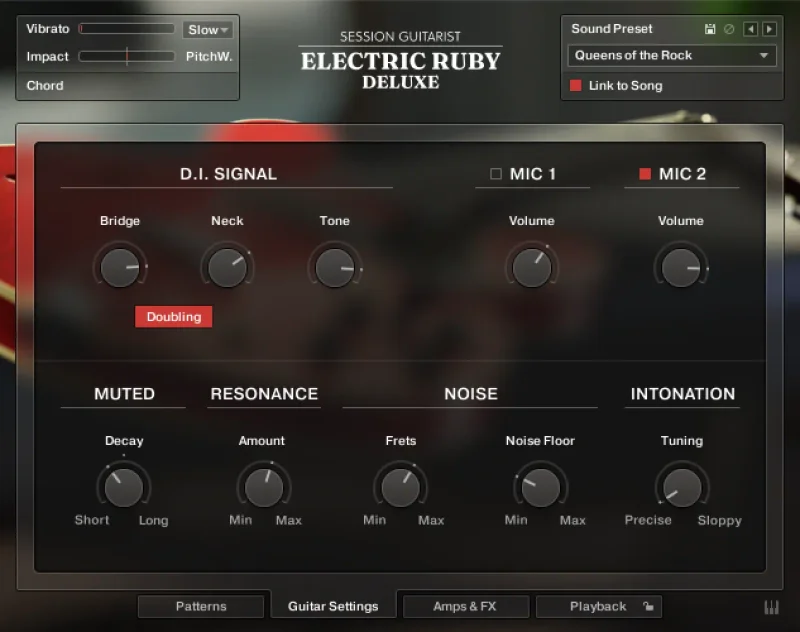
The P-90 pickups on that guitar have a specific character: more midrange bite than a humbucker, more warmth than a single-coil. When you want something that sounds like a '60s soul record or a late-night jazz club, that's the tone. Electric Ruby Deluxe captures it well enough that we'd put it on a record.
How It Actually Performs in a Session
We loaded the instrument into Kontakt 8.5.0 on a Mac running macOS 13 and dropped it into a slow-burning R&B track sitting at 72 BPM.
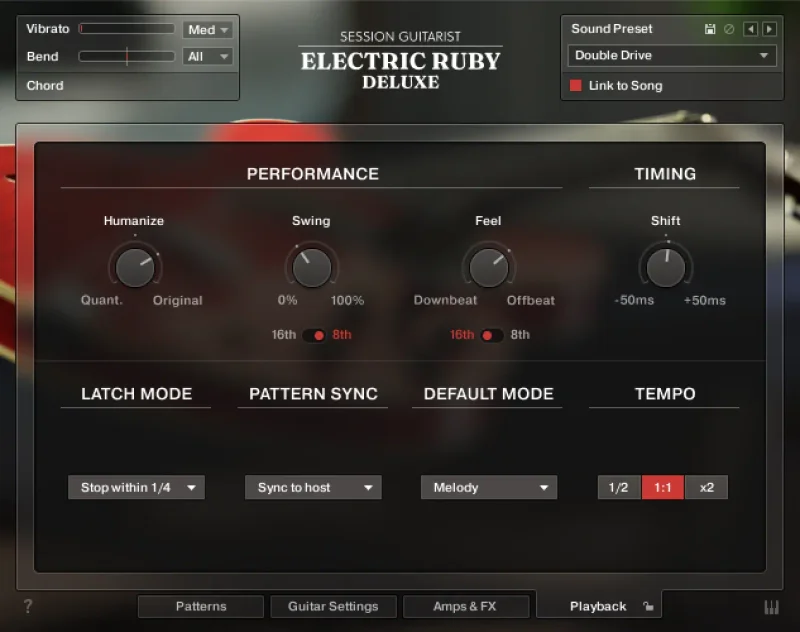
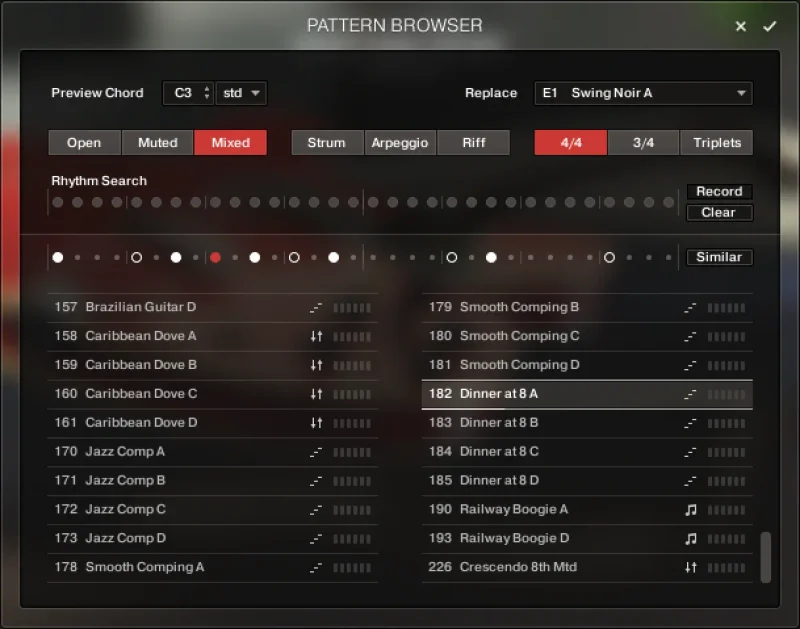
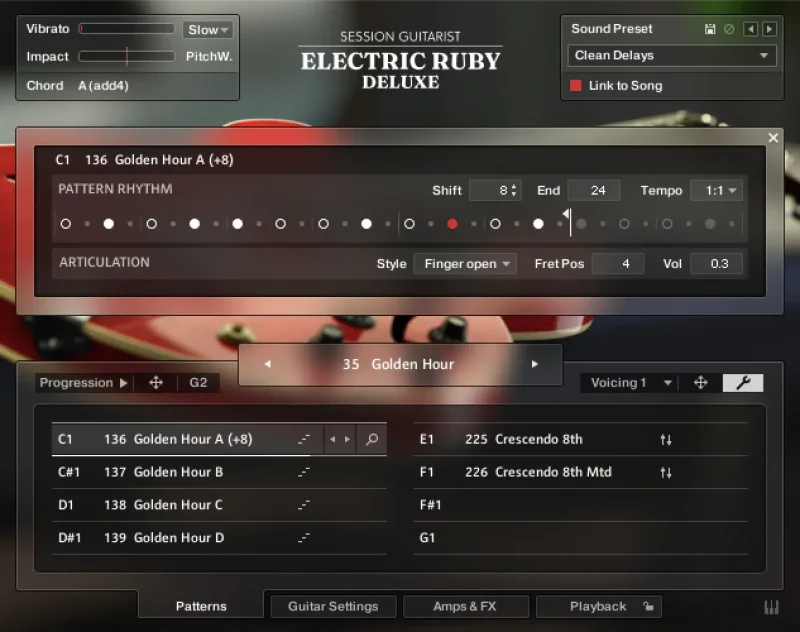
We pulled up the "Crunchy Clean" preset and triggered a fingerpicking pattern from the pattern browser. Within about 30 seconds of adjusting the chord input and toggling between the variation controls, the guitar sat in the mix the way a real part would. Not perfectly, not magically, but convincingly. The rake articulations landed with a slightly unpredictable feel. The palm mutes had weight without becoming tubby.
The dual-engine design is where this gets clever. Pattern mode handles rhythmic grooves. You pick a pattern, feed it chords, and it plays like a rhythm guitarist. Melody mode flips the script: play notes on your keyboard and the engine renders them as a guitarist would, complete with slides and hammer-ons. We used melody mode to sketch a simple one-bar hook over the rhythm pattern, and the two layers locked together without sounding like two different instruments stitched badly at the seam.
Articulations available include slides, palm mutes, harmonics, and flageolets. The flageolets are a love-or-hate thing. We love them for jazz. We'd hate them on anything aggressive.
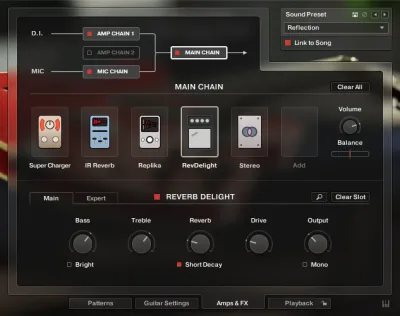
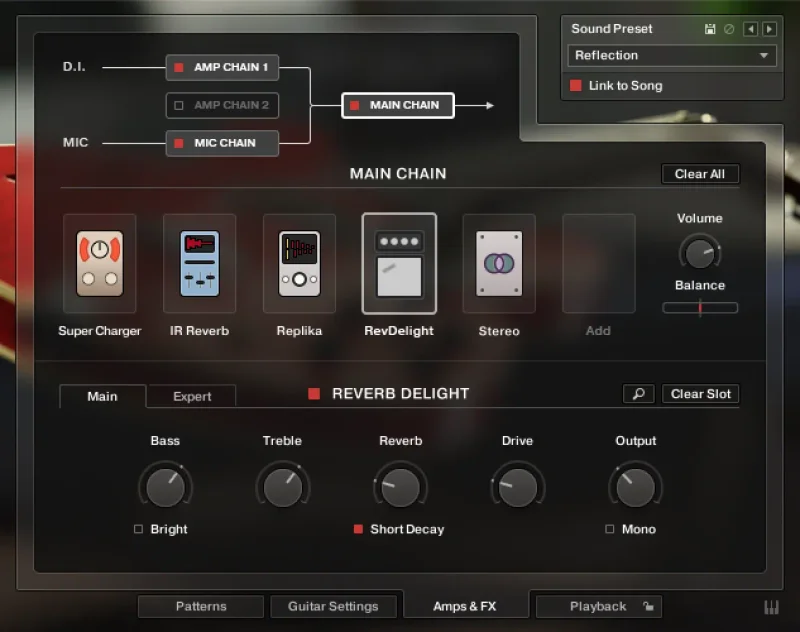
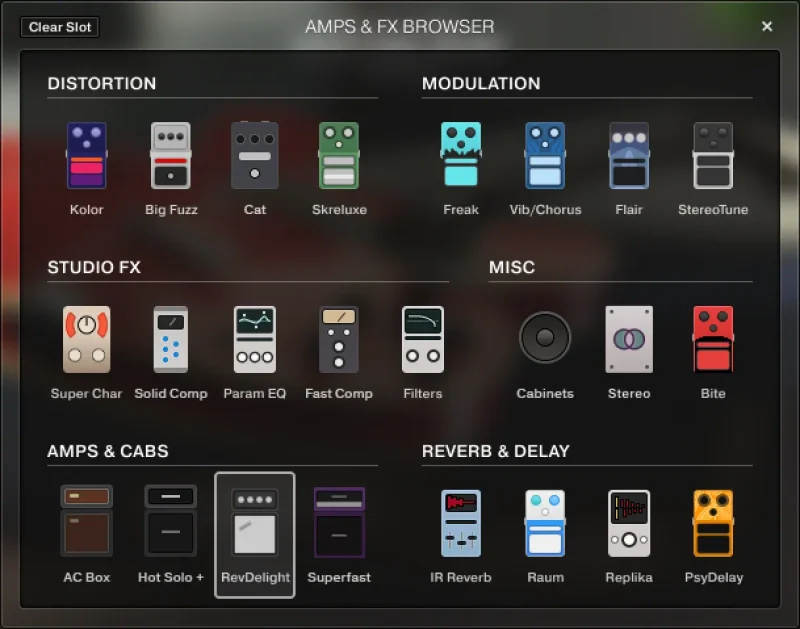
CPU is a real conversation here. With the full effects chain active across three of the 39 presets, we hit around 18% CPU on an M2 MacBook Pro. Bypass all effects, and that drops to roughly 9%. That's a 50% reduction. Native Instruments doesn't offer much guidance on managing this inside the instrument itself, which is frustrating given how obviously it affects performance. If you're on an older machine, build your tone with the DI output and run your own amp sim instead.
The MIDI drag-and-drop feature, added in a series-wide free update, lets you pull patterns directly into your DAW timeline. We dragged a strumming pattern into Ableton, converted the MIDI, and had an editable skeleton in under a minute. That's satisfying in a way that makes other Kontakt instruments feel dated by comparison.
Strengths and Weaknesses
The sound quality is the obvious strength. This is a beautiful instrument, and the P-90 character comes through in a way that cheaper hollowbody libraries don't get right. The midrange presence on the crunchy presets sits in the mix without fighting the keys or the vocals.
The 39 presets are genuinely curated rather than just padded out. The categories, DI, acoustic, clean, crunchy, high gain, modulation, and spacious, cover the real use cases for this guitar type. High gain is the weakest category because P-90 hollowbodies aren't built for that territory, and the presets sound like they know it.
The weakness we keep coming back to is the CPU overhead from the effects chain. It's annoying that there's no built-in "light mode" or effects bypass that still preserves the amp character. You're choosing between full tone and full headroom, which is an ugly compromise in a busy session.
The library is also narrow by design. That's not a flaw exactly, but if you expected a do-everything guitar plugin, you'll be disappointed. This is a hollowbody specialist. Buy it for that reason, or don't buy it at all.
Is $149 Worth It?
For jazz and blues producers working ITB, yes. A single session guitarist costs more than this for a two-hour booking, and you won't have 232 patterns to mix and match afterward. At the current promo pricing, buying Electric Ruby Delu
xe as part of a bundle of four or more NI products gets you 50% off through August 28, 2025. That drops it to about half the price. At that price, it’s an easy call.
At full price, it's still justified if hollowbody guitar appears regularly in your sessions. If you only need it once a year, check the promo window and time your purchase.
Who Should Buy This (and Who Shouldn't)
- ✅ Buy if you produce jazz, blues, soul, or R&B and need a convincing rhythm guitar bed without booking a player.
- ✅ Buy if you're already in the NI ecosystem and can hit the 4-product bundle threshold for the 50% promo.
- ✅ Buy if you want a library built from a specific, historically interesting instrument with a real character rather than a generic "guitar samples" pack.
- ❌ Skip if you produce pop, EDM, or metal. This instrument won't help you, and you'll resent spending the money.
- ❌ Skip if you're on Kontakt 7 or earlier. The 8.5.0 requirement is a hard gate, not a suggestion.
- ❌ Skip if your CPU is already struggling. The effects chain overhead will make things worse and there's no clean workaround built in.
Score Breakdown
| Category | Score | Notes |
|---|---|---|
| Sound Quality | 4.5/5 | The 1969 P-90 hollowbody character is genuinely convincing; high-gain presets are the weak link |
| Value for Money | 4.0/5 | Strong at $149; excellent during bundle promo at 50% off |
| Ease of Use | 4.0/5 | Pattern browser and dual-engine logic are intuitive; MIDI drag-and-drop saves real time |
| Features | 4.0/5 | 232 patterns, 39 presets, full articulation set, and NKS support are all genuinely useful |
| CPU Efficiency | 3.0/5 | 50% CPU reduction when effects are bypassed; no built-in mitigation for the overhead |
| Overall | 4.1/5 | A focused, beautiful-sounding specialist tool that earns its price for the right producer |
Alternatives Worth Considering
If you want a different angle on acoustic and nylon guitar in the box, our Session Guitarist Picked Nylon review covers the closest sibling in the NI lineup. Same pattern-based philosophy, completely different tonal territory.
Orange Tree Samples' Evolution series is the other name you'll hear in this conversation. Their electric guitar libraries go deeper on individual note sampling and per-string articulation control. They're better for realistic solo lines. Electric Ruby Deluxe is better for rhythmic groove beds and the specific hollowbody warmth. Those are different use cases, not a direct swap.
If you're building out a wider palette of acoustic and ethnic stringed instruments beyond guitar, the Ample Ethno Ukulele review covers another strong option in the performance-sampled space. Different instrument, same "does it feel real?" benchmark.
And if you're wondering whether the Session Guitarist series as a whole is worth the NI ecosystem commitment, our Picked Nylon review covers that broader question honestly.
Electric Ruby Deluxe is a hollowbody guitar library that sounds like the real thing on the tracks where it belongs. At $149, it's priced fairly for what it delivers. We'd buy it again. We wouldn't put it on a metal record or run it on a machine that's already struggling. Buy it for the jazz session it was made for, and it'll pay for itself the first time you don't have to book a studio guitarist.
Frequently Asked Questions
Does Session Guitarist Electric Ruby Deluxe work without the full version of Kontakt?
No. It requires Kontakt 8.5.0 or higher. The free Kontakt Player won't run it. If you're still on an older Kontakt version, you'll need to upgrade before this library is accessible.
What guitar was used to record Session Guitarist Electric Ruby Deluxe?
A 1969 USA-built hollowbody guitar with two P-90 pickups. That specific instrument is the core of the library's character. P-90s sit tonally between a single-coil and a humbucker: more midrange presence than most humbuckers, warmer than a Strat-style pickup.
How do I reduce CPU usage with Session Guitarist Electric Ruby Deluxe?
Bypass the built-in effects chain and process the DI or clean output through your own plugins instead. This cuts CPU load by roughly 50%. Native Instruments doesn't offer a dedicated "lite mode," so manual effects bypass is currently the most effective workaround.
Is Session Guitarist Electric Ruby Deluxe good for genres outside jazz and blues?
Honestly, it's a stretch. The P-90 hollowbody character is built for warm, mid-forward tones. Soul, R&B, and Americana all work well. Pop can work if the arrangement calls for a vintage texture. EDM and metal are wrong fits. Don't buy a specialist tool and expect it to behave like a generalist.