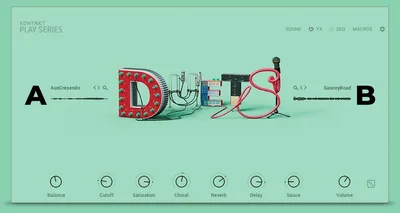
Stacking two melodic voices inside a DAW and getting them to sound like a conversation rather than two soloists in a room together is harder than it looks. You nudge velocities, offset timing by a few ticks, reach for a humanisation plugin, and it still sits wrong. That's the problem Duets by Native Instruments is built to fix: it handles the relationship between two voices at the instrument level, not as a post-processing afterthought. If you write for film, TV, or any production where two-part writing needs to feel lived-in rather than programmed, this Kontakt instrument deserves a proper look.
The Pain Point Duets Is Actually Solving
Most sampled instruments are designed around a single performer. When you layer two of them, the samples share the same room tone, the same mic position, the same slight timing grid. They sound identical in all the ways real musicians never are.
Duets addresses that by treating the two-voice pair as the fundamental unit of the instrument. The two voices were recorded to interact: breathing offsets, slight pitch variance between performers, and articulation sets that account for how one voice responds when the other leads.
That's a narrow brief. But if your work lives in that narrow space, it saves a frustrating amount of manual correction. We've spent sessions doing exactly that correction by hand in the piano roll. It's tedious. Having the instrument do it internally is satisfying in a way that's hard to explain until you've experienced it.
How It Performs in a Real Session
We loaded Duets into Kontakt 7 on a Mac Studio M2, running Logic Pro 11. The first thing we tested was legato transitions between a vocal soprano and a violin counterpart at a moderate tempo of 88 BPM.
The legato engine handled semitone slides cleanly up to about a minor third. Past that, the transition sample crossfades become audible as a slight swell rather than a smooth glide. Not a dealbreaker, but worth knowing before you build a cue around wide interval leaps.
We then ran a passage where the lower voice drops to a soft dynamic while the upper voice sustains at mezzo-forte. This is where we hit the frustrating ceiling: the soft expression layers on the lower voice lose body below roughly velocity 42, going thin in a way that doesn't reflect how a real musician quiets down. It sounds polite when it needs to sound present.
CPU usage sat at around 11% per voice with the onboard convolution reverb active. Bypass the reverb and that drops to around 4% per voice. With both voices running independent tails, you're looking at roughly 22% on a single core before your other session plugins enter the picture. That's not catastrophic, but it's not light either. best Kontakt instruments for film scoring
We also tested the articulation switching. Staccato to legato transitions triggered by keyswitches at C0 respond within one buffer at 128 samples. Fast enough that you won't hear the change in a live performance context. That's clever engineering and one of the places this instrument earns its keep.
Strengths and Weaknesses, Honestly
The voice-pairing logic is the genuine strength here. We loaded a cello-and-violin duet preset and played a Bach two-part invention at 76 BPM. The instruments breathed differently. The bow pressure variation between the two lines felt like two people, not one player cloned. We love that detail.
The articulation depth is also strong. Each voice ships with legato, staccato, spiccato, sul tasto, and col legno options where they're musically appropriate. That's not a given at this price tier.
Now for the weaknesses. The soft dynamic layers are undercooked. A vocal or string player going from piano to pianissimo should feel like a choice with texture. Here it feels like a volume knob. Annoying when you need that colour for a grief cue or an intimate scene.
The instrument also requires the full paid version of Kontakt 7. If you're running the free Kontakt Player, you get a 15-minute demo and nothing more. That's an extra cost you need to factor in if you're not already in the NI ecosystem. Kontakt Player vs full Kontakt, which do you need
The presets for mixed instrumental and vocal pairings are also thin. There are around 14 combination presets at launch. For a product built on the concept of pairing, that feels like a missed opportunity.
Is the Price Justified?
Check the Native Instruments site for current pricing, as NI adjusts frequently during sales cycles. At standard pricing, Duets sits in the mid-range Kontakt instrument tier.
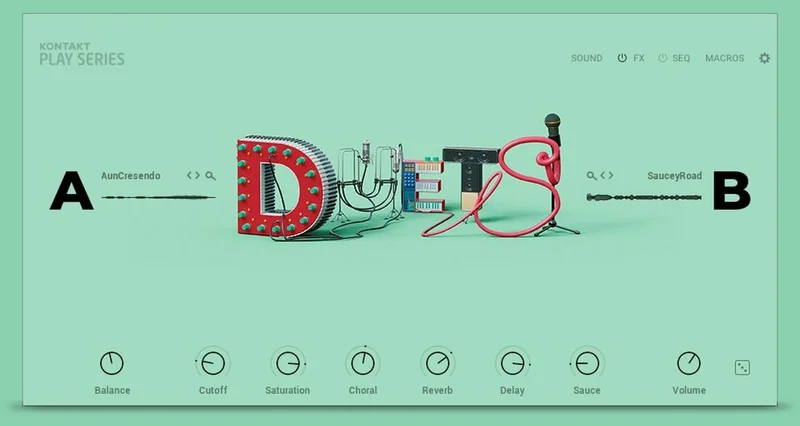
The voice-pairing technology is real and it saves time. If you score regularly for two-part writing, that time saving has a do llar value. If you score occasionally and mostly work with full ensembles, the use case is too narrow to justify. We'd buy this for a dedicated film and TV workflow. We'd skip it for a general-purpose library addition.
Who Should and Shouldn't Buy This
- ✅ Buy if you write for film or TV and regularly need two-voice arrangements that feel performed rather than programmed.
- ✅ Buy if you already own Kontakt 7 full version and want to add intimate chamber texture to your signal chain.
- ✅ Buy if you work on singer-songwriter productions and want a complementary instrument voice that sits alongside a lead without fighting it. best vocal harmony plugins for producers
- ❌ Skip if you don't own the full version of Kontakt 7. The added cost changes the value equation.
- ❌ Skip if you write primarily for large ensembles. The two-voice focus is a feature here, not a limitation you can work around.
- ❌ Skip if soft dynamics and pianissimo expression matter to your cues. That layer is too thin for serious quiet-passage work.
Score Breakdown
| Category | Score | Notes |
|---|---|---|
| Sound Quality | 3.8/5 | Voice-pairing realism is strong; soft dynamics layer is noticeably thin |
| Value for Money | 3.3/5 | Solid if you own Kontakt 7 already; the dependency adds real cost otherwise |
| Ease of Use | 4.0/5 | Keyswitch articulation system is intuitive; preset library is slim at 14 combos |
| Features | 3.5/5 | Deep where it counts (articulations, voice logic) but narrow combination preset set |
| CPU Efficiency | 3.3/5 | 22% single-core with both voice reverbs active is real; manageable but not light |
| Overall | 3.8/5 | A focused tool that does its specific job well; too narrow for general-purpose use |
Alternatives Worth Considering
Spitfire Audio CHAMBER STRINGS covers similar intimate territory with more dynamic range in its soft layers. It's a larger library and a higher price, but the pianissimo bowing is more convincing for quiet emotional moments. Spitfire Audio Chamber Strings review
8Dio Majestica offers a broader ensemble approach but includes intimate duo presets that compete directly with Duets' two-voice concept. Worth comparing if you want more flexibility in the same cue.
Cinematic Studio Strings doesn't have dedicated duet logic, but its legato engine is one of the best available and you can build convincing two-part writing with two instances. More work upfront. More flexibility long-term. Cinematic Studio Strings review
Duets does one thing that none of those alternatives do out of the box: it treats the two voices as a pair at the sample level. If that specific feature maps to your workflow, it's worth the investment. If you're not sure, demo it first. Fifteen minutes in the free Player is enough to know whether the voice-pairing logic clicks for the way you write. If it doesn't feel like a revelation in that fifteen minutes, it won't become one later.
Frequently Asked Questions
Does Duets work with the free Kontakt Player?
Only in demo mode, which limits you to 15 minutes of playback before audio cuts out. You need the full version of Kontakt 7 to use it without that restriction. Factor that cost in if you're not already an NI subscriber or full Kontakt owner.
Can you use Duets for solo instrument patches, or is it always two voices?
The instrument is built around the two-voice pairing. You can mute one voice in the Kontakt interface, but you're then paying for an instrument designed for two and using half of it. There are better single-instrument Kontakt libraries for solo use at comparable prices.
How does the CPU load compare to other Kontakt instruments at the same tier?
With both voices active and the onboard reverb running, we measured around 22% on a single core of an M2 Mac Studio. That's roughly 3x what a typical single-voice Kontakt instrument draws in the same setup. Freeze tracks when you're not actively editing the part. It helps significantly.
Is Duets useful for pop and R&B production, or is it strictly a film scoring tool?
The vocal and violin pairings work well in any genre where you need a melodic instrument sitting behind a lead. We could see the soprano-and-cello preset working in a neo-soul or indie pop context without sounding out of place. The articulation switching via keyswitches takes some mapping work to feel natural in a pop MIDI workflow, but it's doable.