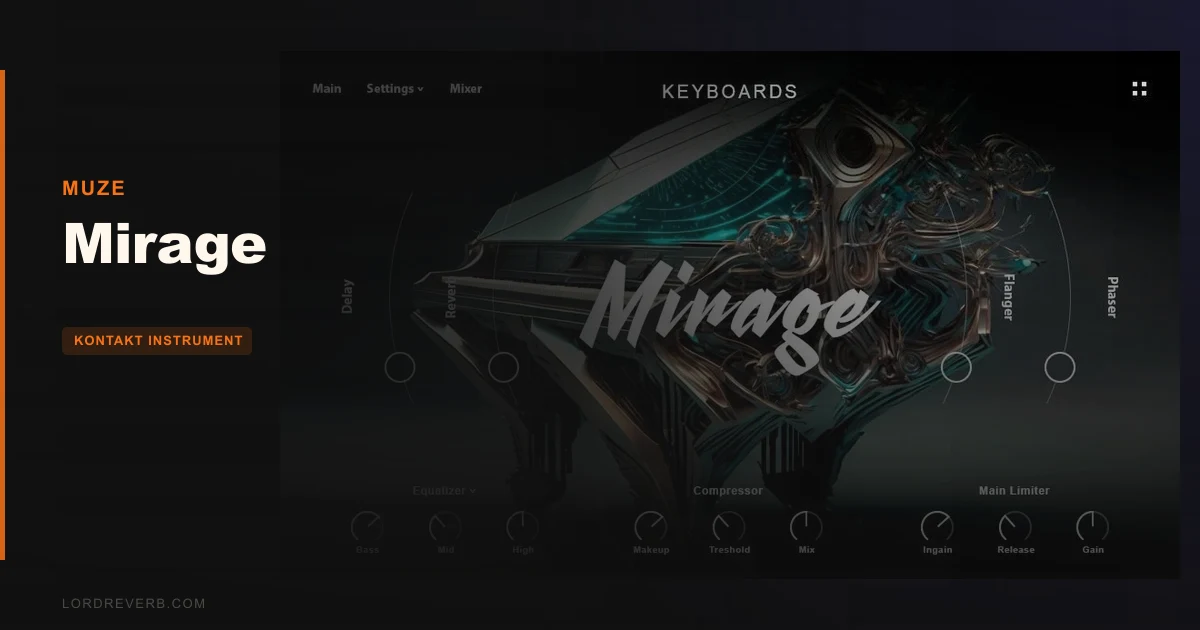
Sampled grand pianos in Kontakt have a credibility problem. You load one expecting a C7 and you get what sounds like a MIDI keyboard left out in the rain. Mirage by Muze is the library that exists because that frustration is real and widespread. At $9, it's a Yamaha C7 grand piano sampled across 11,288 individual recordings with 12 velocity layers and 10 microphone positions, built for producers who want a grand piano that behaves like one. It's aimed squarely at composers, film scorers, and pop or ambient producers who need a credible acoustic piano inside Kontakt without spending session-day rates on a real room.
The Pain Point Every Piano Plugin Buyer Knows
You're halfway through a string arrangement and you need a piano chord that sits back in the mix without fighting the cellos. No bloom, no weight on the low end, no air at the top. So you reach for a sample library that promises "the real thing."
The problem isn't that sampled pianos don't sound like pianos. The problem is they don't respond like pianos. A real grand rewards how hard you play. Soft touches feel different from driven chords. Libraries with thin velocity layers collapse that relationship into a few jumps you can hear as steps.
That's the gap Mirage is addressing directly. Twelve velocity layers is a serious number. It won't sound like a step function when you push from a whisper into a forte.
How Mirage Performs Under the Hood
The core library sits at 9.43 GB after lossless compression. That's not small, and it matters for how you work. Load this from a 7200 RPM spinning drive and you'll notice. Stream it from an SSD and the difference is satisfying enough that it changes how you feel about the instrument during a session.
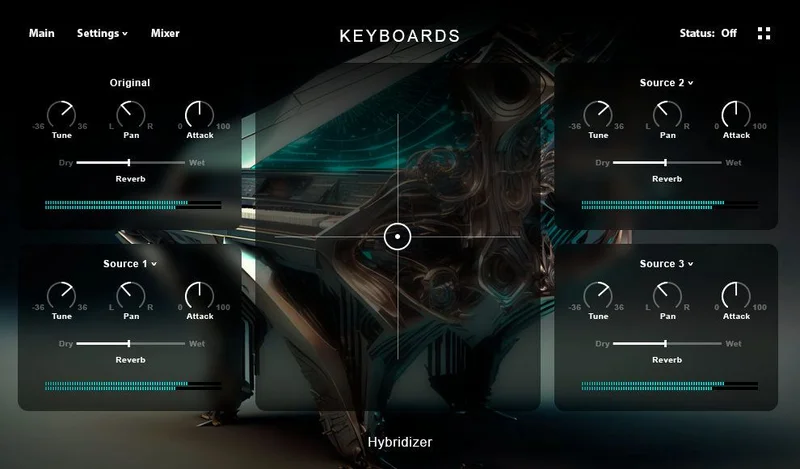
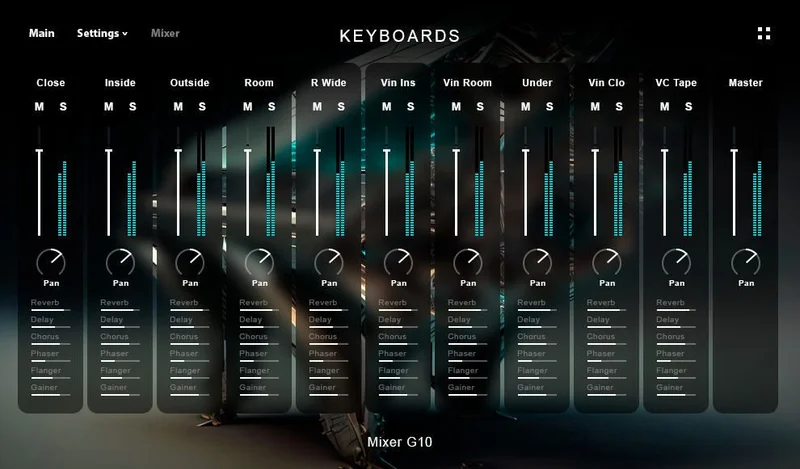
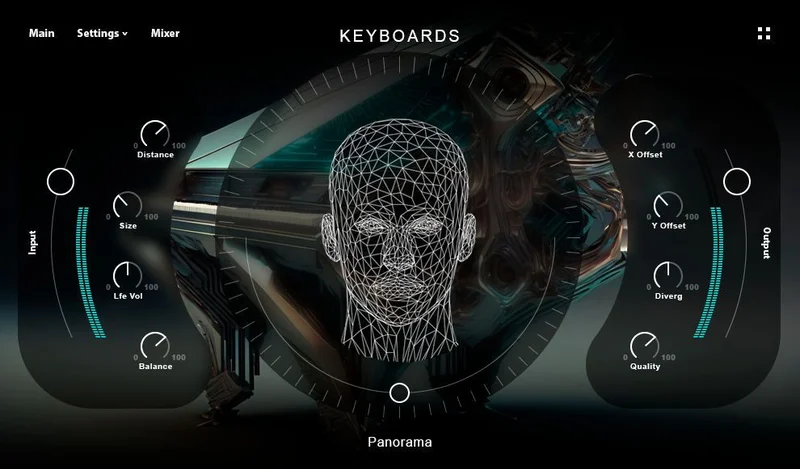
Ten microphone positions is where this gets genuinely interesting. You're not stuck with one "producer room" mix. You can place the piano close, pull back for a natural room sound, or blend positions to get something that sits in a specific way in your stereo field. That kind of control at this price point is clever design, not a checkbox feature.
The 50 hybrid sources for textures and pads are a real addition to the library's identity. If you're scoring to picture or building ambient beds, you can layer a pad underneath the piano attack and use the XY pad modulation to shift the balance live. That's a workflow that would otherwise require a separate instrument.
Fourteen built-in effects cover the basics and then some: compressor, delays, reverb, limiter, cabinet, gainer, rotator, stereo panner, chorus, phaser, flanger, 3-band EQ, and 5-band EQ. The cabinet emulation alone is worth noting for anyone who wants a lo-fi or telephone-filtered piano without reaching for a separate plugin chain.
Strengths and Weaknesses, Both Sides
The 12 velocity layers are the standout. Push into a full-velocity chorus chord and the low strings open up. That transition happens naturally across the range rather than lurching between zones.
The hybrid layer is a smart idea. Some composers will love it. Others will find it a bit frustrating that the library positions itself as both a straight piano and an ambient instrument, because those buyers sometimes want two separate tools.
The Kontakt Player restriction is the most annoying structural fact about Mirage. You need Kontakt full retail version 5.8 or newer. If you don't already own it, that's a real additional cost you need to factor in before $9 means anything. For some buyers, this is a hard stop.
The minimum 8 GB RAM requirement is fair for a library this size. But the gap between minimum (7200 RPM HDD) and recommended (SSD) is real in daily use. If you're on a minimum spec setup, you may find loading times annoying enough to interrupt the creative session.
Value for the Price
At $9, Mirage's value is almost absurdly strong on paper. 11,288 samples, 10 mic positions, 50 hybrid sources, 14 effects, and an XY modulation engine for that number requires you to already own full Kontakt to access it. That caveat is real but not Muze's fault.
If you're already in the Kontakt ecosystem with the full paid version, this is a brilliant deal. The depth of sampling and the microphone flexibility alone justify it. If you need to buy Kontakt as well, you need to weigh the combined cost against what you're getting. The library itself is not overrated at $9.
Who Should (and Shouldn't) Buy This
- ✅ Buy if you already own full Kontakt and need a deeply sampled grand piano for composition or scoring work.
- ✅ Buy if you work in ambient, cinematic, or hybrid genres and want one library that handles both straight piano and textural layers.
- ✅ Buy if you want real microphone placement control over your piano sound without committing to a studio booking.
- ❌ Skip if you only have Kontakt Player. This will not load. Full stop.
- ❌ Skip if you're on a spinning HDD and not planning an upgrade. The experience won't match the library's quality.
- ❌ Skip if you need a pure, stripped-down piano library with no extras. There are lighter tools built for exactly that use case.
Specs & Technical Details
| Spec | Detail |
|---|---|
| Developer | Muze |
| Price | $9 |
| Plugin Format | Kontakt Instrument (.nki) |
| OS Support | Mac (OS X 10.7 or later) / Windows (7 or later) |
| Activation | N/A |
| CPU Usage | N/A |
| Trial Available | N/A |
| Version Reviewed | N/A |
| Sample Count | 11,288 |
| Library Size | 9.43 GB (lossless compressed) |
| Velocity Layers | 12 |
| Microphone Positions | 10 |
| Kontakt Requirement | Full Kontakt 5.8 or newer (not compatible with Kontakt Player) |
| Minimum RAM | 8 GB |
| Recommended RAM | 16 GB or more (Mac); 16 GB (PC) |
| Minimum Storage | 7200 RPM HDD |
| Recommended Storage | SSD |
Score Breakdown
| Category | Score | Notes |
|---|---|---|
| Sound Quality | 4.5/5 | 12 velocity layers and analog/digital recording chain deliver a convincing C7 across the dynamic range |
| Value for Money | 4.5/5 | At $9, the sample depth and mic position count make this an easy call if you already own Kontakt |
| Ease of Use | 4.0/5 | Customizable UI is clean, but the XY pad modulation has a learning curve worth budgeting time for |
| Features | 4.0/5 | 50 hybrid sources and 14 effects push this well beyond a standard piano library |
| CPU Efficiency | 3.5/5 | 9.43 GB library at this sample depth will stress slower drives; SSD is effectively mandatory for smooth streaming |
| Overall | 4.2/5 | A deep, flexible grand piano library that earns its place in the Kontakt ecosystem, with one structural catch |
If you spend serious time scoring, composing, or producing music where a grand piano needs to hold emotional weight in a track, Mirage is the kind of library you'll keep returning to. The 10 microphone positions mean you can drop the piano close and direct for a singer-songwriter feel, or pull it back and let it breathe inside a reverb field for orchestral work. That flexibility, at this price, is hard to argue with.
The buy/skip line is not blurry here. You own full Kontakt and you need a Yamaha C7: buy it. You don't own full Kontakt and you're not planning to: this is the wrong library for your setup right now, regardless of how good it is.
Mirage isn't trying to be everything. It's trying to be the most honest version of one specific piano, and the developer says it records the Yamaha C7 grand piano as realistically as possible.
Frequently Asked Questions
Does Mirage work with the free Kontakt Player?
No. Mirage requires the full paid version of Kontakt 5.8 or newer. It will not load in Kontakt Player. If you only have the free version, you'll need to upgrade before this library is accessible to you.
How much storage space does Mirage need?
The library takes up 9.43 GB after lossless compression. A 7200 RPM HDD is the minimum storage speed, but SSD is recommended. On a spinning drive, you may find loading times and streaming performance frustrating during a session.
What are the 10 microphone positions used for?
The 10 mic positions let you shape where the piano sits spatially in your mix. Close positions give you a more direct, intimate sound. Pulled-back positions capture more room character. You can blend them inside the interface to dial in something that works for your specific arrangement rather than committing to one fixed sound.
What are the 50 hybrid sources in Mirage?
They're additional texture and pad sounds recorded alongside the C7 samples. Using the library's layering engine and XY pad modulation, you can blend them underneath the piano to create cinematic, ambient, or hybrid sounds. It's a feature set built for composers who need the piano to do more than just play notes.
Is 8 GB RAM enough to run Mirage comfortably?
8 GB is the stated minimum, and it will run. But 16 GB or more is recommended for good reason: a library this size, especially with multiple mic positions loaded simultaneously, benefits from the extra headroom. If you're on 8 GB and also running a full DAW session, you may hit memory pressure at the worst possible moment.