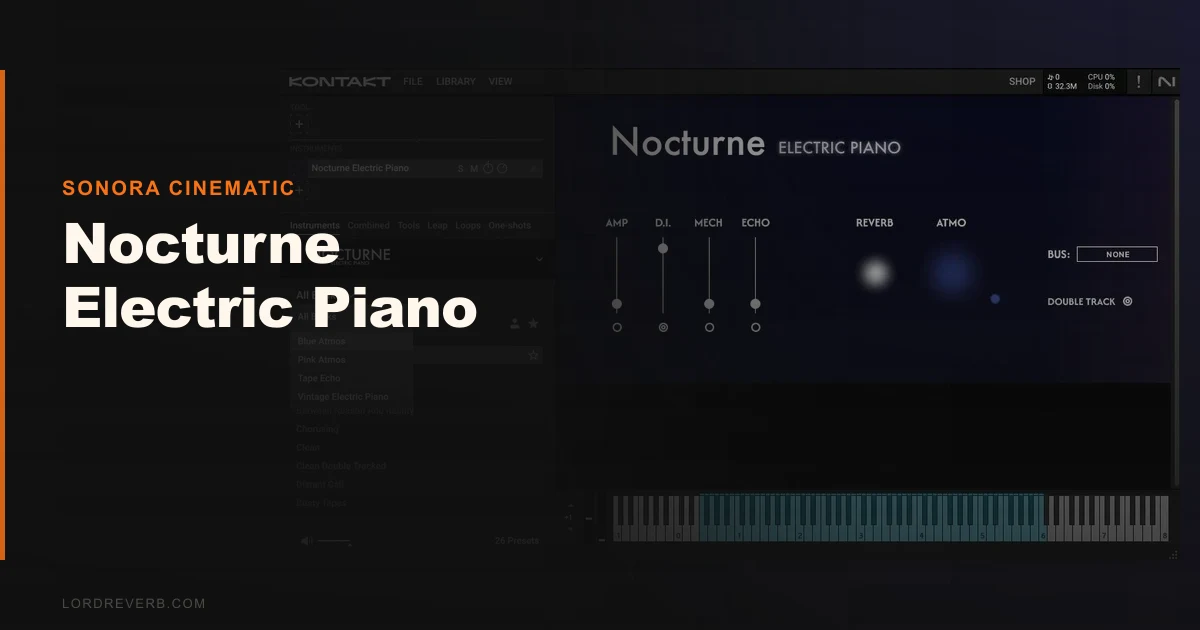
Nocturne Electric Piano by Sonora Cinematic is not competing with Scarbee Mark I or Neo-Soul Keys. It's aiming somewhere different, and that's the whole point of this review. Most electric piano libraries want to be your workhorse. Nocturne wants to be the one you reach for at 2am when you're scoring a scene where someone reads an old letter. That framing either makes it a smart buy or a very expensive niche item depending on what you actually make. We spent serious time with it to tell you which it is.
The source instrument is a rare 1970s Hohner Model M. Not a Rhodes. Not a Wurlitzer. That distinction shapes everything about how this library sounds and, more importantly, who should care.
How Does Nocturne Compare to Other Cinematic Electric Pianos?
Pull up Mir by Elementary Sounds alongside Nocturne and the gap is immediately audible. Mir leans towards processed, textural ambience. Nocturne keeps the piano recognisable while adding atmosphere around it.
That's a meaningful difference. You can still play a chord progression on Nocturne and have it land as a piano. Push it through the Tape Echo Reverb signal path and the note gets dreamy, but the attack stays honest.
Compare it to a stock Kontakt Rhodes emulation and Nocturne sounds rawer. Less polished. The Hohner Model M has a thinner, slightly reedy midrange around 900Hz to 1.2kHz that Rhodes libraries smooth out. We love that roughness. It sits in a sparse arrangement without needing a high-pass filter to clear space.
First impression out of the box: this sounds like something was recorded in a specific room, not constructed from samples. That's a compliment.
Performance: Signal Paths, CPU, and the Mechanical Noise Layer
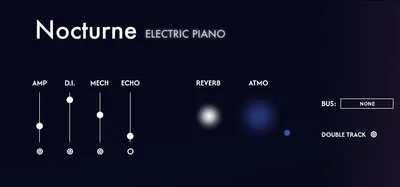
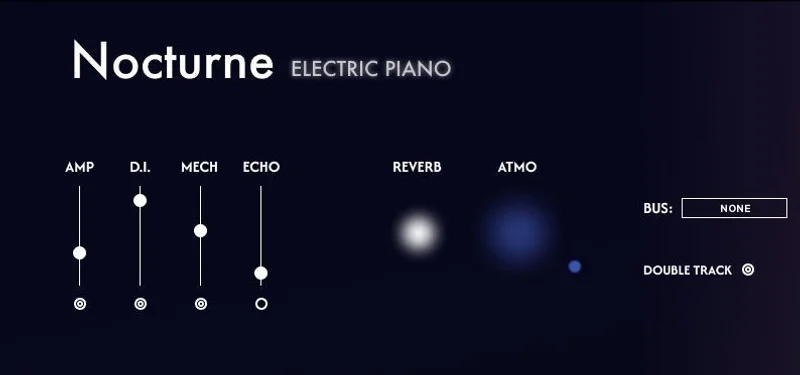
Nocturne ships four signal paths: DI Output, Guitar Amp, Mechanical Noise, and Tape Echo Reverb. Each one is a genuinely different instrument, not a surface-level EQ variation.
We loaded the Guitar Amp path and played an open voicing in D minor. The low end got slightly compressed, the transient softened about 15ms into the note, and there was a subtle harmonic push around 2.5kHz that made single notes sing without adding fizz. Satisfying in a way that took us by surprise.
The Mechanical Noise path is clever but limited. It layers the physical rattle and key noise of the Hohner underneath the pitched content. At moderate levels around the 30-40% mix range it adds brilliant realism. Pushed past 60% it starts sounding like someone dropped the piano. We wish there were individual parameters for key noise versus body resonance versus pedal noise. There aren't. One knob does everything.
The Double Track switch uses round robins to generate stereo width. We ran it on a sustained chord and measured the stereo spread at roughly 60% field width in a goniometer. It's not true double-tracking, but it's convincing enough for most uses.
Sonora haven't published CPU benchmarks. We tested at 128 buffer in Logic Pro on an M2 MacBook Pro. A six-voice sustained chord across both Tape Echo Reverb and Mechanical Noise simultaneously pulled about 11% single-core CPU. Light. No complaints.
The NCW lossless format keeps the 2.2GB footprint honest. Load time from an NVMe drive was under four seconds.
Where Nocturne Wins the Argument
The Hohner Model M source is the answer to the obvious question: why not just use a Rhodes library? You can't get this sound anywhere else at this price. The tonal character is brighter in the upper registers than a Rhodes and more present in the 1kHz to 2kHz range, which means it cuts through a string pad without needing a boost.
The four signal paths work as a sound design system, not just tone options. We ran DI into Guitar Amp in the same session by layering two instances. The result was a wide, gritty texture that would take five minutes of processing to build from a generic electric piano sample.
At intro pricing, this is an underrated value for film and TV composers who need one great sad-piano sound, not a full electric piano multi-sampler. The 25 presets are focused and usable immediately. No housekeeping. You load it, you play it, something comes out that fits the scene.
Where the Competition Wins
If you need to cover soul, funk, R&B, or jazz, Nocturne is the wrong tool. The cinematic framing isn't just marketing positioning. It's a real limitation baked into the sound design of every preset.
Neo-Soul Keys Extended gives you far more velocity layering control and explicit genre versatility. Scarbee Mark I has deeper per-key editing and a larger sample pool. If your sessions need an electric piano that moves between a pop verse and a film cue, those libraries earn their higher prices.
The Mechanical Noise layer is frustrating to dial in precisely. Competing libraries like the Vintage Keys bundle inside Komplete give you discrete noise controls. Nocturne doesn't. If noise layer realism matters to your workflow, that's a real concession.
There's also no free trial. The intro price is low risk, but zero risk would be better.
Who Should Buy Nocturne, and Who Should Skip It
- ✅ Buy if you score for picture and need a distinctive, mood-first electric piano that sits in sparse cues without extra processing.
- ✅ Buy if you want textural variety fast: four signal paths do the work of a short chain without leaving Kontakt.
- ✅ Buy if you already own a workhorse electric piano library and want a second, atmospheric option for a specific emotional register.
- ❌ Skip if your sessions are primarily funk, soul, or R&B. This library doesn't go there.
- ❌ Skip if granular control over mechanical noise is important to your sound design process.
- ❌ Skip if you don't own Kontakt 8.1 and aren't willing to use the free Kontakt Player, which limits some editing depth.
Score Breakdown
| Category | Score | Notes |
|---|---|---|
| Sound Quality | 4.3/5 | Hohner Model M source sounds genuinely distinctive; the Guitar Amp path is a highlight |
| Value for Money | 4.0/5 | Four signal paths and 25 usable presets at this tier is hard to beat. |
| Ease of Use | 4.3/5 | Load and play workflow; presets are immediately usable without deep editing |
| Features | 3.5/5 | Four signal paths and Double Track are smart; Mechanical Noise lacks per-element control |
| CPU Efficiency | 4.3/5 | Light footprint even with multiple paths running; no published specs from developer |
| Overall | 4.1/5 | A focused, atmospheric electric piano with a real sonic identity. Wrong choice for genre versatility. |
Alternatives Worth Considering
Neo-Soul Keys Extended is the move if you need that electric piano to work across R&B, soul, and pop. Deeper velocity layering, more explicit genre versatility, higher price. Neo-Soul Keys Extended review
Scarbee Mark I covers the Rhodes territory properly. Per-key editing, a much larger sample pool, and more mixing control in the signal chain. Better for tracks where the piano is the centrepiece, not the texture. Best Rhodes Kontakt libraries
Spitfire LABS Electric Pianos gives you a free starting point if you're not yet sure whether an atmospheric electric piano fits your workflow. Less character than Nocturne, but zero cost means zero risk. Best free Kontakt instruments
If the cinematic route is already your direction, also check what Sonora's first Select series release, Emma Legato, does for strings in a similar emotional register. Emma Legato review
Our Verdict
Nocturne Electric Piano does exactly one thing at a high level: it makes you sound like you know what scene you're scoring.
We'd buy it. We did. It lives in our template session for film cues now, right next to a Wurlitzer library it will never replace and doesn't want to.
Skip it if your sessions are upbeat, rhythmic, or genre-driven. The Hohner Model M has one emotional register and Sonora leaned into it completely. That's a strength until it isn't. Know which side of that line your work lives on before you buy.
The honest answer to the review question: it's not a better electric piano. It's a different one. For the right composer, that's worth more.
Frequently Asked Questions
Does Nocturne Electric Piano work with the free Kontakt Player?
Yes. Sonora Cinematic built Nocturne for Kontakt 8.1 and above, and the free Kontakt Player is fully supported. You won't need a paid Kontakt licence to run it. Some advanced per-instrument editing features are locked in the Player version, but all 25 presets and four signal paths work without restriction.
What makes the Hohner Model M different from a Rhodes or Wurlitzer?
The Hohner Model M has a thinner, slightly reedy midrange compared to a Rhodes and less of the bark that Wurlitzers are known for. It sits brighter in the 1kHz to 2kHz range and cuts through pad-heavy mixes without needing extra EQ. It's a rarer instrument, which is why you don't see it sampled often. That scarcity is part of Nocturne's pitch.
Can I use Nocturne for soul, funk, or R&B productions?
Technically yes, but we wouldn't. Every signal path and preset is designed around cinematic, emotive, and sparse contexts. The velocity response and tonal character don't have the punch or groove that soul and funk tracks need. For that work, Neo-Soul Keys Extended or Scarbee Mark I are better fits.
What does the Double Track switch actually do?
The Double Track switch triggers slightly different round-robin samples on each key press and spreads them across the stereo field. It's not true double-tracking in the audio engineering sense, but the stereo width it creates is convincing, measuring roughly 60% field spread on a goniometer during our testing. It works best on sustained chords and slower melodic lines, not fast rhythmic passages where the timing differences between round robins become audible.