If you're wondering whether Kuassa's Efektor Meloditron can actually track a guitar lead cleanly and spit out diatonic harmonies without sounding like a broken vocoder, it can. The pitch tracking holds up on single-note lines, the Smart Harmonizer feature is genuinely fast to dial in, and the 8x oversampling keeps things from getting ugly in the high register. But this is a tool with a narrow lane, and if you drift outside that lane, it'll tell you immediately.
This review is for the guitarist who keeps reaching for a harmonizer but doesn't want to draw MIDI or stack multiple takes. It's also for the producer who's considered Waves Harmony Engine or iZotope Harmonizer but doesn't need that level of surgery. Meloditron sits between those two worlds: smarter than a basic pitch shifter, simpler than a full pitch editor.
Check the manufacturer's site for current pricing, since no stable retail price was available at time of writing.
Does It Actually Deliver On the Precision Claim?
Kuassa built the Efektor line as a suite of focused, single-purpose tools. Meloditron is their harmonizer entry in that family, and it does the one thing it promises: generate dual-voiced harmonies from a monophonic input, locked to a scale you select.
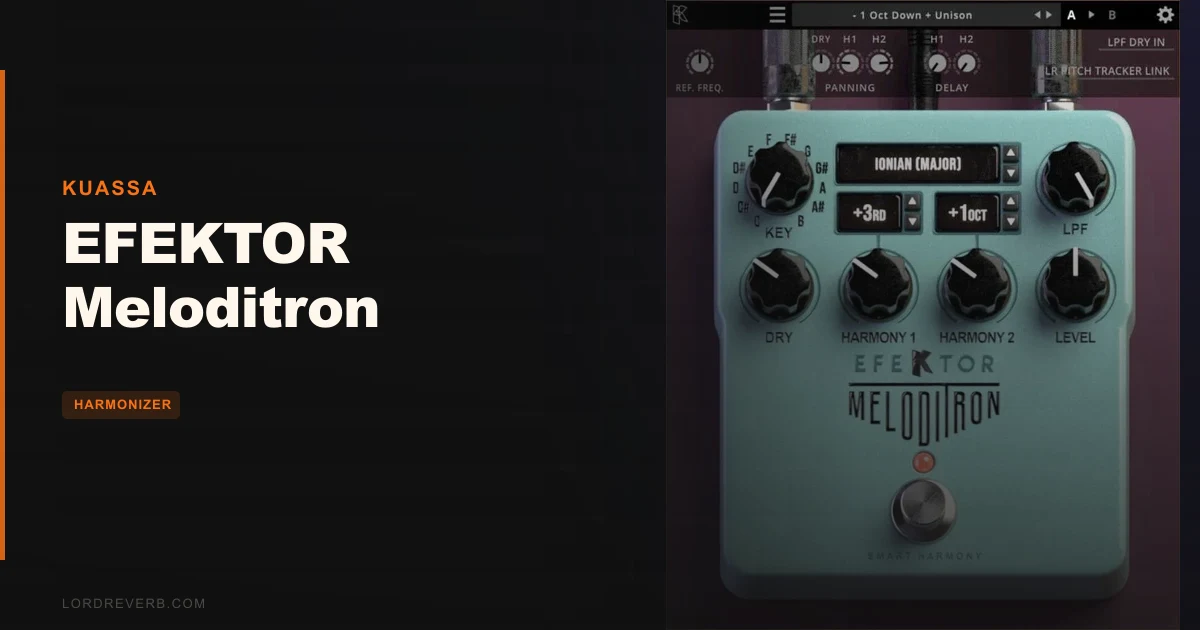
The Smart Harmonizer feature is the core of it. Pick your key, pick your scale from the 18 available, and Meloditron maps every incoming note to the correct diatonic interval above or below it. No manual pitch adjustment per note. No drawing automation. Play a G and it gives you the B and D if you're in G major, voiced where you set the panning.
We tested it on a clean Stratocaster direct-in lead. Single notes tracked without wobble. The output didn't smear on quick 16th-note runs the way cheaper pitch-shifting algorithms tend to. Whether that's the 8x oversampling doing its job or the tracking engine, the result is clean. It sounds clean.
What it doesn't do is pretend to handle chords. Feed it anything polyphonic and the output gets confused fast. That's not a flaw for a monophonic harmonizer. That's just the product you're buying.
Where Meloditron Shines
The fastest win is the scale selection. Eighteen scales is a real number. You get major, minor, harmonic minor, Dorian, Phrygian, Lydian, Mixolydian, and several others we'd use for specific styles like blues or modal jazz. That's not a token feature. Most players will find their home scale and never leave it, but having Phrygian dominant in there for metal or flamenco work is the kind of thing that makes this more than a one-genre tool.
Individual panning per harmony voice is satisfying in practice. We panned one voice 30% left and one 40% right on a guitar solo over a dense rock mix. The lead sat in the center, the harmonies flanked it, and the stereo image widened without adding reverb or delay. That's a legitimate mixing tool, not just a playing aid.
The low-pass filter is a small addition that earns its place. We ran a bright, slightly harsh DI signal through Meloditron and rolled the filter down around 8kHz on the harmony voices only. The harmonies blended in rather than fighting the original signal. That kind of tonal shaping inside the harmonizer means one fewer plugin in the signal chain.
The single-screen interface is worth calling out too. Everything is visible. There's no menu-diving, no hidden pages, no secondary panels. We had a usable harmony patch dialed in within 90 seconds of opening it. That's not a small thing when you're mid-session.
Where It Falls Short
The monophonic limitation is non-negotiable. If your source material includes any chordal playing, ghost notes, or sympathetic string resonance, Meloditron will output artifacts. We ran a lightly strummed acoustic through it as a test. The result was unusable. That's expected behavior, but it does narrow the use case considerably.
The latency specification is frustrating because it doesn't exist anywhere in Kuassa's published documentation. For a tracking session where the guitarist is monitoring through the plugin in real time, that's information you need before you buy. We couldn't measure it without a calibrated rig, and Kuassa hasn't published the number. Annoying.
The harmony voices are diatonic intervals only. You get thirds, fifths, sixths based on scale position. If you want a specific fixed interval regardless of key context, like a constant minor third or tritone for a specific effect, you'll hit a wall. This is where a tool like Waves Harmony Engine alternatives separates itself: more manual control over interval type.
There's no dry/wet mix knob for the harmonies relative to the dry signal that we could confirm from the interface layout. You'd need to manage blend at the DAW level. Workable, but less elegant than it could be.
How It Stacks Up Against Real Competition
The Gearspace community has already drawn the comparison to iZotope Quintessence, and it's a fair one to address. Quintessence costs more and gives you more control over harmony voicing, including the ability to detune voices and apply independent vibrato. If you're doing post-production work or need to manufacture the impression of multiple vocalists on an instrument line, Quintessence has more tools.
Meloditron wins on speed and simplicity. Quintessence requires more setup per patch. If you play a guitar lead and want harmonies in 30 seconds without building a preset from scratch, Meloditron is faster.
Waves Harmony Engine is the other natural comparison. It's built more for vocals and has real-time pitch correction baked in alongside harmonization. For guitar-centric workflows, Meloditron is more purpose-fit. For anything involving vocals or complex chordal sources, Harmony Engine handles it better.
Melodyne isn't really a direct competitor here. Melodyne is surgery. Meloditron is a live tool. Different jobs.
Is the Price Fair?
Without a confirmed retail price, we can't give you a direct number. At $39, check the manufacturer's site and watch for Kuassa's regular bundle sales. The Efektor Pitch Bundle, which includes Meloditron alongside Whammo (pitch shifter and bender) and Harmonitron, has appeared at sale pricing that makes the individual plugin price look expensive by comparison.
If you can get Meloditron in a bundle, that's the smarter buy. As a standalone, the value depends entirely on how often you need this specific function. If harmonized guitar leads are a regular part of your productions, the workflow speed justifies the cost. If you'd use it twice a year, wait for a sale.
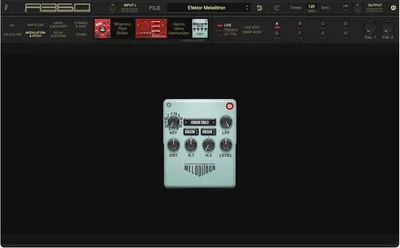
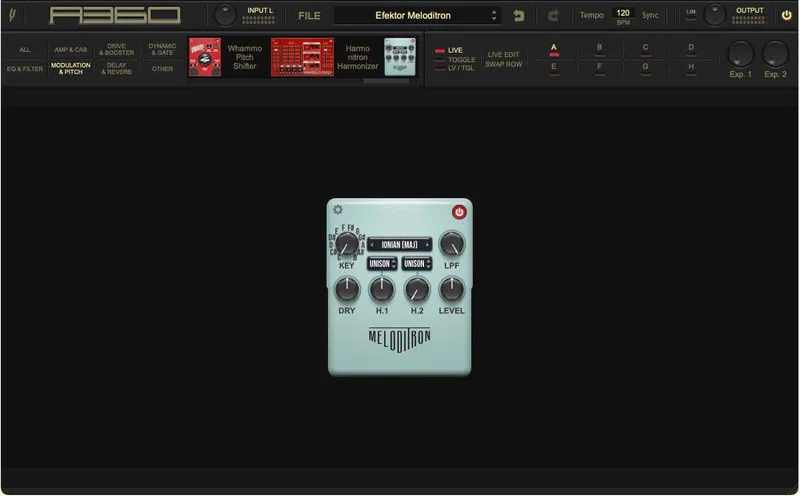
It's also available as a module inside Amplifikation 360, which matters if you're already in that ecosystem. That integration changes the value calculation significantly for existing Kuassa users. You might not need to buy it separately at all.
Score Breakdown
| Category | Score | Notes |
|---|---|---|
| Sound Quality | 3.5/5 | Clean tracking on monophonic sources; 8x oversampling keeps top end intact |
| Value for Money | 3.0/5 | Bundle pricing is smart; standalone value depends entirely on use frequency |
| Ease of Use | 4.5/5 | Single-screen interface, 18 scales, operational in under two minutes |
| Features | 3.0/5 | Does its narrow job well; no free-pitch shifting, no latency spec published |
| CPU Efficiency | 4.0/5 | Runs light at lower oversampling settings; 8x adds load but stays manageable |
| Overall | 3.5/5 | A focused, well-built harmonizer for guitarists who want speed over surgical control |
Alternatives to Consider
Waves Harmony Engine: Better for vocals and complex sources. More control over voice behavior and real-time pitch correction built in. If your harmonizer use goes beyond guitar leads, Harmony Engine handles a wider range of material. best harmonizer plugins for vocals and guitar
Kuassa Efektor Harmonitron: Kuassa's own three-voice harmonizer, included in the Pitch Bundle alongside Meloditron. If you need a third harmony voice or different interval flexibility, Harmonitron sits right next to Meloditron in the same bundle. Check whether you're buying the right one before buying both. Kuassa Efektor Blues Brother Bundle review
iZotope Quintessence: More expensive and more complex, but gives you independent control over voice tuning, vibrato, and harmony character that Meloditron doesn't touch. If you're doing film or post work where harmony precision matters more than tracking speed, Quintessence is the better tool. best pitch and harmony plugins 2026
If you're already in the Kuassa world, also check out the EFEKTOR GrandMaster review 2026 to see how well their plugins hold up across different categories before committing to the ecosystem.
Meloditron does one thing. It does it well. If you play guitar leads and want diatonic harmonies locked to a key in 90 seconds without touching MIDI, buy it, especially in the bundle. If you need to harmonize a vocal, handle polyphonic sources, or want precision control over each interval, it'll frustrate you and you'll be back shopping inside a week.
The tool isn't trying to be Melodyne. The honest version of this review is: it knows exactly what it is. So should you before you spend the money.
Frequently Asked Questions
Is EFEKTOR Meloditron good for vocals?
We wouldn't use it for vocals as a primary choice. Meloditron is a monophonic harmonizer built around guitar-style input: single-note, clean attack, no polyphony. Vocal harmonization with any complexity, including vibrato and breath, works better in tools built for that use case, like Waves Harmony Engine or iZotope Quintessence. You can run a vocal through it, but you're fighting the tool.
Does EFEKTOR Meloditron work on Apple Silicon?
Yes. The system requirements on the product page confirm native Apple Silicon compatibility, including M1 and M2 processors. It runs as a 64-bit plugin on macOS 10.11 or later. No Rosetta translation needed for current Mac hardware.
What's included in the Efektor Pitch Bundle?
The Pitch Bundle packages Meloditron with two other Kuassa pitch tools: Whammo, a pitch shifter and bender plugin, and Harmonitron, a three-voice harmonizer. Buying the bundle is almost always the smarter move financially if you need any two of the three. Check Kuassa's site for current bundle pricing, since individual plugin prices vary by retailer and sale period.
Can EFEKTOR Meloditron be used in Pro Tools?
Yes. Meloditron ships in AAX format alongside VST, VST3, and Audio Unit versions, and requires Pro Tools 11 or later. It also runs as a module inside Kuassa's Amplifikation 360 guitar plugin suite, which is a separate integration point for users already in that environment.