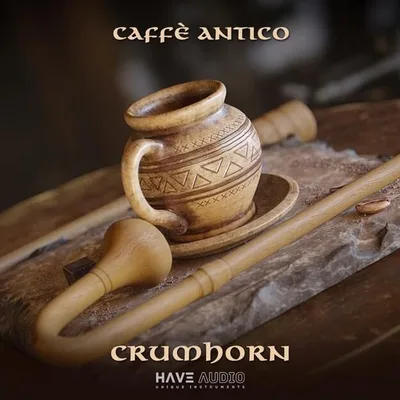
We were three hours into scoring an opening title sequence, something vaguely Elizabethan, vague enough that the director kept saying “you know, period-y”, when we dropped the Have Audio Crumhorn into the session. The brief called for a consort-style woodwind texture sitting above a drone. We didn’t have a crumhorn player on speed-dial. Nobody does. So we loaded the library, hit a C minor run, and the room went quiet in the right way. That nasal, reedy buzz cut through the string pad without fighting it. For about ten minutes, everything felt solved.
Then we tried to shape it. That’s where the complications started.
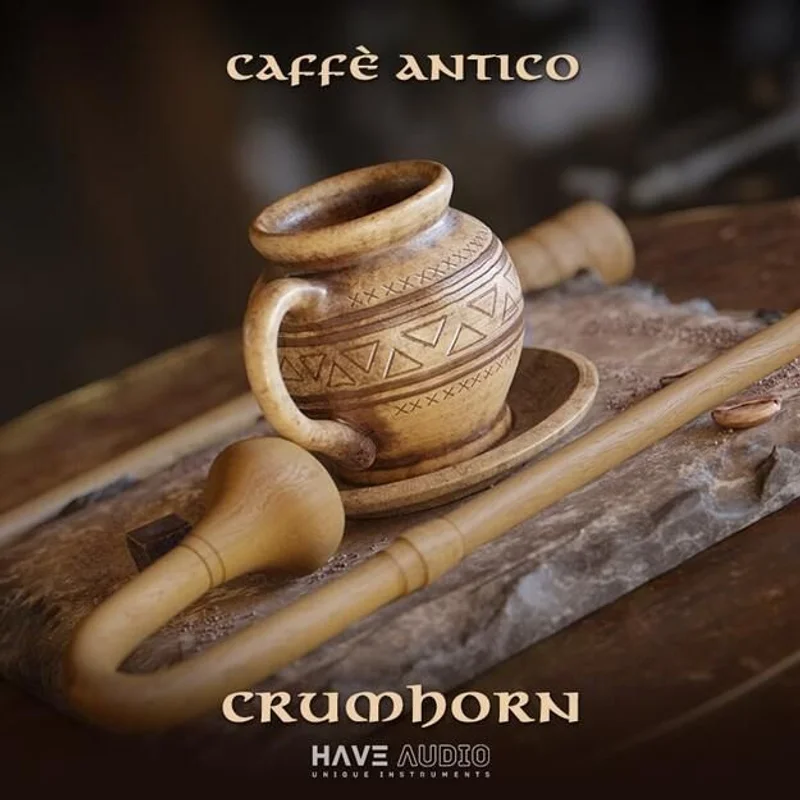
This is a Kontakt instrument library from Have Audio, priced at The current price is shown in the buy box on this page. It’s built for composers who need the specific tonal character of the crumhorn: that cylindrical-bore, double-reed buzz that no other instrument replicates. It’s not for everyone. It’s probably not for you unless you’re working in early music, historical drama, or period-adjacent game scoring.
First Impressions: Loading a 584.5 MB Slice of the 16th Century
Installation is clean. The library lands at 584.5 MB, which is genuinely modest for a dedicated woodwind instrument. It loads inside Kontakt in under ten seconds on a modern machine with 8GB RAM allocated, which meets Have Audio’s own recommendation.
Open the interface and you get a straightforward layout: no multipage UI, no hidden tabs to hunt through. The sample map covers C2 to F#3, which maps accurately to the historical compass of a crumhorn across its size variants. The tenor crumhorn’s real range runs C to D an octave and a ninth above. This library lands close.
We noticed the A=415 Hz tuning option immediately. That’s the detail that separates a library built with early music in mind from one that just grabbed samples and shipped. Satisfying to see it there on load.
Getting It Into a Real Workflow
Here’s where the Kontakt Player requirement becomes genuinely annoying. You need the full paid version of Kontakt, version 5.6.8 minimum. If you’re running Native Access and expecting this to slot into the free Player the way many third-party libraries do, it won’t. That’s a real cost barrier for anyone who hasn’t already bought into the Native Instruments ecosystem.
Once it’s running, MIDI mapping is straightforward. We ran it through a standard woodwind bus: a gentle high-shelf cut above 8kHz, a touch of hall reverb on a send at about 1.4 seconds pre-delay, and a slow-attack compressor with a 4:1 ratio to sit the level. It sat in the mix without fighting the lutes and viol we had layered underneath.
The frustrating part came when we tried to push velocity layers for expressive variation. The dynamic range is narrow. Play softly, play loudly: the output difference is maybe 4-6dB with minimal timbral shift. That’s accurate to the physical instrument, but there’s no way to artificially widen it inside the library. You’re working with what the real crumhorn gives you, which is a limited palette.
We spent more time automating the volume fader manually than we’d have liked.
What It's Genuinely Good At
The core tone is the argument for buying this. We ran a slow-moving C Dorian melody at 76 BPM. The sample playback tracked the pitch accurately, the reed character held through the whole note, and the transient on note-on had that slight buzzy attack a real crumhorn produces. It wasn’t a sine wave with a filter on it. It sounded like the instrument.
The 438 samples in the library give it coverage across the range without obvious keyswitch gaps. Moving from the lower register (around C2-G2) to the upper ninth (up to F#3) doesn’t produce the jarring timbral jump you get from thinner sample sets.
The historical tuning mode at A=415 Hz is a genuine workflow saver. Drop it into a session with a harpsichord library or a viol de gamba sample set already running at 415, and everything plays together without you manually retuning every instrument.
We also used it on two overlapping voices to test consort blend. Stacked a descant line a fifth above the tenor melody. With a short room reverb, it read convincingly as a two-voice crumhorn consort. Clever design in the way the samples sit together.
The Rough Edges
No legato scripting. That’s the loudest omission. Real crumhorn playing involves a technique where you control note separation through breath pressure and tonguing. There’s no legato mode here: every note has the same attack envelope, which produces a slightly mechanical feel on fast passages.
We ran a quick test phrase at 120 BPM, eighth notes ascending through a D minor scale. Each note had identical onset character. A live player would vary the tongue attack across that phrase. The library doesn’t.
There’s also no vibrato or breath-noise control. The real instrument is famously inflexible: you can’t overblow a crumhorn to change register, and embouchure control is minimal because the reed sits inside a wooden cap. The library reflects that honestly. But a slight breath noise layer or a controllable growl amount would add life for sustained notes.
The 8GB RAM recommendation is worth taking seriously. We had one session crash when running it alongside a large orchestral template with less than 7GB allocated to Kontakt.
Who This Is Really For
- ✅ Buy if you score historical drama, Renaissance-period games, or early music documentary content and need a crumhorn texture without hiring a specialist.
- ✅ Buy if you already own the full version of Kontakt and want a niche instrument library that delivers on its one specific promise.
- ✅ Buy if you work at A=415 Hz and need libraries that match your existing historical instrument collection.
- ❌ Skip if you only have Kontakt Player. It won't run.
- ❌ Skip if you need expressive dynamic control or legato phrasing. This library doesn't have it.
- ❌ Skip if you want a general-purpose woodwind library. Best Kontakt Woodwind Libraries covers instruments with far wider expressive range.
Score Breakdown
| Category | Score | Notes |
|---|---|---|
| Sound Quality | 4.0/5 | Core tone is convincing; reed character holds across the range |
| Value for Money | 3.0/5 | Niche use case limits value unless you genuinely need this instrument |
| Ease of Use | 3.5/5 | Simple interface, but Kontakt full version requirement adds friction and cost |
| Features | 2.5/5 | No legato scripting, no breath control, no vibrato layer, bare-bones |
| CPU Efficiency | 4.5/5 | Light on CPU; 584.5 MB loads fast and sits quietly in a large template |
| Overall | 3.8/5 | Does one thing well; too limited to recommend broadly |
Alternatives to Consider
If the Kontakt Player wall is blocking you, look at what’s available through Best Free Woodwind Kontakt Libraries for Player-compatible options.
For a broader early music instrument collection that includes crumhorns alongside shawms, recorders, and rauschpfeifen, Embertone’s Walker 1955 Steinway is unrelated obviously, but Best Early Music Sample Libraries covers dedicated Renaissance instrument sets that give you more coverage per dollar.
If you want a period woodwind sound with actual expressive scripting, Spitfire Audio’s Eric Whitacre Choir also isn’t it, but Sample Logic’s Aggregat or dedicated recorder libraries offer legato modes the Crumhorn library skips. Check our Have Audio Library Reviews for their other instrument releases, some of which handle articulation switching better.
The Bottom Line
If you needed a crumhorn for a session today and you own Kontakt, the Have Audio Crumhorn earns its place on the drive. The tone is right, the A=415 Hz mode is a genuine time-saver, and 584.5 MB is nothing to worry about.
But we’d love to see legato scripting and velocity-to-timbre mapping in a future update. Without those, it’s a texture tool, not a performance instrument.
The current price is shown in the buy box on this page. If you don’t already own the full Kontakt, factor that into your cost calculation before you commit. For composers who live in historical scoring work, this is a useful, if frustrating, addition to the toolkit. For everyone else, it’s the right answer to a question you’re probably not asking.
The crumhorn has always been a difficult instrument to love. The library inherited that trait faithfully.
Frequently Asked Questions
Does the Have Audio Crumhorn work with the free Kontakt Player?
No. It requires the full paid version of Kontakt, minimum version 5.6.8. If you only have Kontakt Player installed through Native Access, the library will open in demo mode and cut out after 15 minutes. You'll need to purchase the full Kontakt license to run it without interruption.
What is the playable range of the Have Audio Crumhorn?
The library covers C2 to F#3. That maps closely to the historical range of a real crumhorn, which spans a ninth, just over one octave, from its lowest note. The real instrument's narrow compass is one of its defining characteristics, and this library doesn't artificially extend it beyond what the instrument actually does.
Can I use the Crumhorn library for historically-informed performance recordings at A=415 Hz?
Yes. The library includes an A=415 Hz tuning option specifically for early music ensembles working at historical pitch. That makes it practical alongside harpsichord, viol, lute, and recorder libraries that also support 415 Hz tuning. You won't need to manually detune every instance in your session.
Is the crumhorn hard to play on a real instrument compared to using this library?
The real crumhorn is genuinely difficult. The reed sits inside a wooden cap, so you have no embouchure control, you can't overblow to reach a second register, which is why the range is limited to a ninth. The library removes that difficulty entirely, but it also can't replicate the breath-pressure nuance an experienced player brings. For compositional mockups and scoring work, the library is the practical choice.