Getting a synthetic vocalist to sound human enough to keep in a final mix is one of the most frustrating problems in modern production. Not demo-quality human. Actually human. The kind of vocal that doesn’t pull a listener out of a track the second a phrase starts.
Jin 2 Voice for Synthesizer V Studio 2 Pro, released March 21, 2025 by Dreamtonics, is the second-generation version of their male vocalist voice library, and it takes a serious swing at that problem. It’s built for dance, R&B, funk, and soul producers who want a reliable synthetic male voice with range, not just one timbre locked to one genre. We spent time inside it across multiple sessions and walked away with a clear opinion.
The Problem This Solves
Most synthetic voice libraries give you one sound. One character. One lane. You dial in your melody, you get your one flavour of artificial, and then you spend the next three hours fighting automation curves trying to fake dynamic expression that should have been baked into the engine.
Jin 1 had this problem badly. The original voice was usable but stiff. Getting it to breathe naturally meant manual volume automation at every phrase boundary, and cross-lingual attempts sounded like the voice was fighting the language rather than singing in it.
Jin 2 attacks this with Diffusion Probabilistic Models. The DPM-based AI handles breathing and volume shifts automatically, across six languages: Japanese, English, Mandarin, Cantonese, Spanish, and Korean. That’s the specific frustration this solves. Less manual work. More natural output. Faster iteration when you’re building out a song idea at 2 a.m.
How It Performs in Practice
We loaded a soul production in Synthesizer V Studio 2 Pro and built a verse-to-chorus structure using three of Jin 2’s five vocal modes.
The Gentle mode sat at the verse. We set the melody, left the breathing parameters at default, and played it back. The phrase endings faded with a naturalness that Jin 1 never produced without manual gain automation. That was satisfying in a way that actually surprised us. One less thing to fight.
We pushed into Belt mode for the chorus. The timbre shifted up in harmonic density, and the top of the register stayed controlled without that metallic sheen that plagues cheaper voice libraries when they’re pushed. We A/B’d this against a session where we’d tried to replicate the same energy with a competing library, and the difference in phrase-end behavior was clear. Jin 2 didn’t clip into artificial-sounding sustain.
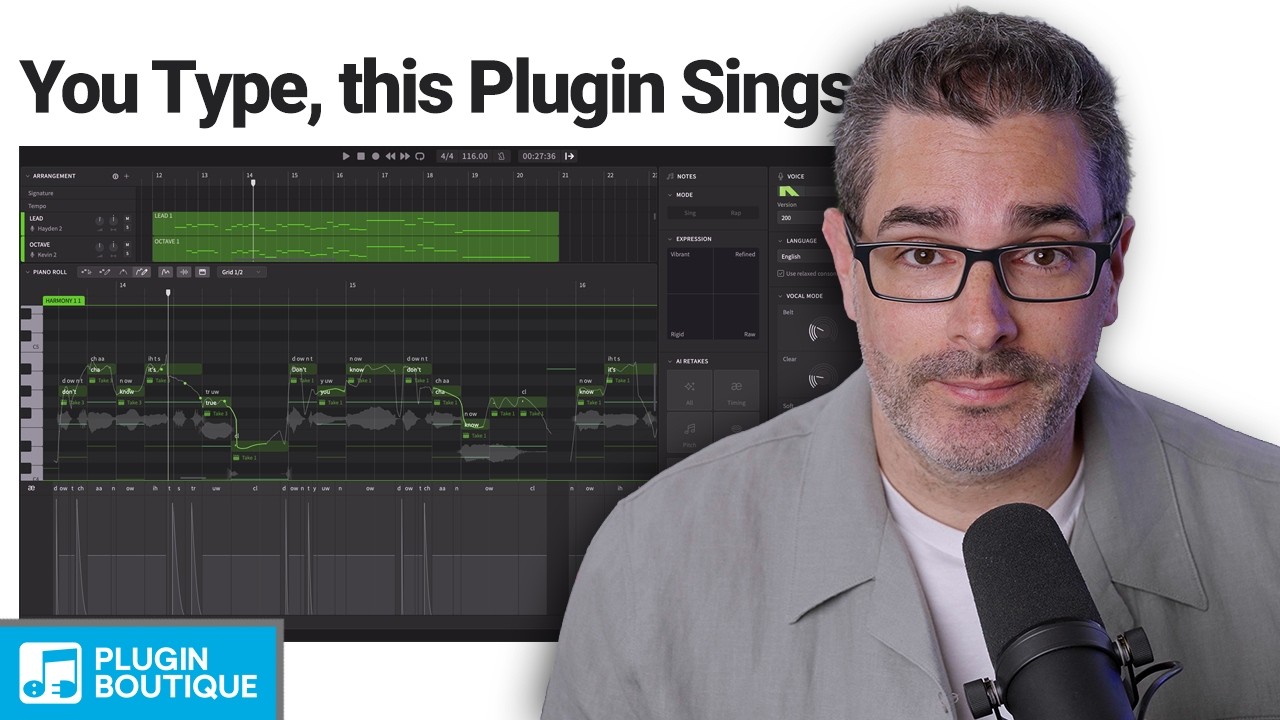
AI Retakes is the workflow feature we’d tell every songwriter to use immediately. You write the phrase once, hit Retakes, and Jin 2 generates multiple interpretations of the same line. We pulled four takes from a single hook phrase and used elements from two of them. It’s not magic. Some retakes are ugly. But having four options in 30 seconds instead of hand-tuning one for 20 minutes changes how you work.
Cross-lingual performance is good but uneven. Japanese and English are the strongest. We ran an English verse into a Japanese pre-chorus without switching voice instances, and the pronunciation held. Mandarin was serviceable. Cantonese and Spanish were noticeably rougher, vowel transitions sounded slightly mechanical compared to the Japanese output. If your production is Cantonese-forward, we’d want to hear more development before committing.
The Airy and Resonant modes fill the middle ground between Gentle and Belt. Powerful is the fifth mode, and it’s the one we’d use least for studio work. It pushes hard and reads more as a stylistic character voice than a flexible production tool.

Strengths and Weaknesses
The strongest thing about Jin 2 is the five-mode system in combination with DPM-driven naturalness. Those two features together mean you can sketch an entire song structure with one voice library and have it feel like the voice is actually performing, not just playing MIDI notes. That’s a real advantage over the previous generation and over several competitors.
The weakness is the real-world entry cost. Jin 2 lists at $79 (the pre-order window at a lower price has closed). But you cannot run it without Synthesizer V Studio 2 Pro, which costs extra. That is a steep combined cost if you are starting fresh. The upgrade path for Jin 1 owners is much more reasonable, with a limited-time window that brought it even lower. If you’re already in the ecosystem, this is an easy call. If you’re not, budget accordingly.
We also wish the Powerful mode were more refined. It feels like a rough sketch of a direction rather than a finished tool. Annoying, because the concept is right. The execution just isn’t there yet.
Value for the Price
For existing Synthesizer V Studio 2 Pro users upgrading from Jin 1, this is straightforward. Paying the upgrade price for a meaningfully improved voice with five modes, six-language support, and AI Retakes is fair. We’d buy this ourselves without much hesitation.
For new users, the combined investment is harder to justify. It’s competitive with Ace Studio’s subscription model over a year, but the value depends entirely on how deep you go into vocal synthesis. If this is your primary workflow, it’s worth it. If you need one vocal for one project, it’s not.
Who Should and Shouldn't Buy This
✅ Buy if you’re already running Synthesizer V Studio 2 Pro and want a significant upgrade from Jin 1. ✅ Buy if you produce dance, R&B, funk, or soul and need a multilingual male vocalist that can cover verse-to-chorus dynamics without constant manual intervention. ✅ Buy if you write songs fast and want AI Retakes to speed up vocal arrangement decisions.
Skip if you do not own Synthesizer V Studio 2 Pro and are not ready to buy it on top of the voice library. ❌ Skip if Cantonese or Spanish is your primary target language. The synthesis in those languages isn’t ready to lead a track. ❌ Skip if you want a fully produced, final-mix vocalist out of the box without learning the platform. This rewards time invested.
Score Breakdown
| Category | Score | Notes |
|---|---|---|
| Sound Quality | 4.3/5 | Genuine step forward from Jin 1; Japanese and English modes are the highlight |
| Value for Money | 3.8/5 | Fair for existing users; steep total entry cost for newcomers |
| Ease of Use | 3.5/5 | AI Retakes is brilliant, but the platform has a learning curve |
| Features | 4.3/5 | Five vocal modes plus six-language cross-lingual synthesis is a strong feature set |
| CPU Efficiency | 3.8/5 | DPM rendering costs more CPU than the v1 engine; fine on modern machines |
| Overall | 4.2/5 | One of the stronger male voice libraries in the SVS ecosystem, with a real-world cost caveat |
Alternatives to Consider
If Jin 2 isn’t the right fit, here are three directions worth looking at.
Ace Studio AI vocalist review is the most direct competitor. It runs on a subscription model that can work out cheaper short-term for light users. The voice quality is competitive, and the interface is arguably more approachable for producers who haven’t used SVS before. We’d compare both before committing.
Synthesizer V Studio 2 Pro voice library roundup covers other voice options inside the same ecosystem. If you want a female counterpart to pair with Jin 2, or a different male character, start there before buying outside the platform.
VOCALOID6 review is worth a look if you’re more J-pop focused. The vocal character range in VOCALOID6 suits that genre better, though we find the SVS workflow considerably faster for iteration.
Our Verdict
Jin 2 is genuinely better than Jin 1 in every area that matters. The DPM-driven naturalness, the five vocal modes, and AI Retakes are real production tools, not marketing checkboxes. We loaded it into a soul production and it contributed something useful in the first session.
The caveat is honest: if you are not already in the Synthesizer V ecosystem, the total cost is significant before you have written a note. That’s the number to decide against, not $79.
For Jin 1 users, the upgrade price makes this close to a no-brainer. For newcomers who produce R&B, dance, or funk and want a serious multilingual male vocal in their toolkit, it’s worth the full investment. Everyone else can wait for a sale or explore free Synthesizer V voice libraries before committing.
Frequently Asked Questions
Do I need Synthesizer V Studio 2 Pro to use Jin 2?
Yes. Jin 2 is a voice library that runs inside Synthesizer V Studio 2 Pro. It won't function as a standalone plugin or inside a DAW without the host software. Budget for the Pro version on top of the Jin 2 library price if you are starting from scratch.
What happened to the original Jin voice?
Dreamtonics discontinued the original Jin voice library on March 21, 2025, the same day Jin 2 launched. Existing Jin 1 owners can still use their purchased copy, but it's no longer available for new purchase. The upgrade path from Jin 1 to Jin 2 was priced lower during the launch window and has since moved to standard pricing.
Can Jin 2 switch between languages in the same song?
Yes. Cross-lingual synthesis lets you write lyrics in different languages across the same vocal track without switching voice instances. Japanese and English produce the most natural results. Mandarin is serviceable. Cantonese and Spanish are the weakest of the six supported languages and may need more manual correction to sit cleanly in a mix.
How does AI Retakes actually work in a session?
You write a phrase, then trigger AI Retakes to generate multiple alternative performances of that same phrase. Jin 2 produces variations in timing, breath placement, and micro-dynamics. You audition each take and pick the one that fits. It doesn't replace taste or judgment, but it replaces the time you'd spend manually tweaking one take into something workable.