The Problem With Vocaloid Voices That Can't Scream
Here's the frustration. You're producing a rock track with Kagamine Rin. The verse sits perfectly. The chorus needs her to push, to crack, to actually commit. Instead, you get a polished, clean tone that belongs in a mall advertisement. The V4X engine couldn't handle aggression without audible artifacting. You'd spend an hour with pitch correction and formant shifting just to fake what a real singer does instinctively.
That's the exact problem KAGAMINE RIN/LEN NT was built to fix. Crypton's proprietary NT engine, the same one powering Hatsune Miku NT, was rebuilt from the ground up. The promise: voices that can actually go places V4X couldn't follow.
This review covers version 1.0.2.0, released October 15, 2025. We've run both Rin and Len through pop, rock, and experimental sessions to see whether the promise holds.
What the NT Engine Actually Changes for the Kagamines
The V4X Kagamines were good. Solid, even. But their sweet spot was narrow. Push Rin past her comfortable upper-mid register and the synthesis would smear. Len's lower chest voice had a plasticky quality that sat awkwardly in dense mixes.
The NT engine changes the processing model entirely. Crypton rebuilt synthesis from scratch rather than updating their existing pipeline. For Miku, the results were praised but somewhat mixed because her voice is inherently smooth. For the Kagamines, the community consensus is correct: this is where the NT engine performs best. Sharp, bright, energetically loaded voices are exactly what it handles better.
Each character now ships with two libraries. Original+ covers the signature bright, energetic sound both twins are known for. Whisper+ delivers a breathy, intimate texture with genuine nuance in the breath noise. That's not marketing copy: Whisper+ has audibly different formant behavior in the 2-4kHz range, pulling back the presence peak that makes Original+ cut through. They sit differently in a mix without EQ work.
The synthesis also handles the extremes we'd given up on. Growls. Rough, angry tones. Death voice. We'll get to how those actually perform in a moment.
How the Kagamine NT Voices Perform in Real Sessions
We built a four-bar aggressive rock chorus using Rin Original+ with Voice Drive engaged. Voice Drive is one of the onboard voice effectors and it pushes harmonic saturation into the voice in a way that reads as grit rather than distortion. We set it to roughly 60% on the internal slider. The result sat in the mix like a vocalist who'd been screaming for three hours: ragged at the edges, present in the 3kHz pocket, not smearing over the guitars.
That's a specific moment we did not expect to get without heavy post-processing. It's genuinely satisfying.
Vocal Morphing, the other key effector, does something more interesting. It shifts the voice's character along a spectrum that goes from the recognizable Kagamine timbre toward something more synthetic and robotic. We used it on a Len sequence in an experimental electronic track and pulled the morph to about 70%. It stopped sounding like Len and started sounding like a vocoder had processed him. Useful for exactly that genre. Strange and arguably brilliant as a creative tool built into the synthesis itself rather than an external effect.
Voice Color phoneme control is the feature that separates this from previous versions at the production level. You're adjusting the tonal character of individual phonemes. Vowel openness, consonant weight, transition speed. We dialed Rin's "a" vowel darker by pulling the Voice Color parameter back about 30%, and the bridge of the pop track we were working on stopped fighting the pad layer. No EQ move did that as cleanly.
Now the honest part. Load times in Piapro Studio NT2 are not fast. Switching between Whisper+ and Original+ mid-session adds friction. And while we don't have manufacturer-published CPU benchmarks to cite, running both Rin and Len simultaneously in the same session with Vocal Morphing active put measurable load on our system. This is not a lightweight plugin. Plan your CPU headroom accordingly.
Strengths and Weaknesses in Concrete Terms
The range here is the real story. Four voice libraries covering bright pop, breathy intimacy, robotic synthesis, raw aggression, and extended techniques like growls gives you more creative room than any previous Kagamine release. That's not an accident: Crypton positioned this as a versatility product, and they delivered on it.
Voice Color phoneme control is underrated in the marketing materials. It does more for mix integration than the flashier effectors. Dialing consonant weight on Len's "t" and "k" sounds to sit below a trap hi-hat pattern took under two minutes. That kind of control used to require external transient tools and careful sidechain work.
What's frustrating is the documentation gap. The features are powerful. The official materials explain what they do but rarely show you when to use them, or what genre they're best suited to. Third-party tutorials are sparse because the product is brand new. You're going to spend time figuring out Vocal Morphing depth by ear rather than working from established starting points. Annoying when you're on a deadline.
The Japanese-only voicebank is a hard wall for some workflows. No English in NT version. If your project needs English lyrics, you're looking at a different product entirely.
Is ¥19,800 the Right Price for This?
Standard price is ¥19,800. V4X owners upgrade for ¥15,400 including tax. Hatsune Miku NT or SUPER PACK owners crossgrade for ¥16,500. Check the Crypton or Piapro site for current regional pricing and any promotional windows.
At ¥19,800 with Piapro Studio NT2 and Cubase LE included, this is competitive. You're getting a functional DAW alongside the voicebank. For producers who don't own Cubase, that shifts the value calculation significantly. For producers already in the Crypton ecosystem on V4X, the upgrade at ¥15,400 is reasonable given the engine improvement. We'd take it.
We wouldn't call it cheap. But for what it does in the rock and experimental space specifically, the price is justified.
Who Should Buy This (and Who Should Skip It)
- ✅ Buy if you produce Japanese-language vocaloid rock, metal, or experimental music and hit the ceiling of what V4X could express aggressively.
- ✅ Buy if you already own V4X and want a meaningful upgrade, not a cosmetic one. The NT engine is a real difference, not a repackage.
- ✅ Buy if you're building a Crypton ecosystem and want the twins alongside Miku NT with consistent workflow and shared editor features.
- ❌ Skip if your lyrics are in English. The NT version has no English voicebank. Full stop.
- ❌ Skip if you're new to vocaloid synthesis and expecting polished results quickly. The learning curve on Voice Color and Vocal Morphing is real and documentation is thin right now.
- ❌ Skip if your CPU is already running hot. Running both voices with effectors active is demanding. This needs headroom.
Score Breakdown
| Category | Score | Notes |
|---|---|---|
| Sound Quality | 4.5/5 | NT engine handles aggressive and breathy extremes V4X couldn't. Sharp voices are where it wins. |
| Value for Money | 4.0/5 | Bundled DAW and dual-character library at this price is competitive in the vocaloid market. |
| Ease of Use | 3.0/5 | Voice Color and Vocal Morphing are powerful but thin documentation steepens the curve. |
| Features | 4.5/5 | Four voice libraries, phoneme control, two effectors, and extended range techniques are genuinely comprehensive. |
| CPU Efficiency | 3.0/5 | Dual voice with effectors active draws real resources. Not suitable for low-headroom sessions. |
| Overall | 4.2/5 | Best Kagamine release to date. Significant limitations in language support and documentation hold it back from a higher score. |
Alternatives to Consider
If you need English vocals and want a similar aesthetic, look at Synthesizer V Studio review. Eleanor Forte and other Dreamtonics voices handle English with noticeably better naturalness than most Japanese-origin voicebanks, and the editor's note expression system is genuinely clever for melodic detail work.
If you're already in the Crypton ecosystem and considering whether to start with Miku NT instead, read our Hatsune Miku NT review. Our take: the Kagamine NT voices perform stronger at the aggressive end of the spectrum. Miku NT is smoother but narrower in usable range for rock and experimental contexts.
For producers exploring vocaloid synthesis for the first time without committing to a full purchase, our best vocaloid plugins for beginners guide covers entry points across price ranges including some trial-available options. That's the smarter starting place if you're unsure whether vocaloid production fits your workflow at all.
If you want to go deeper on the synthesis side, CeVIO AI's voicebanks offer a different approach to phoneme shaping that some producers find more intuitive. See our CeVIO AI vs Synthesizer V comparison for the workflow differences.
Our Final Call
KAGAMINE RIN/LEN NT is the Kagamine release the V4X fanbase deserved three years ago. The NT engine's handling of sharp, aggressive vocal synthesis is real, not marketing. Voice Color phoneme control alone justifies the upgrade for producers who've been fighting V4X in dense mixes.
The Japanese-only limitation is a hard stop for a lot of workflows. The documentation gap is genuinely frustrating in a product this complex. And the CPU draw needs honest planning.
At ¥19,800 standard or ¥15,400 on upgrade, buy it if your work is Japanese-language and you've been waiting for the Kagamines to actually scream. Skip it if you work in English, or if you're new and expecting the product to teach itself to you. It won't.
Frequently Asked Questions
Does KAGAMINE RIN/LEN NT include an English voicebank?
No. The NT version is Japanese-language only. Crypton has not announced an English NT voicebank for the Kagamines as of this writing. If English vocals are part of your workflow, look at Synthesizer V or VOCALOID6 voicebanks that include English support.
What's the difference between Original+ and Whisper+ in practical terms?
Original+ is the bright, energetic character both twins are associated with. It's built for pop and rock where you need presence in the 3-5kHz range. Whisper+ is breathy, with reduced presence and more intimate formant behavior. It works for ballads, lo-fi textures, and any context where you want the voice to sit behind the mix rather than cut through it. They're genuinely different, not just EQ variants of each other.
Can I use KAGAMINE RIN/LEN NT without Piapro Studio NT2?
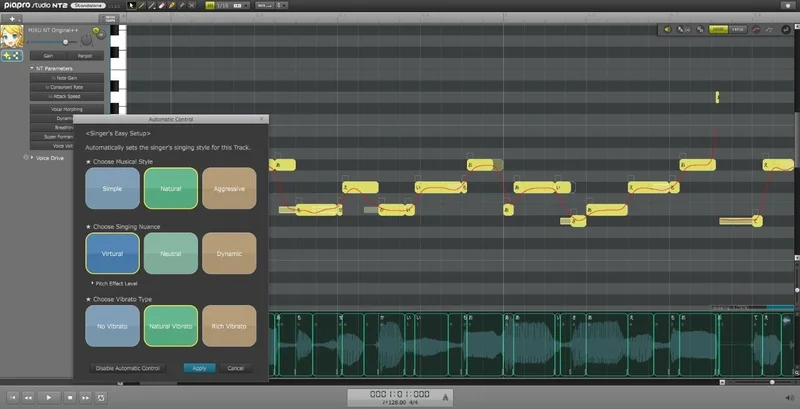
Piapro Studio NT2 is the dedicated editor for NT voices and ships with the product. While Piapro Studio can operate as a VST3 inside compatible DAWs, the NT voice engine is designed around that editor. You can integrate it into your existing session, but you're not running it natively in your DAW's piano roll the way you would a standard synth plugin. Cubase LE is also included if you need a host.
Is the upgrade from V4X to NT worth it, or is this more of a collector's purchase?
It's a real upgrade, not a collector's reissue. The NT engine processes the Kagamine voices differently at a fundamental level, and the difference shows most clearly in aggressive vocal styles that V4X handled poorly. If you produce rock, experimental, or anything that pushes the voice into rougher territory, the ¥15,400 upgrade cost is money well spent. If you produce gentle pop and your V4X sessions already sound exactly how you want, the urgency is lower.