If you're comparing Organetta to other reed organ libraries in Kontakt, like Soundiron's own vintage organ offerings or the Bontempi-style toy keyboard libraries, AudioThing's version wins because it's built to be bent, not preserved. This isn't a museum piece. It's a $16 sound design toolkit built around one of the stranger instruments Hohner ever produced, and by the end of this review, you'll know whether that's what you actually need.
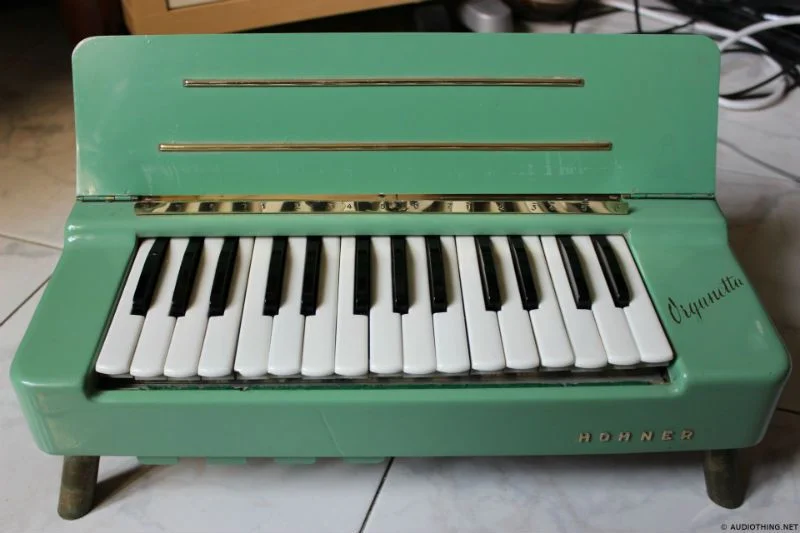
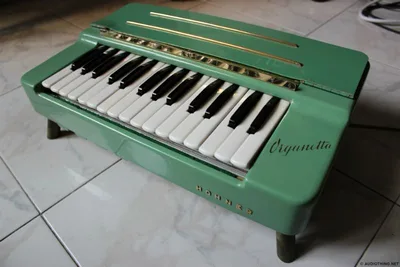
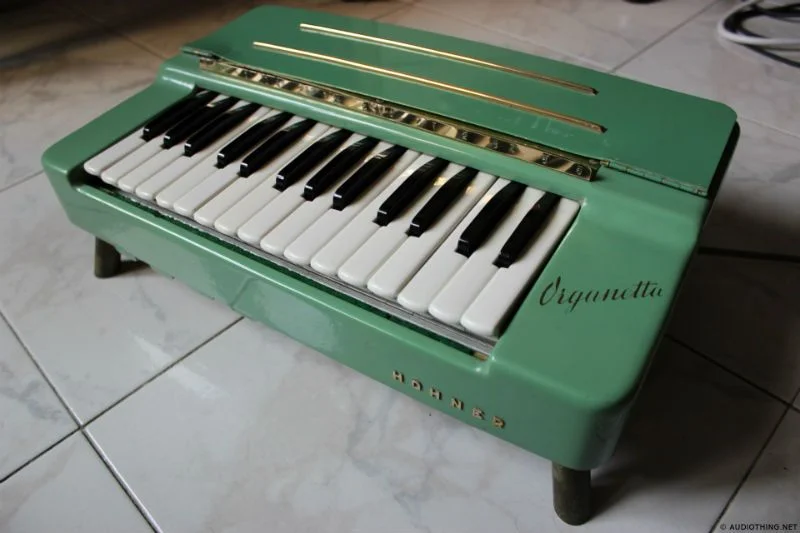
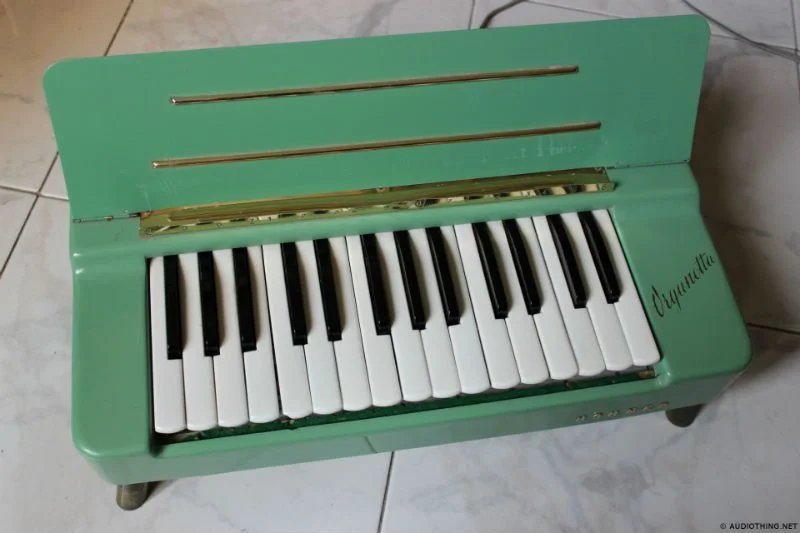
The source material is a Hohner Organetta, a small portable reed organ from the late 1950s. Its sound comes from an electric fan blowing air through brass reeds. That gives it a character sitting somewhere between a melodica and an accordion, but breathier and more unpredictable. AudioThing sampled it with two microphones and then built a modular FX environment around those samples.
This review is for producers who've heard a reed organ in someone else's track and wanted it, or who are building lo-fi, cinematic, or experimental music and need texture that sits outside the standard Kontakt instrument palette.
How It Compares Out of the Box
Lined up against other vintage reed instrument libraries, Organetta is immediately different in philosophy. Most competing libraries aim for authenticity. They capture the instrument, present it cleanly, and leave you to it. AudioThing captures the Hohner Organetta and then hands you a synthesizer.
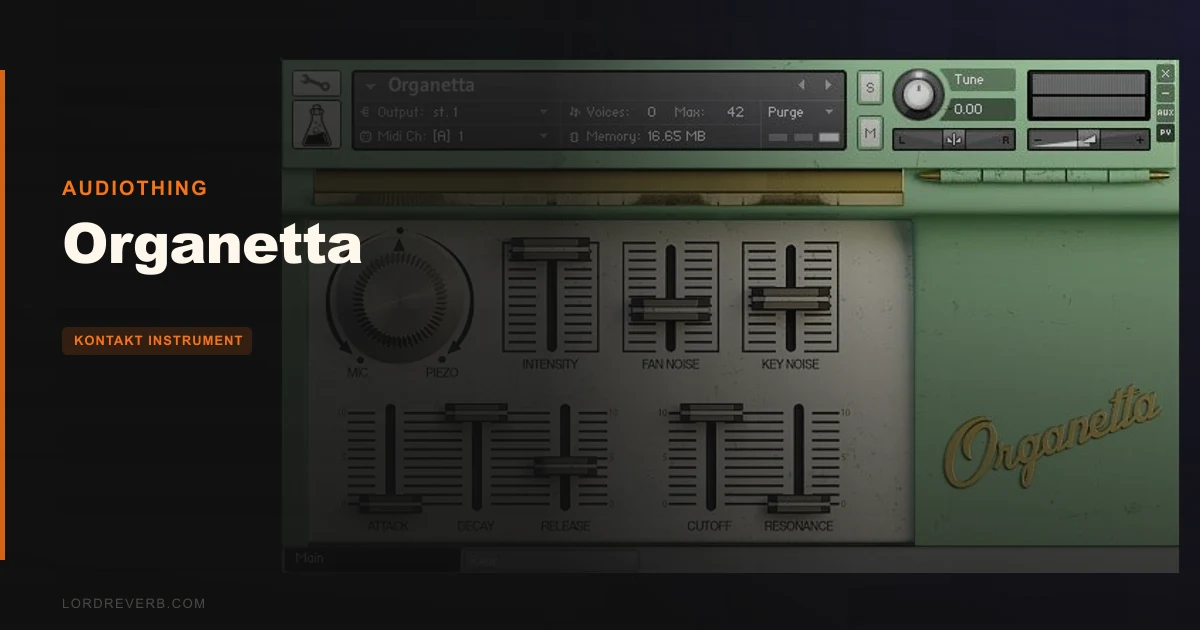
Soundiron's reed instrument libraries skew toward realism and give you rich round-robin layers but minimal synthesis shaping. Organetta skews toward sound design and gives you full ADSR, a resonant filter, portamento, and a modular FX panel before you've even touched your own plugins.
Out of the box, the six included .nki files each represent a different configuration. You're not loading one instrument and tweaking. You're choosing a starting position. That structure is clever. It means the library feels more like a collection of instruments than a single capture with variations.
The dual-mic approach also separates it immediately. The large diaphragm condenser gives you the instrument's natural air and warmth. The piezo pickup, attached directly to the chassis, gives you something stranger: a more tactile, close, almost broken-speaker quality. These aren't just tone options. They're two different instruments from the same source.
What's Inside the Sampling Engine
AudioThing recorded 144 samples at 44.1kHz and 24-bit. Note samples run to 17 seconds, which is long enough that the natural decay of a held chord never sounds looped or artificial. Fan samples run to 30 seconds or more.
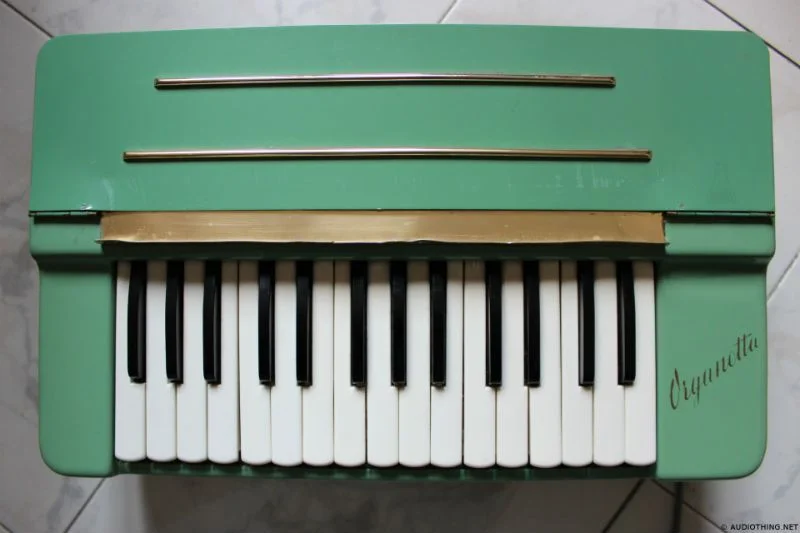
That fan detail is worth explaining. The original Hohner Organetta's electric fan is the engine of its sound. AudioThing removed the fan noise from the core samples, which is the right call for a clean starting point. But they kept the fan recordings separately and mapped them to the green keys on the interface. You can blend the fan back in as an atmospheric layer, or play it solo as a drone texture.
We loaded the fan layer under a long sustained chord and pulled it up about 30% in the mix. The result was an organic, low-level hum underneath the reeds that made the whole thing feel physically present. It's a small feature. It matters a lot.
Two intensity layers sit underneath the samples. Softer playing draws a different character than harder hits, and the crossfade between them tracks velocity in a way that feels natural rather than mechanical. Six round-robin articulations cover both key-down and key-up noises, captured separately. This is where the library earns its "played, not programmed" quality.
Key noise is blendable. You dial it in with a dedicated control. Push it up and you get the mechanical action of the keyboard audible in the performance. Keep it low and the instrument breathes without clicking. This is genuinely useful for realism. It's the kind of detail that separates a good library from one that sounds like a sample collection.
The FX Rack and Sound Design Layer
Here is where Organetta stops being a vintage instrument library and becomes something more interesting. The built-in FX panel includes reverb, delay, and distortion. The modular FX panel adds chorus and stereo spread. The arpeggiator sits on top of all of it.
We ran the piezo mic signal through the distortion, pulled the resonant filter down to around 800Hz, set the arpeggiator to a dotted-eighth pattern, and added a long reverb tail. What came back sounded nothing like a Hohner Organetta. It sounded like something from a late-period Angelo Badalamenti session. Unsettling, harmonic, and completely usable.
That's the point AudioThing is making. The source instrument is the palette. The FX rack is the studio.
The 20 custom patches show you the range the developers intended. Some sit close to the original instrument. Others push the synthesis controls to the edge of recognisability. Browsing them is satisfying. Not every patch is brilliant, but enough of them are to give you an immediate sense of what the tool can do.
Portamento is included and works well for melodic lines that need to slide between notes. It's not a common feature in reed instrument libraries. It's welcome here because it opens the instrument to lead melody work that a straight organ sound would make awkward.
Full ADSR gives you control over how the sound enters, sustains, and exits. Set a slow attack and the Organetta becomes a pad. Cut the release and it punches like a stab. These aren't synthetic transformations. They're applied to real samples, so the underlying character stays intact even when the envelope is extreme.
Where It Wins
The dual-mic setup is the sharpest advantage Organetta holds over alternatives. Blending condenser and piezo gives you a spectrum from refined to raw that no amount of EQ fully replicates after the fact. You're working with two genuinely different captures of the same moment.
The key noise layer is underrated. Reviewers mention the GUI and the sonic character, but this feature gets less attention than it deserves. The ability to dial in the mechanical action of the keyboard adds a performance realism that most sample libraries at this price tier don't bother with.
Six round-robins on key articulations means repetitive melodic passages don't machine-gun. Play the same note six times fast and you'll hear slight variation each time. That's a sampling luxury that's rarely found at this price point.
The fan samples as a standalone layer is a feature we haven't seen in competing libraries. It's a free atmospheric texture included with the instrument. At no extra cost, you have a long-form drone that sits in the same sonic space as the reed tones.
And at $16, the value comparison against anything in the same category is embarrassing for the competition.
Where the Competition Wins
Kontakt Full is a hard requirement. No Player support. If you're on Kontakt Player, this library doesn't load. That's a real barrier at the entry level, and it's annoying because the library itself would suit beginners well.
The sound design ceiling inside the plugin is real. The built-in FX are good for shaping and texturing. They won't replace your primary reverb or your favourite saturation plugin. If you're serious about processing, you'll be routing Organetta out to your own signal chain anyway, which makes the internal FX feel more like a prototyping space than a finished production tool.
Source breadth is also limited. The Hohner Organetta is one instrument. The library captures it thoroughly, but if you need a reed organ library that covers multiple instruments or tonal families, Organetta is the wrong choice. Kontakt Instruments Guide: 5 Things Beginners Must Know covers how to assess library scope before buying, and it's worth reading before you commit to any single-instrument collection.
Professional coverage is thin. We found limited critical evaluation of this library compared to AudioThing's other releases. That doesn't mean it's underperforming. It means you're largely relying on user-generated impressions, which trend positive but aren't always rigorous.
Who Should Buy Which
- ✅ Buy if you make lo-fi, cinematic, or experimental music and need textured reed organ character you can shape with synthesis controls.
- ✅ Buy if you already own Kontakt Full and want a low-risk, high-character addition to your library that won't bloat your drive.
- ✅ Buy if the dual-mic blending workflow fits how you build sounds, this is a tool for producers who work in layers, not presets.
- ❌ Skip if you need a realistic, unprocessed reed organ for traditional folk or vintage pop production. This library wants to be shaped.
- ❌ Skip if you're on Kontakt Player only. It won't run, full stop.
- ❌ Skip if you want a wide range of instrument characters. This is one instrument, captured well, with synthesis on top.
Specs & Technical Details
| Developer | AudioThing |
| Price | $16 |
| Plugin Format | Kontakt Instrument (.nki) + WAV |
| OS Support | Mac / Windows (via Kontakt 4.2.4+) |
| Activation | Kontakt Full licence required |
| CPU Usage | Light to medium (sample-based, no heavy DSP) |
| Trial Available | No |
| Version Reviewed | AudioThing Organetta (2026 edition) |
| File Size (installed) | 618 MB |
| Download Size | 266 MB |
| Sample Rate / Bit Depth | 44.1kHz / 24-bit |
| Instruments Included | 6 .nki files |
| Total Samples | 144 |
| Kontakt Requirement | Full version 4.2.4 or higher |
Score Breakdown
| Category | Score | Notes |
|---|---|---|
| Sound Quality | 4.0/5 | Dual-mic capture is genuinely distinctive; 17-second note samples prevent any loop fatigue |
| Value for Money | 4.5/5 | 618 MB of 24-bit samples with a synthesis layer at this price is hard to argue with |
| Ease of Use | 4.0/5 | GUI is clean and intuitive; Kontakt Full requirement is the only friction point |
| Features | 3.5/5 | FX rack and arpeggiator are solid; fan layer is a nice bonus; synthesis depth is limited compared to dedicated synths |
| CPU Efficiency | 4.0/5 | Sample-based architecture stays light; no heavy convolution or DSP eating your session |
| Overall | 4.0/5 | A focused, well-sampled instrument with enough synthesis to make it genuinely flexible |
The Real-World Workflow: Three Moments That Define It
The first moment that defined our session was loading the piezo mic patch clean with no FX. It was ugly in the best way. Thin, slightly broken, with an almost contact-mic character that sounded nothing like any other reed instrument in our library. We sat it under a piano melody at -8dB and it filled a gap we hadn't known was there.
The second moment was the arpeggiator. We don't expect much from built-in arpeggiators in sample libraries. This one surprised us. Set to a short gate length and a fast rate, with the resonant filter at around 1.2kHz and the delay synced to quarter notes, it generated a rhythmic reed pattern that needed almost no further processing. It went straight into the session.
The third moment was frustrating. We wanted to push the distortion past what the internal unit could deliver and route the Organetta into our own saturation chain. Doing this mid-session required bouncing the output and re-importing, which broke the real-time sound design workflow. It's not a flaw in the library. It's a reminder that the internal FX are a ceiling, not a launchpad. Plan your signal chain before you fall in love with a patch.
Reviewers consistently report that the GUI is intuitive, and we agree. The controls are labelled clearly, laid out logically, and respond to mouse movement without any of the sluggishness you sometimes get in older Kontakt instruments. Users keep running into the Kontakt Full requirement as a surprise, though. If you're about to buy this, check your Kontakt version first.
For anyone building out a broader AudioThing workflow, SX1000 Review: AudioThing's Italian Synth Emulation 2026 covers how their synth emulation philosophy compares to their sample library work. And if you're new to Kontakt instruments generally, Kontakt Instruments Guide: 5 Things Beginners Must Know is the starting point.
Alternatives to Consider
If you need something closer to an authentic vintage organ reproduction rather than a synthesis-forward tool, look at Soundiron's vintage keyboard libraries. They cover similar territory with more emphasis on natural performance feel and less on modular sound design.
For a completely different kind of prepared instrument with a similar lo-fi character, Loot Audio's Palm Mute Piano operates in the same "familiar instrument made strange" space. It's a different sound but the same production philosophy: take something recognisable and make it strange.
If you want a Bontempi-style toy organ library with a simpler architecture and less synthesis depth, those exist and are cheaper, but you'll trade the dual-mic capture and round-robin articulations for a more limited toolkit. For most producers, Organetta's depth wins that comparison.
If you're building a wider AudioThing setup and want to understand how Organetta fits into their broader instrument design approach, SX1000 Review: AudioThing's Italian Synth Emulation 2026 gives useful context on how they approach vintage hardware as source material.
The Verdict
Organetta is not trying to be the most realistic reed organ library. It's trying to be the most useful one. For most producers, that's the right call.
At $16, the only genuine reason to skip it is the Kontakt Full requirement. If you have the full version of Kontakt and any interest in lo-fi, cinematic, or textured sound design, this library earns its place in your collection on its first session.
The dual-mic capture alone is worth the entry. The synthesis layer extends it further than competing libraries at twice the price. The fan samples are a free bonus that you'll use more than you expect.
If you need a reed organ that sounds like a reed organ and nothing else: wrong tool. If you need a reed organ that sounds like itself, then like a slowly disintegrating synthesizer, then like something you've never quite heard before: this is it.
Frequently Asked Questions
Does Organetta work with Kontakt Player?
No. Organetta requires the full version of Kontakt 4.2.4 or higher. It won't load in the free Kontakt Player. Check your version before purchasing, because this is a hard requirement with no workaround.
What makes the dual-mic setup different in practice?
The large diaphragm condenser captures the instrument's natural air and harmonic detail. The piezo pickup, attached directly to the Organetta's chassis, gives you a contact-mic-style signal with more edge and physical grit. Blending these two gives you tonal control that EQ alone can't replicate after the fact, because they're two genuinely different recordings of the same performance.
Can I use the WAV files in a different sampler?
Yes. AudioThing includes the raw WAV files alongside the .nki instruments. You won't have access to the built-in FX rack, arpeggiator, or synthesis controls, but the sample content itself is available for use in any sampler that accepts 44.1kHz/24-bit WAVs.
What kind of music is Organetta best suited to?
Lo-fi, cinematic, and experimental production is where it shines. The synthesis controls and FX rack let you shape the reed organ character into pads, textured stabs, atmospheric drones, and arpeggio lines. It's a weaker choice for traditional or folk music where a straightforward, unprocessed organ sound is the goal.
How large is the library and will it slow down my sessions?
The download is 266 MB and installs to 618 MB. CPU load is light. It's a sample-based instrument without heavy convolution or real-time DSP, so it won't strain a modern session even when you're running other CPU-hungry plugins alongside it. Purge unused samples in Kontakt if you're tight on RAM.