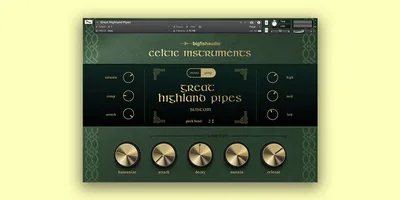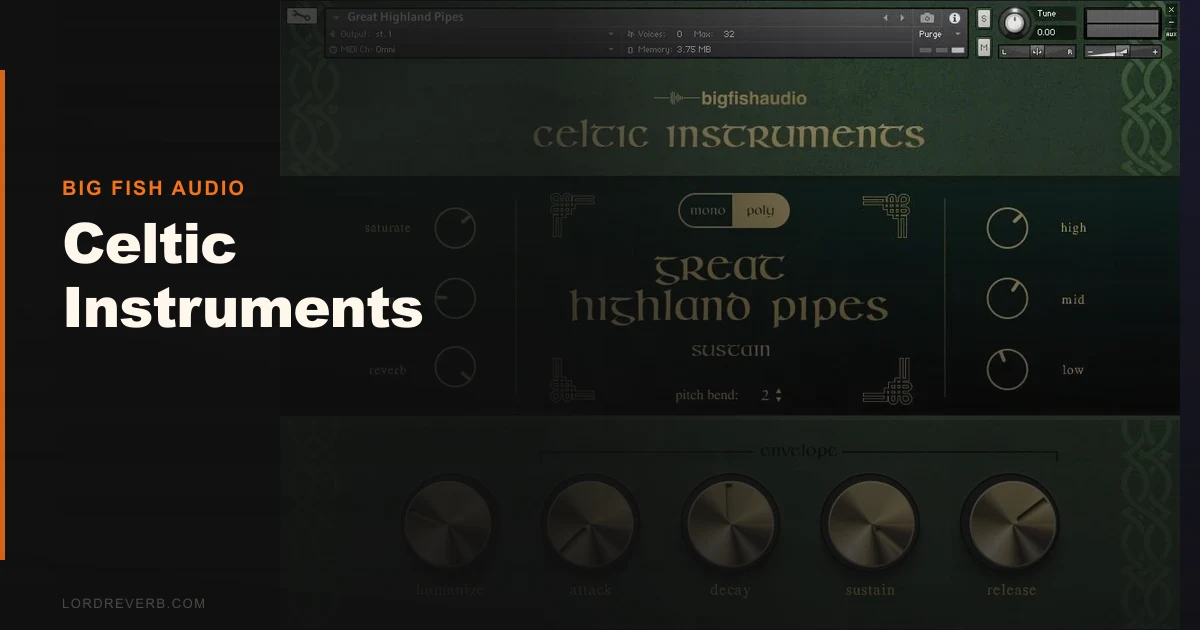
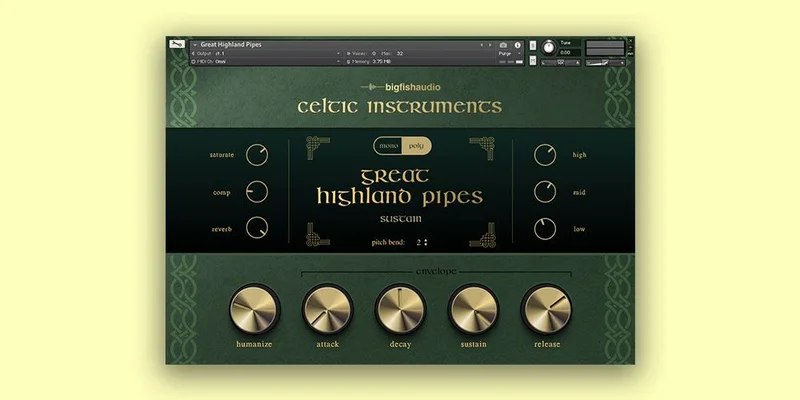
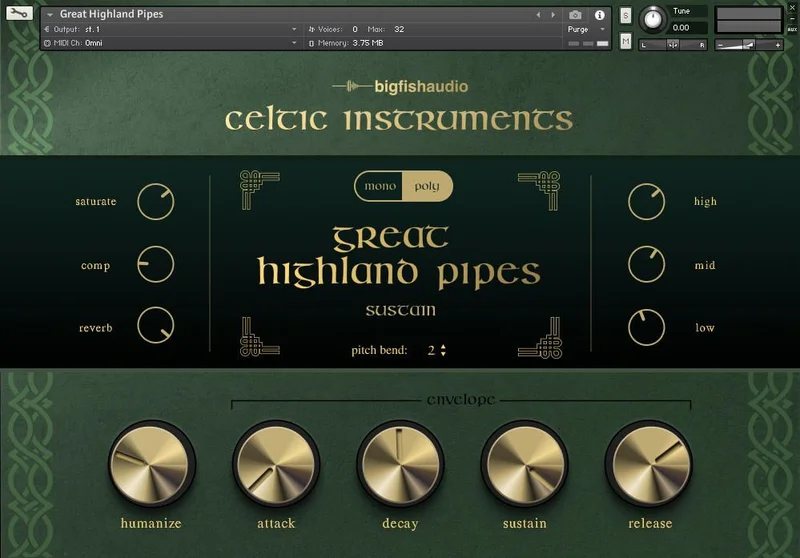
Getting a Celtic mockup to sound like it was recorded in a Dublin pub instead of a plugin folder is one of the most frustrating things in media scoring. The fiddle sits wrong. The tin whistle has no breath. The bagpipes sound like a synthesizer that watched Braveheart once. Celtic Instruments by Big Fish Audio exists specifically to solve that problem, bundling 23 instruments into a single Kontakt library so you're not stitching together five separate purchases just to build one cue.
This is aimed at film, game, and trailer composers who need that ancient, windswept sound and need it working by this afternoon. It's not built for players learning the tin whistle or harp owners looking for a digital backup. It's a production tool.
The Problem With Scoring Celtic Music ITB
The core frustration with Celtic scoring isn't finding the sounds. It's that Celtic instruments are defined by their ornamentation, and most libraries treat ornaments as an afterthought.
A fiddle without cuts and rolls doesn't sound Celtic. It sounds like a slightly nasal violin. A tin whistle without grace notes sounds like a MIDI flute patch from 2003. The bodhran without rhythmic variation sounds like a cardboard box.
The second problem is sonic coherence. If you buy a fiddle library from one developer, a harp from another, and bagpipes from a third, you're mixing three different rooms, three different mic positions, and three different ideas about what "authentic" means. Getting them to sit together takes hours of EQ work and you still don't quite get there.
Celtic Instruments tries to solve both problems in one purchase.
How It Performs in a Real Scoring Session
We loaded the library into Kontakt 6 and started with the fiddle, because that's always the hardest test. The sustained bowing is genuinely satisfying. There's rosin grit in the attack and the tone sits at a frequency range that cuts without being harsh, roughly 2-4kHz forward presence without the 8kHz shriek you get from cheaper fiddle samples.
We then programmed a four-bar reel. No ornaments, straight notes first. It sounded like a polished violin, not a session fiddle. Annoying, but expected. When we switched into the ornament articulations and started placing cuts on the beat downstrokes, it clicked. Not completely, but enough. The cuts are pre-recorded, not algorithmic, so they only work convincingly at tempos close to the original recording session. Stray too far from roughly 140 BPM and the timing feels wrong.
The tin whistle was a different story. We placed it on a simple D-major melody, added grace note articulations before the beat, and it sounded close to a live take on the first try. Genuinely close. The breath noise is recorded at a realistic level, not exaggerated for "effect."
We also ran the bagpipes through a cue that required the drone to sit under a string arrangement. Raw bagpipe drones are notoriously difficult to mix because they sit around Bb2/F3 and fight everything below the midrange. We high-passed at 150Hz and pushed the room mics up, and it blended. Not perfectly. But better than we expected without manual tuning.
The 23 instruments share the same acoustic space. This is the library's strongest practical asset. Drop in the bodhran, the uilleann pipes, the Celtic harp, and the fiddle together and they already feel like they're in the same room. We didn't touch EQ on the first pass and the balance was usable.
For comparison: ERA II Celtic review covers 36 instruments at 12GB after compression, and its per-instrument sampling depth is noticeably higher. Celtic ERA II wins on breadth and file efficiency. Celtic Instruments by Big Fish Audio wins on immediate usability for composers who don't want to spend an hour learning a new interface.
Strengths and Weaknesses
The library's strongest asset is its coherence. Twenty-three instruments, one room. That's a clever decision that saves real session time.
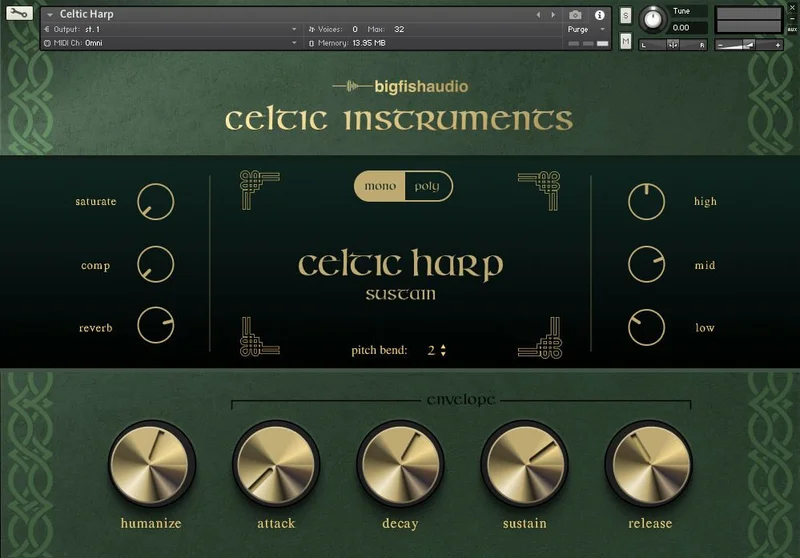
The harp samples deserve a mention. Modern Celtic harps run to about 34 strings and four feet of height. The Big Fish Audio harp captures that full-range resonance well, with believable sympathetic string decay that most harp libraries fake badly.
The weakness is depth. Each instrument gets enough articulations to be useful, but not enough to be convincing across every context. The fiddle has maybe six bowing styles. A dedicated fiddle library like Cinesamples Fiddle review has three times that. If Celtic strings are central to your project, not just supporting texture, you'll feel the ceiling.
The ornament programming is also frustrating to work with at non-standard tempos. The pre-recorded cuts and rolls are locked to their original timing. You can't stretch them cleanly. For composers working at 76 BPM on a slow, cinematic piece, the fast ornaments simply don't fit and you end up not using them.
No regional differentiation is a missed opportunity. Scottish bagpipes, Irish uilleann pipes, and Breton biniou are recorded instruments with distinct tonal and playing-style differences. They're not interchangeable. This library treats them as a genre rather than distinct traditions. That's a creative limitation if you're scoring something that needs to be specifically Irish versus specifically Scottish.
Value for the Price
Check the Big Fish Audio site for current pricing, as this library goes on sale regularly and the street price fluctuates significantly.
At full retail, the value case rests entir
ely on whether you need all 23 instruments. If you do, buying them individually from separate developers would cost considerably more and leave you with the coherence problem we described earlier.
If you only need fiddle and tin whistle for a single project, skip this and rent or buy a dedicated library. You'll get better results for less money.
The honest comparison: Celtic ERA gives you 18GB and 23 instruments. Celtic ERA II pushes to 36 instruments at 12GB compressed. If price is flexible, ERA II is the better long-term investment. Celtic Instruments by Big Fish Audio sits in a practical middle ground, but you should catch it on sale.
Who Should (and Shouldn't) Buy This
- ✅ Buy if you're scoring a fantasy game or film that needs multiple Celtic instruments and you want them pre-matched in the same acoustic space.
- ✅ Buy if you're new to Celtic scoring and want a practical starting library that doesn't require deep articulation knowledge to produce a usable cue.
- ✅ Buy if you catch it at a significant discount and need broad coverage without assembling individual libraries.
- ❌ Skip if Celtic fiddle or pipes are your lead instrument and you need full expressive depth for a hero performance.
- ❌ Skip if you're working at slow, cinematic tempos where ornament articulations need to be tempo-flexible.
- ❌ Skip if you need regional accuracy between Scottish, Irish, and Breton traditions. This library doesn't make that distinction.
Score Breakdown
| Category | Score | Notes |
|---|---|---|
| Sound Quality | 3.8/5 | Coherent room sound across all instruments; individual depth is limited |
| Value for Money | 3.5/5 | Strong on sale; harder to justify at full retail versus ERA II |
| Ease of Use | 4.0/5 | Low learning curve; ornament programming takes time but interface is clean |
| Features | 3.5/5 | 23 instruments is broad but articulation sets per instrument are shallow |
| CPU Efficiency | 3.8/5 | Medium load; manageable with standard Kontakt streaming settings |
| Overall | 3.8/5 | Practical and coherent, but not the deepest or most flexible Celtic library available |
Alternatives to Consider
Celtic ERA II is the main competitor. Thirty-six instruments, 12GB after lossless compression, and more granular articulation sets per instrument. If your budget allows for it, Celtic ERA II is the stronger long-term library. The per-instrument sampling is deeper and the compressed file size is a genuine practical advantage.
For fiddle specifically, we'd point you toward best fiddle VST libraries. Dedicated fiddle libraries at a similar or lower price point give you the bowing detail and ornament flexibility that a multi-instrument library can't match.
If you want hybrid Celtic-fantasy sound design with layered textures and atmospheric processing baked in, check best Celtic VST libraries for film scoring. Some options there pair recorded Celtic instruments with designed beds that suit trailer and game music more directly than a clean sample library.
Celtic Instruments by Big Fish Audio is a solid shortcut for composers who need a working Celtic toolkit without assembling one from scratch. Catch it on sale. Don't buy it at full retail when Celtic ERA II exists at a defined price point and covers more ground. If you're scoring a one-off Celtic cue, it'll do the job. If Celtic is a core sound in your work, you'll outgrow it faster than you'd like.
Frequently Asked Questions
Do I need a full version of Kontakt to use Celtic Instruments by Big Fish Audio?
Yes. This is a Kontakt instrument, not a standalone plugin. The free Kontakt Player will run it in demo mode only, with a 15-minute session limit before silence. You need a full Kontakt license to use it without restriction in your sessions.
How hard is it to program realistic ornaments with this library?
Harder than the marketing suggests, easier than building them from scratch. The pre-recorded cuts and rolls work well near the original recording tempo, roughly around 130-150 BPM. At slower tempos the ornament timing feels rushed and you'll need to either skip them or use single grace notes instead. Plan for extra MIDI editing time on your first project.
Can I use Celtic Instruments for specifically Irish or specifically Scottish scoring?
Not with precision. The library covers Celtic instruments broadly without distinguishing between regional playing styles or tonal traditions. Uilleann pipes are included, which skews Irish, but Scottish bagpipes, Breton biniou, and Welsh crwth have distinct characters that aren't separately captured here. If your brief is regionally specific, a dedicated library or live player is the better call.
How does Celtic Instruments compare to Celtic ERA for a composer just starting out?
Celtic ERA covers 23 instruments at 18GB with a slightly different instrument selection and interface. Celtic Instruments by Big Fish Audio has a lower learning curve for composers already familiar with the Big Fish ecosystem. If you're starting fresh with no existing library preference, Celtic ERA II gives you more instruments and better compression for a defined price, making it the stronger beginner investment despite the higher upfront cost.